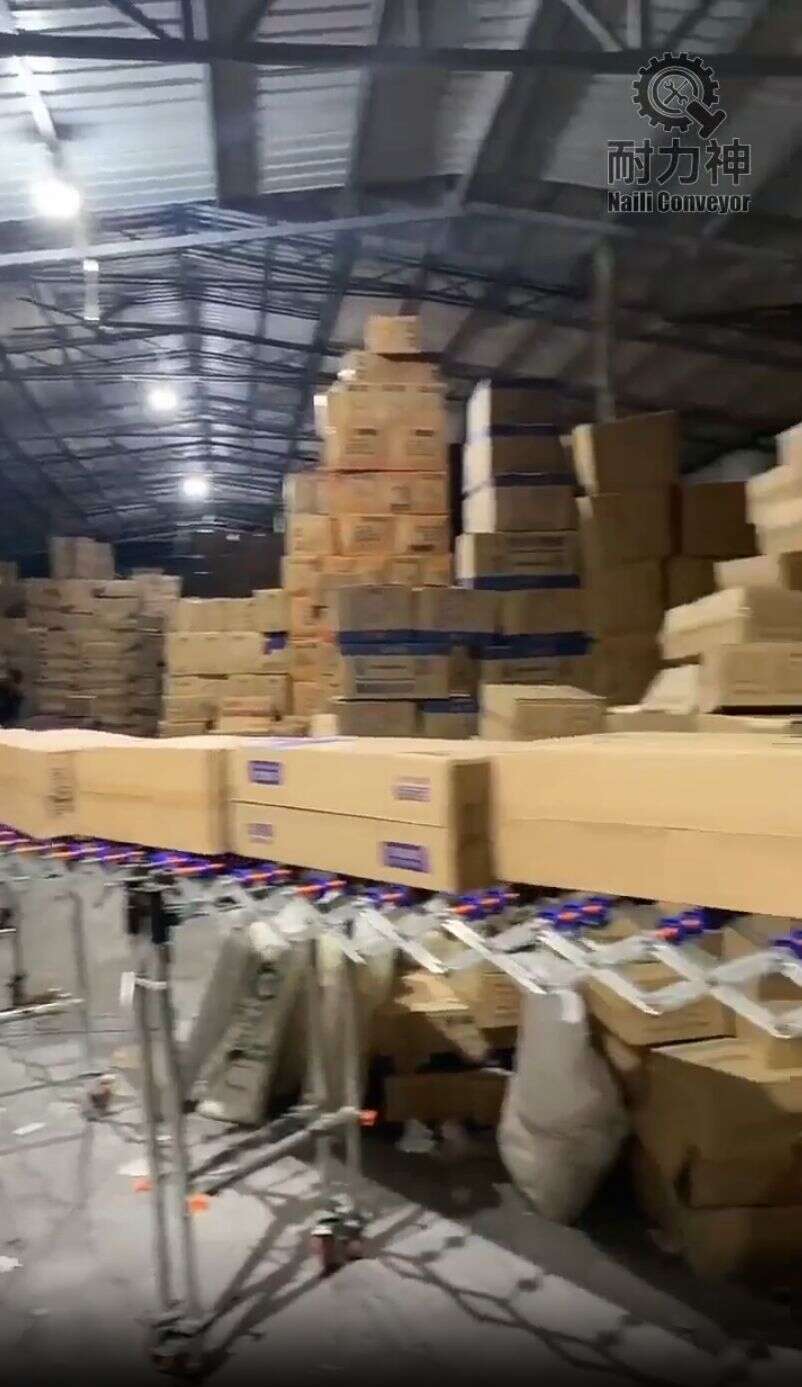
Bottlenecks in truck loading and unloading: the limitations of forklifts and manual labor
Between warehouse docks and truck trailers, "telescopic conveyor truck loading and unloading" has become an increasingly common setup mainly because loading and unloading is often the bottleneck in supply-chain rhythm: once volume rises, efficiency, labor cost, and safety pressure all increase at the same time.
Traditional loading and unloading mainly relies on forklifts and manual handling, but in high-throughput scenarios, the limitations are obvious:
- Typical limitations of forklift loading and unloading: requires certified operation; turning and visibility are restricted in narrow spaces such as truck trailers and docks, increasing the risk of collisions, tipping, and mixed pedestrian-vehicle traffic; it is difficult to create a continuous flow for loose cartons, parcels, and other non-palletized goods; fork tines and impacts may also damage the cargo and trailer; meanwhile, equipment maintenance costs are higher, and fuel-powered forklifts also bring exhaust issues at the worksite.
- Typical limitations of manual loading and unloading: heavy physical labor and slow rhythm; higher risk of work-related injuries such as sprains, strains, and back injuries; fatigue causes fluctuations in efficiency and unstable loading/unloading times; repeated lifting and handling over height differences also increase the likelihood of cargo damage.
A dedicated truck loading conveyor system turns loading and unloading from "back-and-forth carrying" into "steady cargo flow" through "continuous conveying + reduced handling + reduced vehicle movement inside the trailer, " easing on-site congestion and safety pressure at the source.
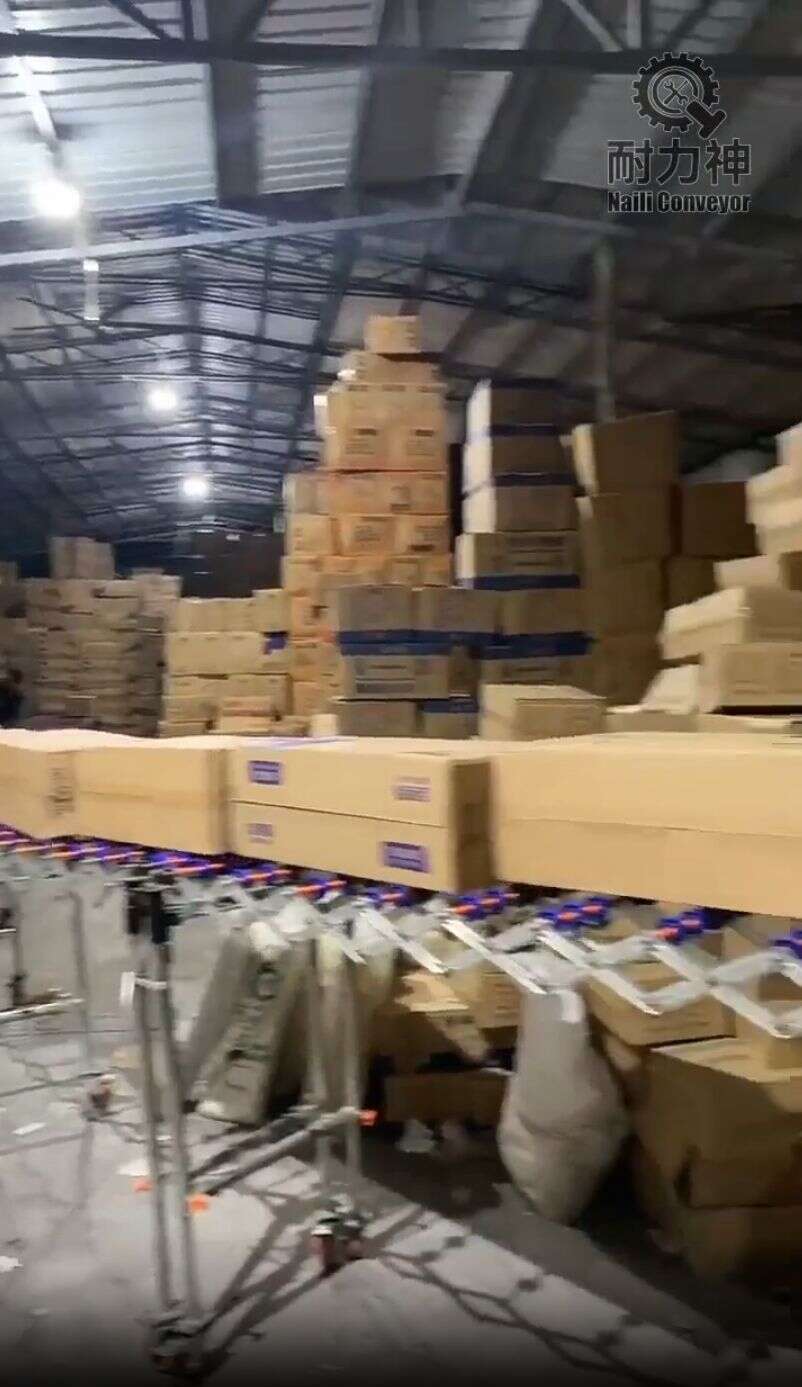
How truck loading and unloading conveyors are classified: telescopic conveyors for truck loading/unloading, and incline, roller, and skate wheel lines
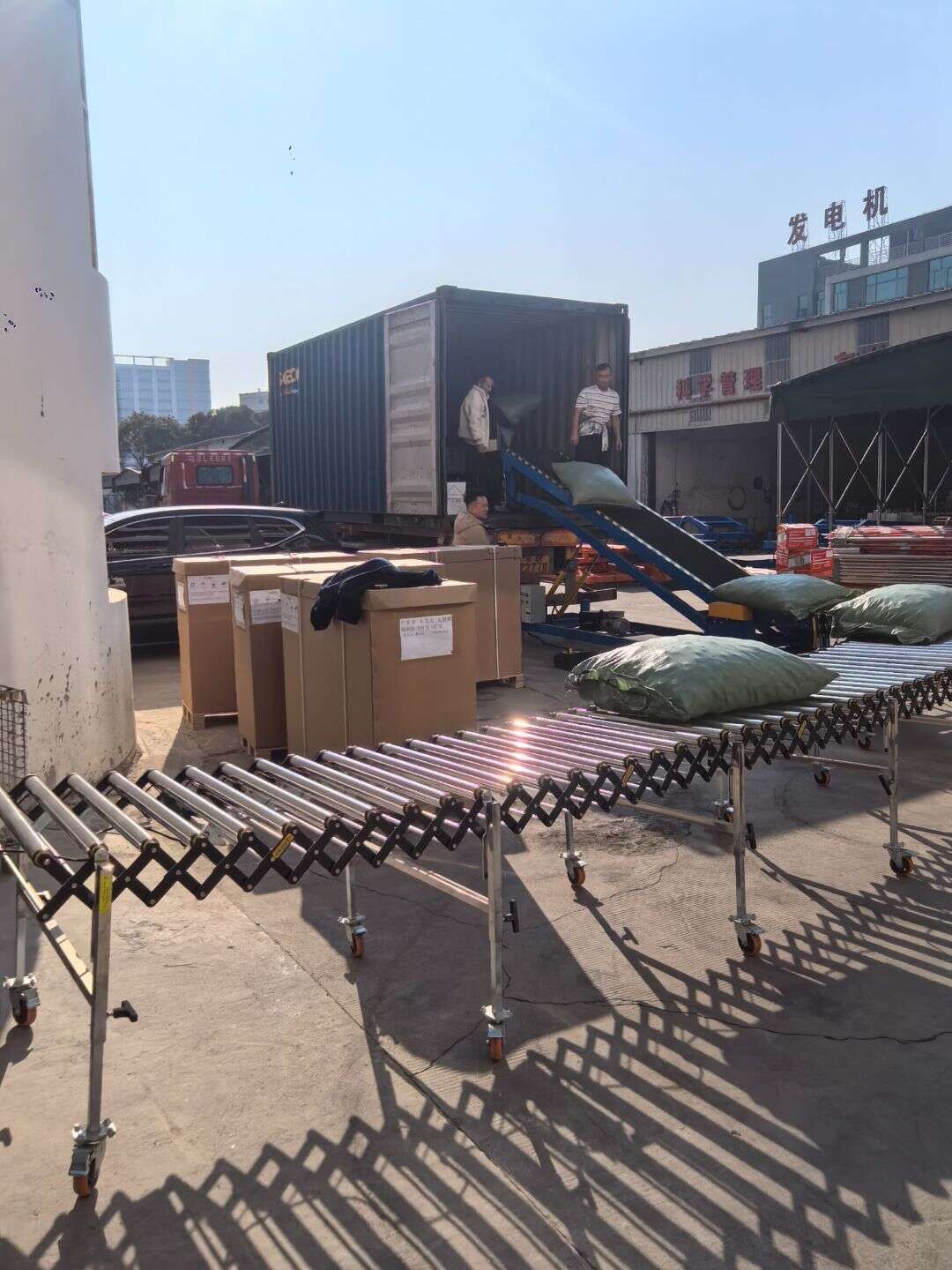
Centered on the goal of "moving goods into the trailer / taking goods out of the trailer, " a Truck Loading Conveyor can usually be divided into four approaches: telescopic conveyors, hydraulic incline conveyors, powered rollers (including rubber-covered rollers), and gravity rollers / skate wheel lines. Understanding what each is best at solving is more important than simply looking at the equipment name.
Telescopic conveyors: a continuous loading and unloading channel extending into the trailer
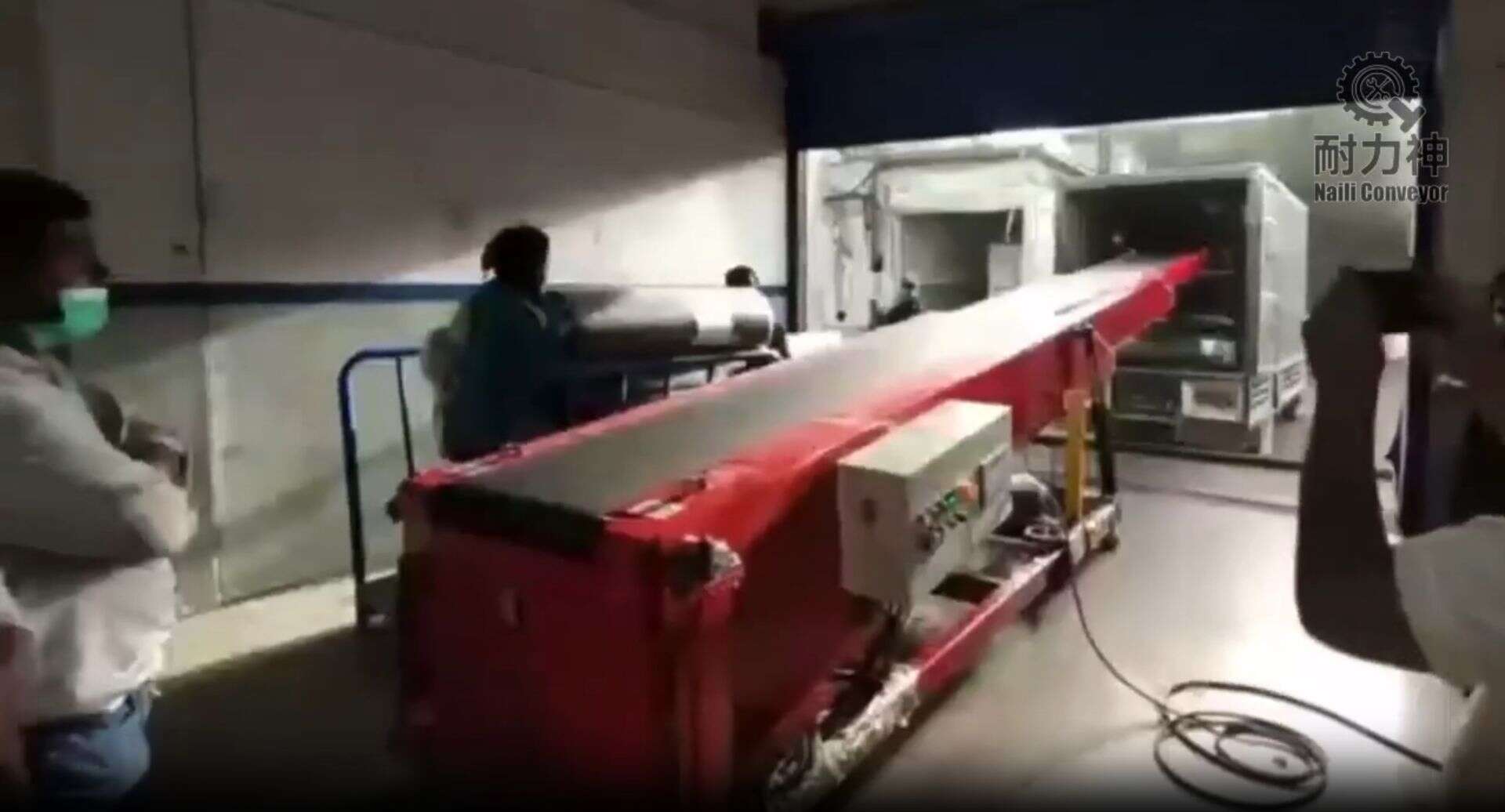
The value of a telescopic conveyor lies in:The multi-section telescopic structure can extend into or retract from the trailer or container as loading and unloading progress, working with belt power to achieve smoother continuous conveying.
- Working inside the trailer: the front end of the conveyor can extend deep into the trailer, reducing long-distance carrying and back-and-forth walking by workers inside the trailer.
- Adjustable height: height adjustment matches the trailer floor height and improves the working posture.
- Bidirectional operation: it can be used for both unloading and loading, adapting to different processes.
- Stability and safety: large multi-section equipment requires reliable stabilization measures during operation to avoid tipping risks.
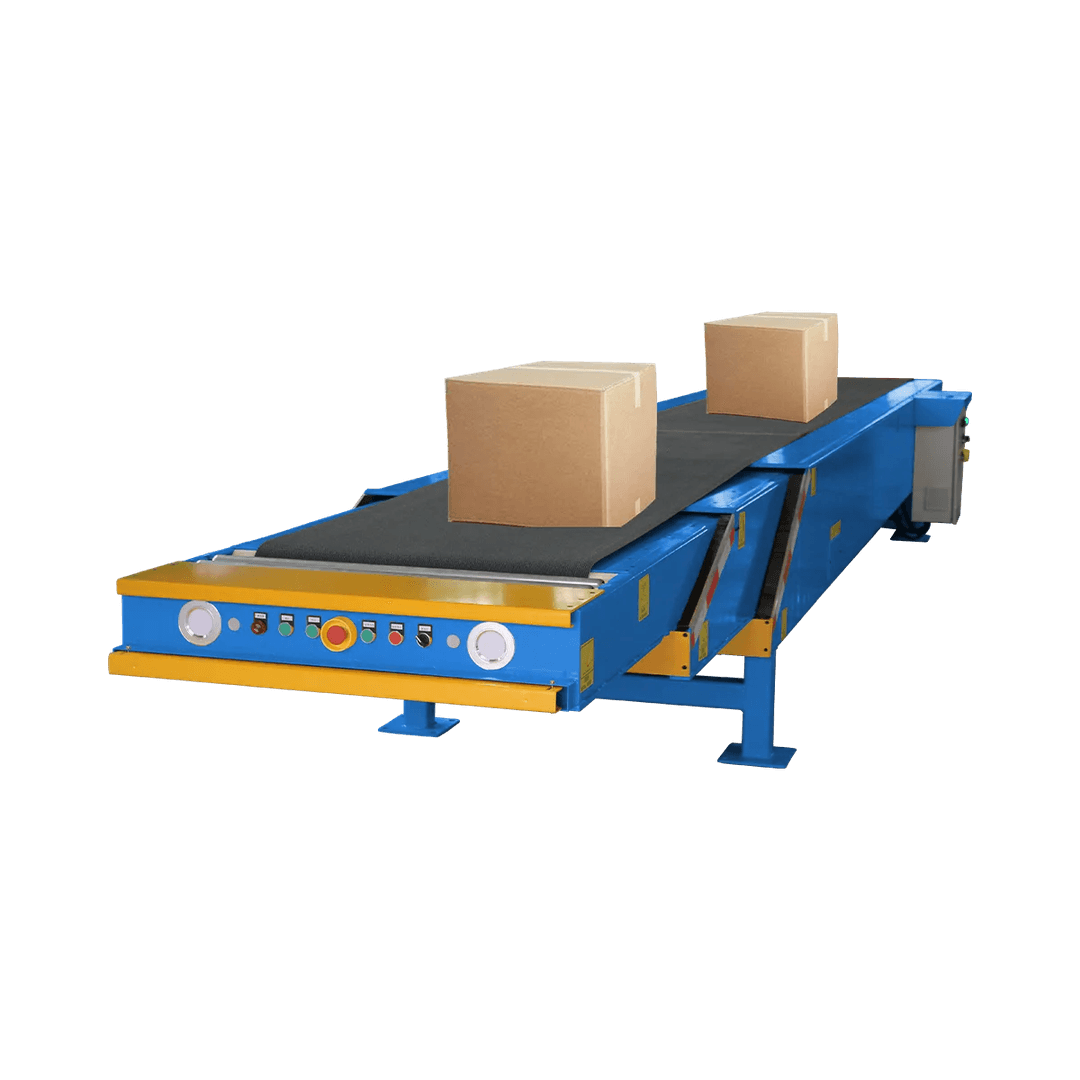
3-teiliger Teleskopförderer
Our three-section telescopic conveyor can extend up to 7–9 meters, reaching deep into trucks and containers to enable fast and efficient loading and u…

Metallfass

Kunststofffass

Rolle

Karton

Verpackt
For applications of telescopic conveyors in improving unloading efficiency, see Improving loading and unloading efficiency with telescopic conveyors for details.
Hydraulic Ramp Conveyor: Bridging the Height Difference Between Ground and Truck Bed
The core function of a hydraulic ramp conveyor is:to turn the height difference between the ground or a site without a loading dock and the truck bed into a "sloped passage". It adjusts height through a hydraulic mechanism, making it suitable for:
- sites without fixed loading and unloading docks;
- scenarios with large changes in truck-bed height that require frequent adaptation to different vehicles;
- serving as an "elevating/feeding base" for other conveyor lines, lifting goods before connecting to the downstream conveyor section.
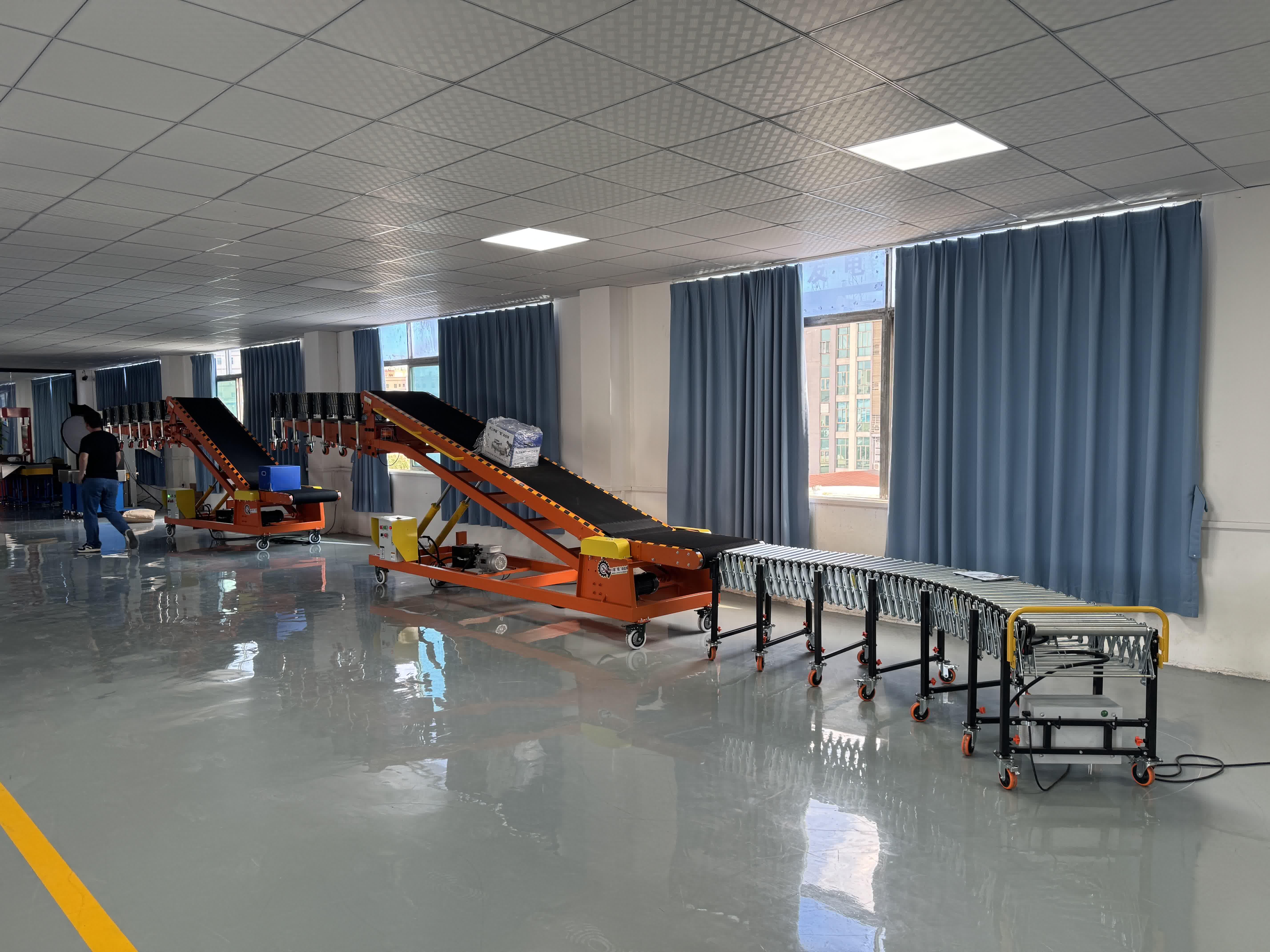
In many applications, the upper end of a hydraulic ramp conveyor is equipped with a support structure for carrying or connecting extension sections such as roller conveyors and skate wheel conveyors, sending the conveyor path "deeper into the truck bed".
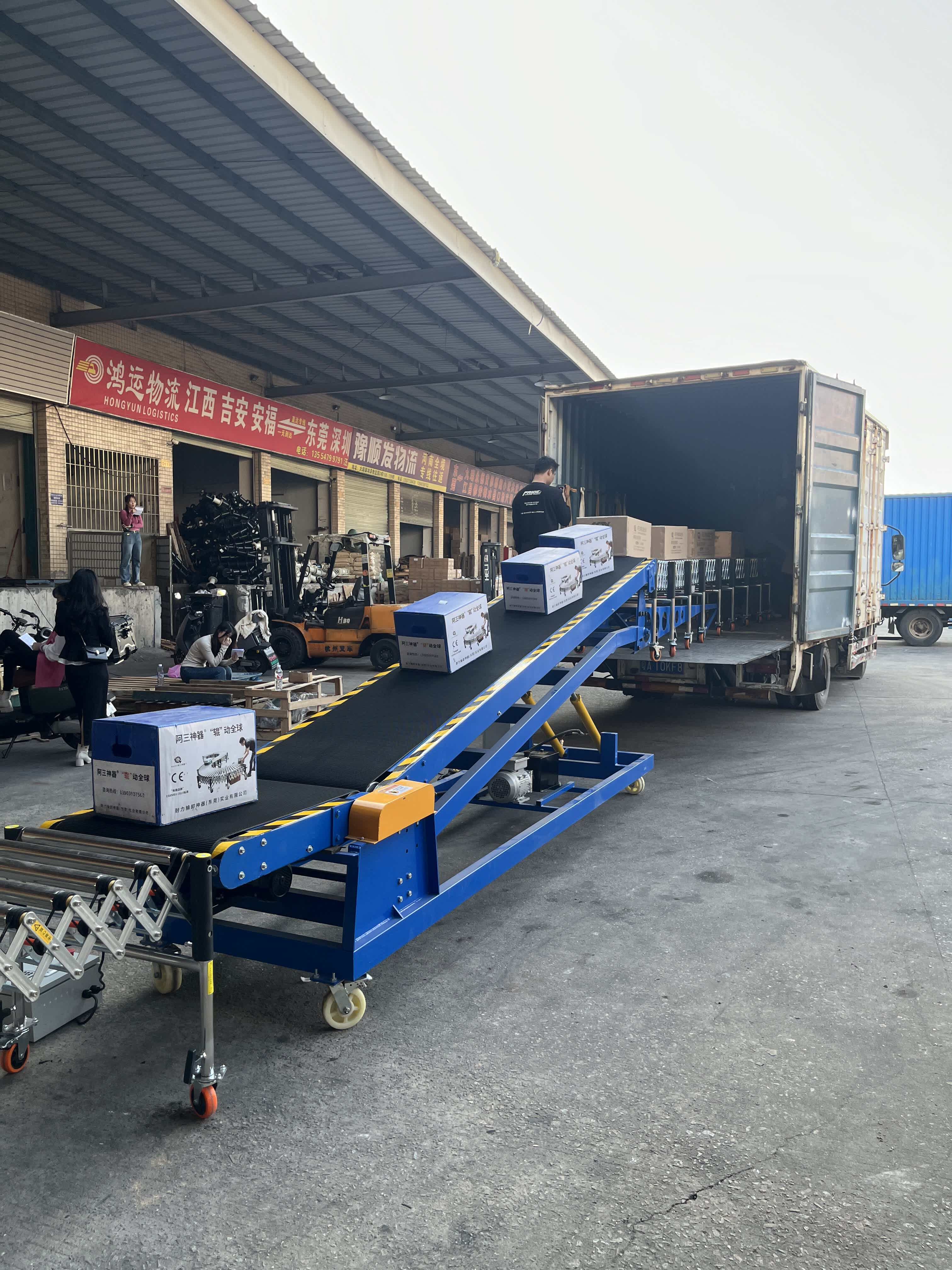
For safe operation of a hydraulic ramp conveyor, please refer to Safe Operation Procedures for Hydraulic Ramp Conveyors.
Powered Roller / Rubber-Covered Roller: Continuous Feeding from the Warehouse to the Loading Point
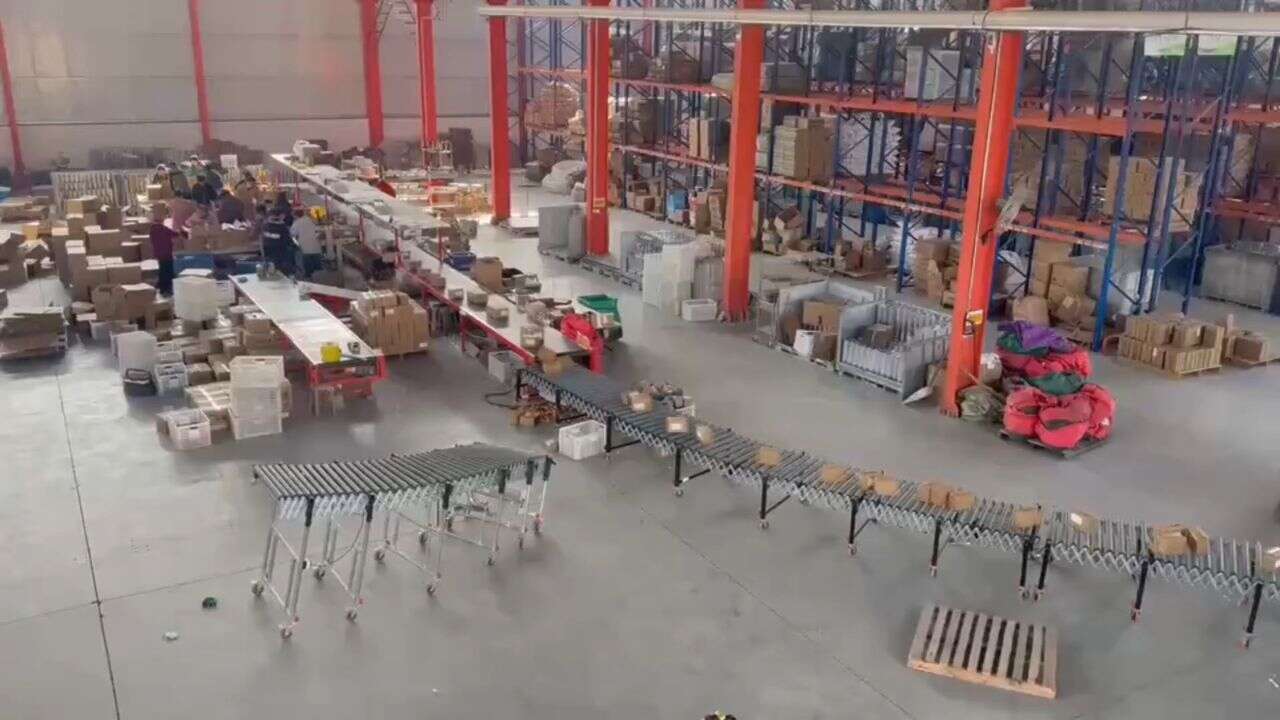
Powered Roller Conveyor uses a motor to drive the rollers, enabling continuous transport of cartons, totes, and otherflat-bottom goodscontinuous conveying and feeding, and it can be used as:
- main conveyor line or collecting line inside the warehouse;
- feeding section or buffering section at the loading/unloading point;
- when used with a hydraulic ramp conveyor, it serves as the extended conveyor section entering the truck bed.
Rubber-covered rollers are a more "gentle" type of roller. Relying on the grip and cushioning provided by the rubber coating, they are suitable for soft packaging or goods that are more likely to slip and require gentler contact.
See similar application cases Loading Christmas Tree Cartons with a Roller Conveyor.
Gravity Roller / Skate Wheel Conveyor: Low-Cost Extension and Temporary Connection
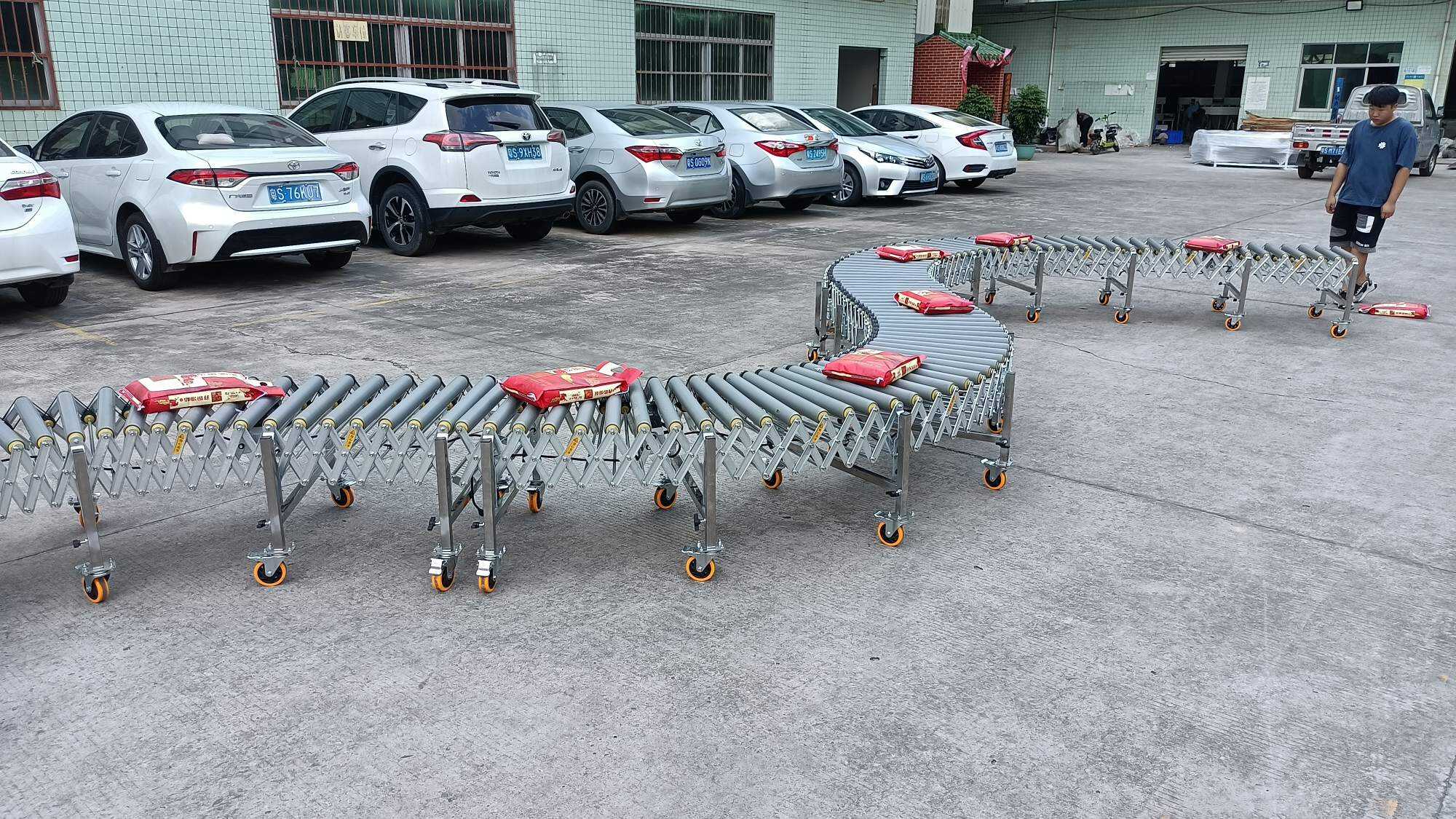
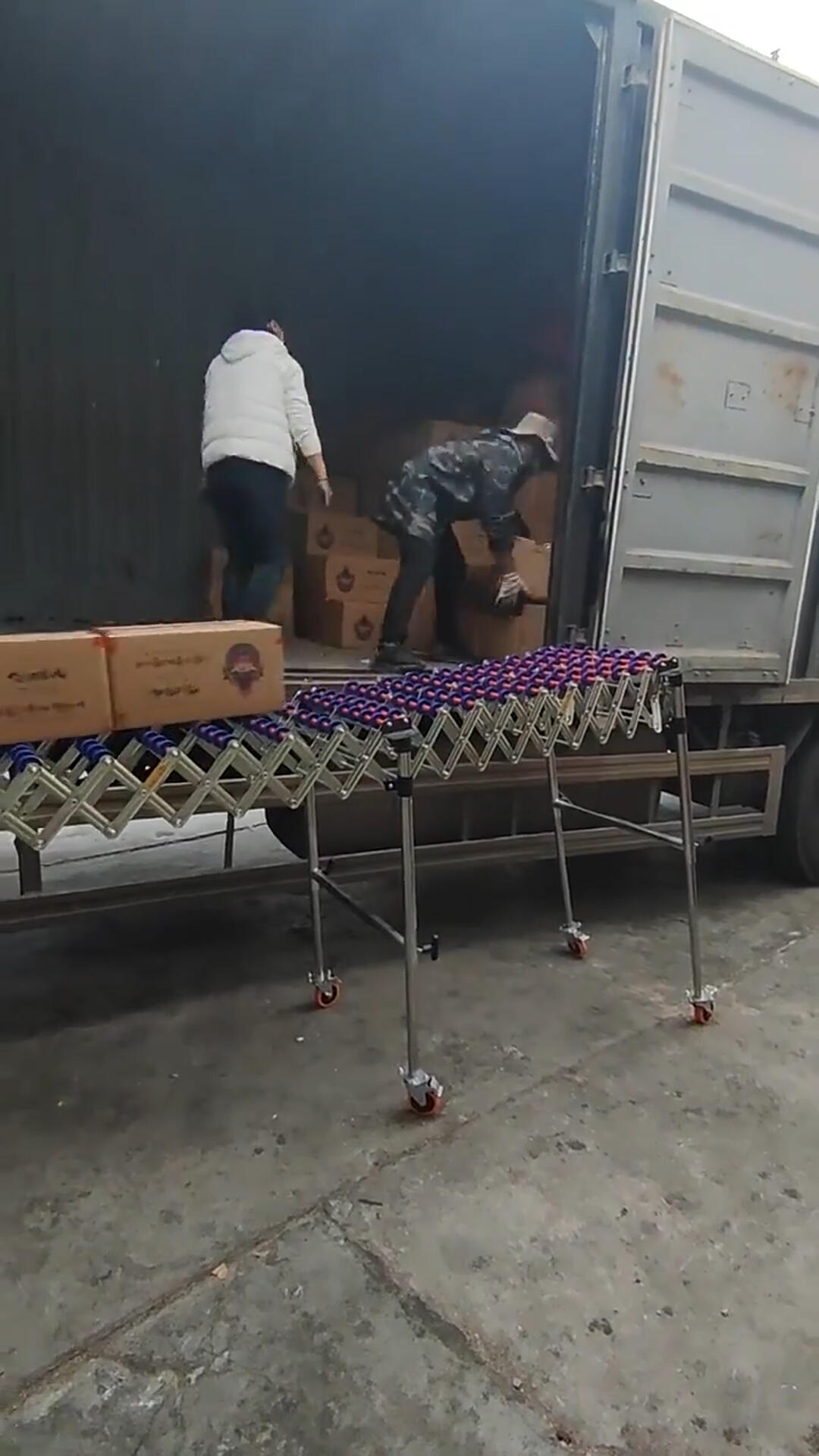
Gravity roller lines and skate wheel lines convey goods through a gravity slope or light manual pushing. They are simple in structure, easy to maintain, and flexible to deploy, and are commonly used for:
- short-distance extension and end connection at loading and unloading openings;
- temporary work lines and scenarios that require rapid setup and retraction;
- as an extension at the discharge end of a powered system to reduce end impact.
It should be noted that this type of solution places higher requirements on the flatness of the bottom of the goods, and skate wheel lines in particular are more suitable for goods with firm, flat bottoms such as cartons and totes.
Key Metrics Compared with Forklifts: Efficiency, Labor, Safety, and Cargo Damage
In the specific process of "loading and unloading trucks, " the difference between conveyors and forklifts is essentiallycontinuous flowundintermittent handling cycles.
- Efficiency model: conveyors move goods forward at a steady pace in a continuous flow, reducing waiting and back-and-forth travel; forklifts must repeatedly go through the cycle of picking up goods—driving—positioning—placing goods, and their speed depends more on the operator’s skill and travel distance. In bulk carton handling scenarios, they also struggle to create a continuous flow.
- Manpower Organization: Conveyors typically split the work into a "two-end collaboration" model—one end for feeding/loading and the other for stacking/receiving—reducing long-distance carrying and back-and-forth walking; forklifts, by contrast, require licensed operators, and loose goods often need additional workers to organize and stack them inside the truck bed.
- Safety and Space: Reducing the need for forklifts to enter the truck bed or move frequently within the dock can significantly lower collision risks and the risk of mixed pedestrian and vehicle traffic; it also reduces reliance on turning space inside the truck bed.
- Cargo Damage and Maintenance: Conveyor motion is smoother and can reduce cargo damage caused by drops and impacts; however, the power system requires routine inspection (such as the belt, drive, and motor). Gravity rollers/skate wheel lines usually require less maintenance.
Key Points for Selection and Integration: Site Conditions, Cargo Form, and Compatibility
When choosing a "telescopic conveyor for loading and unloading trucks" or another loading/unloading conveyor solution, it is recommended to start with on-site constraints and then move on to functional configuration and upstream/downstream integration.
1) Start with a needs assessment: decide which type will be the primary equipment
You can organize the requirements along the following dimensions:
- Loading/unloading volume and peak demand, vehicle turnaround cycle
- Cargo form: cartons/parcels, bagged goods, soft packages, mixed loads, etc.
- Vehicle/container type, and the range of truck bed height variation
- Whether there is a dock, and whether ground-level direct loading and unloading is required
- On-site space (door openings, aisles, parking positions), budget, and maintenance capability
- How it connects with upstream and downstream processes: how to link with sorting lines, temporary storage areas, palletizing areas, etc.
2) Key functional points: turning "usable" into "easy to use"
- Reach depth: Determines whether manual handling is still needed deep inside the truck bed.
- Height adjustment capability and adjustment method: Affects compatibility with different vehicle heights and operating posture.
- Speed control and safety devices: Adapts to different cargo types and cycle times, while reducing the risk of misuse.
- Mobility and on-site layout: Whether multi-vehicle positions need to be shared, and whether frequent repositioning and relocation are required.
3) Compatibility and integration: what can be connected, and what should not be forced together
- Important note: Telescopic conveyors and hydraulic ramp conveyors are usually not designed to be combined into one direct unit. They solve different problems—the former is used to extend into the truck bed for operations, while the latter is used to bridge height differences and provide lifting and support for other conveyor sections.
- Common feasible integration options: Inside the warehouse, a Powered Roller Conveyor can transport goods to the tail end of the Telescopic Conveyor to achieve continuous feeding.
- Extension method for the ramp conveyor: The upper end of the hydraulic ramp conveyor can be paired with extension sections such as rollers or skate wheels to enter the truck bed, forming a continuous path from the ground to the deep interior of the truck bed.
If you want to learn about how telescopic conveyors are organized and integrated into the process for unloading parcel-type loose items, please refer to:
3-Section Telescopic Conveyor unloading process at a courier center
For more information on loading and unloading truck cargo with a telescopic belt conveyor, please read Loading and unloading truck cargo with a telescopic belt conveyor.