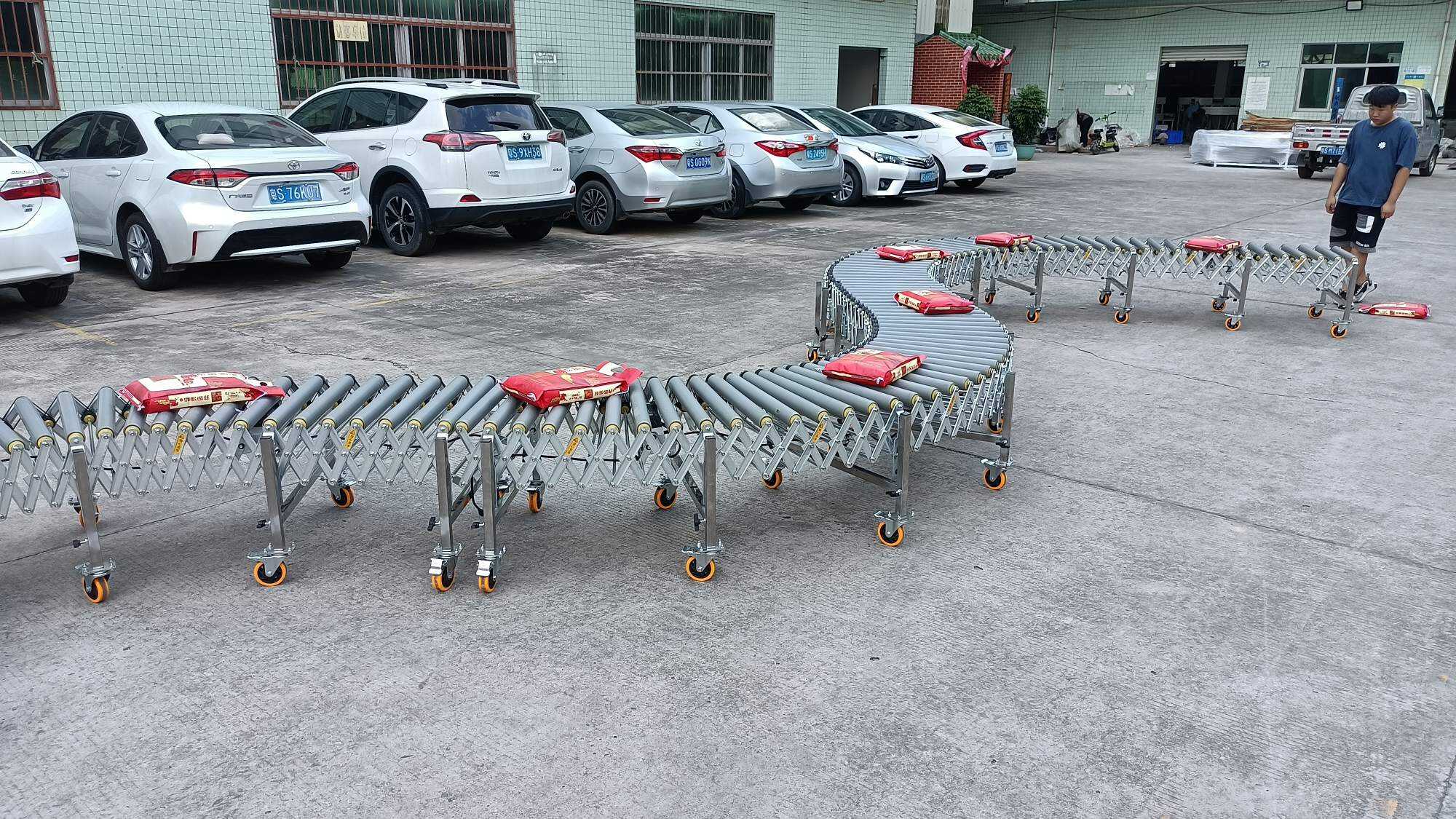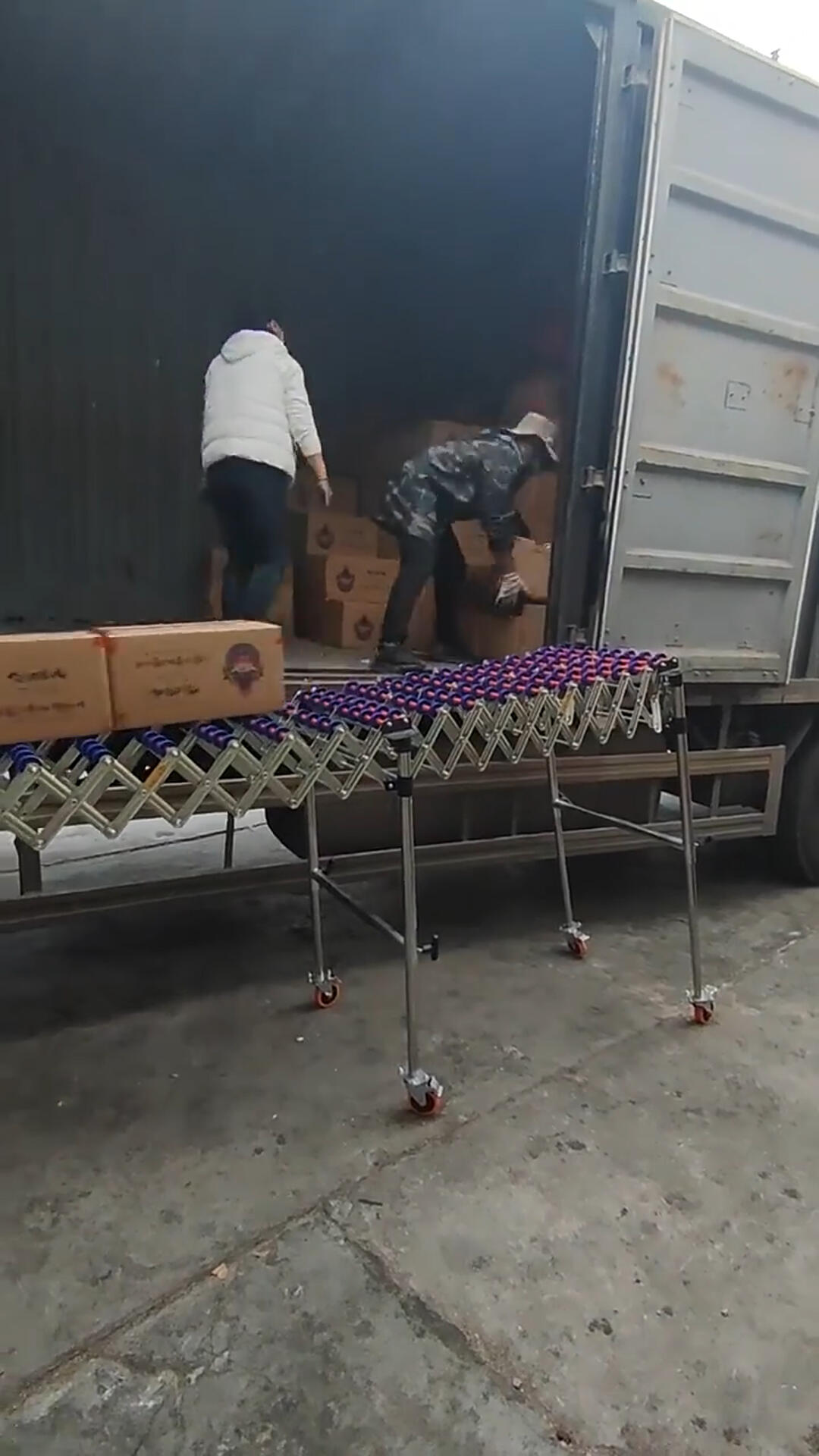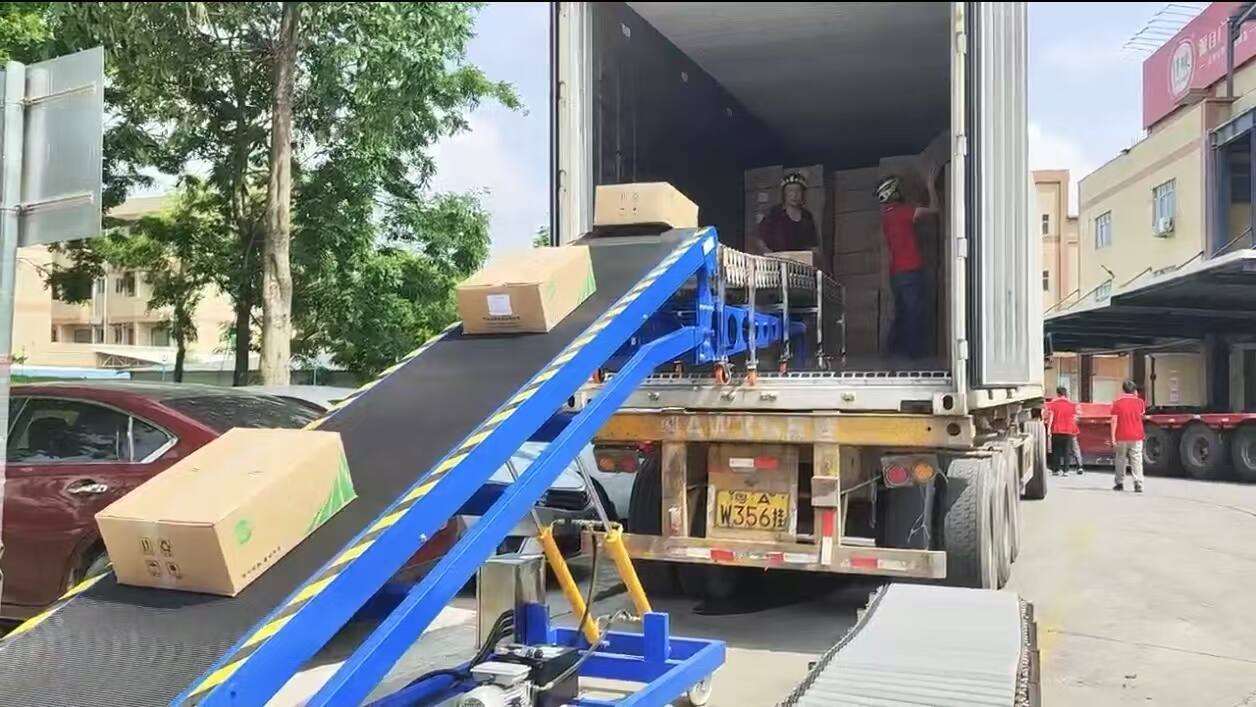

The overall throughput of a loading and unloading conveyor is usually determined by two core factors:
- Mechanical conveying capacity (theoretical conveying limit)
- Manual loading and unloading efficiency (actual operating capacity)
In real truck loading and unloading scenarios, the bottleneck of the system is often not the conveyor itself, but the pace of manual operation.
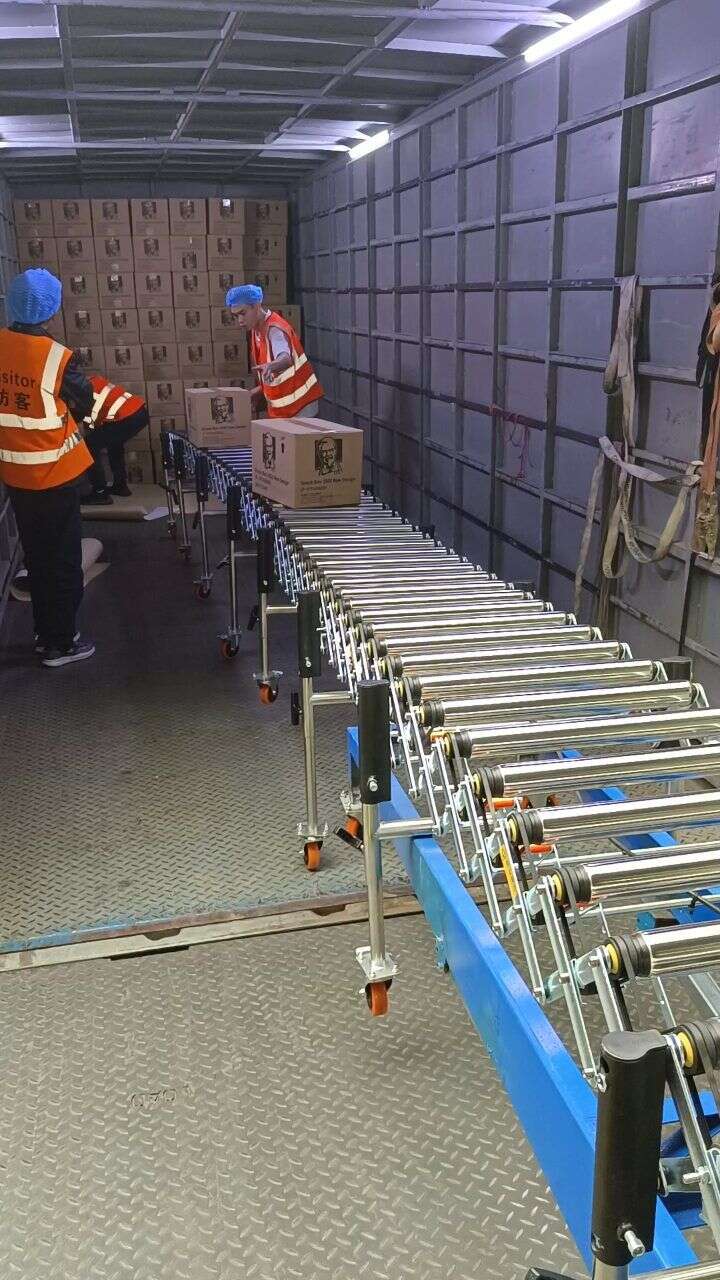
Therefore, one key conclusion can be drawn:
- The conveyor provides the maximum transportation capacity
- Operators determine the final actual output
Conveyor technical parameters (reference standard)
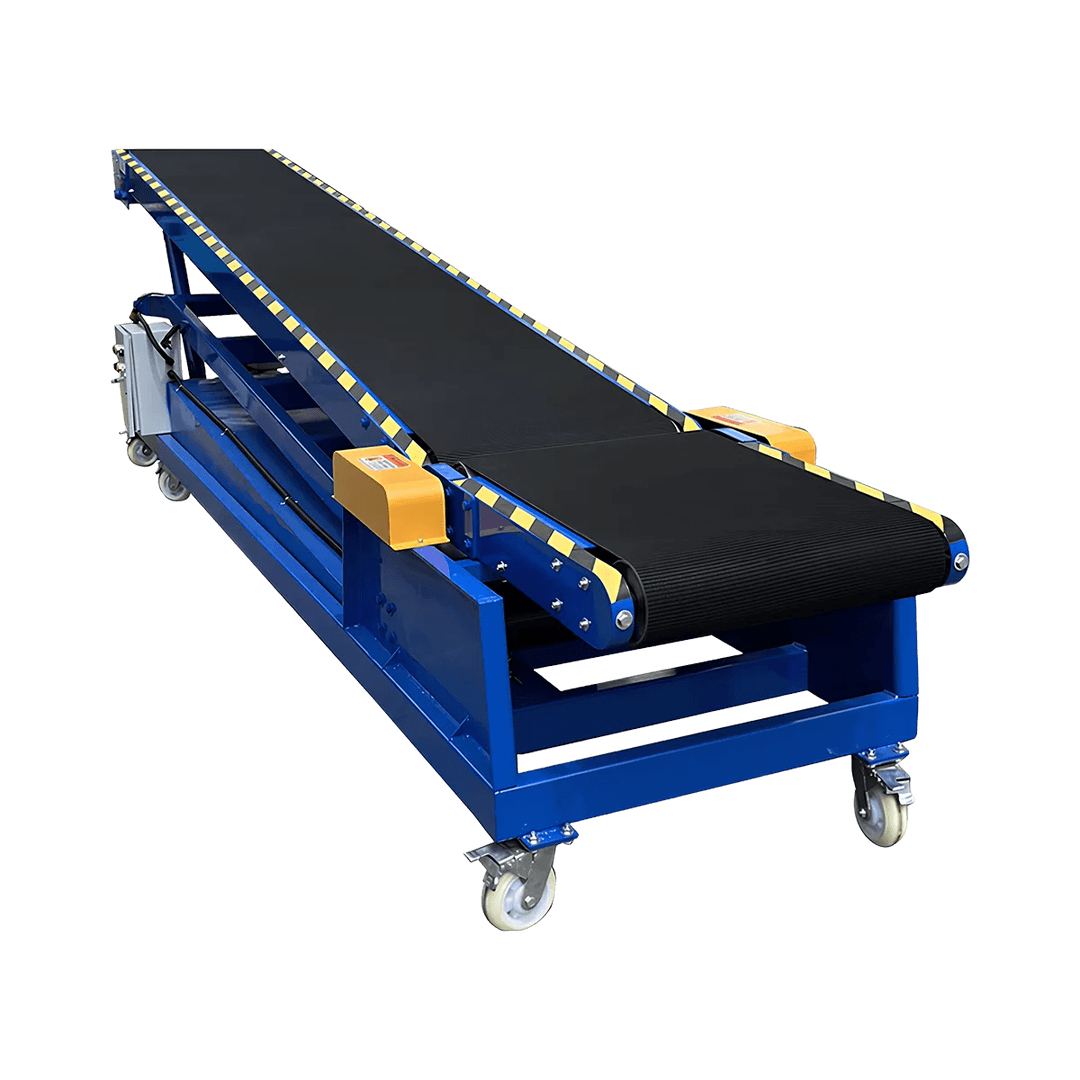
Mittlerer Hydraulikförderer
Medium Hydraulic Conveyor is specially designed for sites without loading and unloading platforms and is suitable for trucks under 40 ft. The hydrauli…

Metallfass

Kunststofffass

Rolle

Karton

Verpackt
- Conveying speed: up to 30 m/min
- Load capacity: up to 80 kg/m
- The standard calculation conditions are as follows:
- Single-item length: 0.6 m
- Average spacing: 0.15 m
Theoretical conveying capacity calculation
Unit takt time = 0.6 m + 0.15 m = 0.75 m
Theoretical number of items passing per minute = 30 ÷ 0.75 = 40 items
Theoretical hourly output = 40 × 60 = 2, 400 items/hour (reference value)
Actual operating throughput (items/hour)
The following data are estimates based on real loading and unloading scenarios:
- Loaders work at fixed positions at the loading and unloading ends
- No extra walking distance
- Continuous operation state
- Standard industrial operating pace
- Cargo size varies with weight
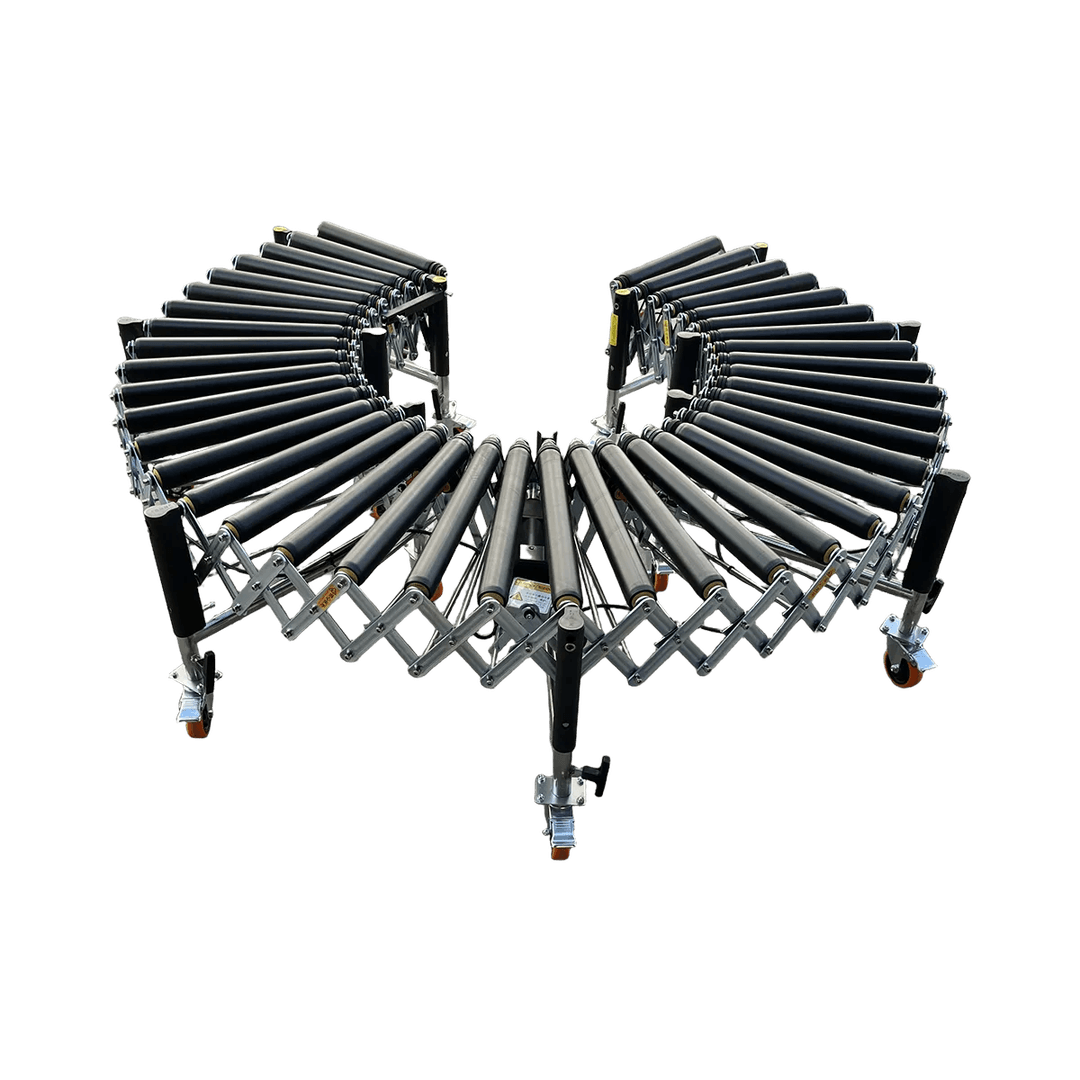
Gummibeschichtetes Rollenförderband mit Mehrkeilriemenantrieb
Das angetriebene, gummibeschichtete Rollenförderband mit Mehrkeilriemen wurde speziell für den reibungslosen Transport von Sackware entwickelt. Es verwendet Mehrkeilriemen…
Metallfass
Kunststofffass
Rolle
Karton
Verpackt
Table 1: Actual processing capacity (items/hour)
| Cargo weight | 1 loading, 1 unloading | 2 loading, 1 unloading | 2 loading, 2 unloading | 3 loading, 2 unloading |
|---|---|---|---|---|
| 10 kg | 1000–1400 | 1200–1600 | 1400–1800 | 1500–2000 |
| 25 kg | 500–700 | 600–800 | 800–1000 | 900–1200 |
| 50 kg | — | 250–350 | 350–500 | 450–650 |
Actual throughput capacity (tons/hour)
The overall handling capacity after converting pieces to weight is as follows:
Table 2: Actual handling capacity (tons/hour)
| Cargo weight | 1 loading, 1 unloading | 2 loading, 1 unloading | 2 loading, 2 unloading | 3 loading, 2 unloading |
|---|---|---|---|---|
| 10 kg | 10–14 | 12–16 | 14–18 | 15–20 |
| 25 kg | 12.5–17.5 | 15–20 | 20–25 | 22.5–30 |
| 50 kg | — | 12.5–17.5 | 17.5–25 | 22.5–32.5 |
Theoretical Capacity Explanation
The theoretical capacity is based on the following assumptions:
- Conveying speed is stable at 30 m/min
- Standard cargo size: 0.6 m × 0.4 m × 0.3 m
- Average spacing between cargo items: 0.15 m
- Continuous conveying without interruption
Core principle:
- Lighter cargo → faster operation → higher throughput
- Heavier cargo → slower operation → lower throughput
- Therefore, the theoretical value is usually expressed as a range.
Reference for manual operation cycle time
Actual capacity is mainly determined by the manual cycle time:
- 10 kg goods: 2–4 seconds/item
- 25 kg goods: 4–7 seconds/item
- 50 kg goods: 6–12 seconds/item (multi-person cooperation required for handling)
These data are based on real-world warehousing and loading/unloading experience.
Important Note
In most application scenarios, the conveyor itself is not the limiting factor.
Actual efficiency depends on the following variables:
- Operator proficiency
- Cargo size and weight distribution
- Stacking height requirements
- Internal layout of the container
- Work safety standards
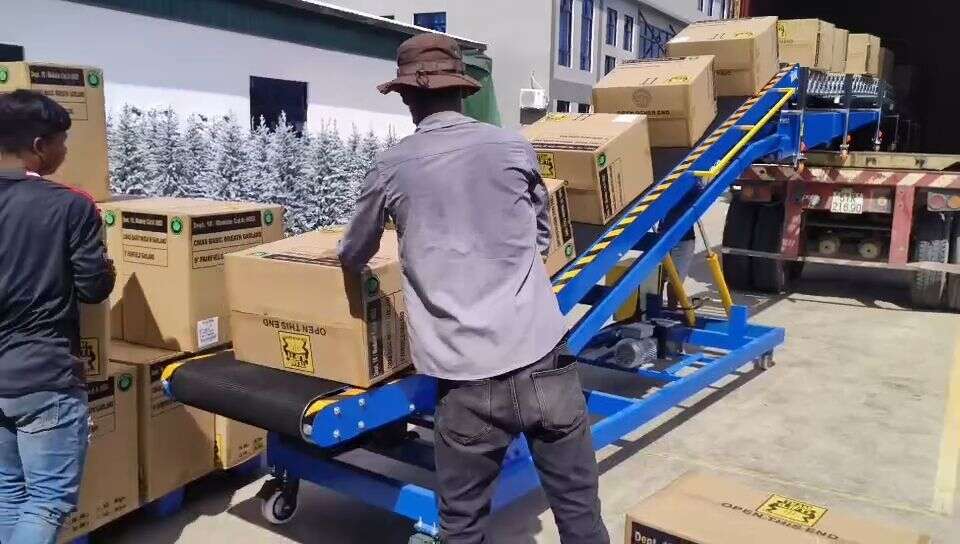
Efficiency improvement conclusion:
When using a loading and unloading conveyor, overall efficiency can usually be improved by 2–4 times compared with purely manual loading and unloading.
Summary
The core value of a loading and unloading conveyor does not lie in its "conveying speed itself, " but in:
- Reducing manual handling distance
- Stabilizing the work rhythm
- Improving loading and unloading efficiency per unit time
- Reducing labor intensity
By properly configuring the combination of personnel and equipment, overall logistics throughput can be significantly improved.