Gravity Skate Wheel Conveyor vs Roller Conveyor: Site Selection Comparison and Practical Guide for Loading and Unloading Areas
When selecting a loading and unloading site, one often faces the choice between Gravity Skate Wheel Conveyor and Roller Conveyor: light-load rapid deployment vs heavy-load stable conveying? This article provides a practical comparison from the perspectives of load capacity, structural features, applicable cargo types, and cost to help you quickly determine the best solution.
Key Parameter Comparison
| Artikel | Schwerkraft-Skate-Radförderer | Rollenförderer |
|---|---|---|
| Typical Load Capacity | Within about 50 kg/m | 80~100 kg/m |
| Structural Features | Lightweight, foldable, and movable with casters | Stable, can be powered, and can be inclined |
| Applicable Cargo Types | Flat-bottom cartons, light packages, regular cargo | Heavy goods, bagged goods, barrel goods, irregular bottoms |
| Initial Investment | Nach unten | Höher |
| Deployment Speed | Fast, flexible | Relatively slow, requires fixing |
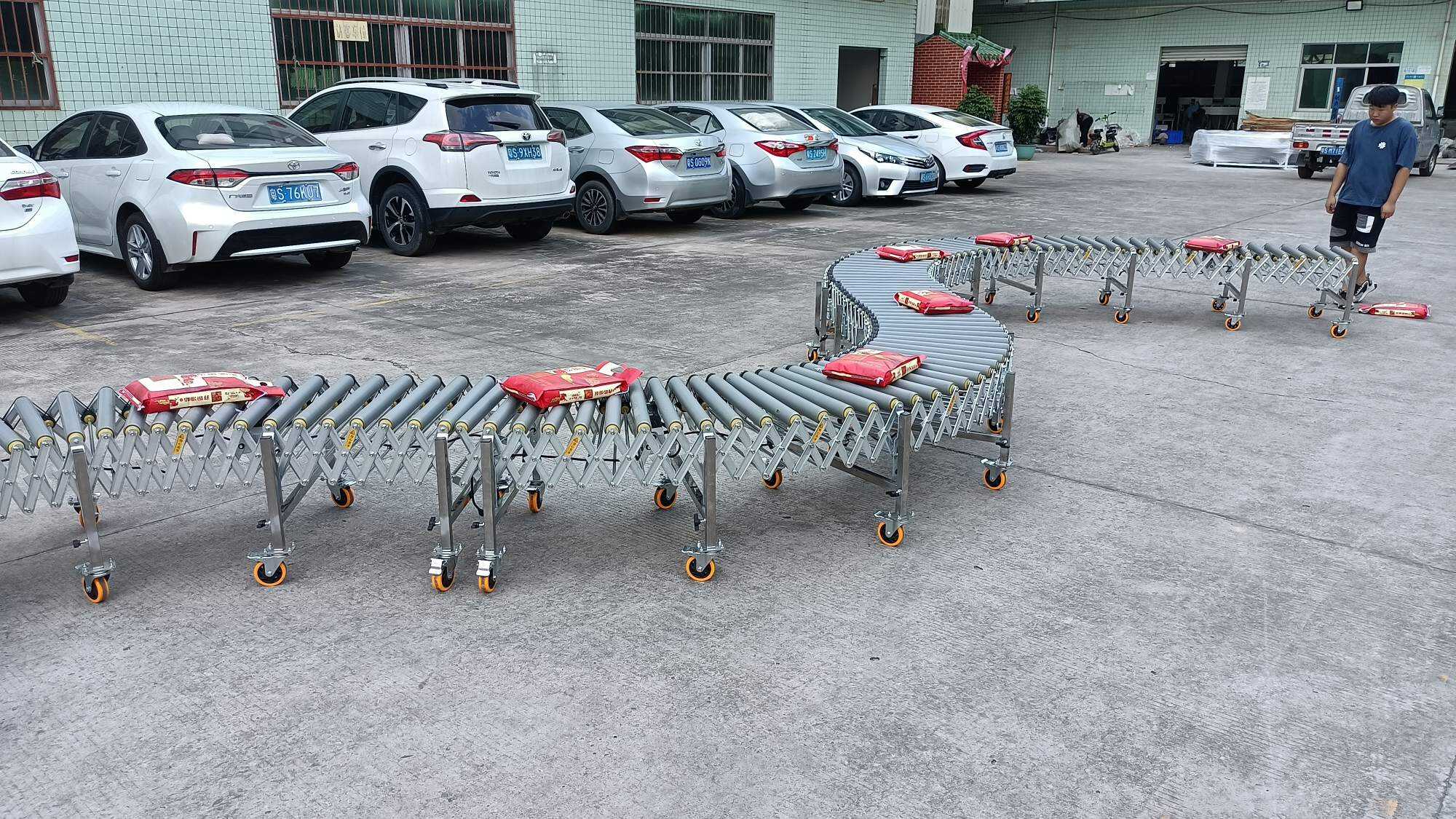
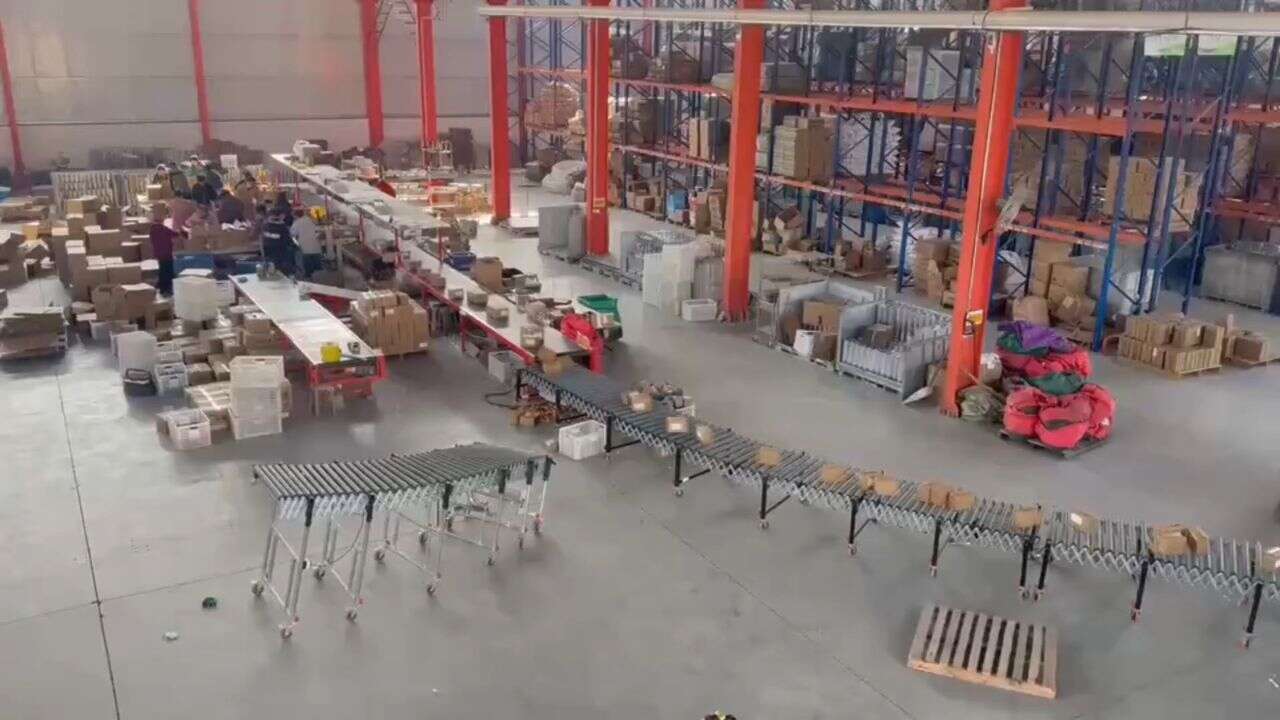
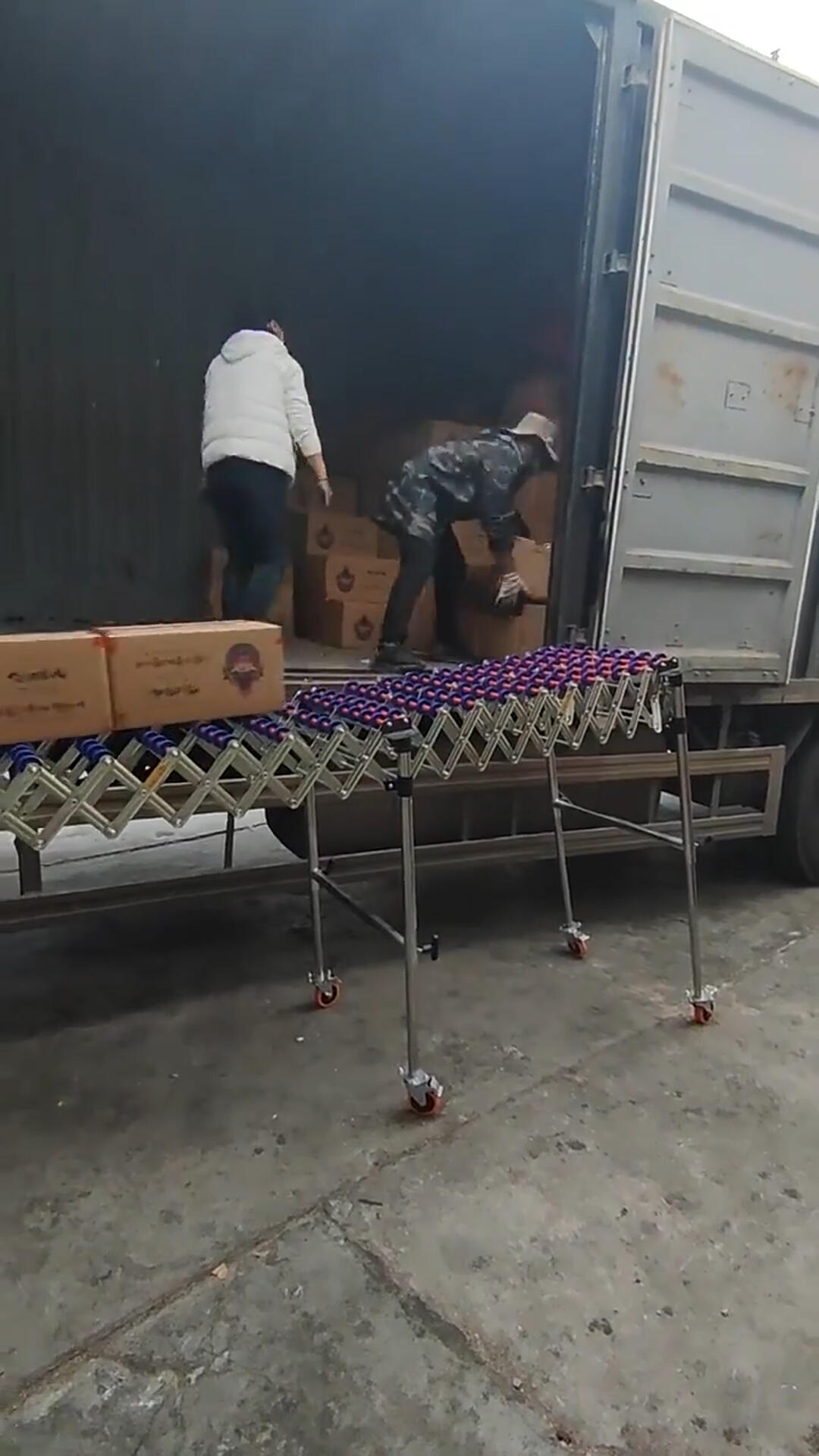
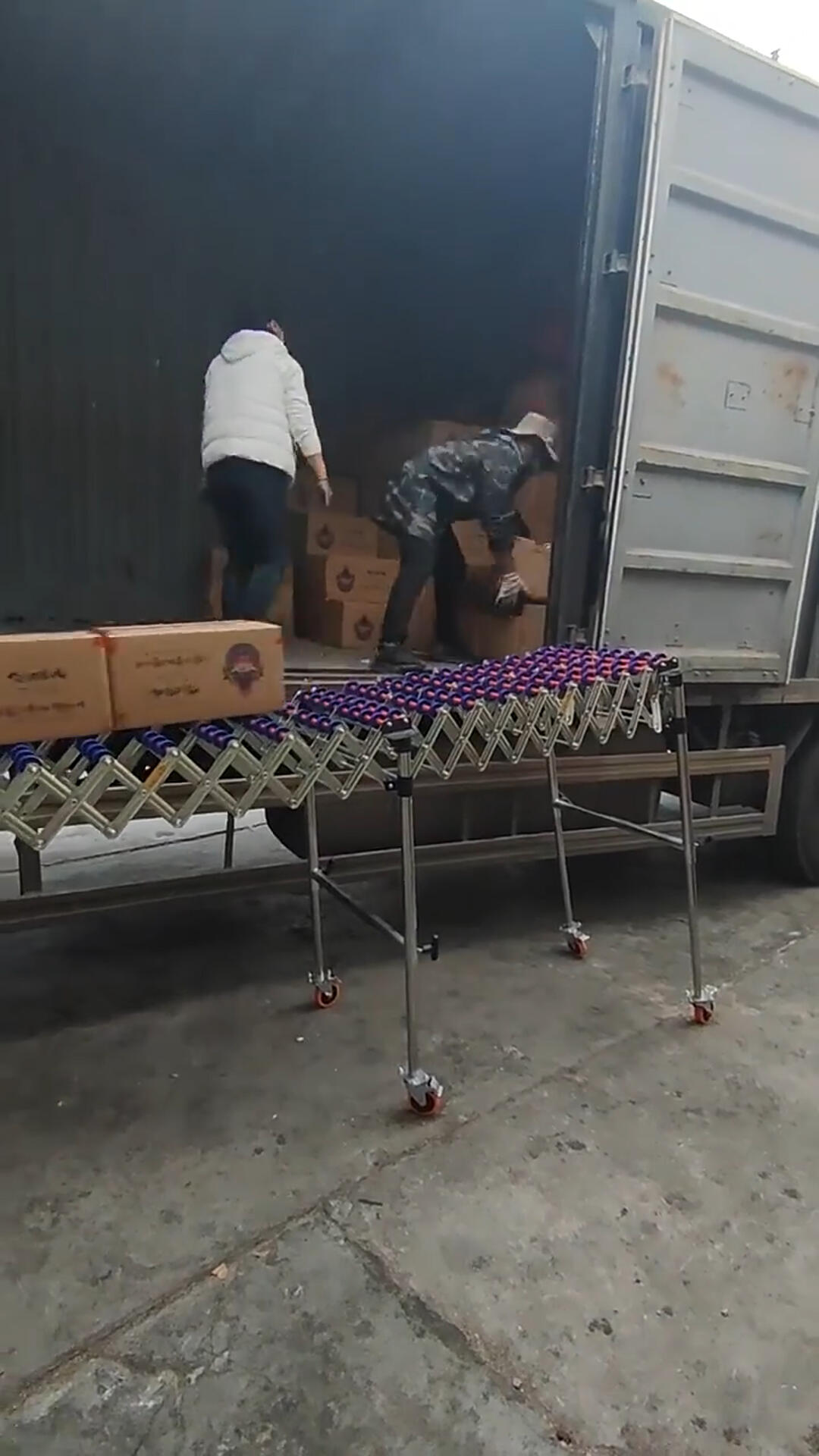
Gravity Skate Wheel Conveyor On-site Unloading Demonstration
At truck-to-warehouse platforms, receiving docks, or front-end storage areas, the Gravity Skate Wheel Conveyor typically completes short-distance loading and unloading by relying on gravity or manual pushing. It is suitable for regular goods such as flat-bottomed cartons and light packages. Based on existing application experience, this type of equipment is better suited for light-load scenarios of approximately 50 kg/m or less, with advantages in fast deployment, easy mobility, and flexible temporary setup.
In contrast, roller conveyors typically have a load capacity of 80–100 kg/m, making them more suitable for heavy goods, bagged items, and materials with irregular bottoms. If the loading/unloading line needs to extend to inclined sections, transverse transfer sections, or link with other equipment, roller conveyors can more easily achieve continuous transport through power modules and maintain stability under higher loads.
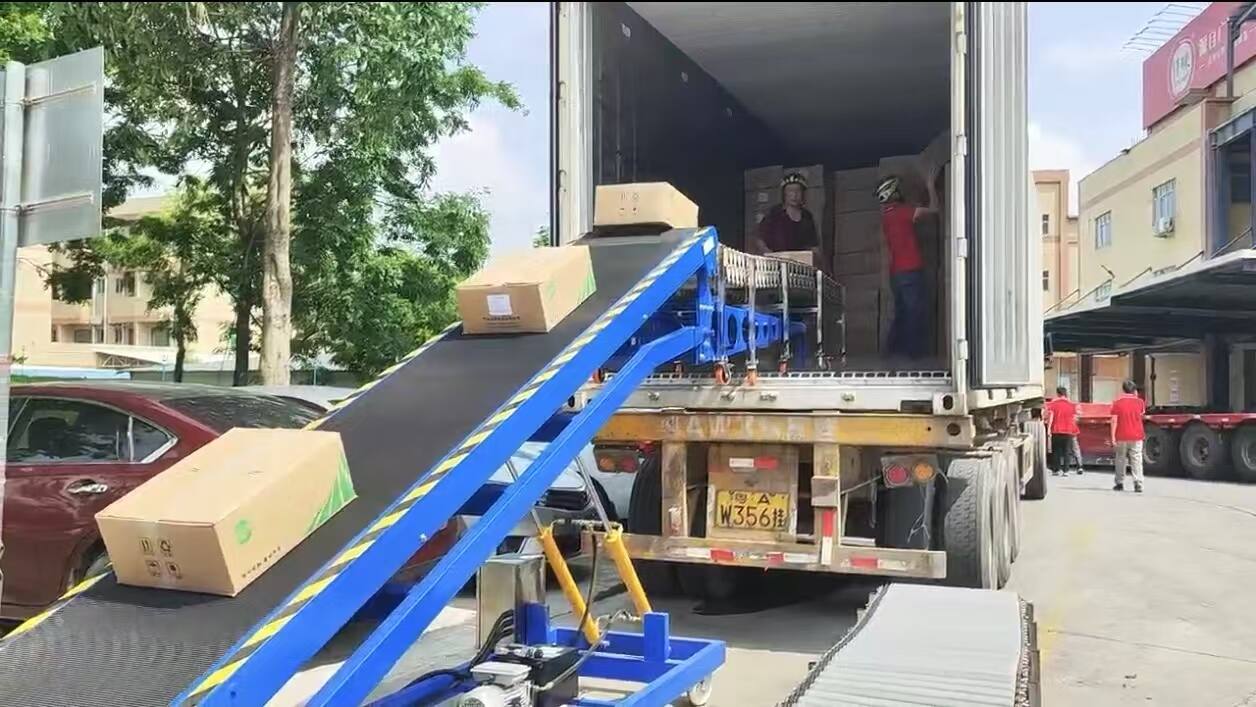
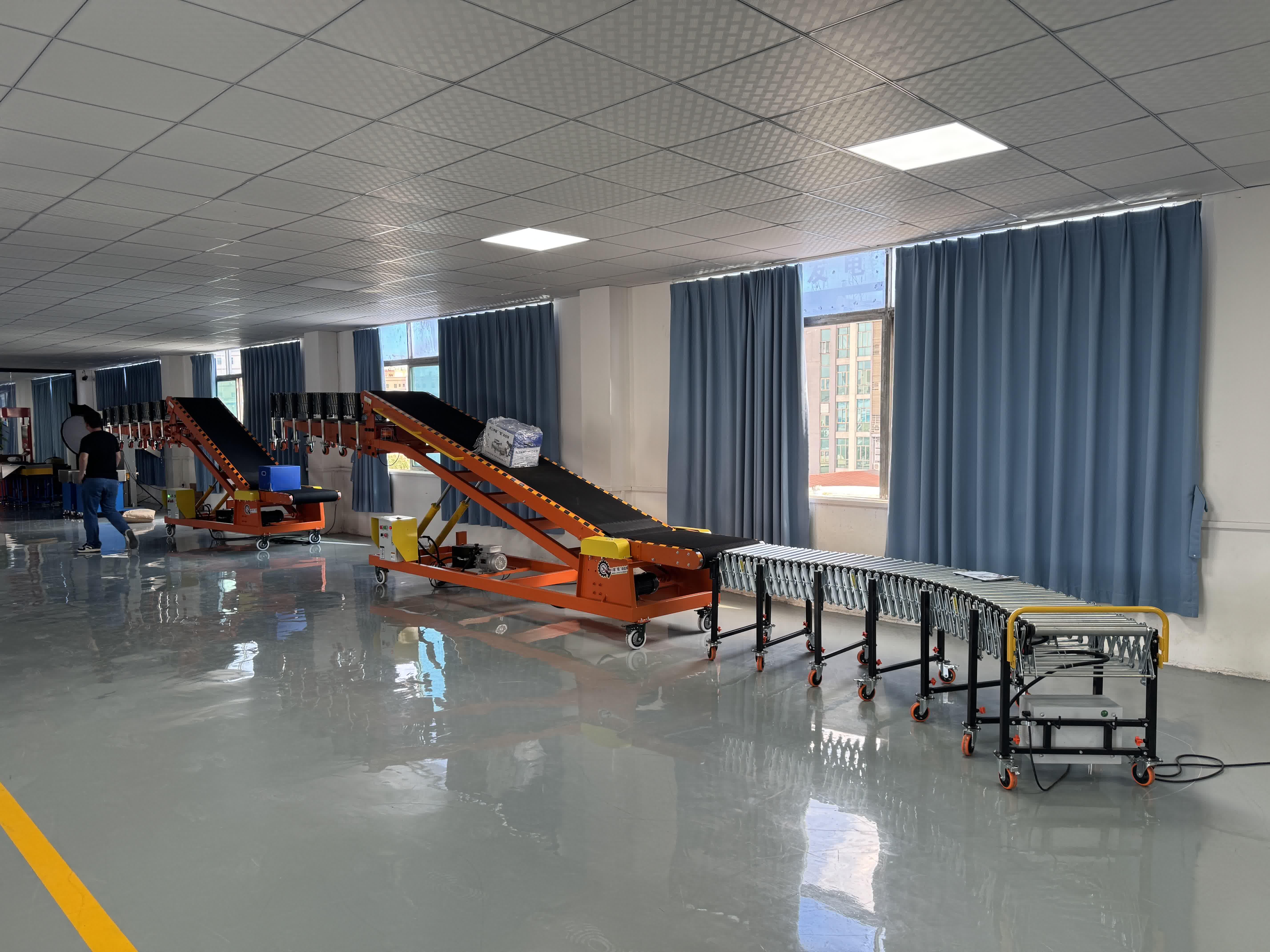
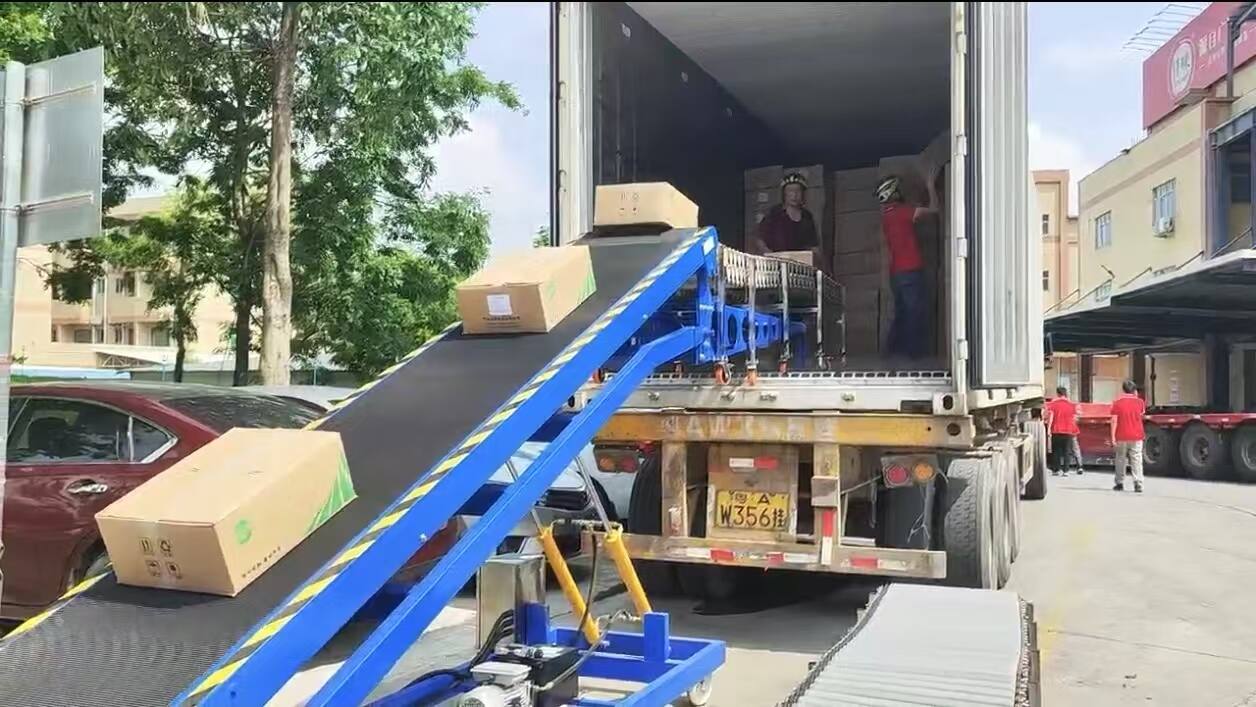
Loading scenarios combining roller conveyors and hydraulic conveyors
Comparison of Gravity Skate Wheel Conveyor loading/unloading structure with roller conveyors
The Gravity Skate Wheel Conveyor has a lighter structure and is commonly used at loading/unloading points that require frequent deployment, retraction, and movement. Its characteristics include fast installation and adjustment, relatively simple maintenance, and the convenience of temporarily setting up unloading channels in limited spaces. For operations primarily assisted by manual labor with low-frequency requirements, this type of structure is often more economical and practical.
Roller conveyors emphasize stable load capacity and continuous transport capabilities, with options for gravity, powered, or heavy-duty frame solutions depending on the scenario. In situations requiring inclines, turns, or high-frequency operation, the roller structure is generally more advantageous; if configured with rubber rollers, it can also increase the friction between the goods and the transport surface, reducing the risk of sliding. For heavy-duty loading lines, roller equipment is generally stronger in terms of stability and system scalability.
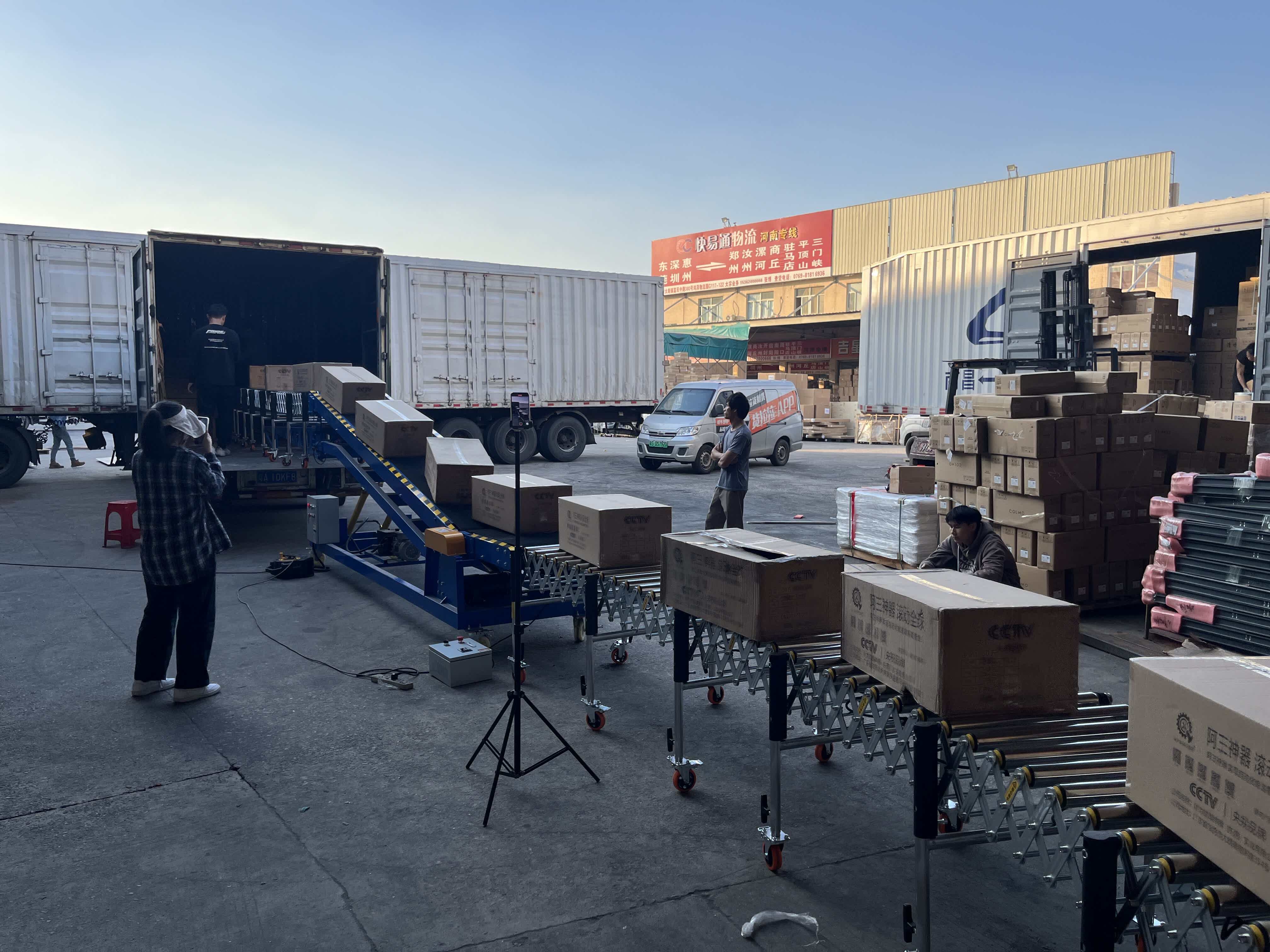
Loading with medium-sized hydraulic conveyors and roller conveyors, demonstrating incline climbing capability
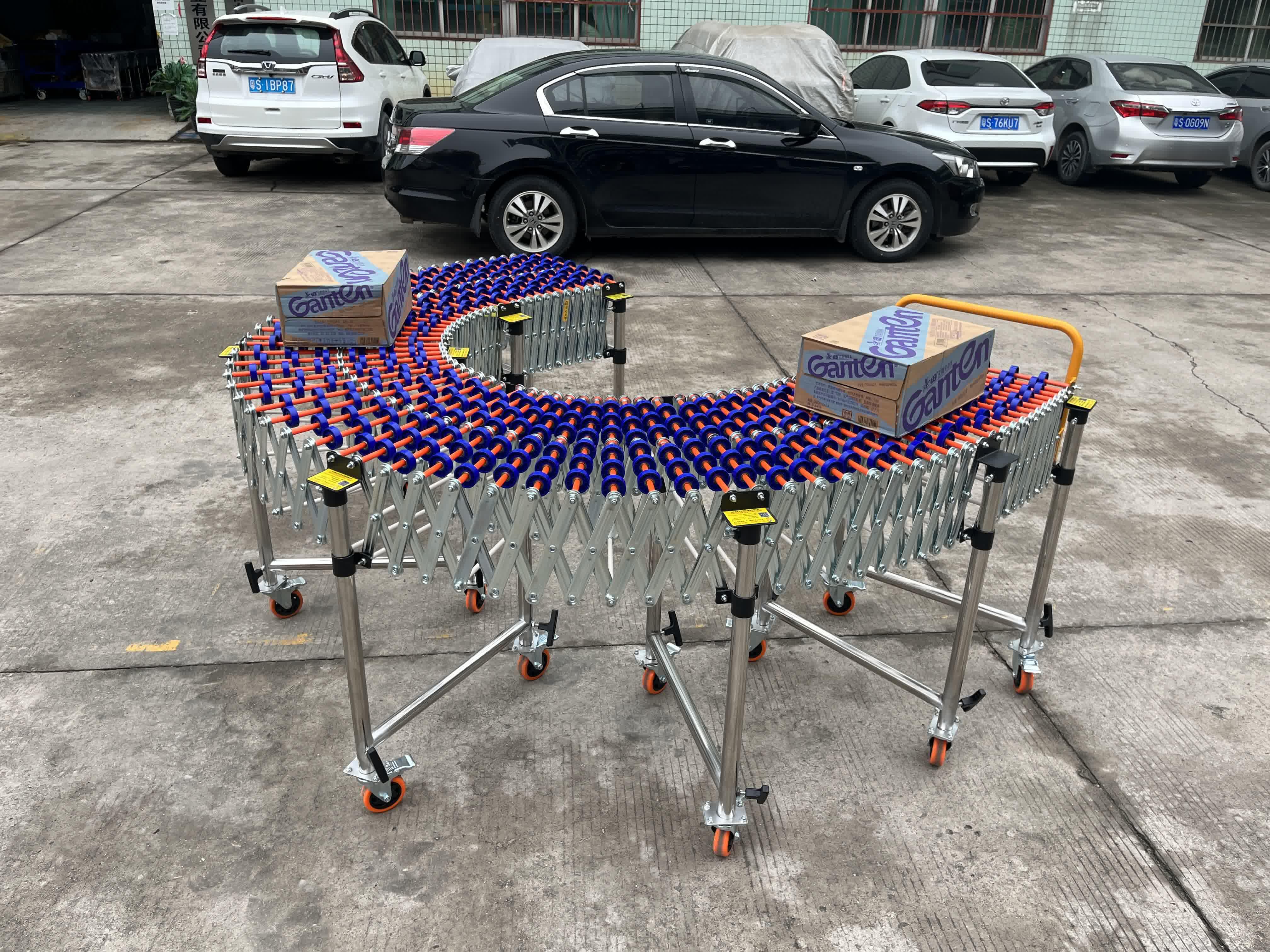
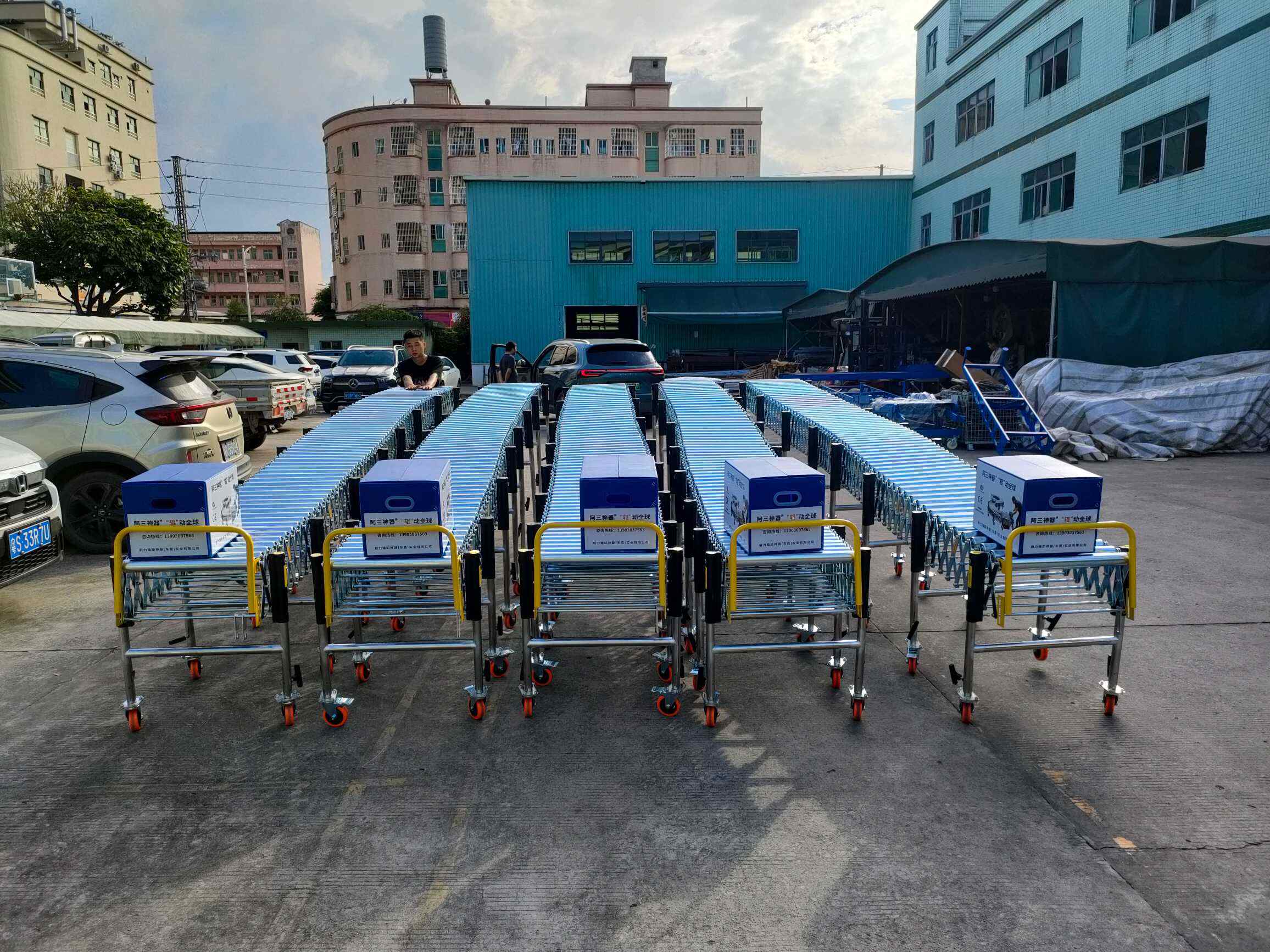
Loading goods into Gravity Skate Wheel Conveyor transport boxes
Applicable Cargo Types and Operating Suggestions
If the loading/unloading objects are primarily regular goods such as flat-bottomed cartons, light packages, and boxed beverages, and the site prioritizes rapid deployment, flexible mobility, and saving manual setup time, the Gravity Skate Wheel Conveyor is more suitable as a front-end section for truck unloading or a short-distance transition section. Its foldable, telescopic, and wheeled features are particularly suitable for temporary loading/unloading stations.
If the goods include bagged, barreled, heavy cartons, large-volume items, or products with irregular bottoms, it is more recommended to use roller conveyors to achieve better support and transport stability. For conditions requiring transverse transfer, inclined lifting, or connection to powered transport lines, the roller solution is generally easier to achieve integrated connection.
In practice, the two types of equipment can be used in combination: use the Gravity Skate Wheel Conveyor at the front end for quick connection to trucks, and use roller conveyors at the back end to handle heavy loads or continuous transport, balancing flexibility and efficiency. For relevant standard products, please refer to the following configurations:
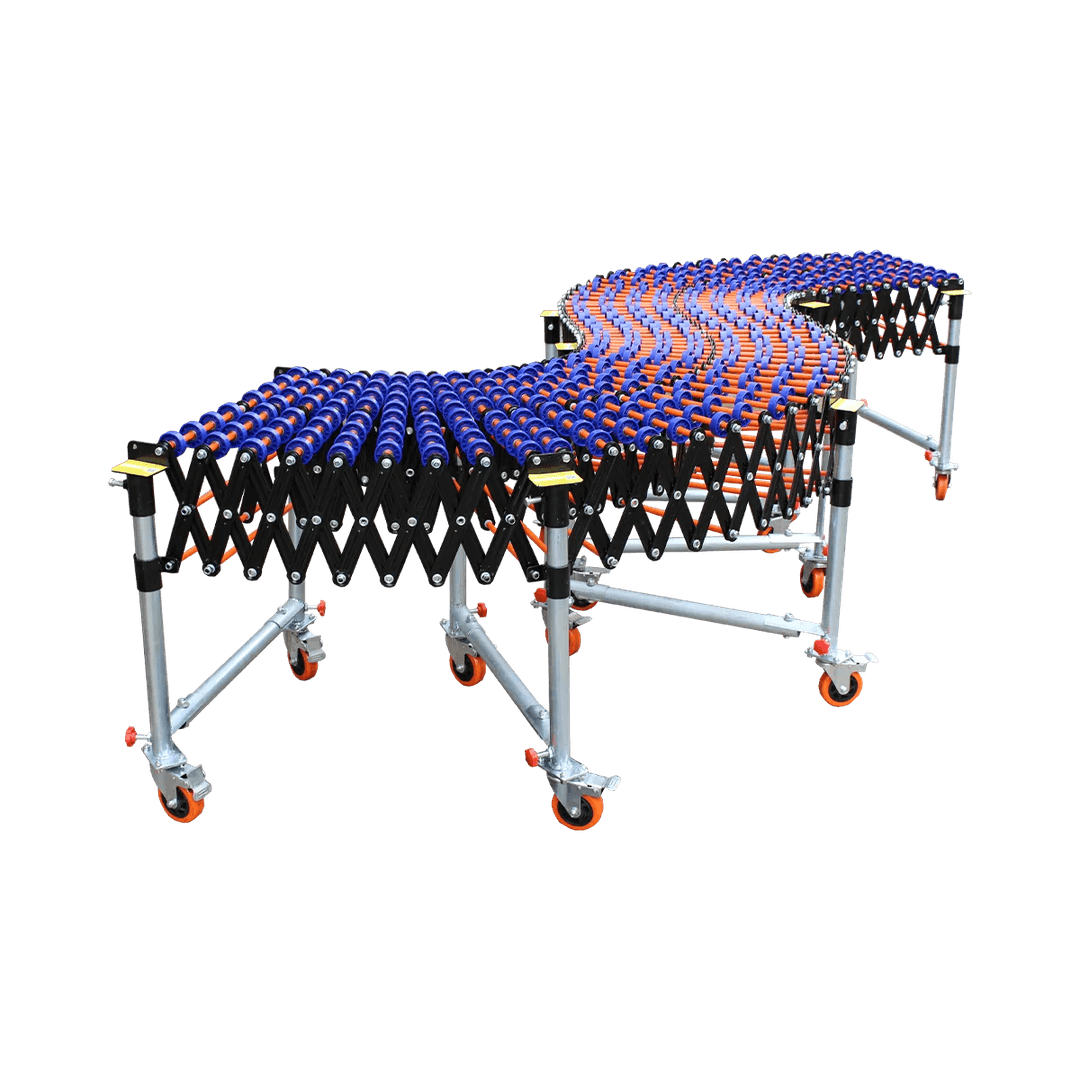
Schwerkraft-Skate-Radförderer
Der Gravity Skate-Radförderer wurde speziell für Güter mit flachem Boden wie Kartons entwickelt und ermöglicht so schnelle und effiziente Entladevorgänge. Der Förderer…

Karton
Selection Reminders and Cost Differences
From an investment perspective, the Gravity Skate Wheel Conveyor typically has lower initial procurement and subsequent maintenance costs due to its simple structure and light weight, making it suitable for light-load, short-distance, non-continuous loading and unloading operations. For sites with limited budgets and frequent workstation changes, this solution is often more advantageous.
Although the overall investment for roller conveyors is usually higher, they have advantages in the 80–100 kg/m load range, continuous operation capability, and stable transport on inclined sections, making them more suitable for loading/unloading sites with larger loads, faster cycles, or those requiring power upgrades. When selecting, key factors to evaluate include the condition of the goods’ bottom, load per unit length, site flow lines, anti-slip requirements, and whether subsequent connection to a power system is needed.
If the site handles both light and heavy goods, consider setting up roller transition sections or buffer sections at key positions to improve space utilization and reduce overall modification pressure. See further reading: Gravity Skate Wheel Conveyor connecting to truck unloading.