Peak Season and Box Size Challenges in Toy Warehousing and Distribution Conveying
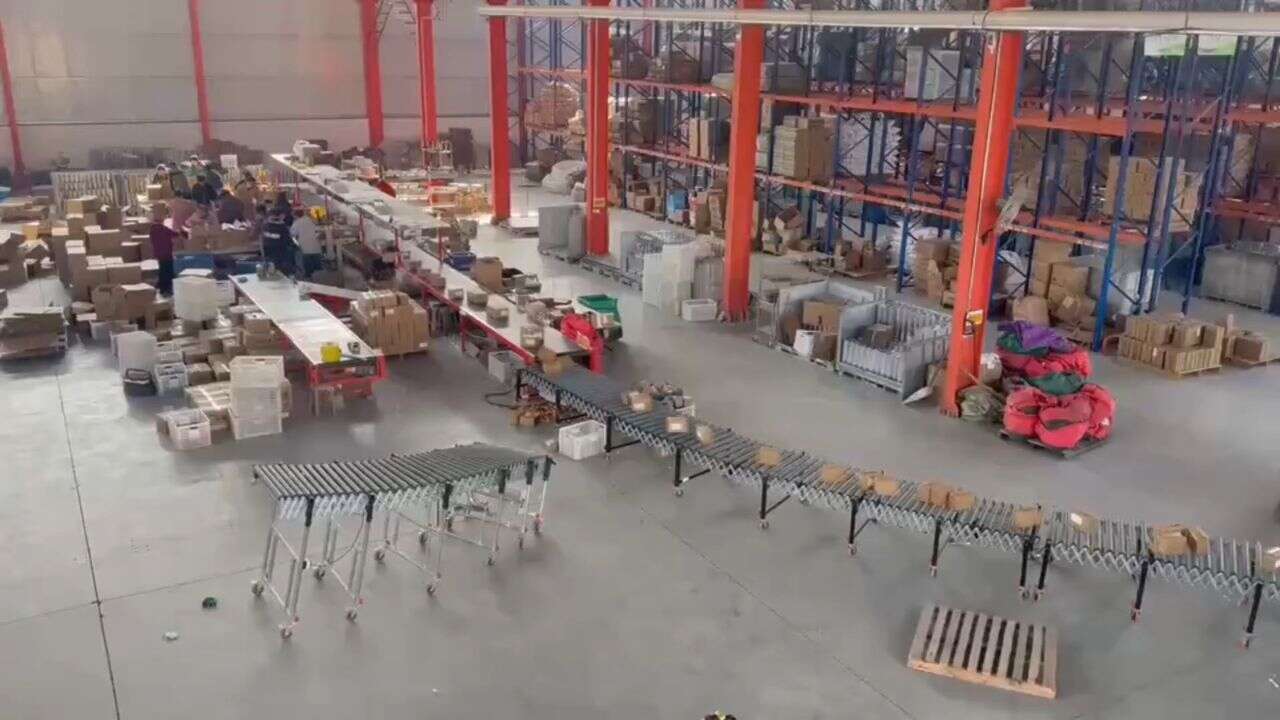
In peak-season sorting for toy and games warehousing and distribution, the handling capacity often needs to be maxed out in a short time, while also dealing with on-site changes such as increased temporary labor and frequent adjustments to aisles and workstations. For many teams, the real challenge is not just increasing throughput, but how to go live and reconfigure quickly without significantly expanding fixed production lines.
Differences in packaging sizes for toy and games products also magnify conveying difficulty: from small boxed collectibles and figurines, to board game boxes that are flat but vary greatly in footprint, and then to plush toys that are bulky yet lightweight and irregularly shaped. Different box sizes place different requirements on conveying surface support, cornering passability, and sorting/diversion methods, meaning that a fixed conveyor line optimized for one type of box may become inefficient or unsuitable for another type of cargo.
Under such strong seasonal fluctuations, fixed and permanently installed conveying systems can easily face the contradiction of being idle in the off-season and insufficient in the peak season, making it difficult to balance investment and utilization.
Gravity Skate Wheel Conveyor Peak-Season Sorting with Expandability and Rapid Setup
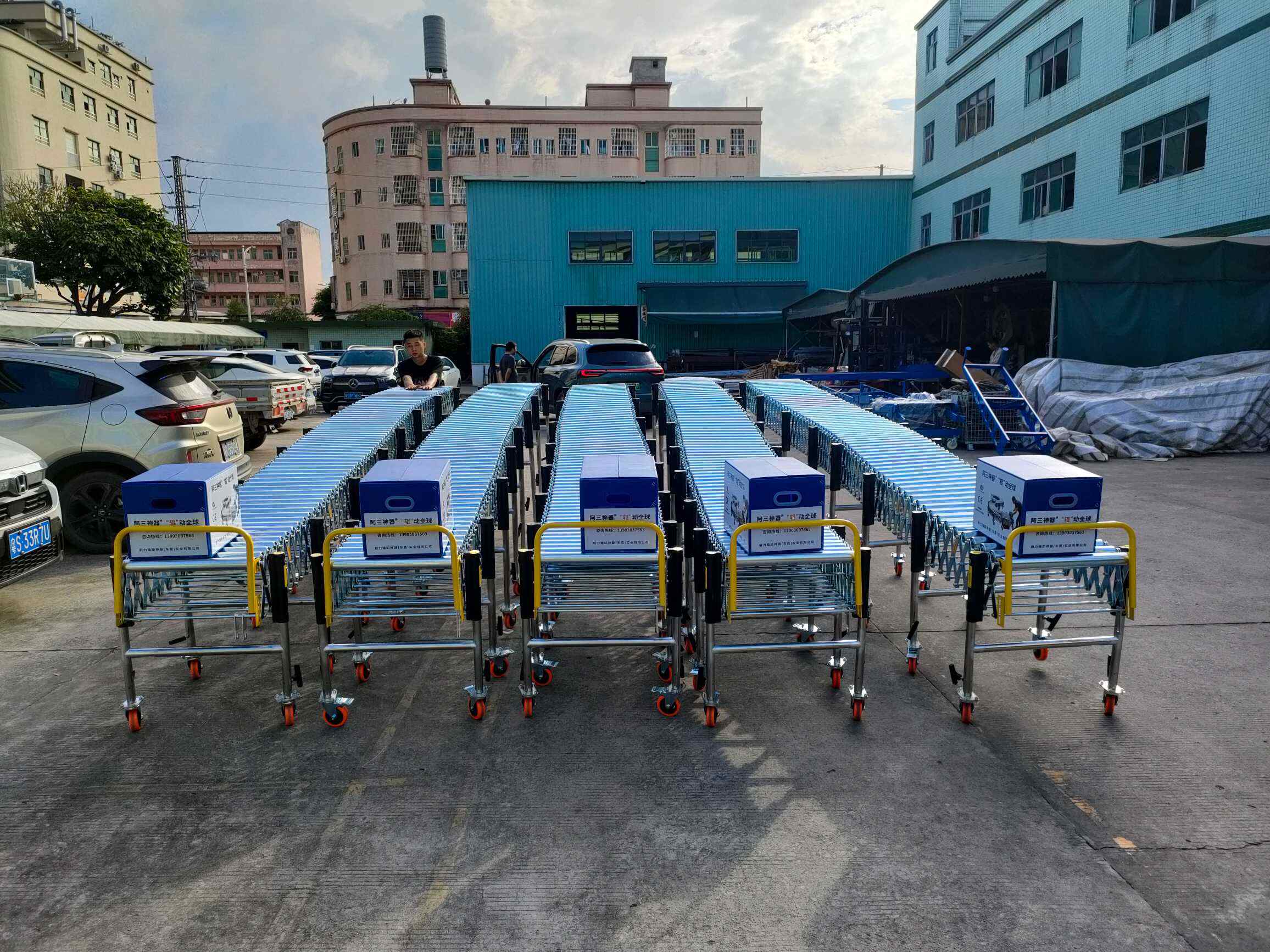
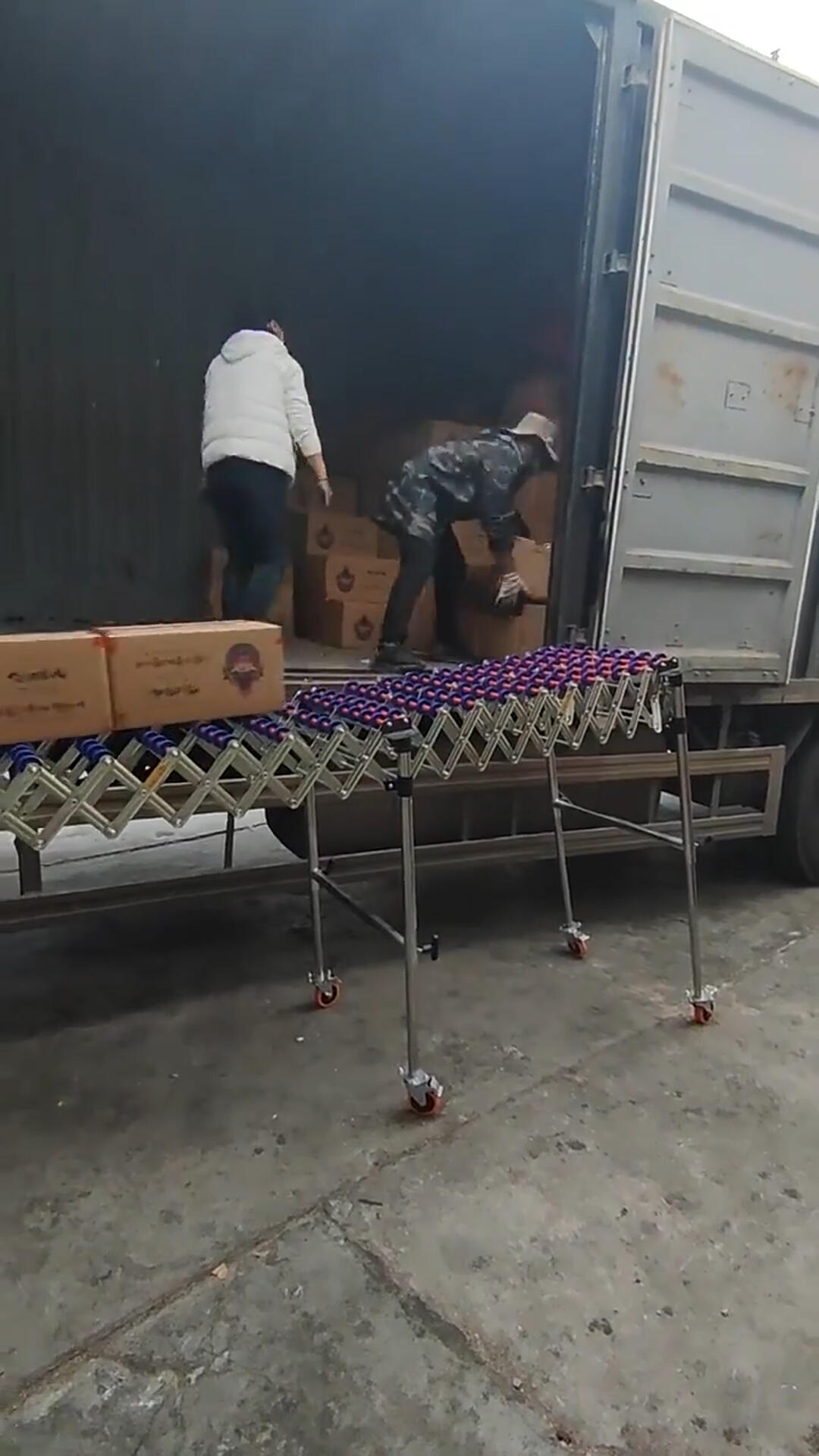
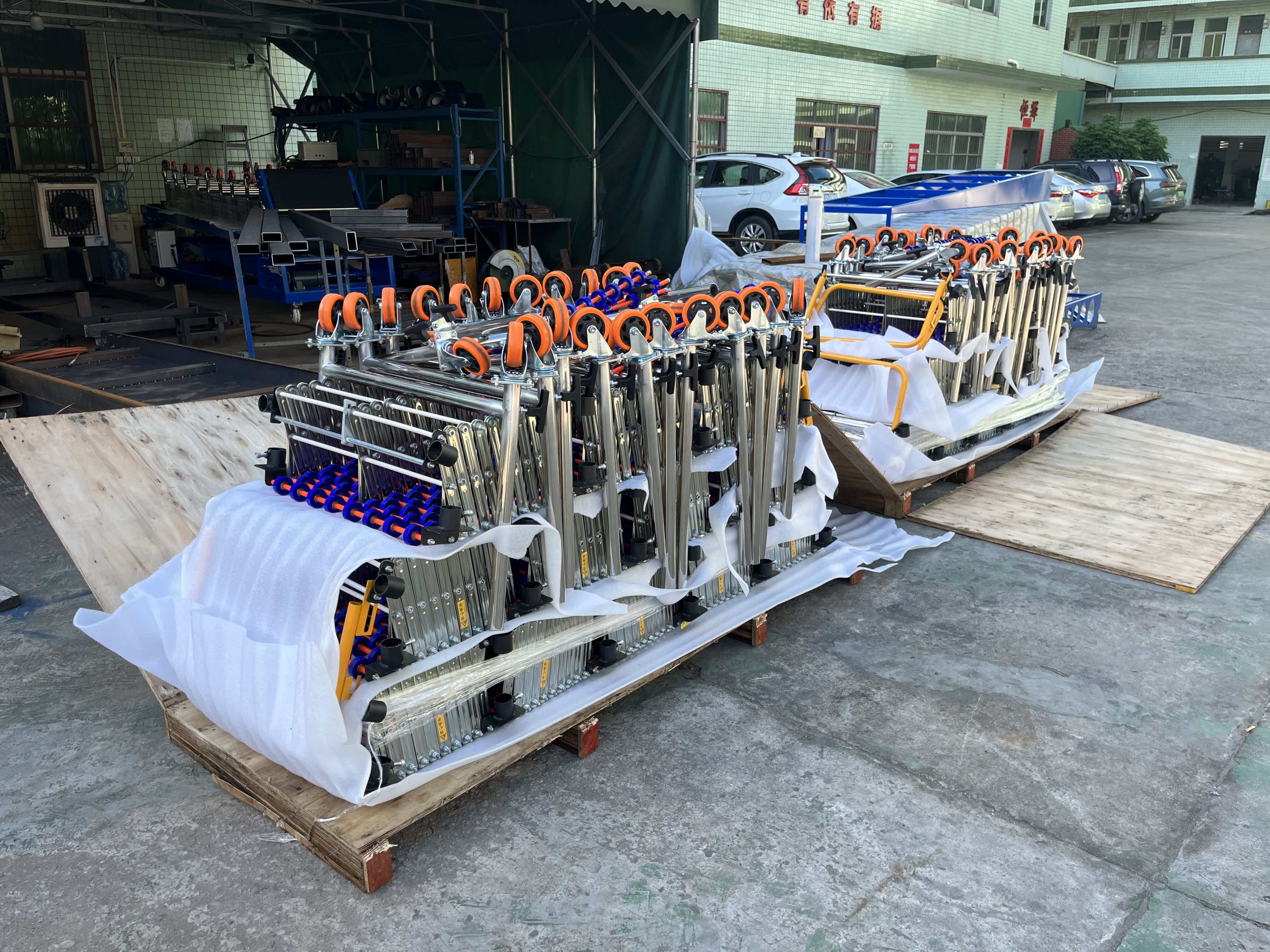
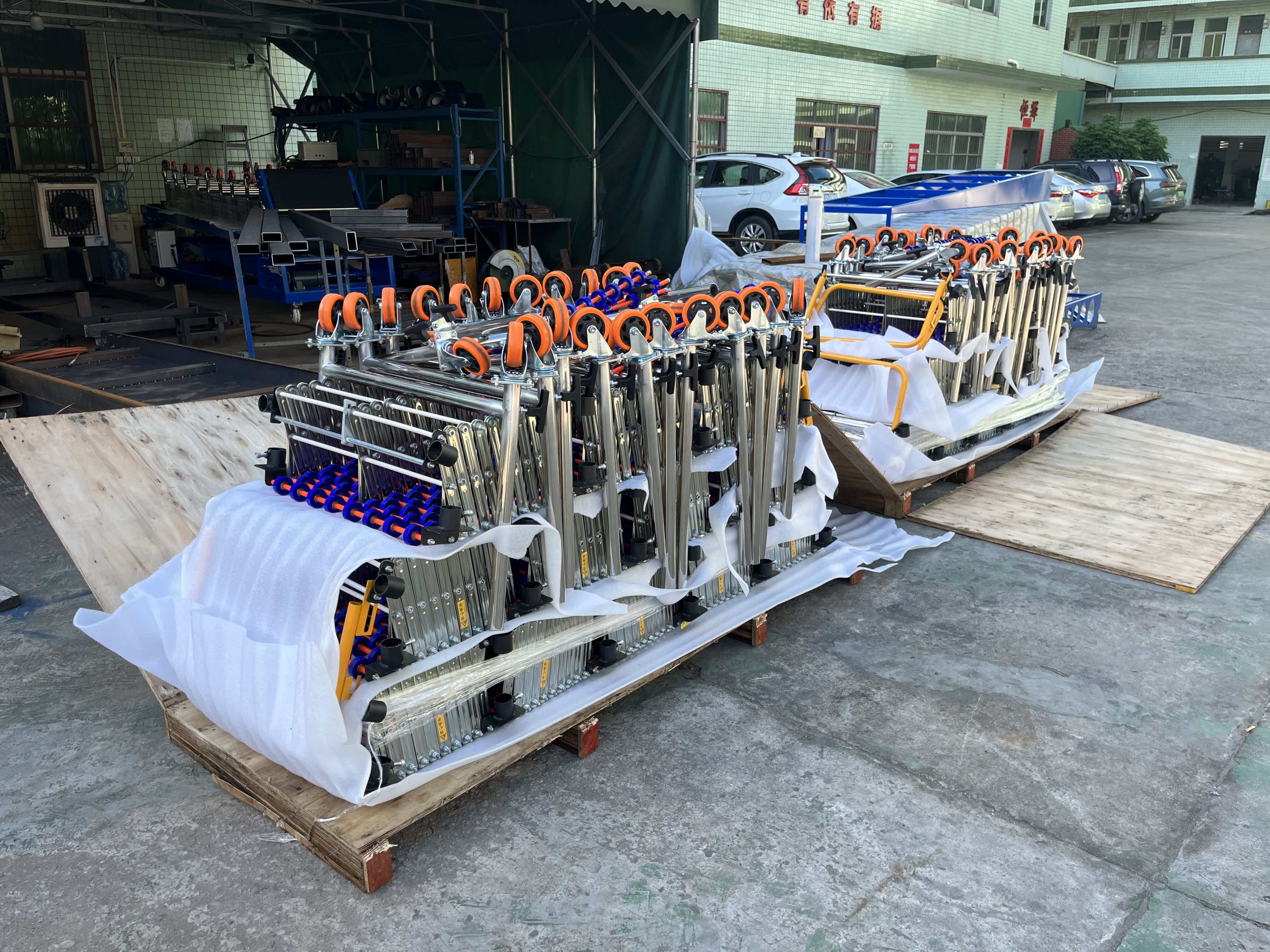
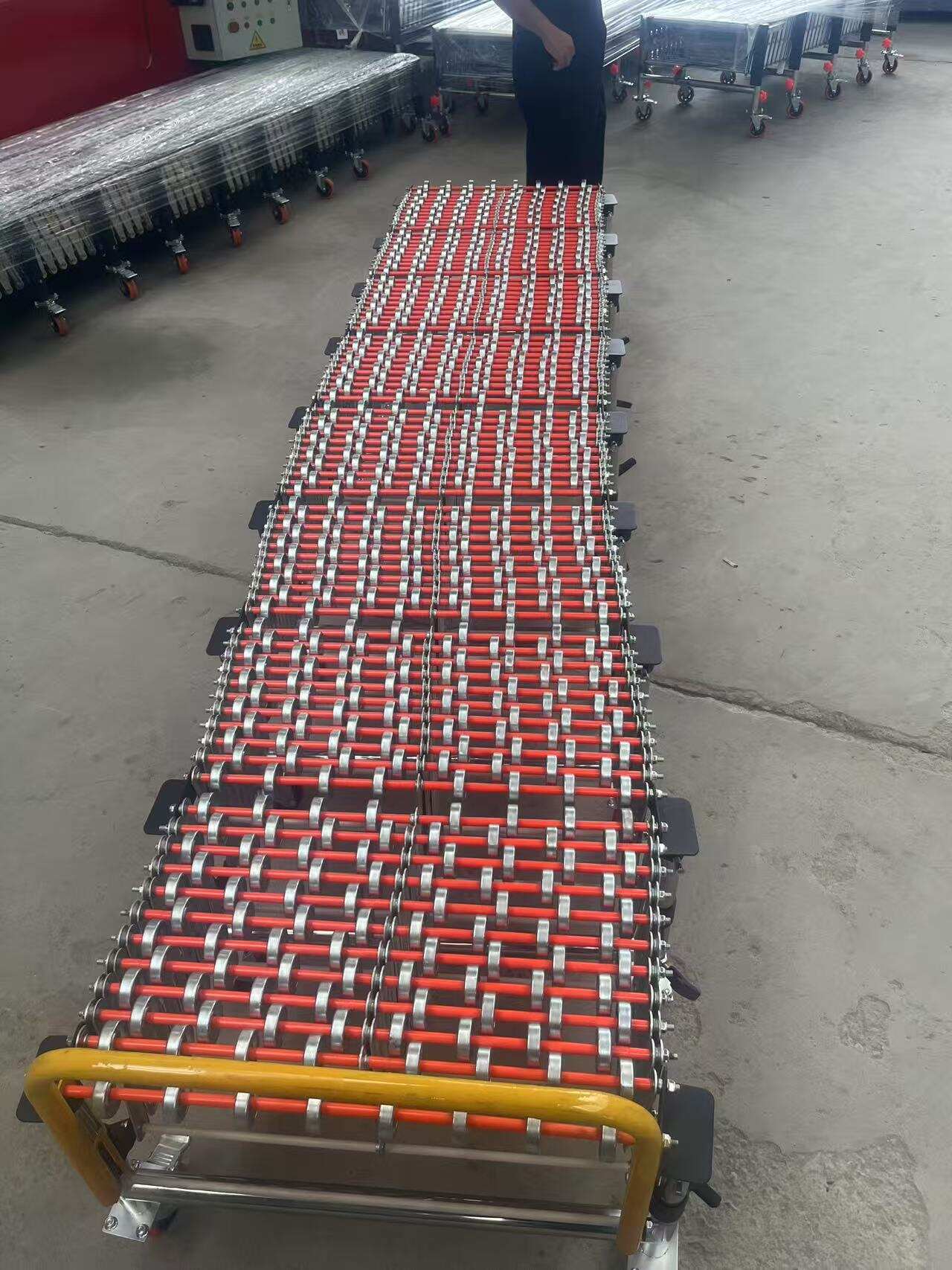
To support rapid peak-season expansion while also being able to scale down in the off-season, a gravity skate wheel telescopic conveyor is a choice that fits the pace of on-site operations better. Its core logic is: extend the conveyor sections when a longer reach is needed, and retract them when not in use, so that capacity can be built into movable and reconfigurable modules as much as possible.
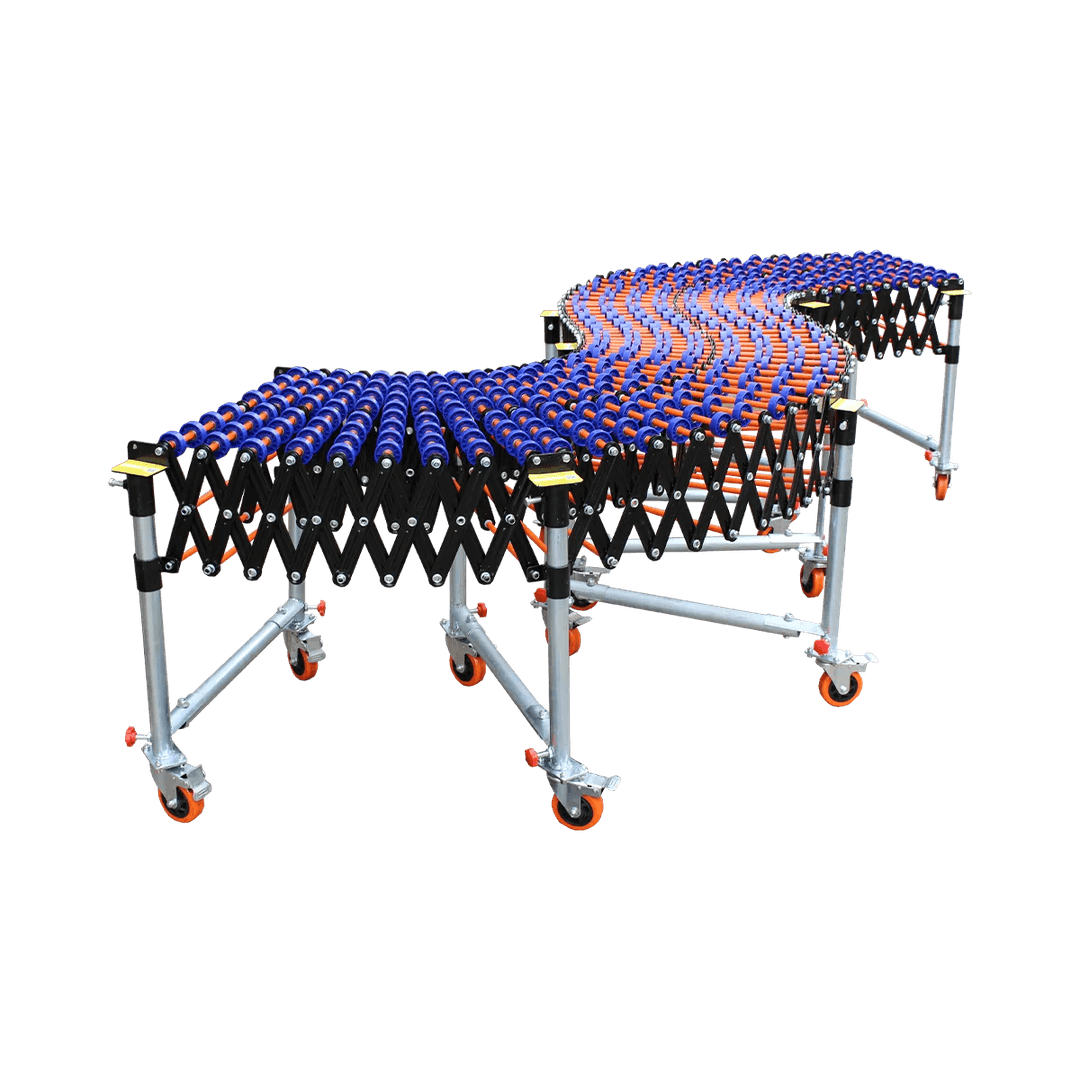
Schwerkraft-Skate-Radförderer
Der Gravity Skate-Radförderer wurde speziell für Güter mit flachem Boden wie Kartons entwickelt und ermöglicht so schnelle und effiziente Entladevorgänge. Der Förderer…

Karton
Based on the typical needs of toy warehousing and distribution, such a solution usually brings several direct benefits:
- Extension ratio 1: 5: the conveyor section can switch quickly between a shorter retracted length and a longer working length, making it convenient for temporary workstation expansion, cross-aisle connection, or increasing the sorting radius.
- Unpowered operation: relies on gravity or manual pushing, requiring no electrical connection or control system, which saves steps when making temporary line changes or temporary capacity expansions during peak season.
- Easy to move and store: after use, it can be retracted and stored, reducing floor space in the off-season; when needed, it can be pulled out again for deployment, reducing the time the equipment is on site but not working.
- Add or remove sections as needed: configuration can be increased step by step in conveyor-section units, making it more suitable for phased investment as business fluctuates.
On-site usage points: layout, turns, and temporary sorting lines
Using a skate wheel telescopic conveyor well depends on turning the advantages of "quick setup, routable layout, and diversion capability" into actual actions and arrangement.
Quick setup and teardown
The value of a temporary peak-season line comes from deployment speed and reuse efficiency. On site, it can usually be organized according to the following approach:
- Tool-free connection: conveyor sections are quickly joined with mechanical connectors, making it easy to extend or shorten the line temporarily.
- The stand height is adjustable: By adjusting the leg height, the conveyor can connect smoothly with existing workbenches, staging areas, or packing tables.
- Caster movement and positioning: When a line change is needed, first move the unit into position, then lock the casters to ensure stable operation.
- Low training threshold: Temporary staff can master the basic methods of assembly, height adjustment, and positioning in a short time, reducing onboarding costs during peak seasons.
Optimize space with a turning layout
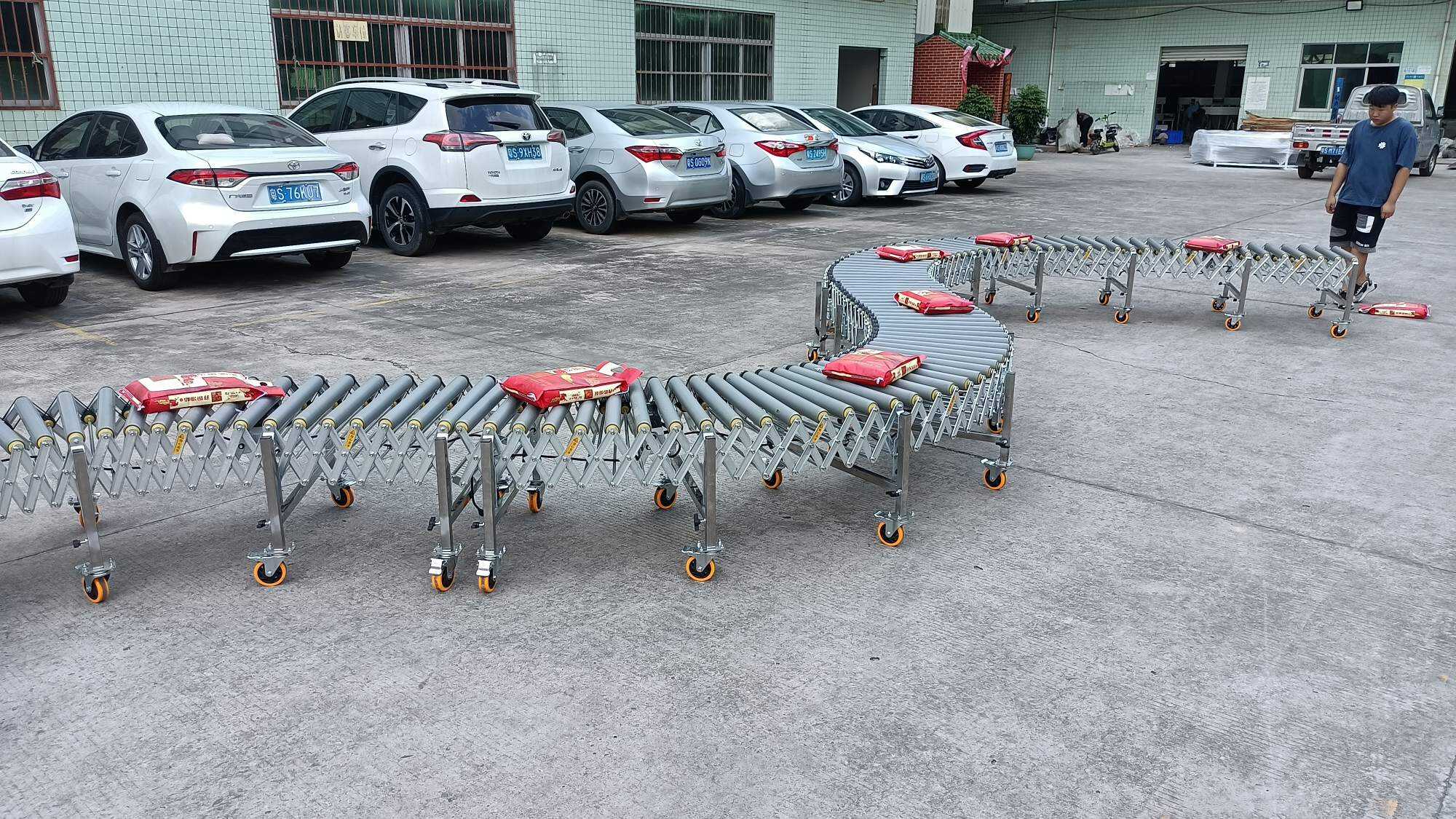
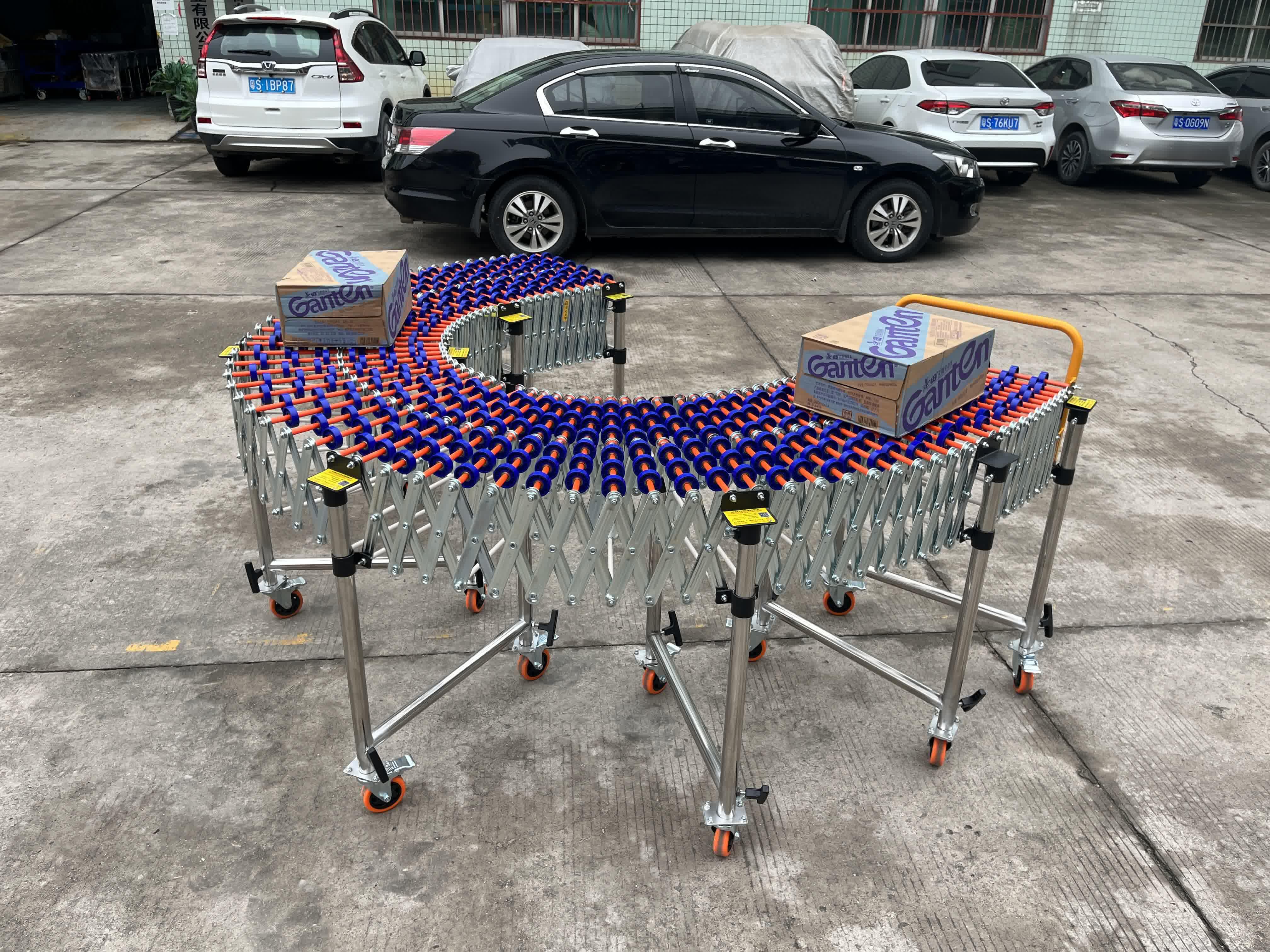
In a toy warehouse, temporary lines often need to avoid columns, rack ends, or existing equipment. By changing the angle, the skate wheel telescopic section can form a curved route, thereby:
- Running along the wall to free up space in the middle of the aisle;
- Making full use of corner areas;
- Creating branch lines where needed for more natural sorting and diversion.
Peak-season temporary sorting: central merge point + multiple branch lines
A common way to organize peak-season sorting is to set up a central merge point (or loading point), then branch out multiple lines in different directions to connect to different handling stations. The following setup logic can be used for reference:
- Mixed goods first enter the central merge point
- Use one main line to convey the goods to the diversion area
- Set up multiple sorting lines in the diversion area, each corresponding to a different product category or work team
- At the end of each branch line, connect to packing, verification, or exception-handling stations
- Set up receiving areas at points where throughput fluctuates, for temporary accumulation and peak shaving
The advantage of this structure is that when one line gets congested, the problem can be quickly relieved by adjusting the line length, adding parallel stations, or temporarily changing the diversion direction; after the peak season ends, it can also be dismantled and recovered quickly.
Return peaks and daily maintenance reminders
After the peak season, there is often pressure from handling returns. The "reconfigurability" of the skate wheel telescopic conveyor is also suitable for reverse logistics: convert the peak-season branch lines into return-processing lines, add inspection points and diversion points along the conveyor path, and direct the goods to different destinations such as warehouse return, repacking, or exception handling.
For daily use, it is recommended to pay attention to three key details:
- Preventing small items from falling: For small boxed toys, use turnover boxes or tote bins whenever possible; or place a backing board or thin cardboard at the bottom of the box so the load is distributed across more skate wheels, reducing the risk of jamming and falling.
- Control the slope and pushing method: Gravity conveying usually relies on a slight slope to enable flow; at the connection between straight and curved sections, avoid collisions caused by moving too fast.
- Seasonal inspection and cleaning: Before each deployment, check whether the skate wheels rotate smoothly and whether the connection points are secure; after use at the end of the season, clean the equipment before storing it to reduce the impact of dust buildup on the next rapid deployment.
Weiterführende Literatur:
Gravity Skate Wheel Conveyor temporary loading and unloading