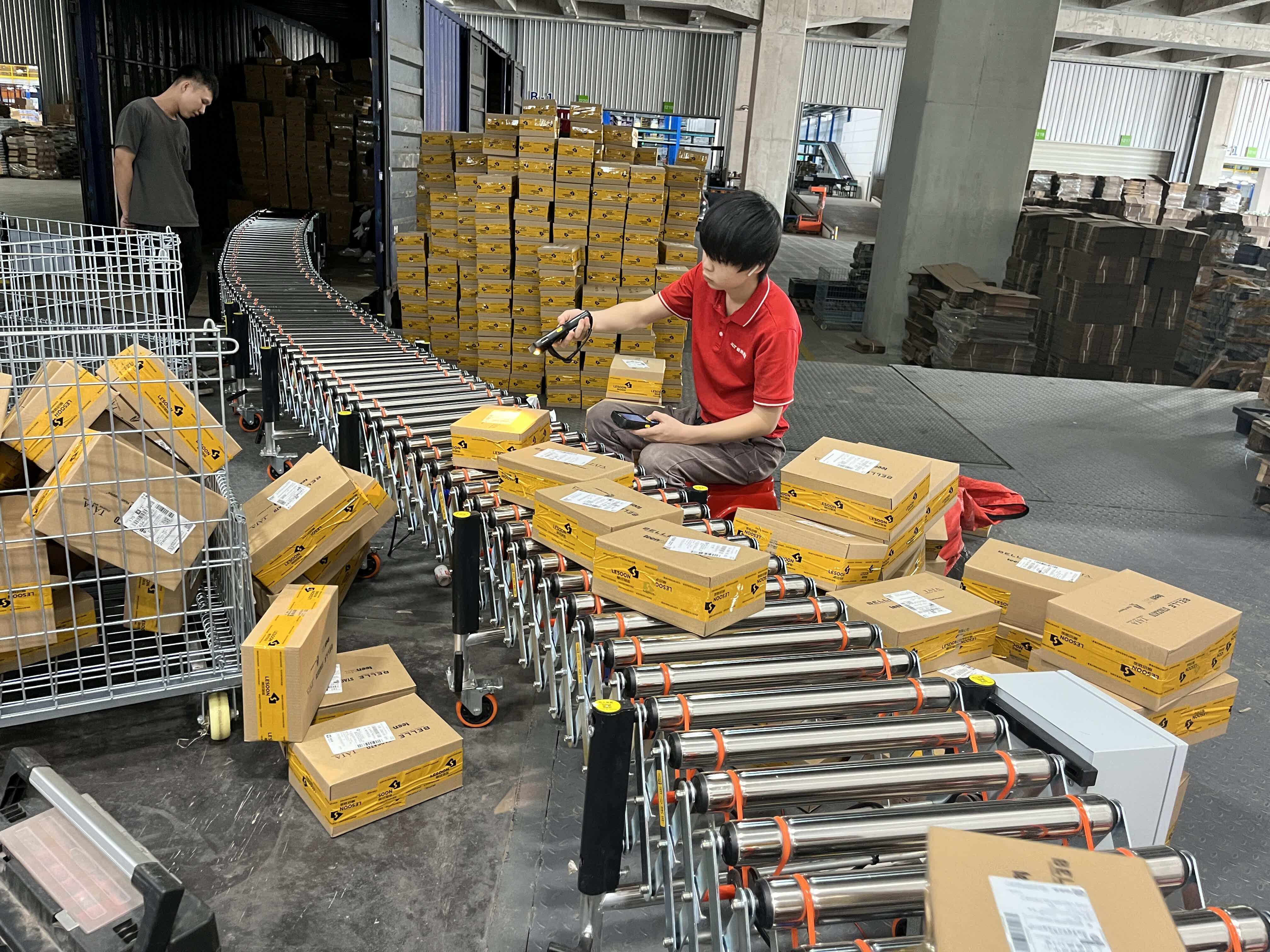
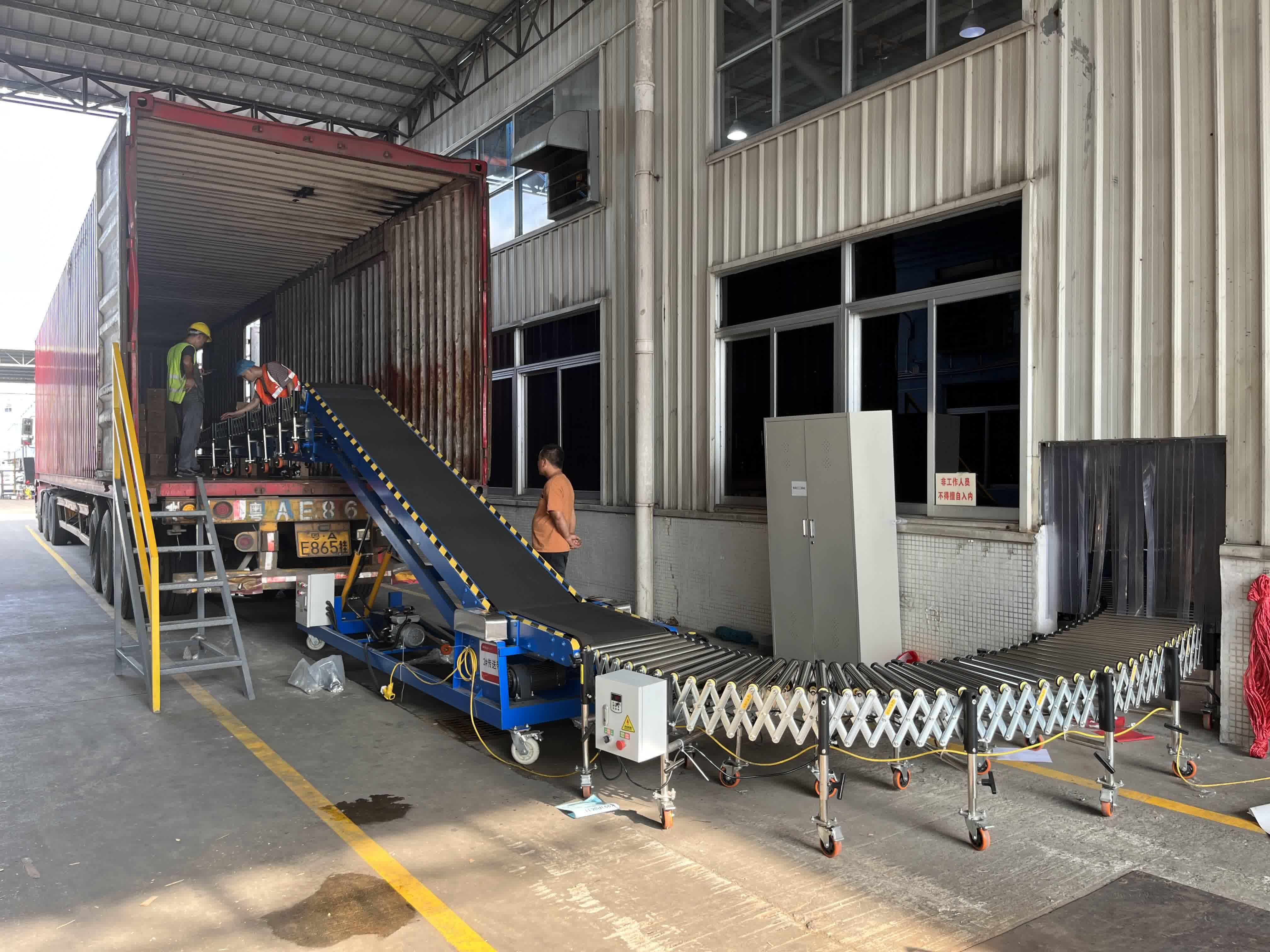
In fertilizer storage and logistics, unloading bagged fertilizer is often labor-intensive and inefficient. Traditional manual-only operations are not only time-consuming and strenuous, but also involve certain safety risks. To address this issue, a fertilizer warehouse introduced a mechanized unloading system composed of a rubber-covered Multi-Wedge Belt Powered Roller Conveyor and a medium-duty climbing conveyor. After unloading goods from the flatbed truck, the system smoothly conveys them into the warehouse through the conveyor line and uses the climbing conveyor to lift the goods to the appropriate height, greatly facilitating subsequent stacking operations.
Unloading Process and Equipment Configuration
The entire unloading process is clear and efficient. After the fully loaded flatbed truck carrying bagged fertilizer arrives at the warehouse, workers first push the goods from the edge of the truck body onto a specially designed anti-impact platform. This platform is actually a short-distance Gravity Roller Conveyor, with spring buffer devices installed beneath the rollers, which can effectively absorb the impact when the goods drop and protect both the conveying equipment and the packaging of the goods.
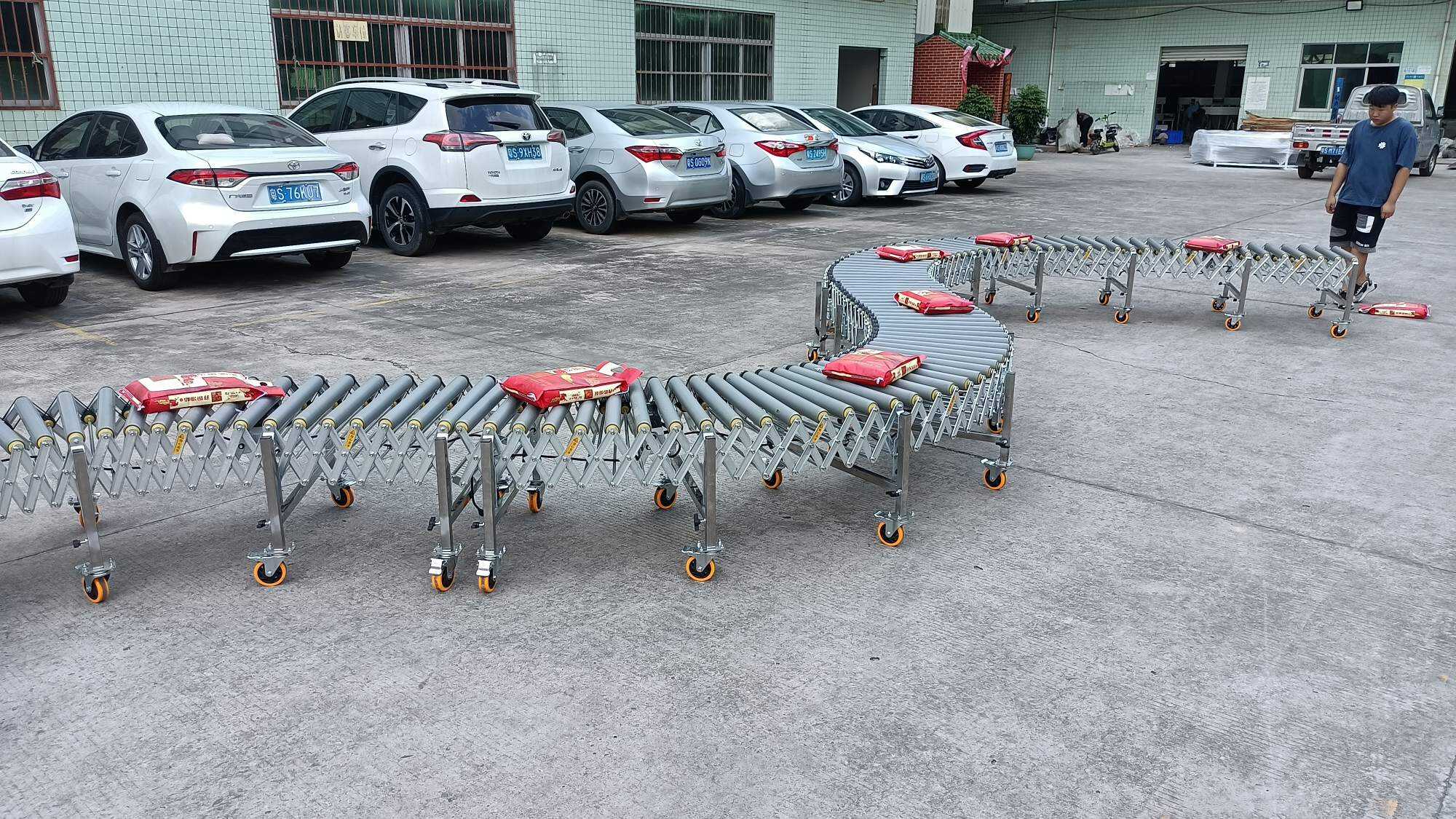
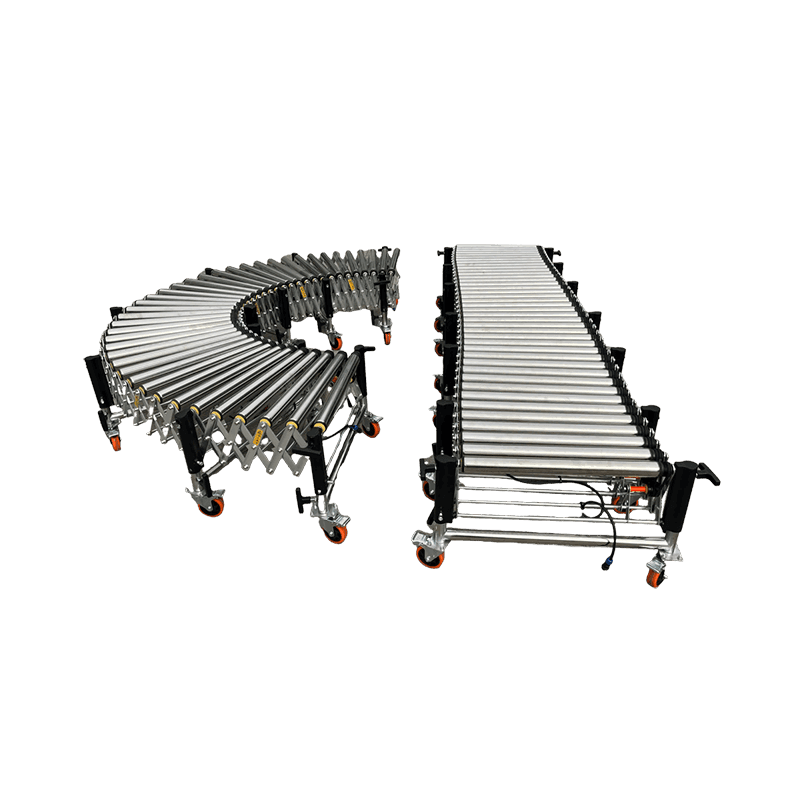
After being buffered, the goods then enter the main conveyor line— Rubber-covered Multi-Wedge Belt Powered Roller Conveyor. The rubber-coated roller surface provides ample friction, enabling stable conveyance of bagged fertilizer and preventing slipping. The power system drives the rollers to rotate at a constant speed, continuously conveying the goods deeper into the warehouse.
Core Equipment: Rubber-covered Multi-Wedge Belt Powered Roller Conveyor
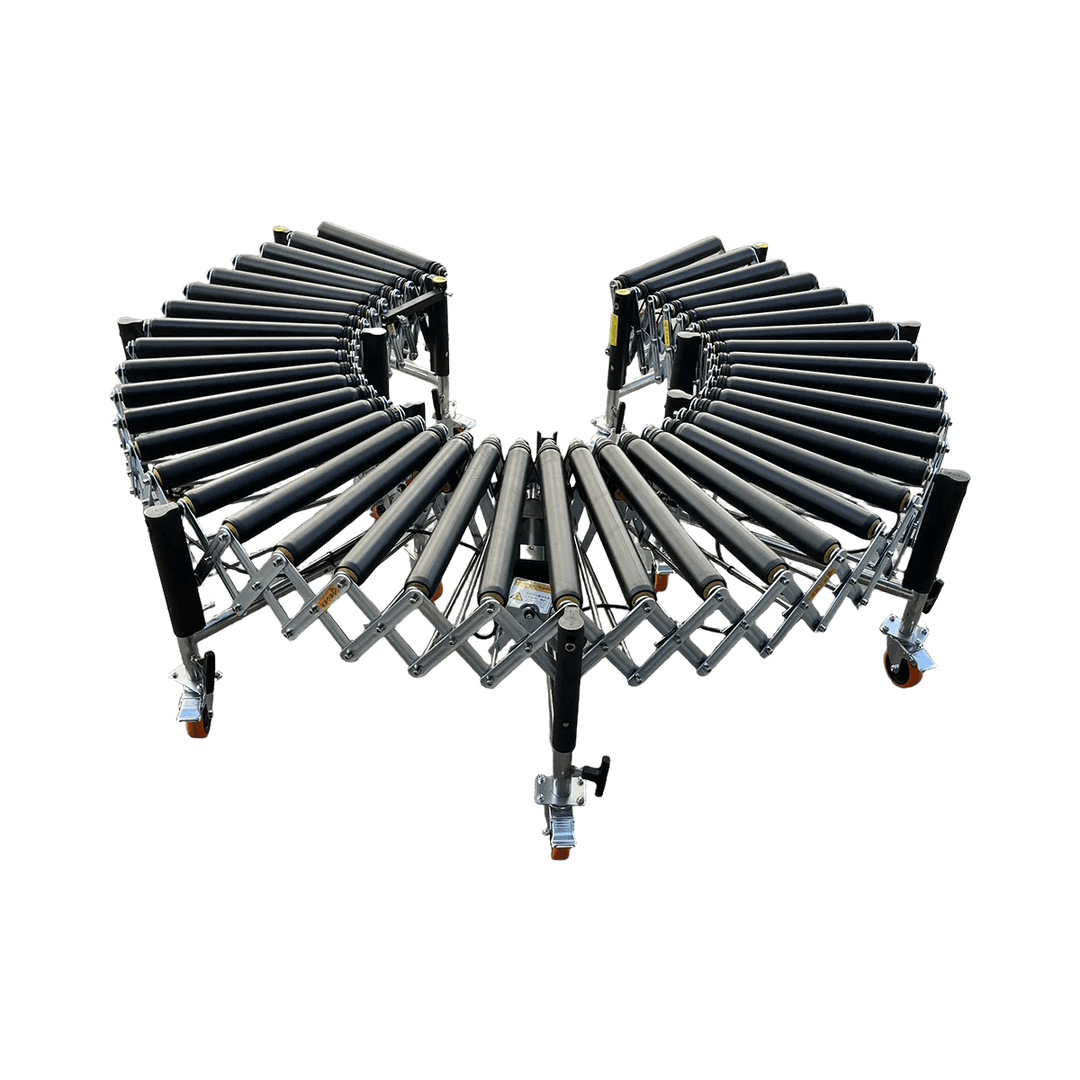
Gummibeschichtetes Rollenförderband mit Mehrkeilriemenantrieb
The multi-wedge-belt Powered Rubber-Covered Roller Conveyor is specifically designed for the smooth conveying of bagged goods. It uses multi-wedge-bel...
 Metallfass
 Kunststofffass
 Rolle
Rolle
 Karton
 Verpackt
In this case, the rubber-covered Multi-Wedge Belt Powered Roller Conveyor is the core equipment responsible for horizontal conveying. The rubber coating on the roller surface is a key design feature, significantly increasing the coefficient of friction with the woven bags used for bagged fertilizer packaging. This makes the conveying process very smooth; even if the bagged goods are slightly tilted or not placed evenly, they can still be reliably conveyed forward, avoiding the problem of goods spinning in place on the rollers or failing to move forward. The multi-wedge belt transmission runs smoothly and with low noise, making it ideal for warehouse environments that require long hours of continuous operation.
End Lifting: The Role of the Medium-Duty Climbing Conveyor
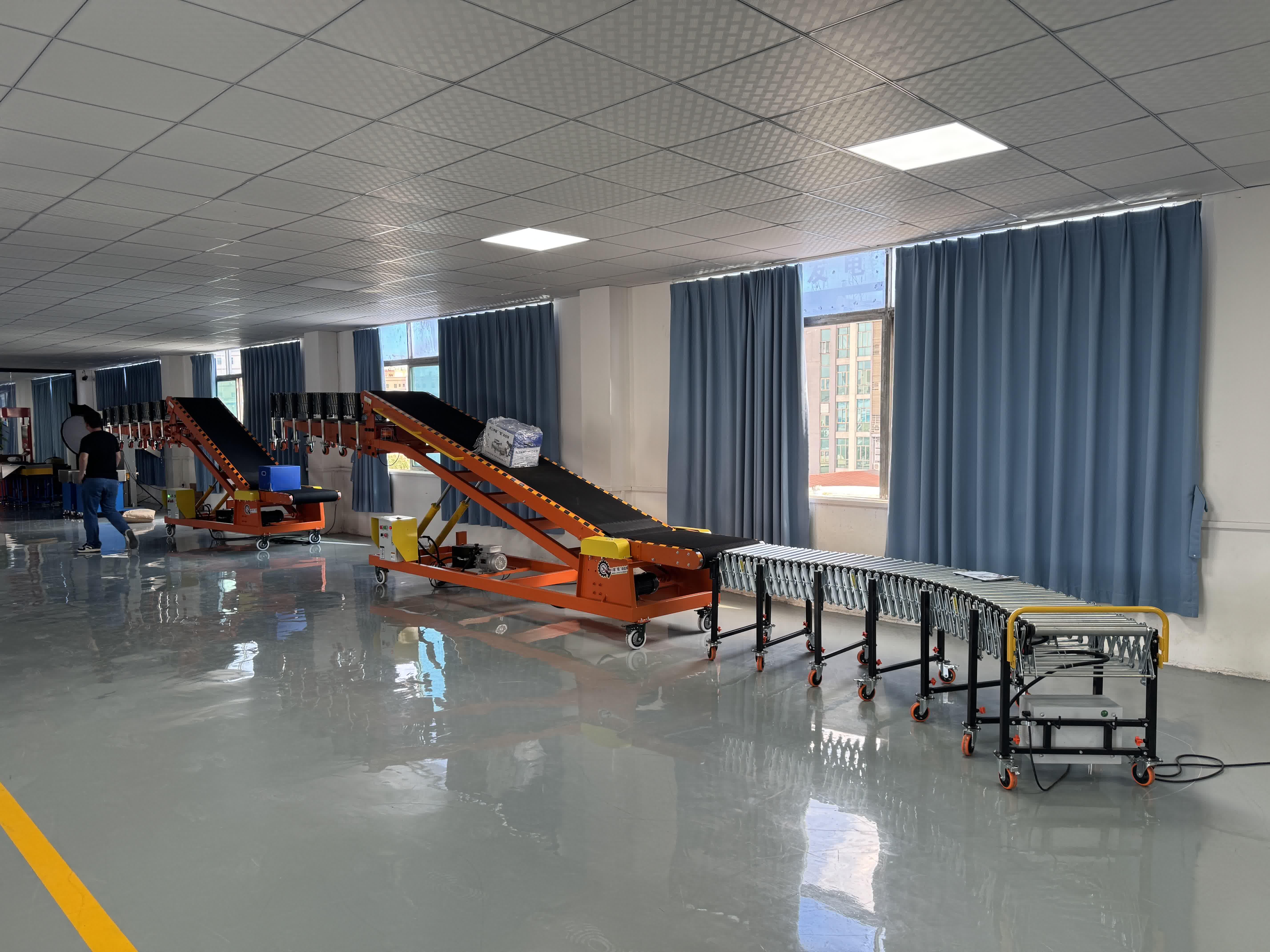
At the end of the conveyor line is a medium-duty incline conveyor. Its function is to lift bagged fertilizer delivered from the horizontal conveyor line to a height suitable for workers to stand and stack. The incline angle is adjustable, and the conveying surface connects seamlessly with the horizontal roller conveyor. When the goods are delivered to the bottom of the incline conveyor, they are carried by its powered belt and conveyed upward.
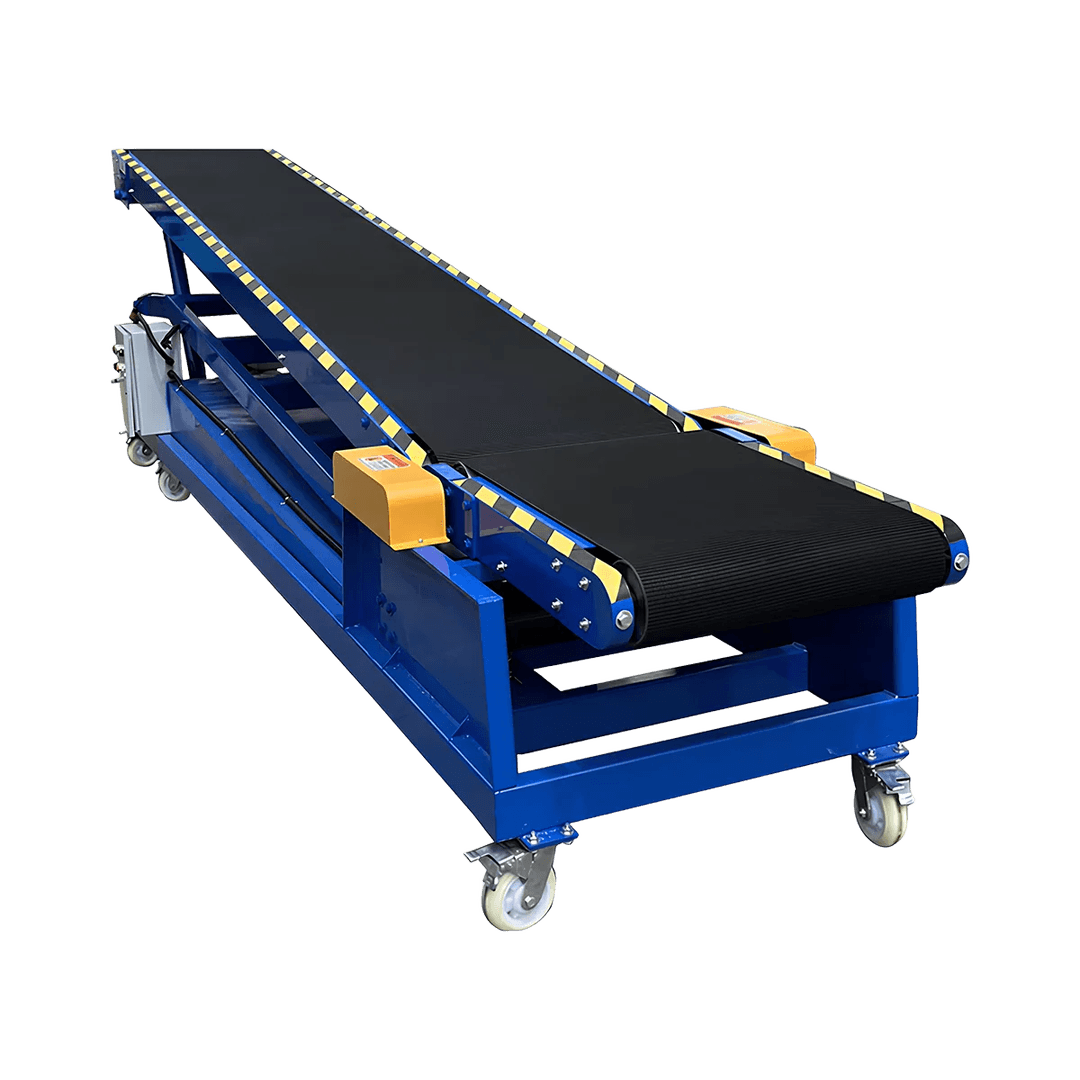
Mittlerer Hydraulikförderer
Medium Hydraulic Conveyor is specially designed for sites without loading and unloading platforms and is suitable for trucks under 40 ft. The hydrauli...
Metallfass
Kunststofffass
Rolle
Karton
Verpackt
After being lifted to the top, the goods are just at a comfortable working height above the workers' waist. Workers do not need to bend over or lift heavy fertilizer bags from a low position with effort; they only need to receive the goods at the end of the conveyor and turn around to stack them neatly onto pallets or shelves. This design completely changes the traditional labor-intensive mode in which workers repeatedly bend and carry items, greatly reducing labor intensity and improving stacking efficiency and operational safety.
Solution Advantages and Application Scenarios
This combined solution of "anti-crush buffer platform + rubber-covered roller horizontal conveying + incline conveyor end lifting" provides an efficient, labor-saving unloading solution for heavy, uniformly packaged goods such as bagged fertilizer. It is not only suitable for fertilizer warehouses, but also widely applicable to warehousing and logistics scenarios for similar bagged goods such as feed, grain, and chemical raw materials.
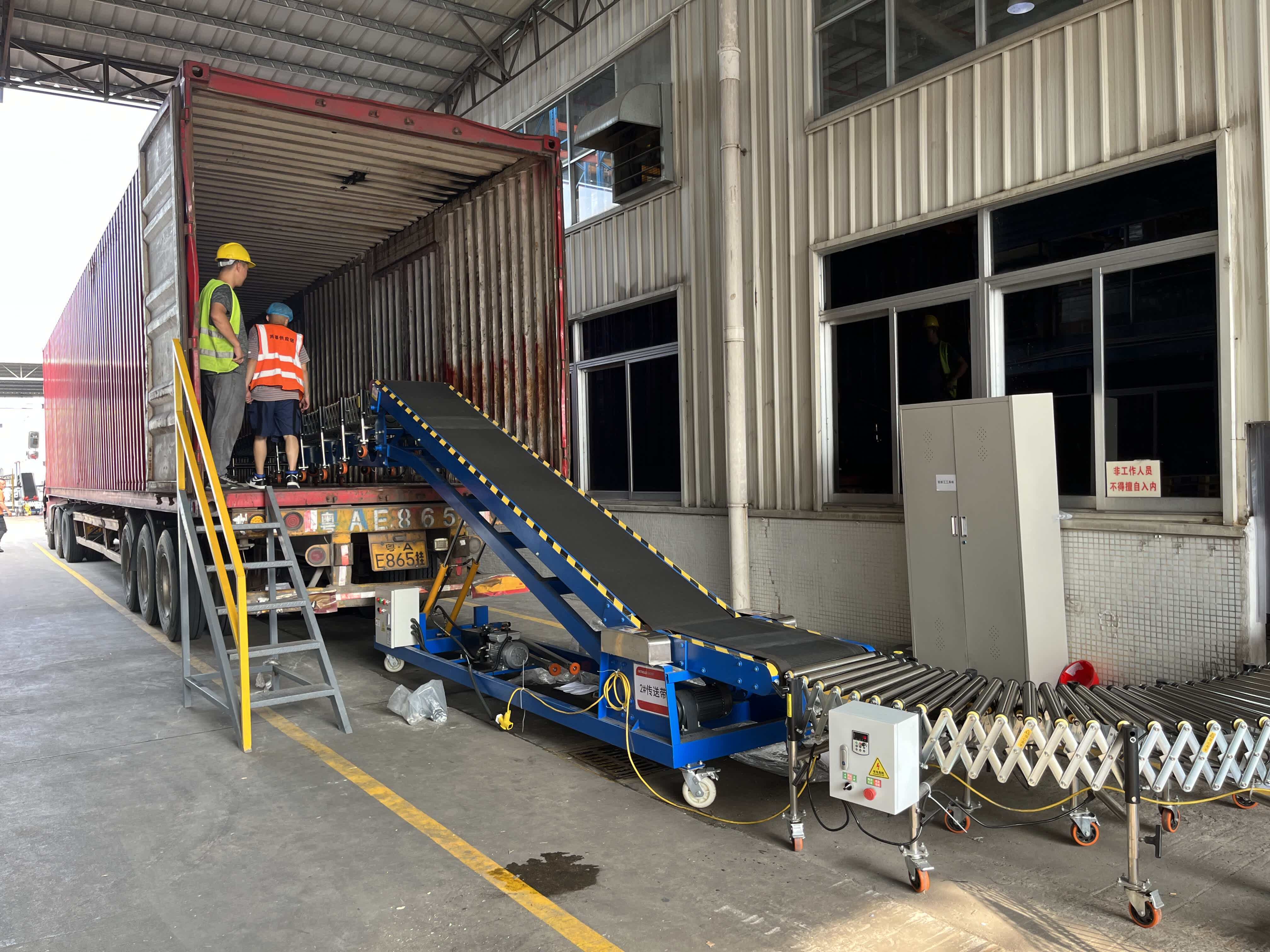
The advantage of the system lies in its modular design, which can be flexibly configured according to the height difference between the warehouse platform and the truck bed, the conveying distance, and the internal layout of the warehouse. All equipment can be deployed and moved quickly without complicated installation, enabling a rapid mechanized transformation of loading and unloading operations. It is an ideal choice for improving the loading and unloading efficiency of traditional warehouses and reducing labor costs.