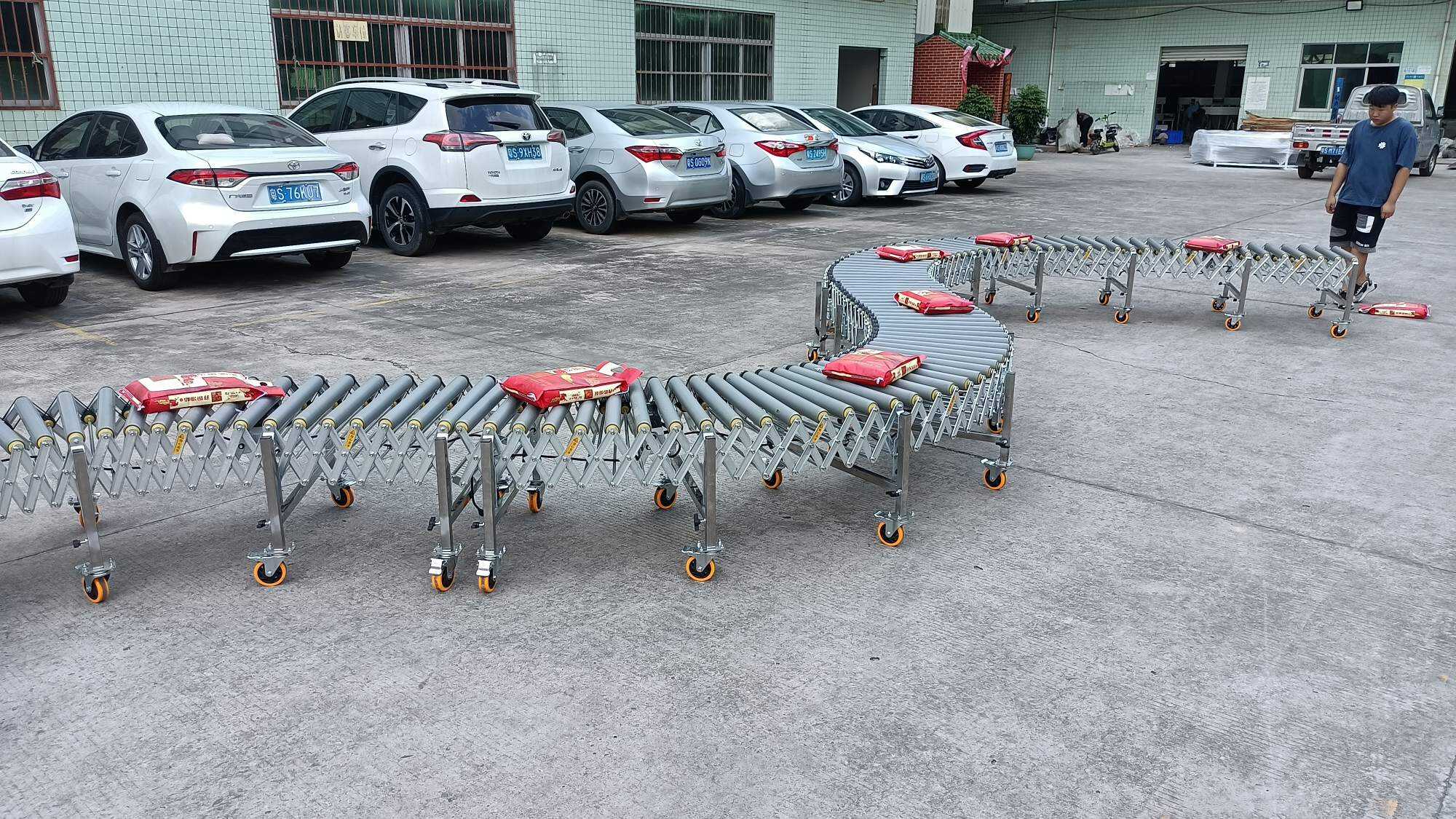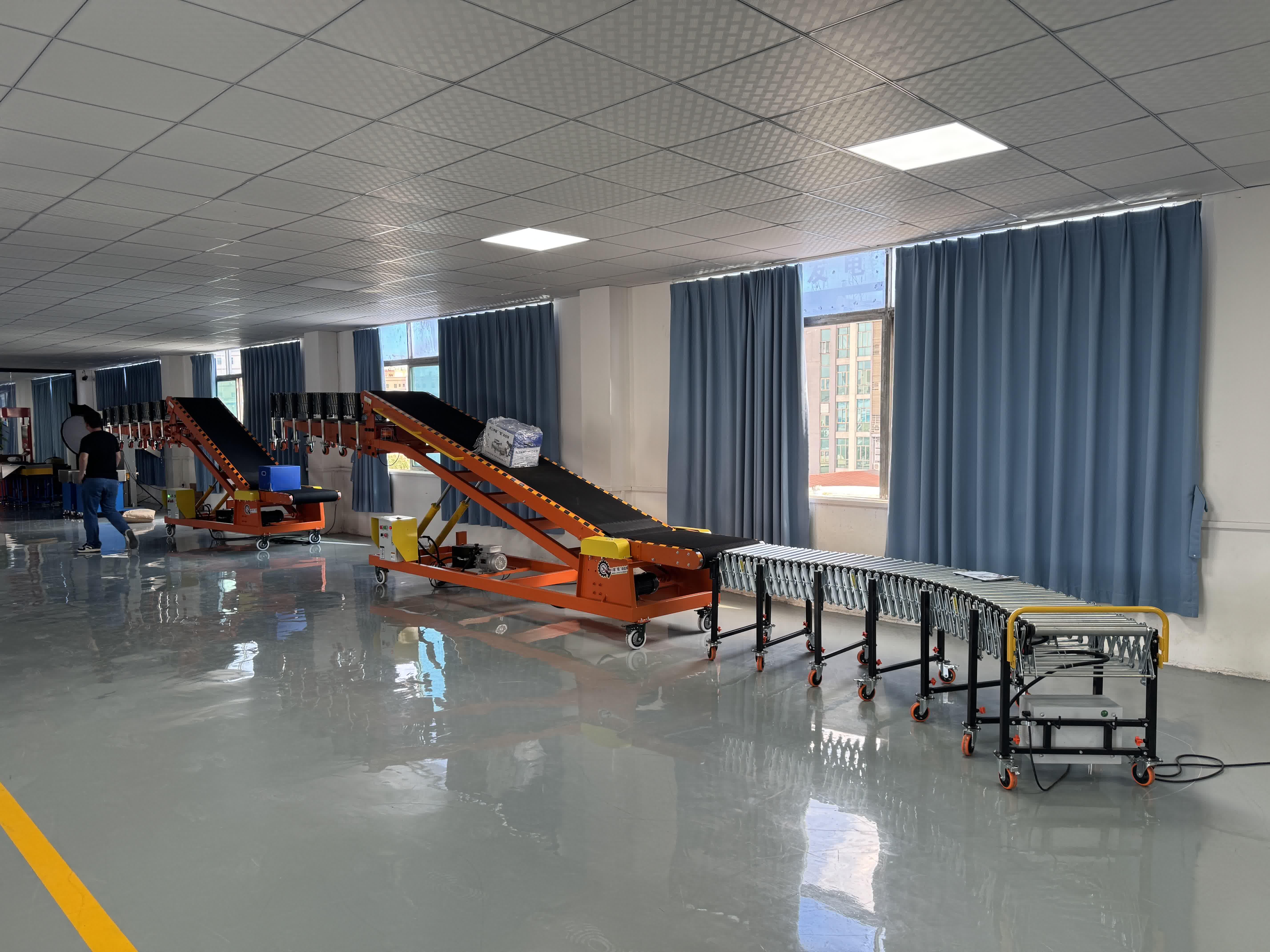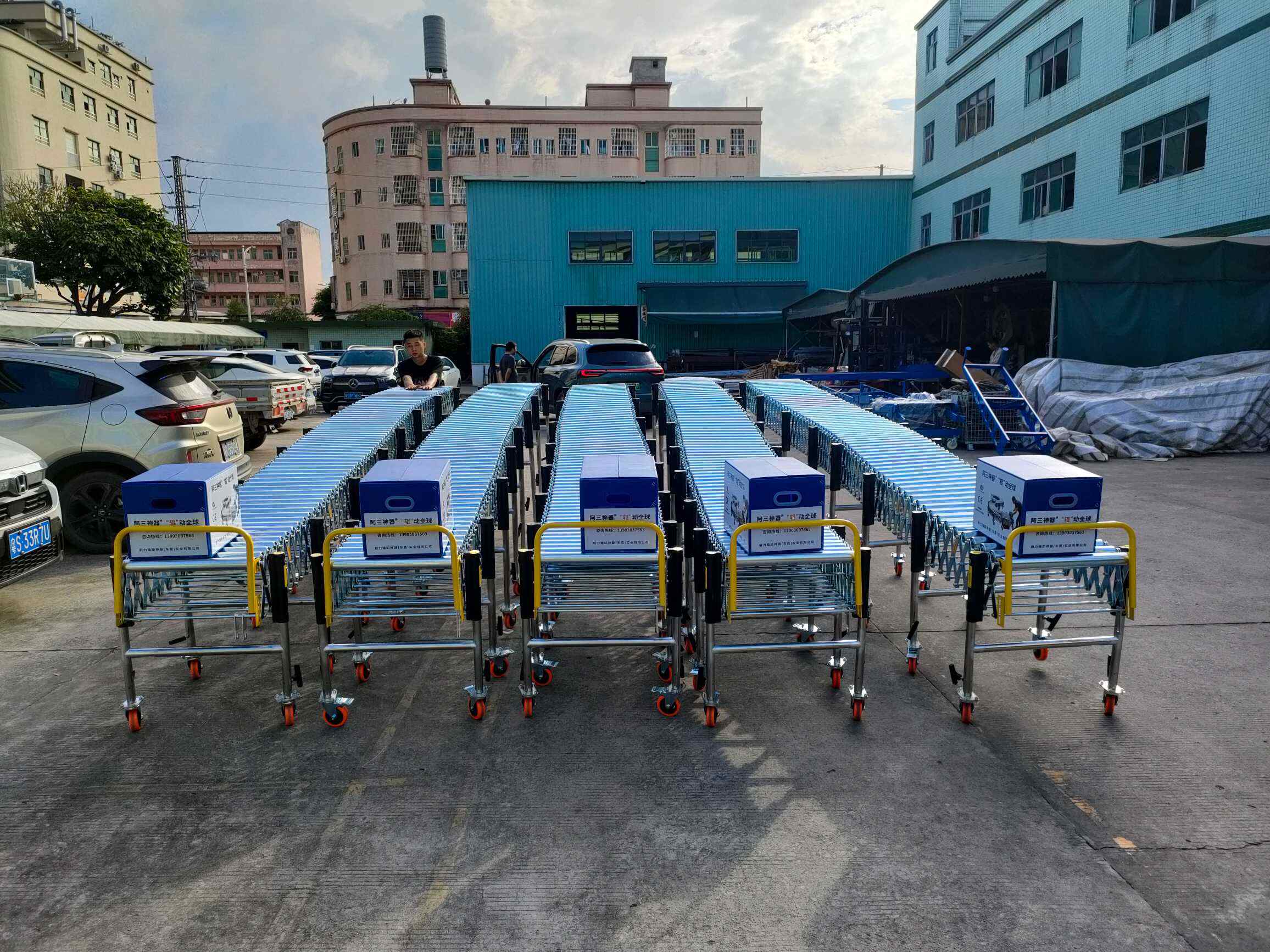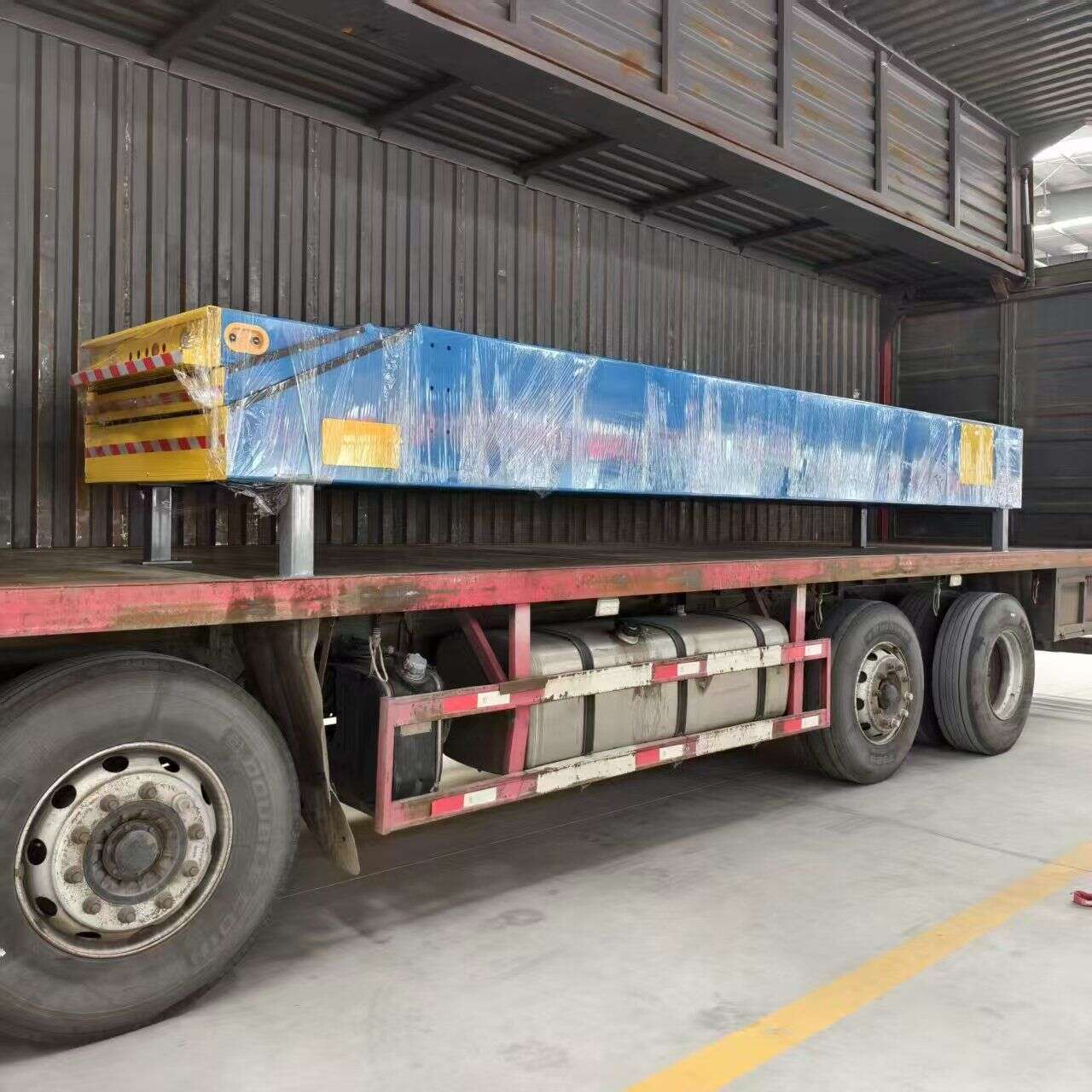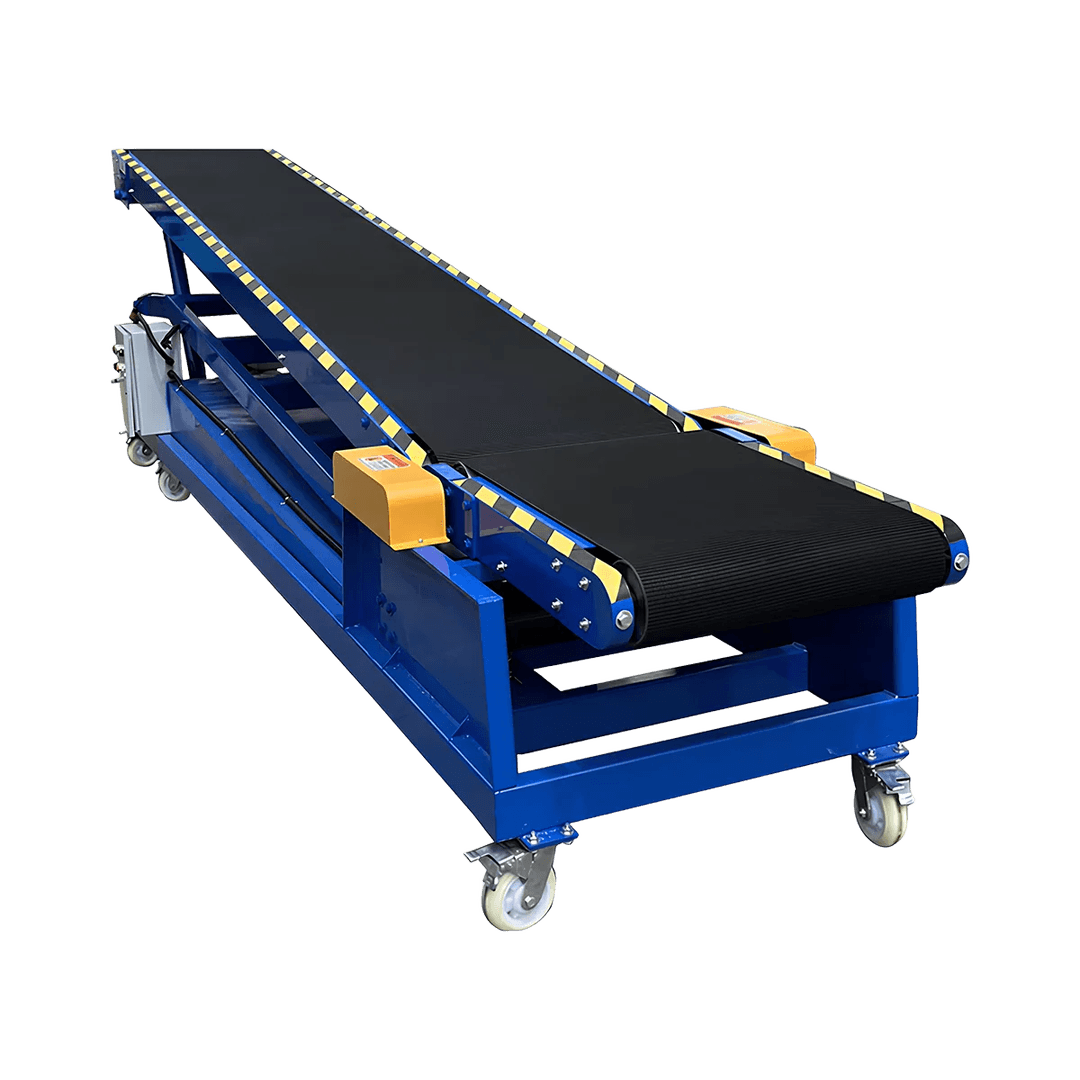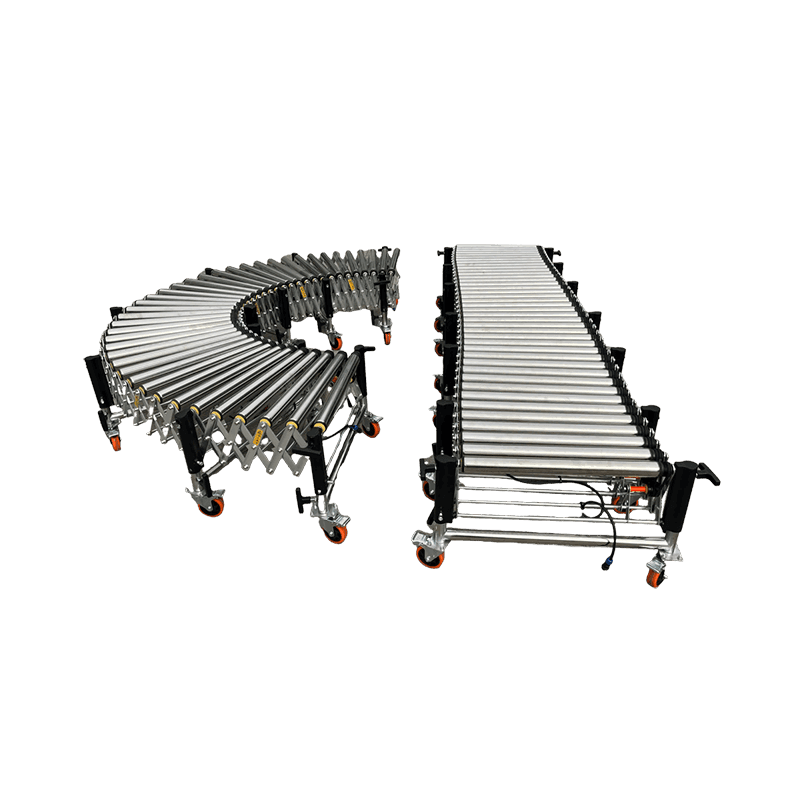
A textile customer needed to frequently load and ship small rolls of fabric from the finished-goods warehouse. The individual items were not heavy, but the quantity was large and the batches were dense. Naili Conveyor configured a rubber-covered powered roller conveyor line assembled in 3 m sections, connecting the warehouse shipping outlet and the truck compartment into a straight line, achieving a workflow where "people only handle loading and unloading, while horizontal transfer is handled by the conveyor.".
Loading Scenario and Customer Requirements
Typical shipping characteristics of the customer:
- Goods form: small rolls of fabric, cylindrical in shape, light per item but large in quantity.
- Work rhythm: multiple loading batches per day, requiring a continuous and stable conveying pace.
- Site conditions: the warehouse shipping outlet has a platform, and the rear of the truck can dock directly with the platform position.
Originally, everything relied on manual carrying of rolls back and forth:
- The average walking distance for each round trip was long, with frequent bending and turning motions, resulting in a heavy physical burden;
- The loading pace was easily affected by the physical condition of the staff, making it difficult to maintain stable shipping efficiency;
- During peak periods, temporary additional labor was needed, leading to high management and coordination costs.
The customer wanted to use simple and reliable conveying equipment to let machinery handle the long-distance horizontal transfer, while still keeping manual loading and stacking on site to balance flexibility and investment cost.
Solution Configuration: 3 m Sections of Rubber-Covered Powered Roller Conveyor Line
Overall Conveyor Line Layout
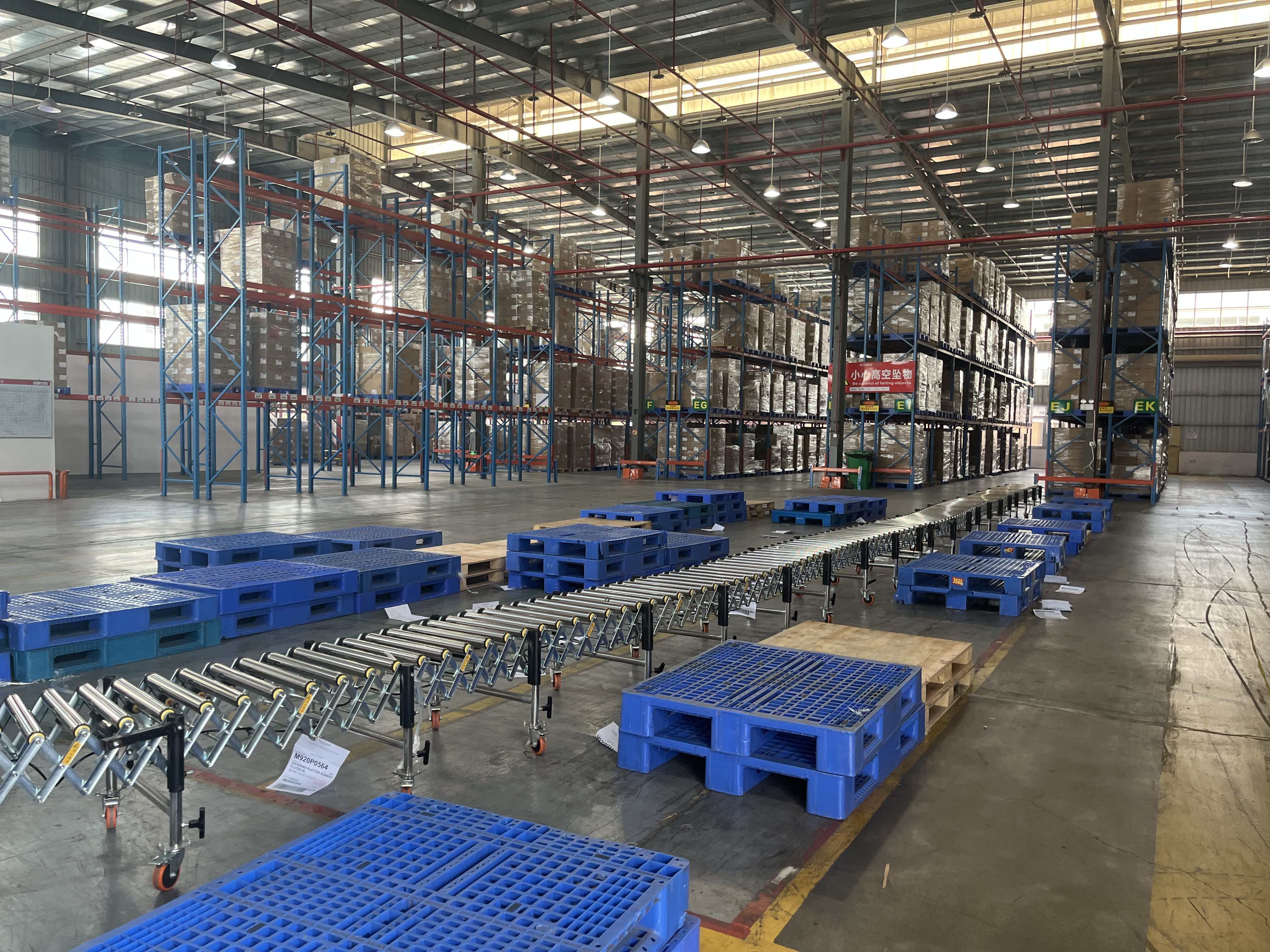
This solution uses a multi-section modular rubber-covered Powered Roller Conveyor:
- Each section is about 3 meters long, and multiple sections are combined and arranged according to the distance from the warehouse to the truck compartment on site;
- The conveyor height is matched to the warehouse platform and the truck bed floor height;
- The conveyor line extends from inside the warehouse all the way into the truck bed, allowing the fabric rolls to remain basically in a straight-line transfer along the entire line.
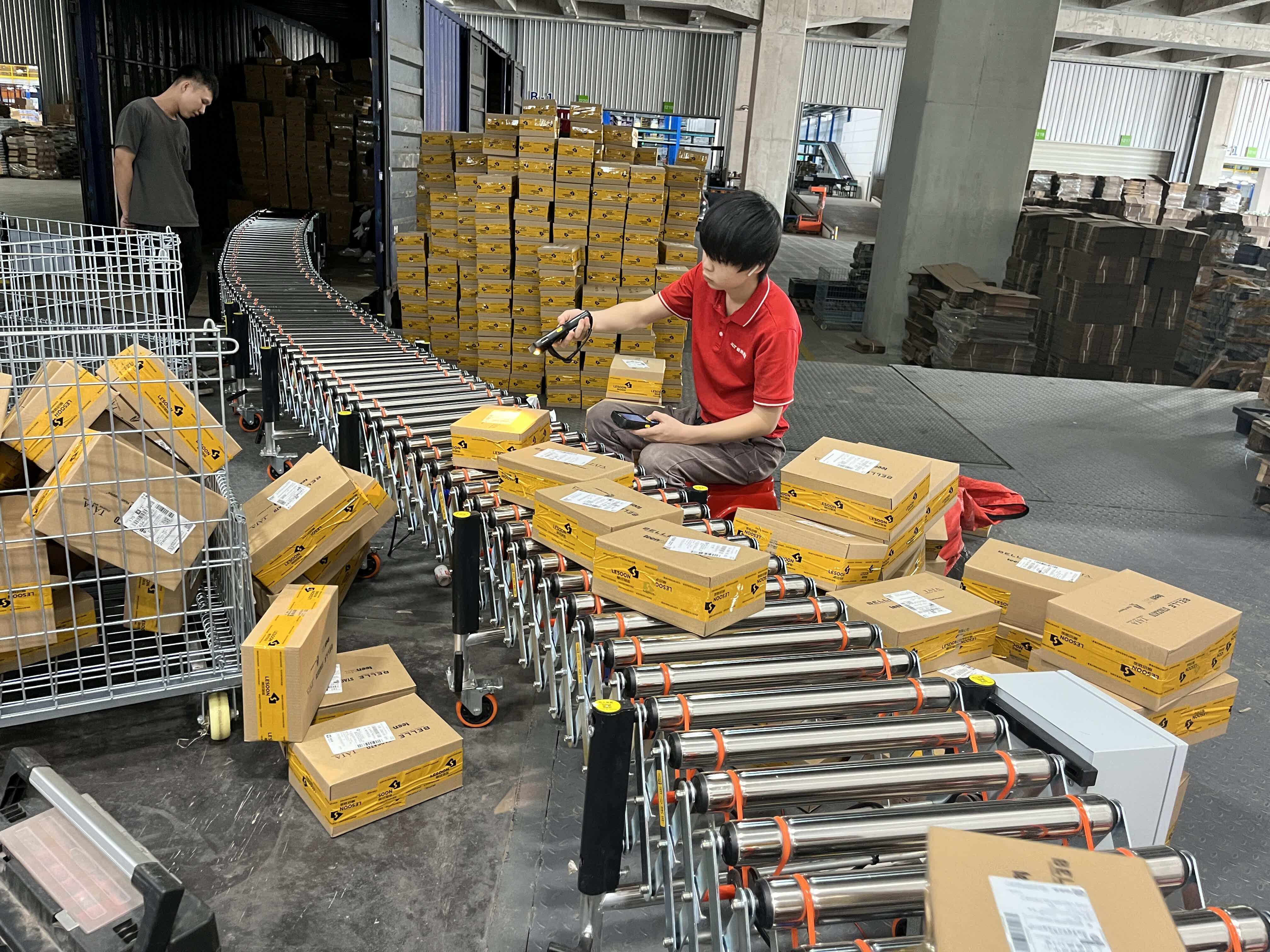
This section-by-section assembly method makes it easy to increase or decrease the number of sections or adjust the layout direction later, optimizing the logistics route without major modifications to the facility.
For similar projects that require long-distance horizontal conveying but have limited on-site space, you can also refer to Naili Conveyor's application of Multi-Wedge Belt Powered Roller Conveyor in narrow spaces practical experience for layout optimization.
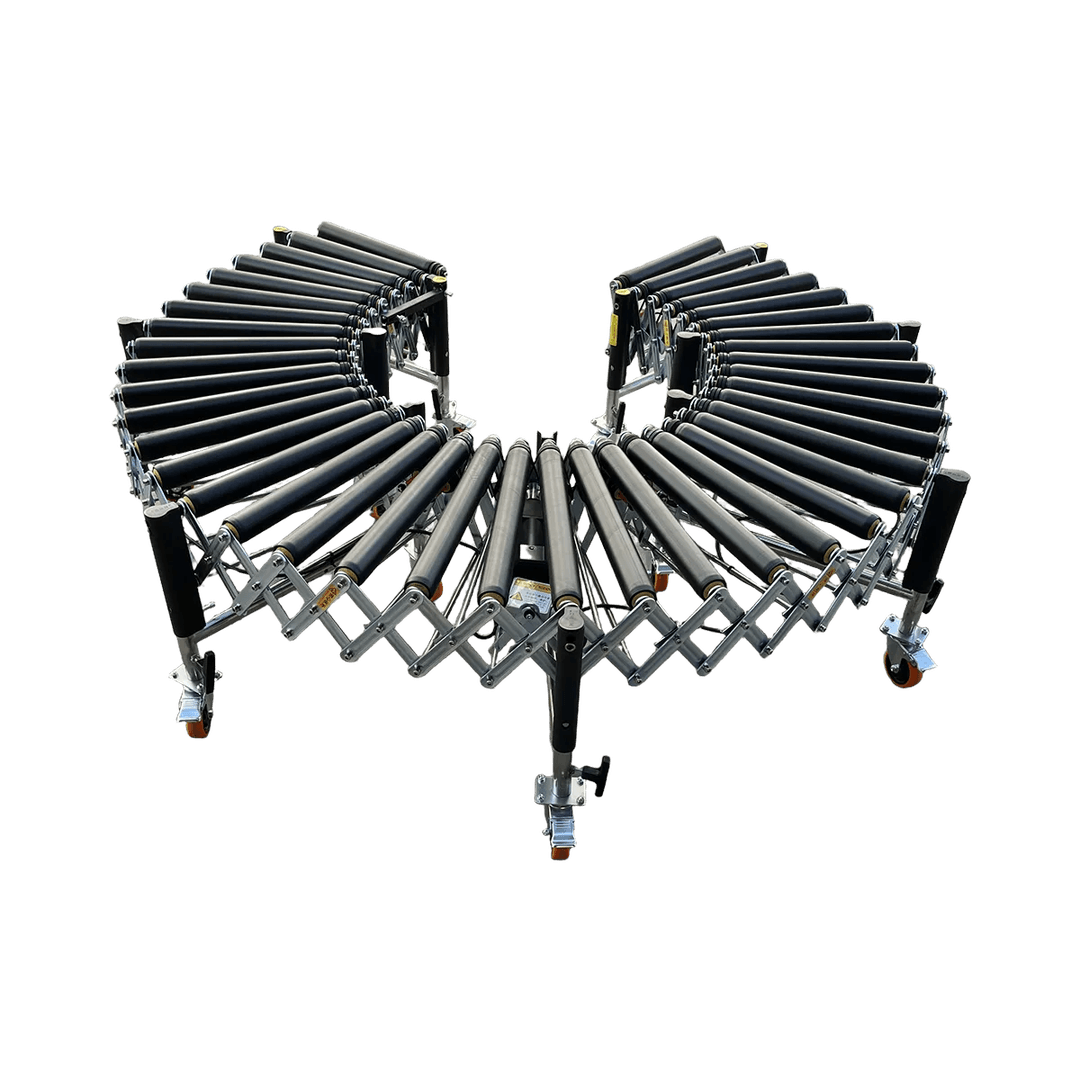
Serie der angetriebenen, gummibeschichteten Rollenförderer
The Powered Rubber-Covered Roller Conveyor is designed specifically for short-distance conveying of bagged goods, enabling smooth and controlled cargo...
 Metallfass
 Kunststofffass
 Rolle
Rolle
 Karton
 Verpackt
Anti-slip performance and adaptability of rubber-covered rollers
Since the outer surface of fabric rolls is mostly cloth or packaging film, with a relatively low coefficient of friction, if ordinary metal rollers are used, the following issues may occur during startup or on slight slopes:
- The goods slip on the rollers, making the conveying rhythm unstable;
- Partial stoppage or slight rollback of the fabric rolls, causing difficulties for manual receiving.
Therefore, this case uses a rubber-covered roller structure. The rubber layer on the roller surface increases friction with the fabric rolls, delivering the following results:
- Light fabric rolls are more stable during conveying and less likely to slip;
- The equipment has less impact on the goods during startup and shutdown, making it easier for workers to receive them at the truck bed end;
- It also adapts well to soft packaging and film-wrapped roll materials.
If the customer later needs more product types, such as paper rolls, film rolls, or light tubes, to be conveyed on the same line, a multi-wedge-belt-driven rubber-covered powered roller line can be considered first. A typical configuration can be referenced as follows:
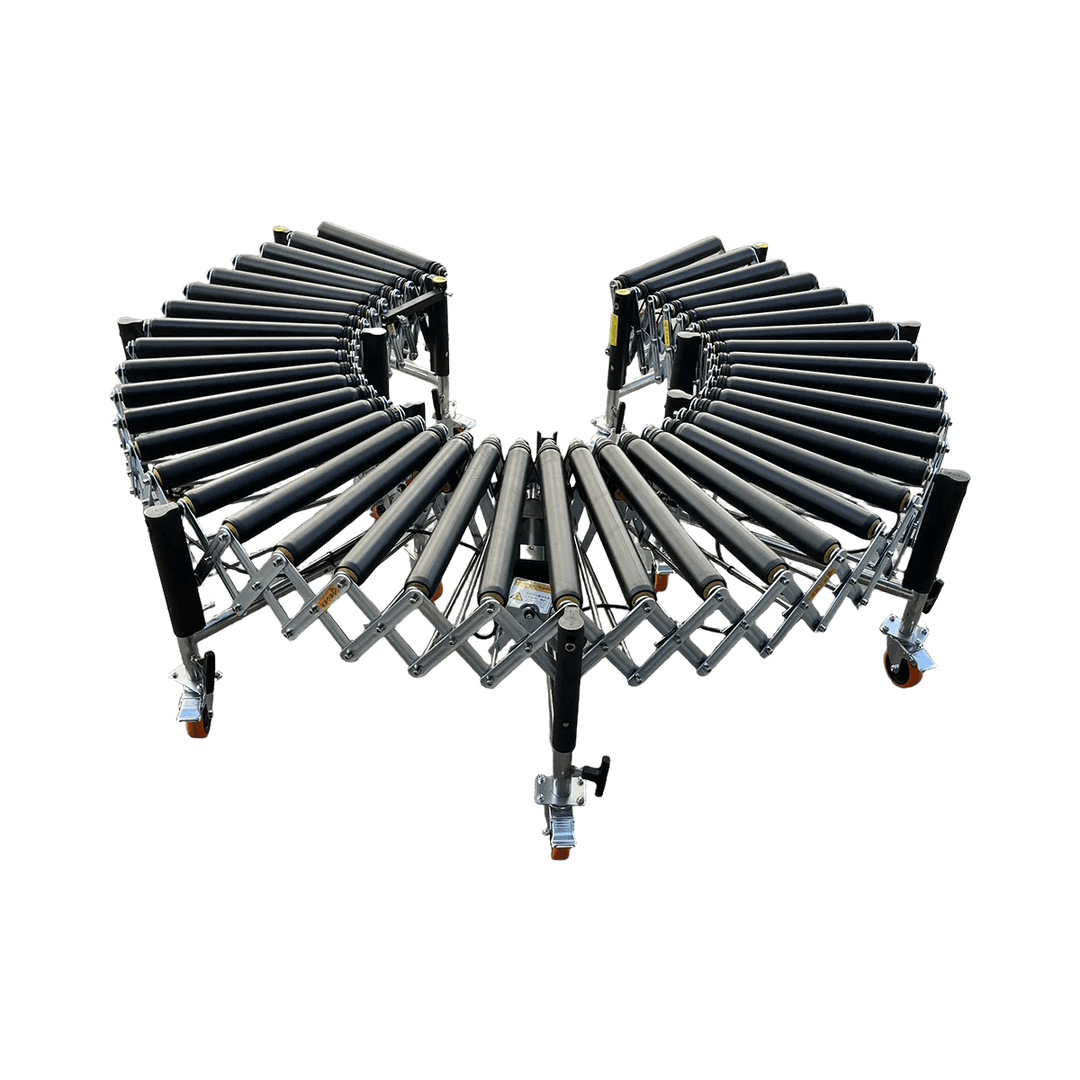
Gummibeschichtetes Rollenförderband mit Mehrkeilriemenantrieb
The multi-wedge-belt Powered Rubber-Covered Roller Conveyor is specifically designed for the smooth conveying of bagged goods. It uses multi-wedge-bel...
Metallfass
Kunststofffass
Rolle
Karton
Verpackt
Conveying rhythm for light fabric rolls
In this project, each fabric roll is relatively light and the conveying distance is mainly within several dozen meters, so the focus when selecting powered rollers is on:
- meeting continuous light-load operation and ensuring a stable line speed;
- a simple structure and easy maintenance, reducing downtime for adjustments;
- a simple interface with the customer's existing electrical system, making on-site wiring and operation easier.
Naili Conveyor has also used a similar rubber-covered multi-wedge-belt powered roller solution in other industries, such as grain wholesale handling. Refer to application of rubber-covered Multi-Wedge Belt Powered Roller Conveyor in grain wholesale handling and it adapts well to both light bulk goods and light packaging items.
Operation process: loading can be completed by two people
This solution is strictly positioned to "reduce handling and shorten distance, " rather than to achieve full unmanned operation. The entire workflow still involves manual participation, but the actions are more concentrated at the two ends: "loading" and "stacking":
-
Warehouse-side unloading
At the warehouse end, one employee at the start of the conveyor line places the small fabric rolls onto the roller line one by one. Since the rolls are not heavy, the actions are mainly light lifting and light placing, reducing long-distance carrying and repeated walking. -
Automatic conveyor transport
After the powered rollers are started, the fabric rolls move automatically along the conveyor line toward the truck. The employee only needs to control start/stop as needed to maintain an appropriate pace. -
Receiving and stacking inside the truck bed
Inside the truck bed, one worker receives the goods at the end of the conveyor line and stacks and secures the fabric rolls according to the customer's loading requirements. Since there is no longer a need to frequently step out of the truck bed to fetch goods, the work focuses more on stacking quality and safe securing. -
Truck change and line adjustment
When one truck has been loaded, only the end of the conveyor line needs to be adjusted or moved slightly so it aligns with the entrance of the next truck bed, without dismantling the entire line.
From actual operation, two workers can complete the loading task that originally required multiple people to work together. Per-capita labor intensity is significantly reduced, and the operation rhythm is more continuous and predictable.
Application results: reducing physical burden and improving loading efficiency
Based on overall on-site feedback, the main results of this case are reflected in the following aspects:
- Horizontal conveying distance is greatly reduced: Workers no longer need to push carts or carry fabric rolls back and forth between the warehouse and trucks; the main tasks are concentrated at fixed workstations for "loading" and "stacking.".
- Loading rhythm becomes more stable: The conveyor line runs at a constant speed, and the fabric rolls arrive at the truck opening in step with the rhythm, making it easier for workers inside the trailer to stack them at a fixed pace and reducing efficiency fluctuations caused by physical fatigue.
- Staffing becomes simpler: A standard shift usually requires only 2 people to load one truck, without the need to temporarily add a large number of short-term workers during peak periods.
- The working environment is cleaner and more organized: Fabric rolls are no longer stacked in aisles or other temporary areas, and the passages on both sides of the conveyor line remain clear, helping improve safety and on-site management standards.
In other industries, such as finished tobacco warehouses, goods are also sent directly from the warehouse into the trailer by roller conveyor; see Tobacco Warehouse Loading Gravity Roller Conveyor Solution, and the two are consistent in their approach of "man-machine collaborative loading.".
Application scenarios and future expansion directions
The loading method in this case is suitable for reference by the following types of companies:
- Loading small fabric rolls and yarn rolls in the textile, knitting, nonwoven, and other industries;
- Outbound loading of cylindrical lightweight goods such as plastic film, small rolls of paper, and light coil materials;
- Warehouses with a fixed loading platform or simple platform and relatively fixed vehicle types.
On this basis, if the following needs arise later, the existing roller line can be expanded at the front and rear ends:
- Interface with upstairs/downstairs storage locations: In multi-story warehouses, vertical conveying equipment can be added before and after the roller line to consolidate goods from different floors to the loading point;
- Connected with sorting or packaging workstations: Arrange the fabric-roll packing and labeling workstations near the conveyor line to create a more continuous shipping process;
- Combined with other loading and unloading equipment: For scenarios with more complex vehicle types and larger differences in loading and unloading height, a combination with Hydraulic Conveyor or Telescopic Conveyor can be considered to further reduce manual handling.
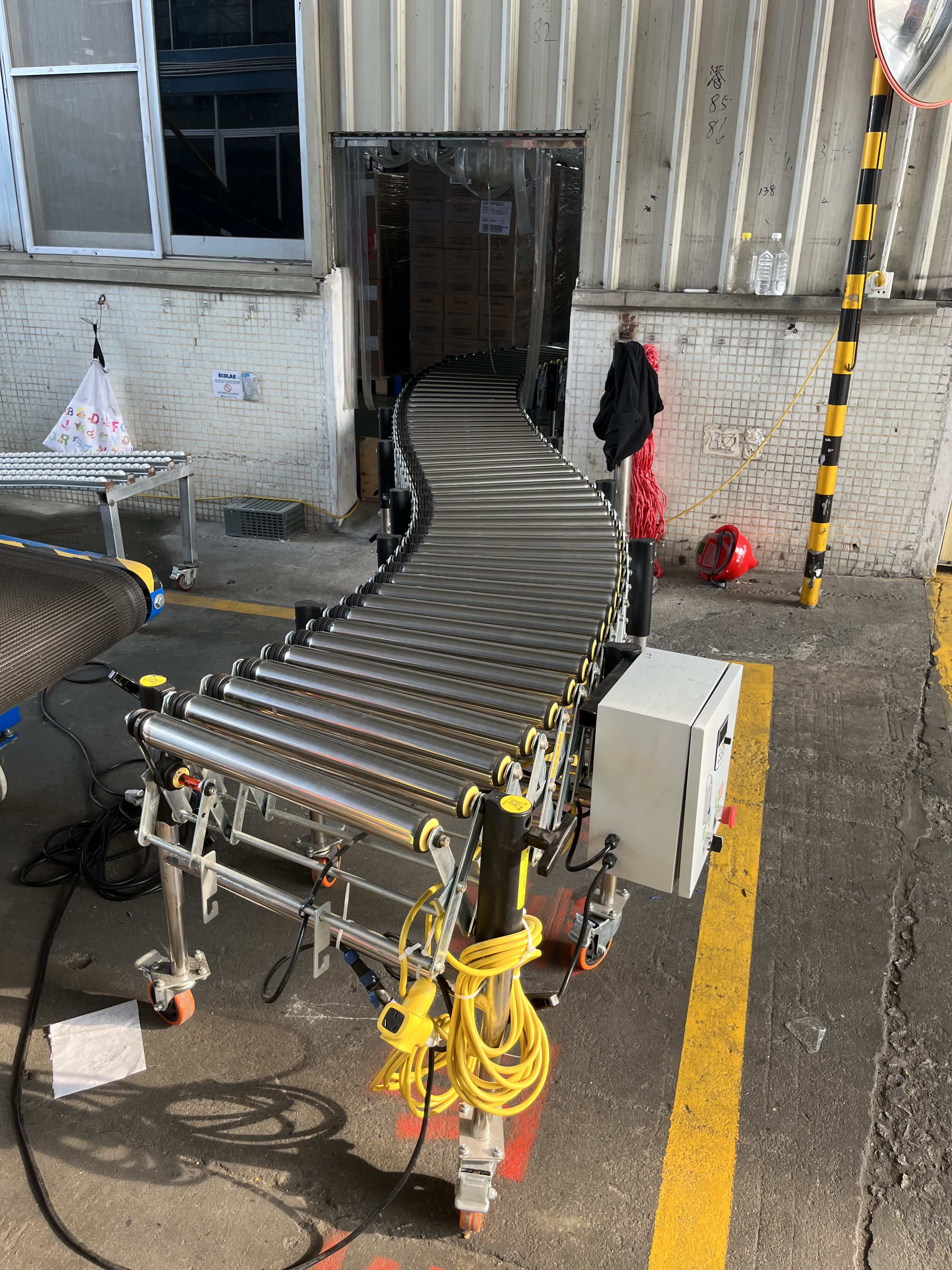
Overall, this project uses a simple 3m/section rubber-covered powered roller conveyor line. While maintaining human involvement and flexibility, it significantly reduces the physical effort and organizational difficulty of loading small fabric rolls, providing a directly applicable loading solution for companies shipping similar lightweight coil and roll materials.