Choosing a telescopic belt conveyor is not simply a matter of selecting the longest conveyor or the highest number of sections. The right configuration depends on the vehicle or container being loaded, the required telescopic reach, available installation space, conveying height, load requirements, and whether the conveyor needs to be fixed or mobile.
For truck and container loading and unloading, a properly selected telescopic belt conveyor can extend the conveying point closer to the cargo, reducing unnecessary manual carrying distance and making the loading or unloading workflow more continuous.
This guide explains the main factors to consider when selecting a telescopic belt conveyor for warehouses, logistics centers, distribution facilities, e-commerce warehouses, and manufacturing plants.
What Is a Telescopic Belt Conveyor?
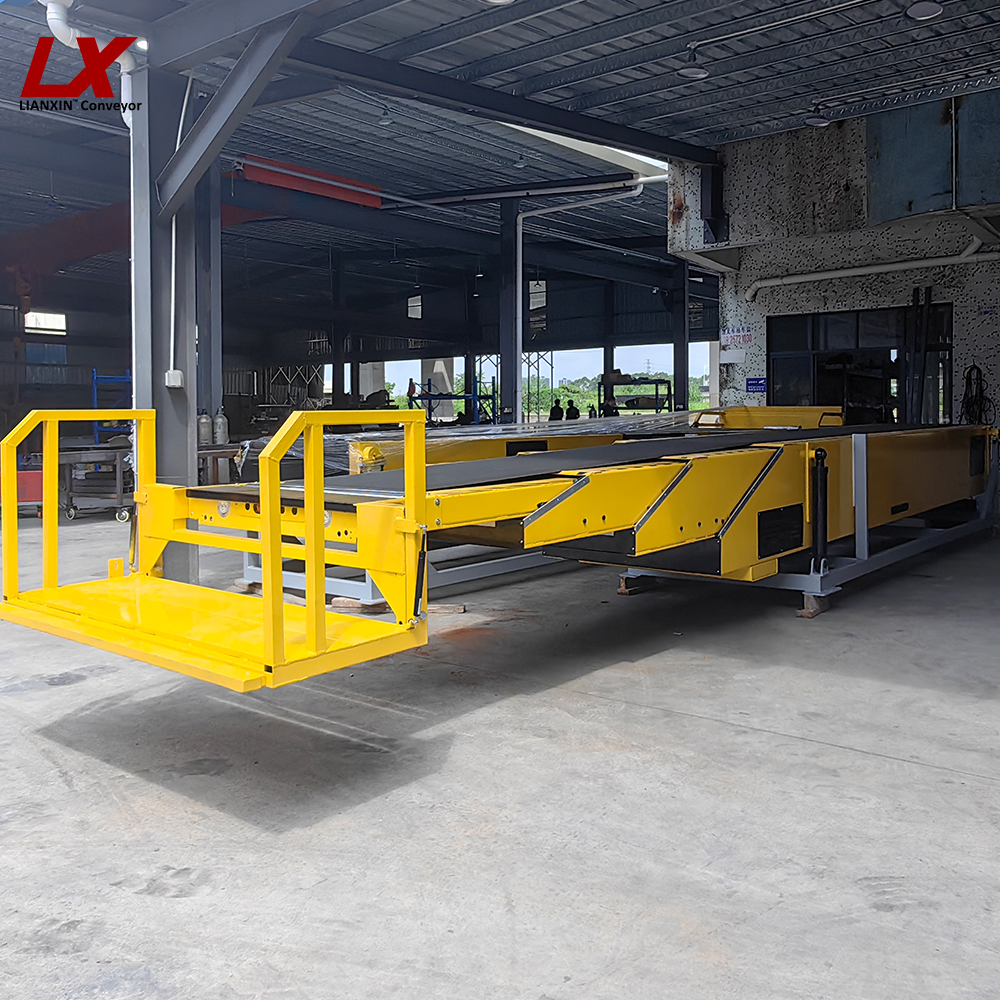
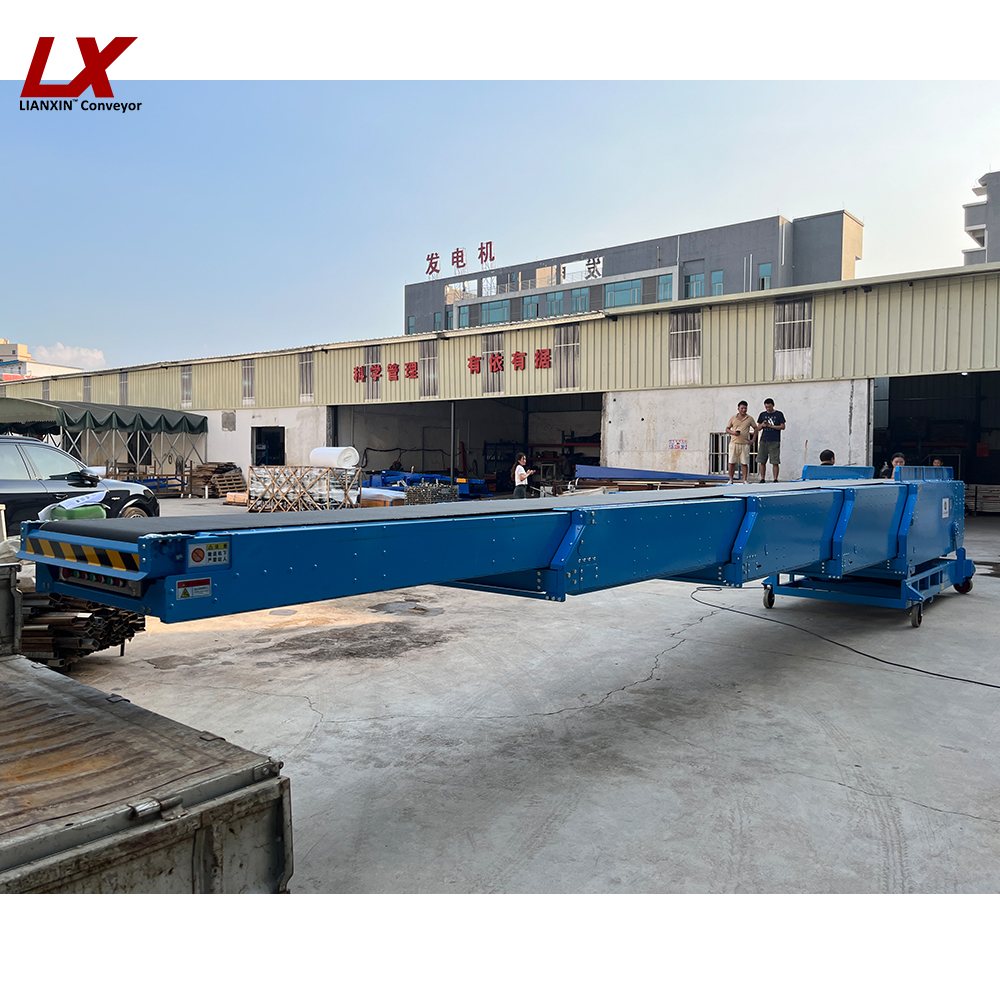
A telescopic belt conveyor is a conveyor system with one fixed section and one or more telescopic sections that can extend and retract during loading and unloading operations.
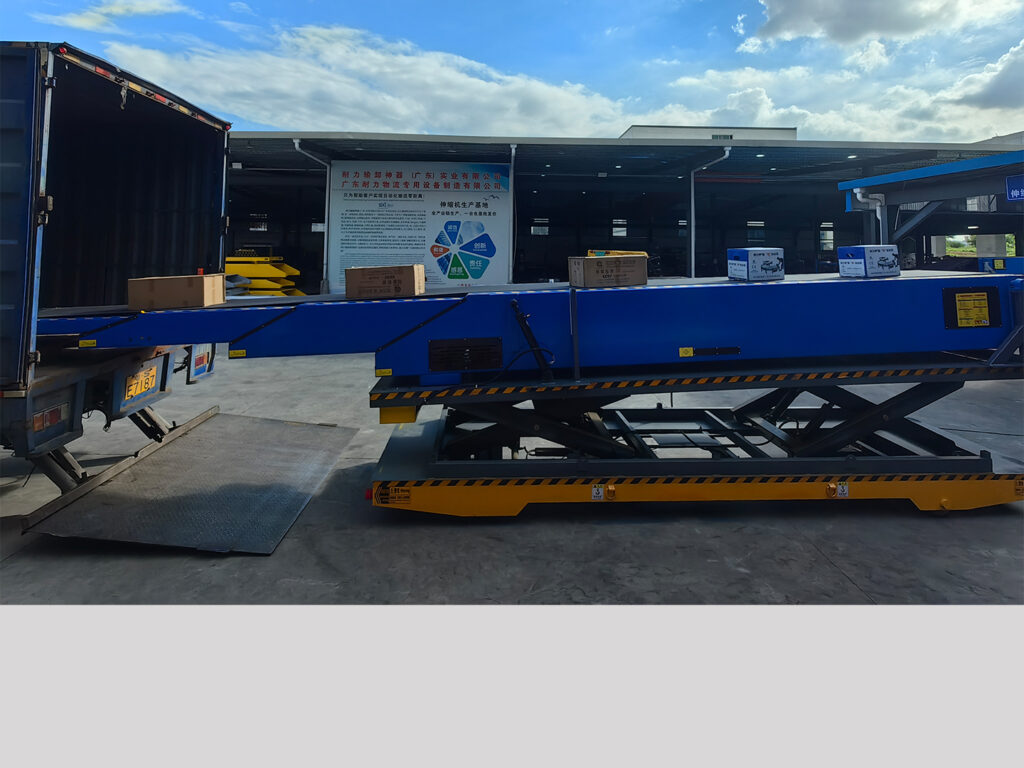
The conveyor working end can extend into a truck, trailer, or container, allowing workers to handle goods closer to the cargo position.
Telescopic belt conveyors are commonly used for:
- Be- und Entladen von Lkw
- Container loading and unloading
- Warehouse material handling
- Logistics and distribution centers
- E-commerce warehouses
- Manufacturing facilities
Unlike a conventional fixed conveyor, a Teleskopförderer can change its effective working reach according to the loading or unloading position.
What Factors Should You Consider When Choosing a Telescopic Conveyor?
Before selecting a model, several application conditions should be considered.
The main factors include:
- Vehicle or container dimensions
- Required telescopic reach
- Number of conveyor sections
- Gesamtlänge des Förderbands
- Riemenbreite
- Working height
- Load requirements
- Fixed or mobile configuration
- Verfügbare Nutzfläche
- Integration with other conveyor equipment
The correct conveyor is therefore determined by the complete loading and unloading application rather than by one specification alone.
How Many Sections Does the Telescopic Conveyor Need?
Naili telescopic belt conveyors are available in 2-section, 3-section, 4-section, and 5-section configurations.
The number of sections describes how the conveyor is constructed.
A:
- 2-section conveyor consists of 1 fixed section + 1 telescopic section.
- 3-section conveyor consists of 1 fixed section + 2 telescopic sections.
- 4-section conveyor consists of 1 fixed section + 3 telescopic sections.
- 5-section conveyor consists of 1 fixed section + 4 telescopic sections.
A higher number of sections does not automatically mean that the conveyor is better. The appropriate configuration depends on the required reach, machine structure, available space, and loading application.
Wie viele Abschnitte benötigt ein Teleskopförderer? Ein umfassender Leitfaden zur Auswahl
What Is the Difference Between Total Length and Telescopic Extension?
One of the most important points when selecting a telescopic conveyor is understanding the difference between total conveyor length and telescopic extension.
The telescopic extension refers to the additional length that moves outward from the fixed section.
The total conveyor length is the fixed section length plus the telescopic extension.
Zum Beispiel:
5 m fixed section + 7 m telescopic extension = 12 m total conveyor length
Therefore, a specification such as “7 m extension” does not mean that the complete conveyor is 7 m long.
This distinction is particularly important when determining whether a conveyor can reach the required position inside a truck or container.
Welcher Teleskopförderer eignet sich für einen 20-Fuß-Container?
For 20ft container loading and unloading, the conveyor configuration needs to provide sufficient working reach while remaining suitable for the available space and machine structure.
A commonly used Naili configuration is a 3-section telescopic belt conveyor with a 5 m fixed section and 7 m telescopic extension, giving a total length of 12 m.
This configuration is designed around the working requirements of 20ft container operations and the structural limitations of the conveyor.
However, the final configuration should still be selected according to the actual loading position, container dimensions, working height, and site layout.
Welcher Teleskopförderer eignet sich für einen 40-Fuß-Container?
40ft containers generally require a longer working reach than 20ft containers.
For this application, Naili commonly uses a 4-section configuration with a 6 m fixed section and 12 m telescopic extension, giving a total length of 18 m.
The configuration is designed around the internal working requirements of 40ft container operations and the structural design of the telescopic conveyor.
The actual conveyor configuration should be confirmed according to the container dimensions, loading position, required extension depth, working height, and available space.
How Do You Choose the Right Belt Width?
Belt width should be selected according to the size and type of goods being conveyed, as well as the required handling capacity.
Naili telescopic belt conveyors are commonly available with:
- 600 mm belt width
- 800 mm belt width
Wider belt configurations can also be customized according to the application. Naili can supply belt widths up to approximately 1100 mm based on the machine design and customer requirements.
For cartons and packaged goods, the belt width should provide enough support for stable conveying while remaining suitable for the available conveyor space.
What Load Capacity Does a Telescopic Belt Conveyor Handle?
Naili’s standard telescopic belt conveyor load rating is approximately 80 kg/m.
The conveyor can convey loads of around 100 kg/m in applicable conditions, but continuous operation above the standard rated load is not recommended.
Load requirements should be evaluated together with:
- Product weight
- Produktabmessungen
- Loading frequency
- Conveyor length
- Conveyor inclination
- Operating conditions
This helps ensure that the motor, belt, frame, and conveying system are appropriately configured for the application.
How Do You Choose Between Fixed and Mobile Telescopic Conveyors?
Naili offers both fixed and mobile telescopic belt conveyors.
Fixed Telescopic Belt Conveyor
A fixed conveyor is suitable when the equipment will remain in a dedicated loading or unloading position.
It can be anchored to the floor or loading area using expansion bolts and is commonly used where the loading workflow is relatively permanent.
Mobile Telescopic Belt Conveyor
A mobile conveyor is suitable when the same conveyor needs to serve different loading positions.
Mobile configurations can be equipped with different mobility systems depending on the conveyor length, machine weight, floor conditions, and site requirements.
This makes mobile telescopic conveyors suitable for facilities where loading locations change or where a conventional loading dock is unavailable.
What Working Height Does a Telescopic Conveyor Need?
Working height is another important factor when selecting a telescopic conveyor.
Naili telescopic belt conveyors have a minimum belt surface height of approximately 900 mm from the ground, while the working height can be customized according to the application.
The hydraulic system can adjust the overall conveying angle of the machine. The hydraulic system is positioned at the front of the conveyor, in the direction of telescopic extension.
For applications requiring significant elevation, such as high-level material handling in warehouses, a customized hydraulic configuration can also be considered.
What Optional Features Can Be Added?
A telescopic conveyor can be configured with additional functions according to the application.
Common options include:
Hydraulic Lifting
The hydraulic system adjusts the overall conveying angle and working height.
Forward and Reverse Conveying
The belt can operate in both directions, allowing the same conveyor to be used for loading and unloading.
Mechanical Anti-Collision Braking System
A mechanical anti-collision braking system helps protect the equipment and people working around the conveyor.
Front Cargo Presence Sensor
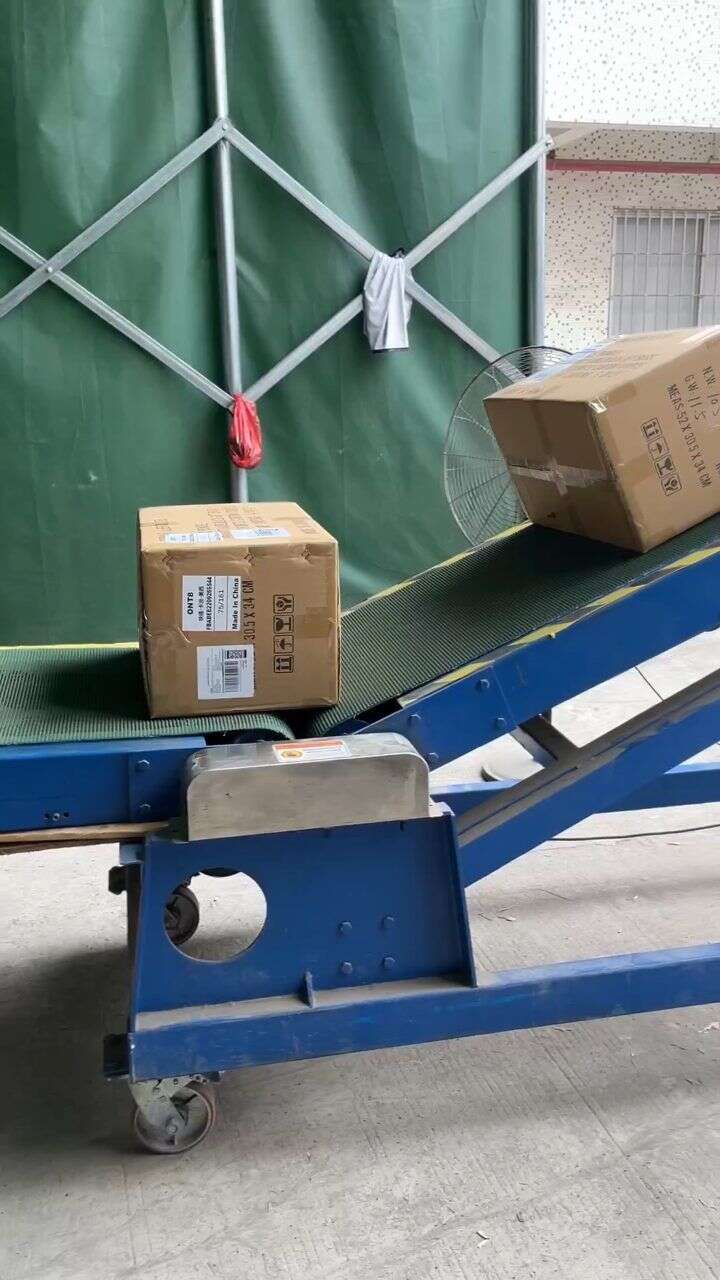
A laser sensor can be installed near the front of the conveyor. When cargo remains within the detection area, the conveyor can stop automatically and resume after the cargo has been removed.
This helps reduce the risk of cartons or packages falling when workers have not yet removed the previous item.
Mobile Drive System
Different mobility configurations can be selected according to conveyor length, weight, and site conditions.
Can a Telescopic Conveyor Be Connected to Other Conveyor Equipment?
Ja.
A telescopic belt conveyor can be integrated with other material handling equipment to create a continuous conveying route.
Depending on the application, it can be connected with:
- Roller conveyors
- Powered roller conveyors
- Belt conveyors
- Incline conveyors
- Lifting equipment
- Existing warehouse conveying systems
- Production-line conveying equipment
For example, goods can move from a warehouse or production line onto a conveyor system and then continue onto the telescopic conveyor for truck or container loading.
Optional counting or system integration can also be considered when required by the project.
Telescopic Conveyor Selection Guide
| Selection Factor | What to Consider |
|---|---|
| Application | Truck loading, truck unloading, container loading or container unloading |
| Abschnitte | 2-section, 3-section, 4-section or 5-section |
| Gesamtlänge | Fixed section + telescopic extension |
| Belt Width | Standard 600 mm or 800 mm; customized widths available |
| Load | Standard rating approximately 80 kg/m |
| Working Height | Minimum belt surface height approximately 900 mm; customizable |
| Konfiguration | Fixed or mobile |
| Vehicle / Container | Consider internal dimensions and required working reach |
| Mobility | Select according to machine weight, length and site conditions |
| Integration | Roller conveyor, belt conveyor, lifting equipment or existing systems |
| Optional Functions | Hydraulic lifting, anti-collision braking, cargo sensor and other options |
Häufig gestellte Fragen
What is a telescopic belt conveyor used for?
A telescopic belt conveyor is mainly used for truck and container loading and unloading. It extends the conveying point into the vehicle or container to reduce unnecessary manual carrying distance.
How many sections can a telescopic conveyor have?
Naili telescopic belt conveyors are available in 2-section, 3-section, 4-section, and 5-section configurations.
What is the difference between conveyor length and extension length?
Total conveyor length includes the fixed section and telescopic extension. For example, a 5 m fixed section with a 7 m extension has a total length of 12 m.
Kann ein Teleskopförderer mobil sein?
Yes. Naili offers both fixed and mobile telescopic belt conveyors. Different mobility systems can be selected according to the machine and site conditions.
Can the conveyor load and unload trucks?
Yes. The belt supports forward and reverse conveying, allowing the same conveyor to be used for both loading and unloading.
Can a telescopic conveyor be customized?
Yes. Customization can include conveyor length, belt width, working height, mobility configuration, hydraulic configuration, motor configuration, and other functions according to project requirements.
How to Select the Right Telescopic Belt Conveyor
The right telescopic belt conveyor should be selected according to the complete loading or unloading application rather than a single specification.
For a typical project, the selection process should consider:
Vehicle or container → Required reach → Number of sections → Total length → Working height → Belt width → Load → Fixed or mobile → Site layout → System integration
For example, a 20ft container application may use a 3-section configuration with a 5 m fixed section and 7 m telescopic extension, while a 40ft container application may require a longer 4-section configuration.
Naili can configure the telescopic belt conveyor according to the actual vehicle, container, loading area, material characteristics, and workflow.
Need Help Selecting a Telescopic Belt Conveyor?
Send us your loading or unloading application, and Naili can recommend a suitable conveyor configuration based on the vehicle or container dimensions, required reach, load, working height, and site conditions.