







| Equipment Specifications | ||
|---|---|---|
| Nom du paramètre | Specification/Parameters | Remarques |
| Longueur totale | Retracted: 560 mm Dégagement : 1 100 mm |
|
| Taux d'extension | 1: 1.96 | |
| Capacité de charge | 120 kg/m | |
| Vitesse de transport | 0.3-40 m/min | |
| Largeur effective | 500/600/800/1 000 mm | Personnalisable |
| Rouleau | Diameter: 54 mm (rubber-covered) Épaisseur : ≥ 1,5 mm Material: galvanized/201 stainless steel Standard section roller count: 10 Telescopic section roller count: 9 Roller spacing: 100 mm (when using spacing rods, the spacing is 50 mm) |
|
| Arbre | Q235 | |
| Leg Frame (Main H Frame) | Dimensions de la section transversale : 35 × 35 mm Épaisseur : ≥ 1,3 mm Matériau : acier inoxydable 201 |
|
| Support leg | Dimensions de la section transversale : 30 × 30 mm Épaisseur : ≥ 1,3 mm Matériau : acier inoxydable 201 |
Réglable en hauteur |
| Longueur du pied d'appui | 450-800/550-900/750-1 100/900-1 200 mm | Longueur personnalisable |
| Châssis en acier | Épaisseur : ≥ 3,5 mm Matériau : Q345 |
|
| Paramètres des accessoires | ||
| Nom du paramètre | Spécifications/Paramètres | Remarques |
| Réducteur | 120 W | 1 unité configurée par 1,1 m |
| Onduleur | 0,75/1,5/2,2 kW | Configuré en fonction de la longueur |
| Panneau de commande | Forward/Reverse/Emergency Stop/Speed Control | |
| Boîtier de commande électrique | Conforme aux normes nationales applicables | |
| Tension nominale | 380/220 V | |
| Mode de commande | Courroie à plusieurs cales | Résistant à l'usure |
| Casters | 4 pouces Largeur de la roue : 30 mm Hauteur de la roue : 120 mm |
Equipped with full brakes, meets load-bearing design requirements |
| Autres paramètres | ||
| Nom du paramètre | Specification/Parameters | Remarques |
| Electrical Control Box and Wiring | Uses 1.5 mm² wire, wired in parallel | Standard wiring/ground-fault protection required |
| Product Dimensions | ||
| Largeur effective | Overall Body Width | Unit Weight |
| 500 mm | 655 mm | 30 kg |
| 600 mm | 755 mm | 33 kg |
| 800 mm | 955 mm | 39 kg |
| Garantie | ||
| Article | Durée | Remarques |
| Durée de la garantie du cadre | 12 mois | |
| Belt Warranty Period | 6 mois | |
| Le châssis du convoyeur et le moteur sont couverts par une garantie d'un an, tandis que la courroie d'entraînement est couverte par une garantie de six mois.
Within the warranty period, if a quality issue occurs in any part due to non-human damage, we will provide the corresponding replacement parts free of charge. However, because international shipping is involved, the related freight costs shall be borne by the customer. If the equipment or any parts are damaged due to improper manual operation, misuse, poor maintenance, or other reasons, or if the issue occurs outside the warranty period, the cost of replacement parts and shipping shall be borne by the customer. For overseas orders, the warranty period is calculated from the bill of lading date; for domestic orders, the warranty period is calculated from the date of goods delivery or arrival. |
||
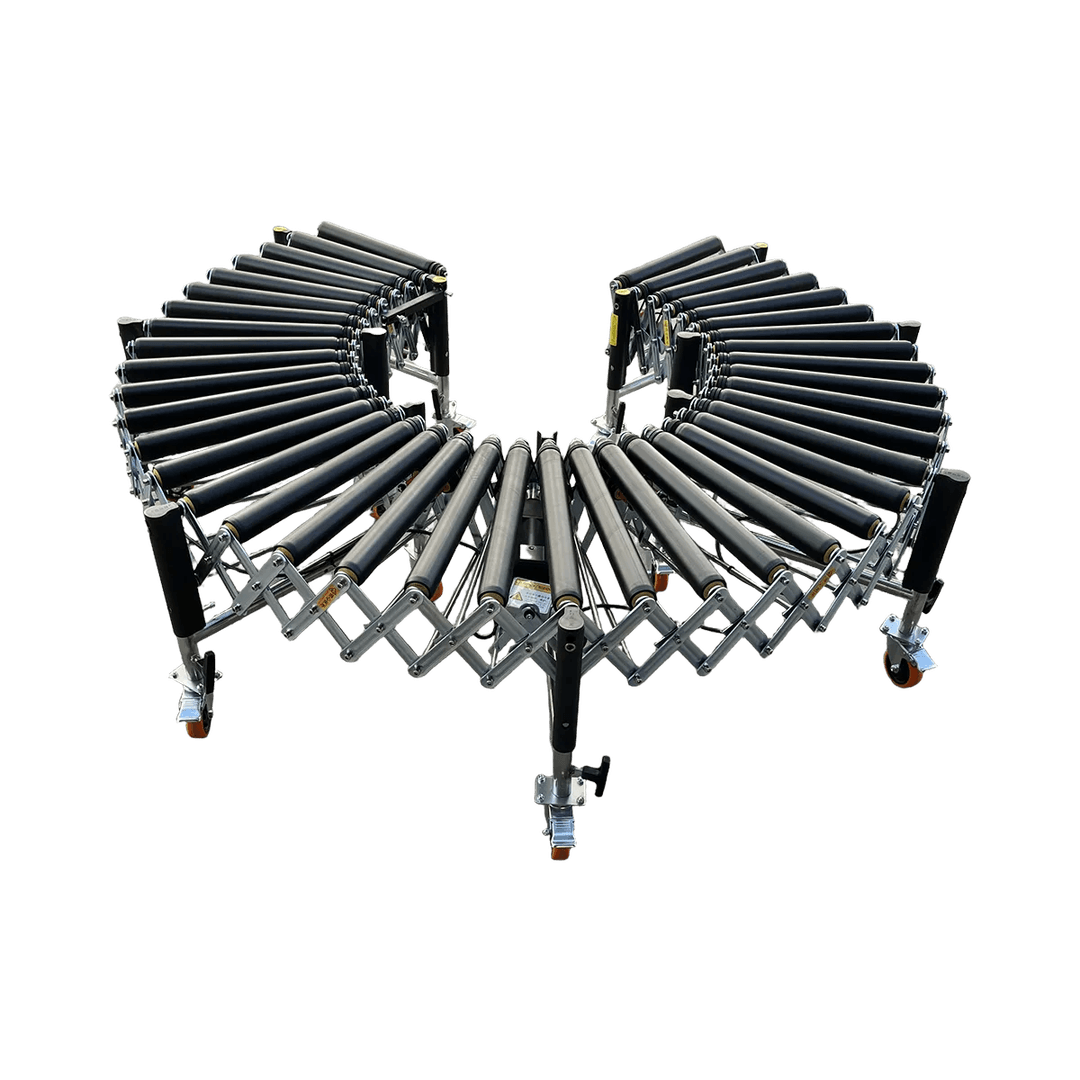
Série de convoyeurs à rouleaux motorisés revêtus de caoutchouc
Multi-Wedge Belt Powered Rubber-Covered Roller Conveyor
The multi-wedge-belt Powered Rubber-Covered Roller Conveyor is specifically designed for the smooth conveying of bagged goods. It uses multi-wedge-belt drive and rubber-covered rollers, with motor spacing ranging from 1, 100 mm to 2, 000 mm and a conveying load of 120 kg per meter, ensuring stable movement of goods. It is suitable for warehouses, factories, and logistics sites, especially for conveying soft or deformable goods. It can be freely extended, retracted, and turned.
Vitesse
0.3-40 m/min adjustable
Capacité de charge
120 kg/m
Largeur effective
500/600/800/1 000 mm
Taux de rétraction
1:2.9/1:1.2
Tous les modèles
Marchandises concernées (poids maximal recommandé par article)
Multi-Wedge Belt Powered Rubber-Covered Roller Conveyor Maximum weight per item (reference)
Le poids maximal réel dépend des conditions d'utilisation et de la configuration spécifiques.
| Type de marchandises | Multi-Wedge Belt Powered Rubber-Covered Roller Conveyor 1.1m/section | Multi-Wedge Belt Powered Rubber-Covered Roller Conveyor 2m/section | Multi-Wedge Belt Powered Rubber-Covered Roller Conveyor 3m/section |
|---|---|---|---|
Fût métallique | 80 kg/pièce | 70 kg/pièce | 50 kg/pièce |
Fût en plastique | 80 kg/pièce | 70 kg/pièce | 50 kg/pièce |
Lancer | 80 kg/pièce | 70 kg/pièce | 50 kg/pièce |
Carton | 80 kg/pièce | 70 kg/pièce | 50 kg/pièce |
En sachet | 50 kg/pièce | 25 kg/pièce | 15 kg/pcs |
Options du produit
Multi-Wedge Belt Powered Rubber-Covered Roller Conveyor Product Options
Choisissez les pièces en option, les éléments structurels et les configurations auxiliaires adaptés en fonction des conditions du chantier.
Aucune image disponible
#1 Le corps est en acier inoxydable 304.
Aucune image disponible
#2 : Équipé d'un moteur étanche.
Aucune image disponible
#3 : Passage à des moteurs antidéflagrants
Aucune image disponible
Armoire électrique étanche #4
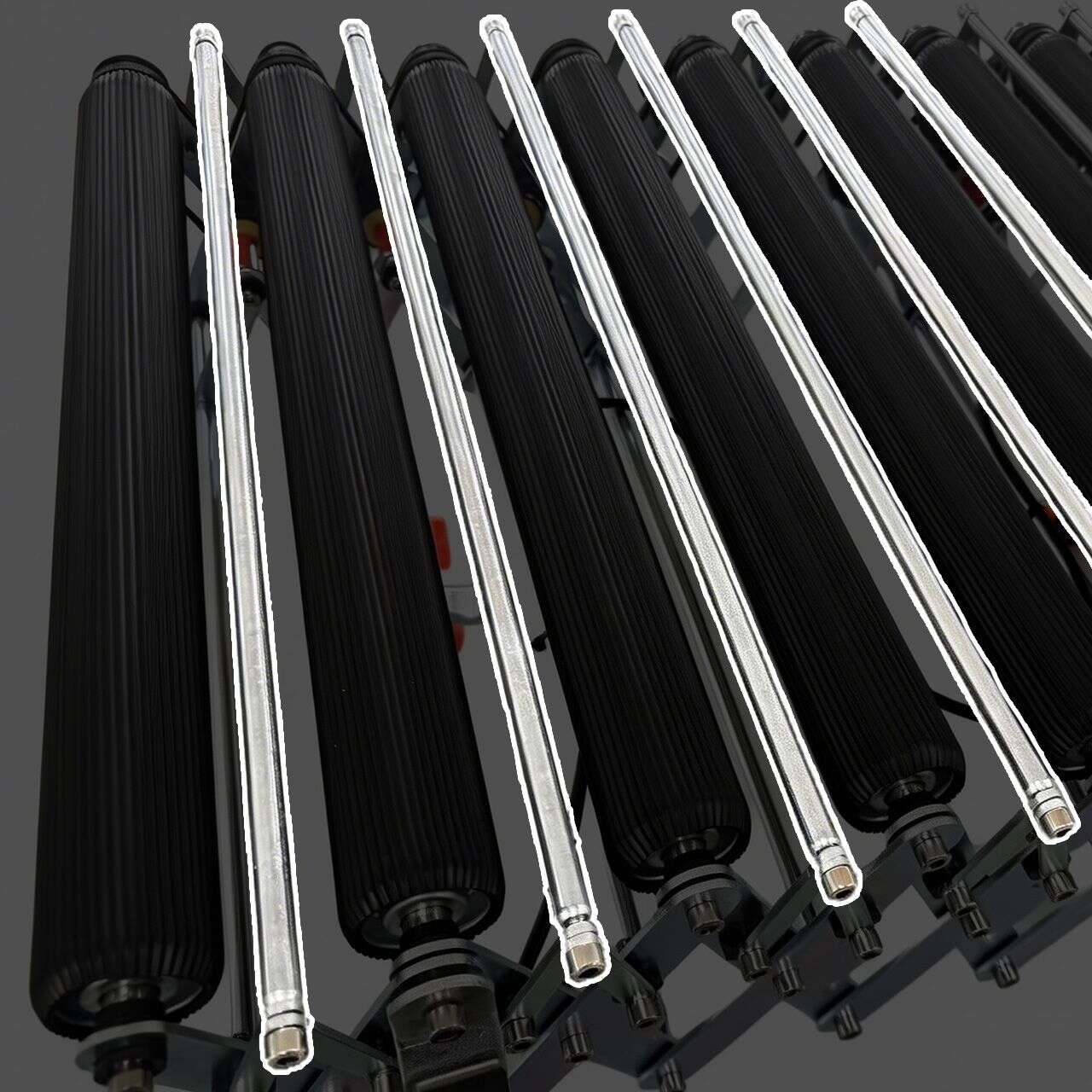
Barre d'écartement #5
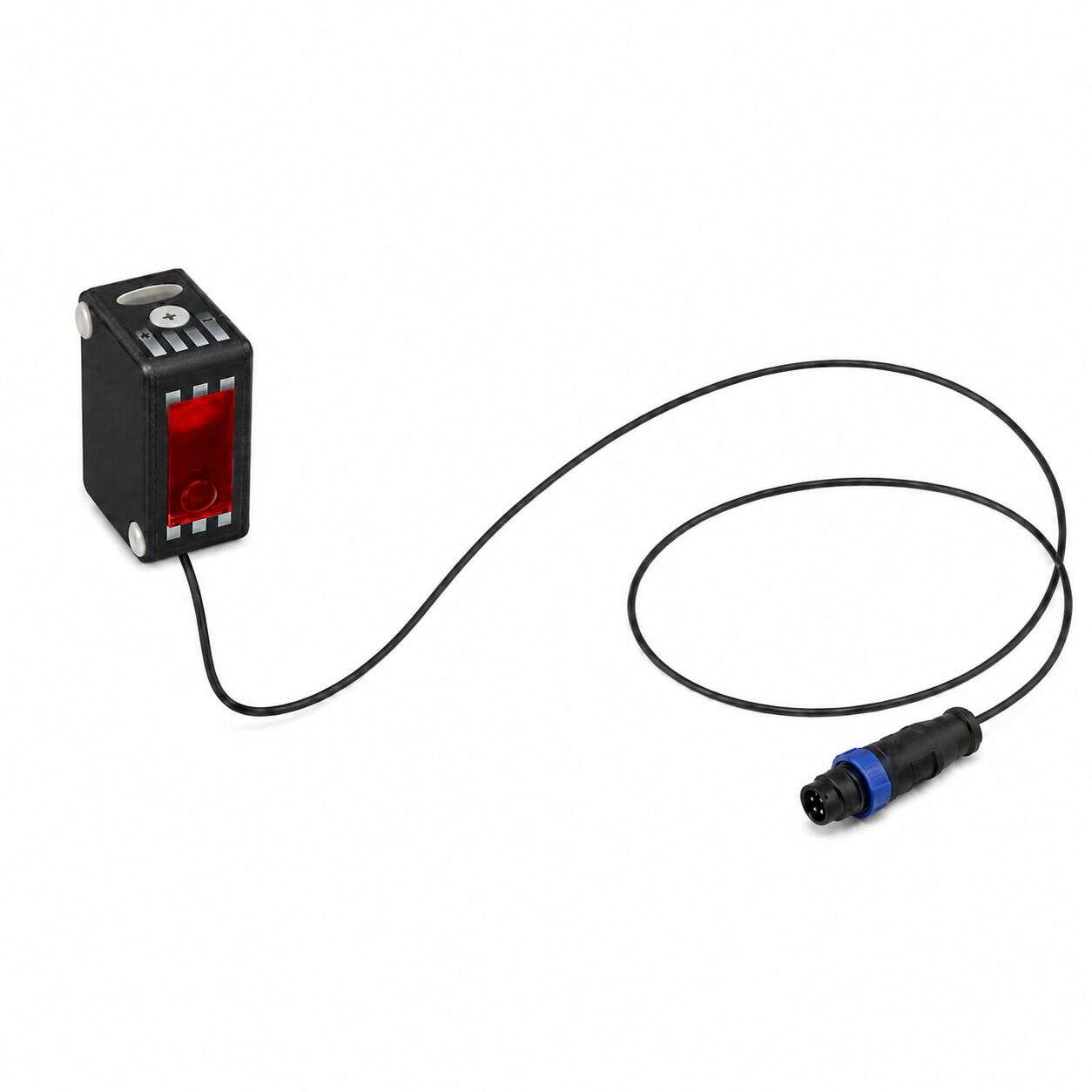
Capteur optique #6
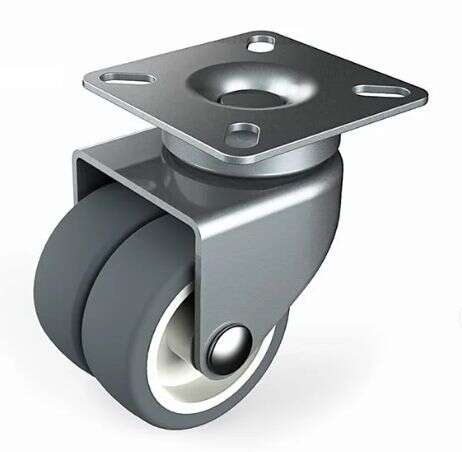
Roulette pivotante à double roue #7
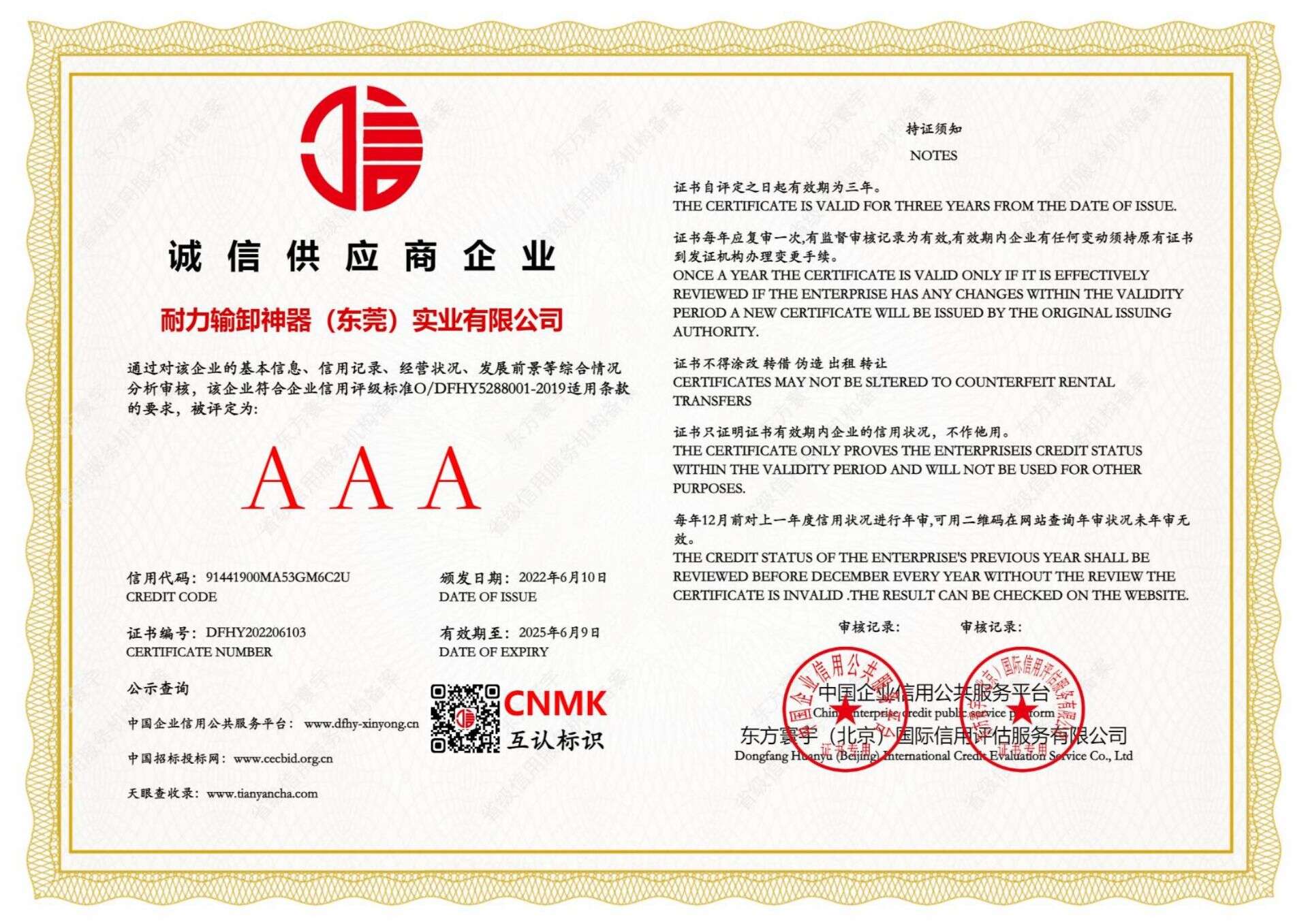
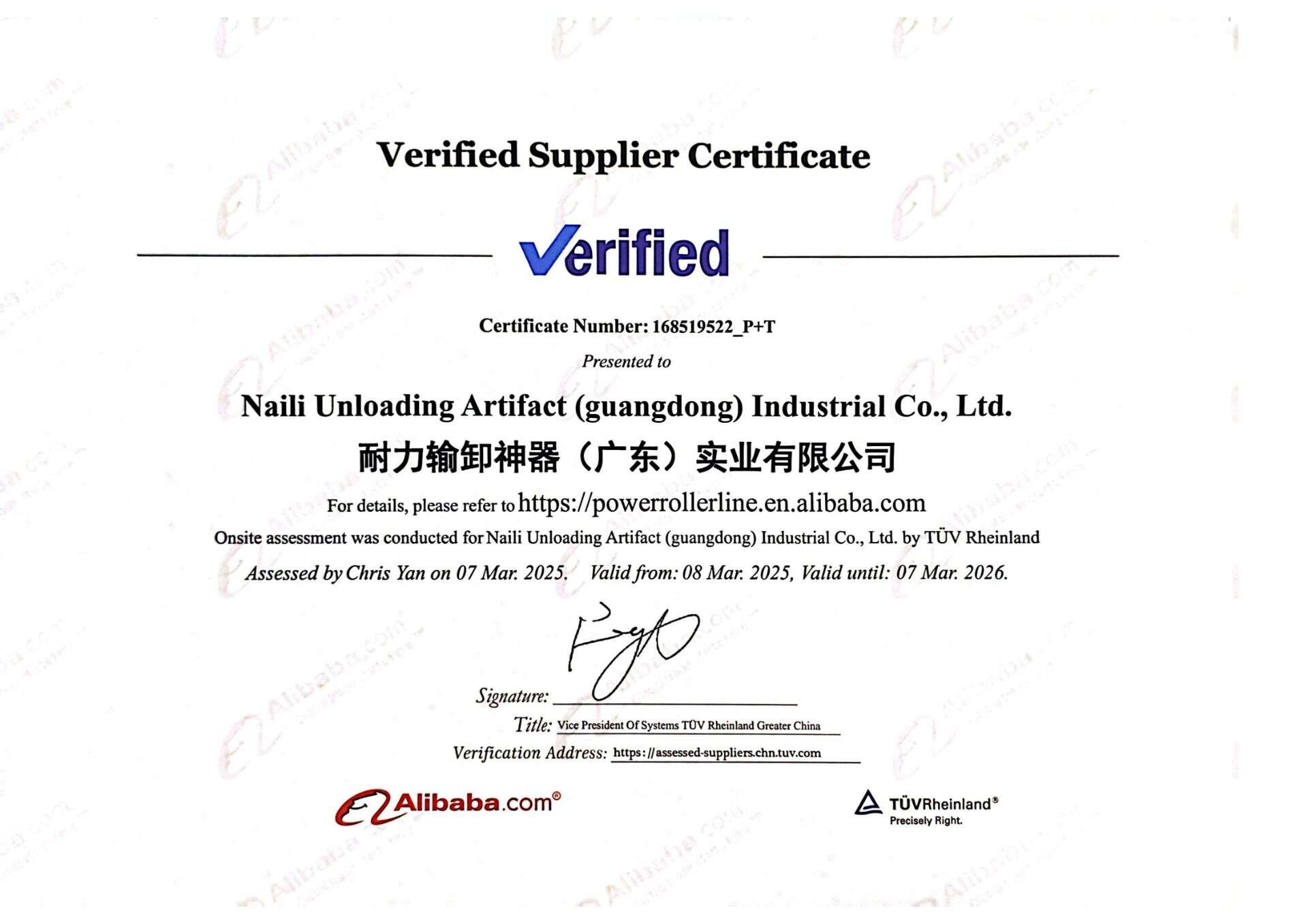
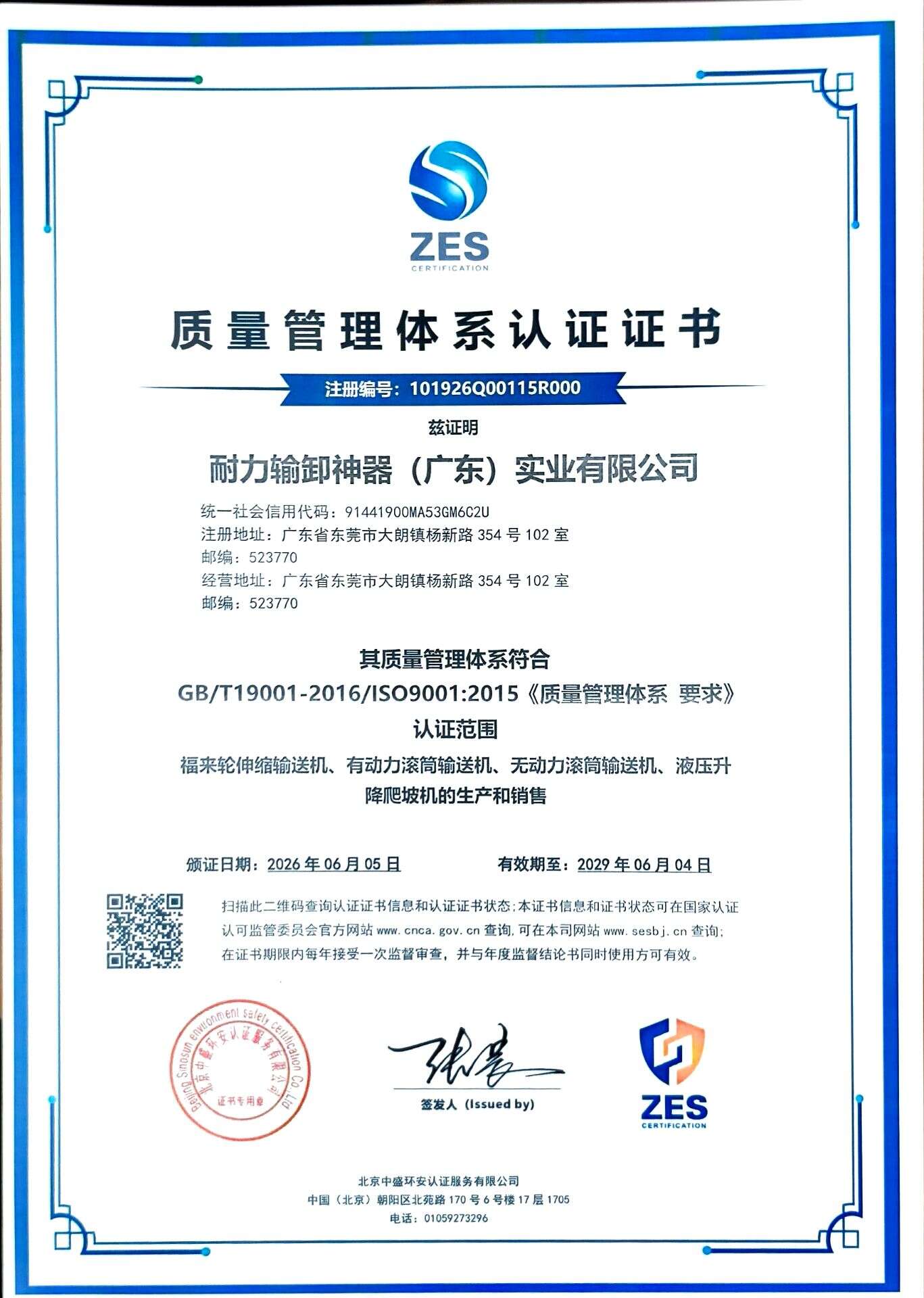
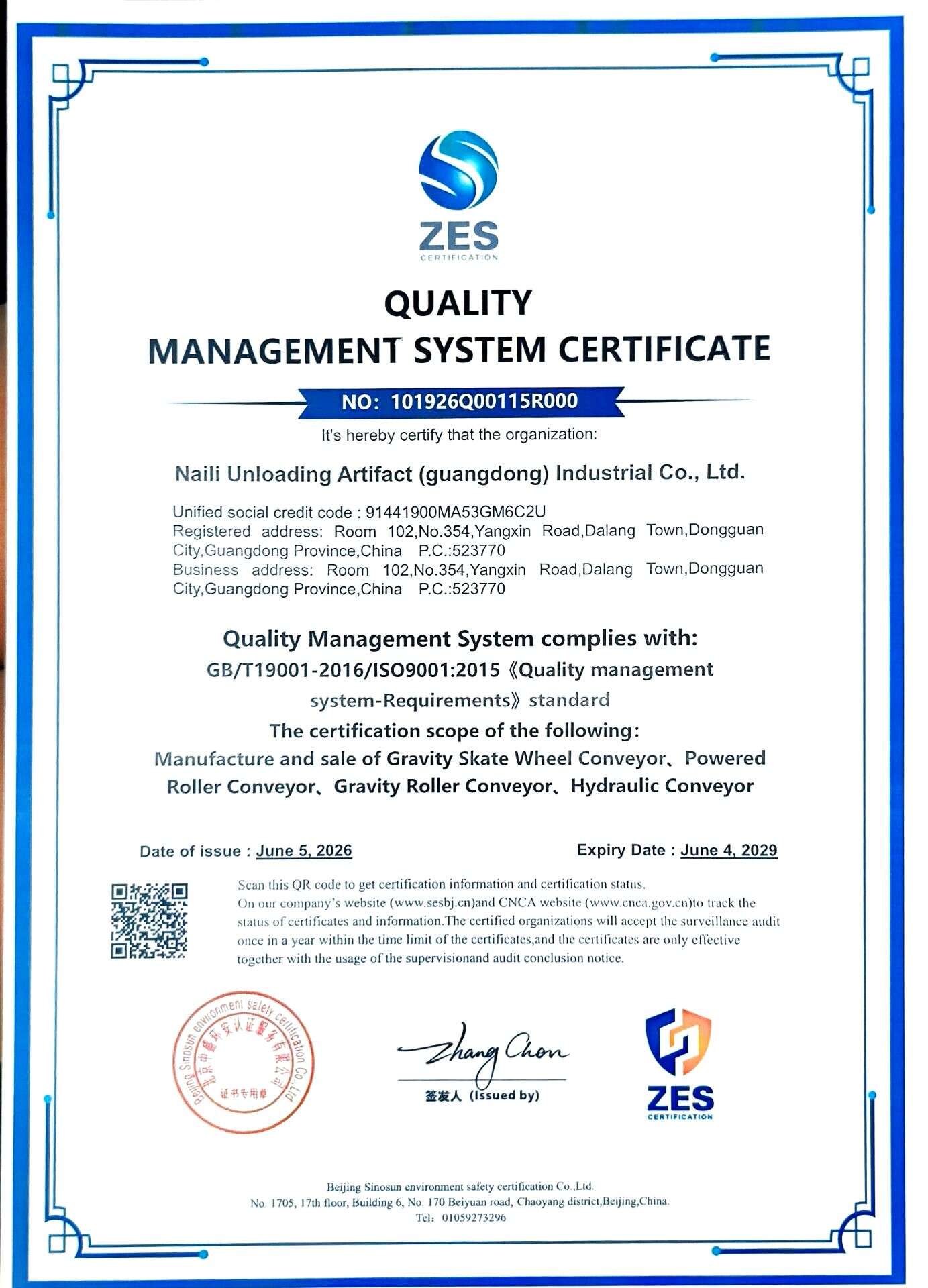
Certifications et rapports
Multi-Wedge Belt Powered Rubber-Covered Roller Conveyor Qualifications and Reports
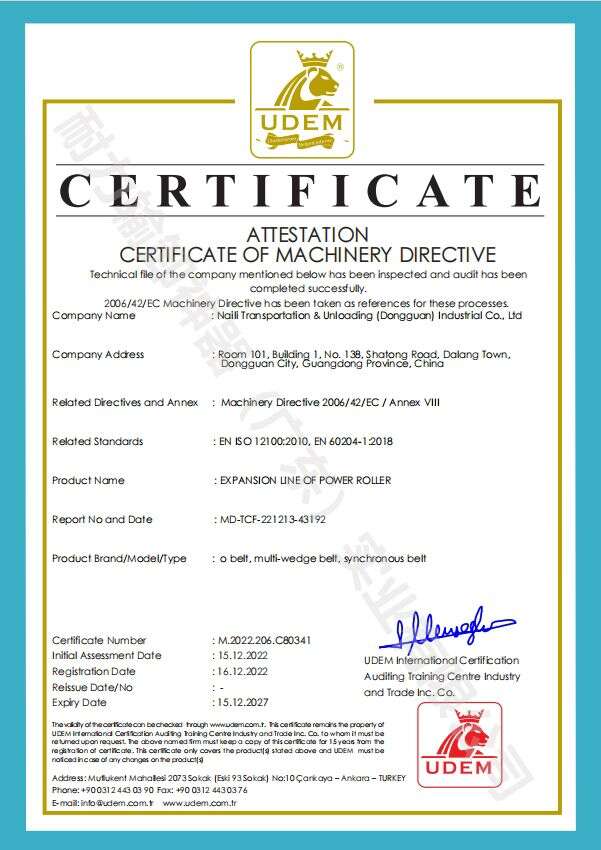
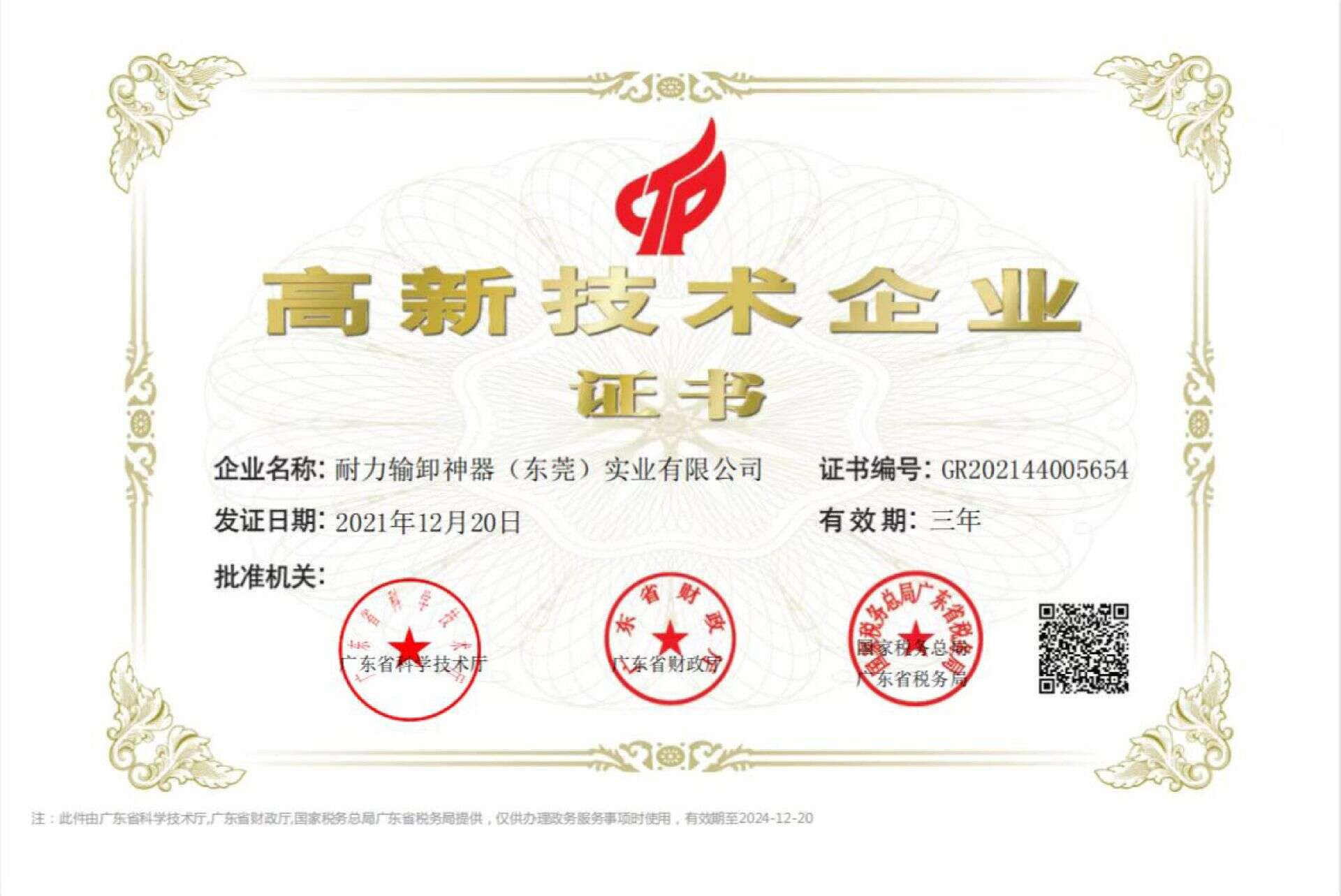
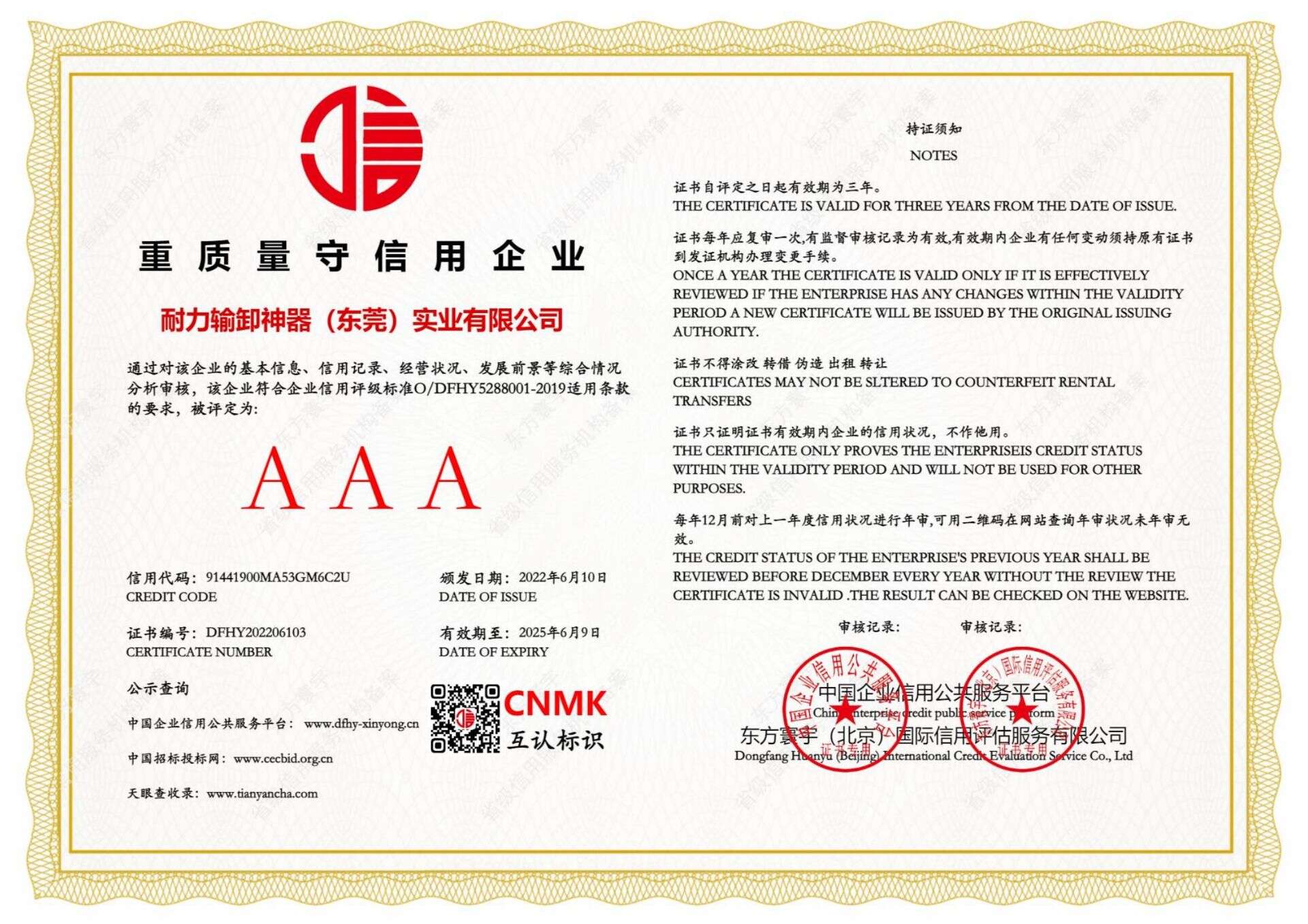
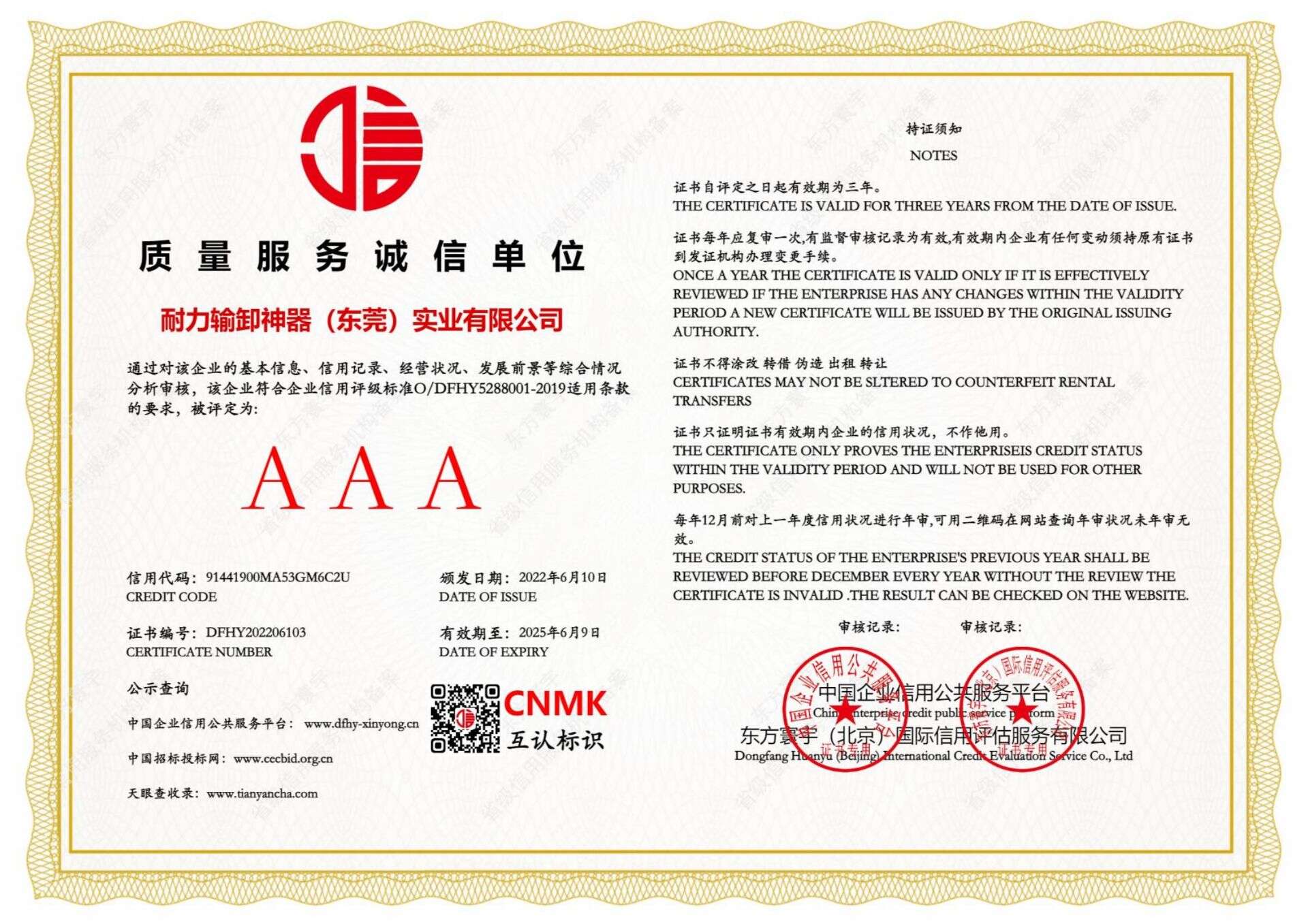
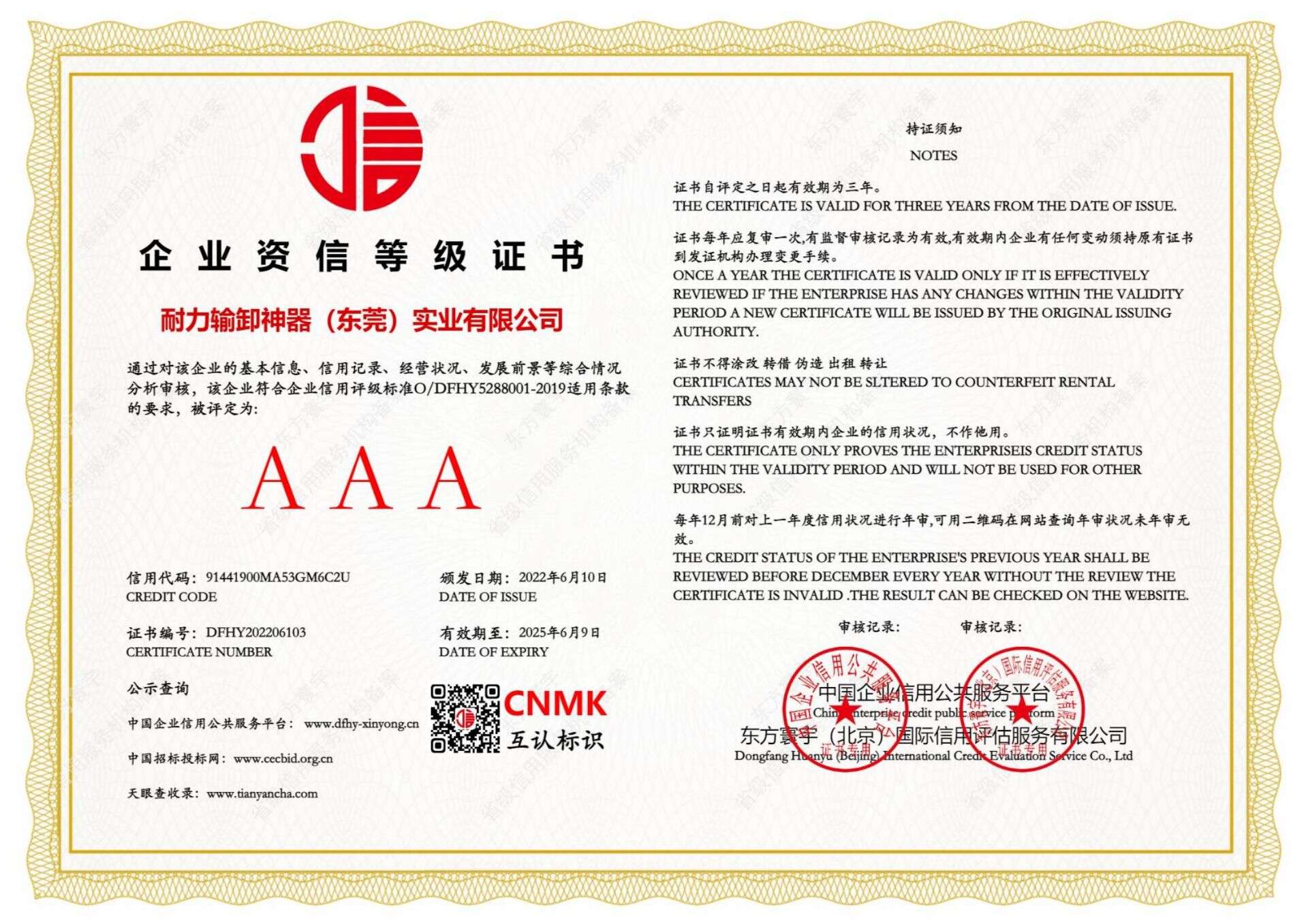
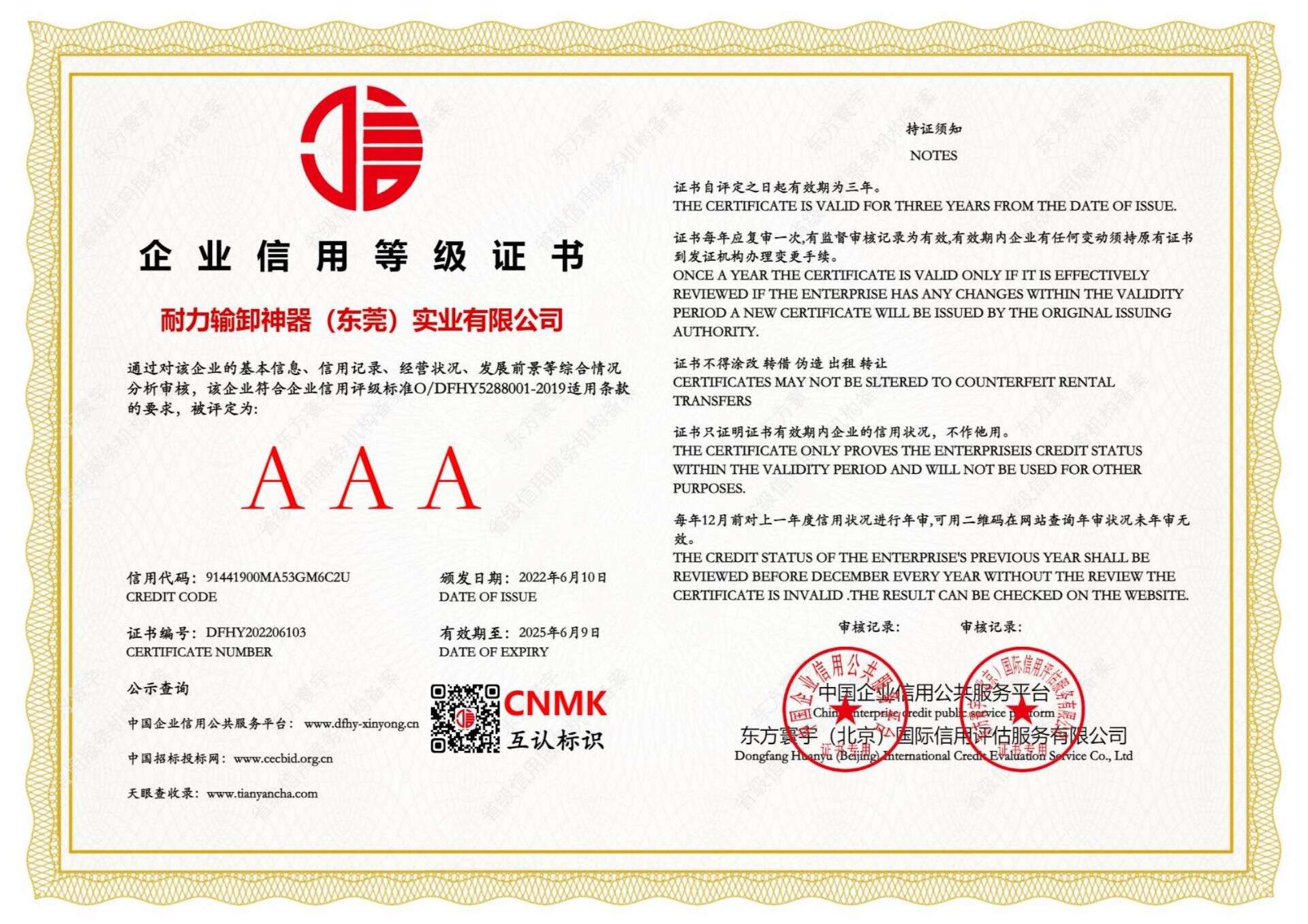
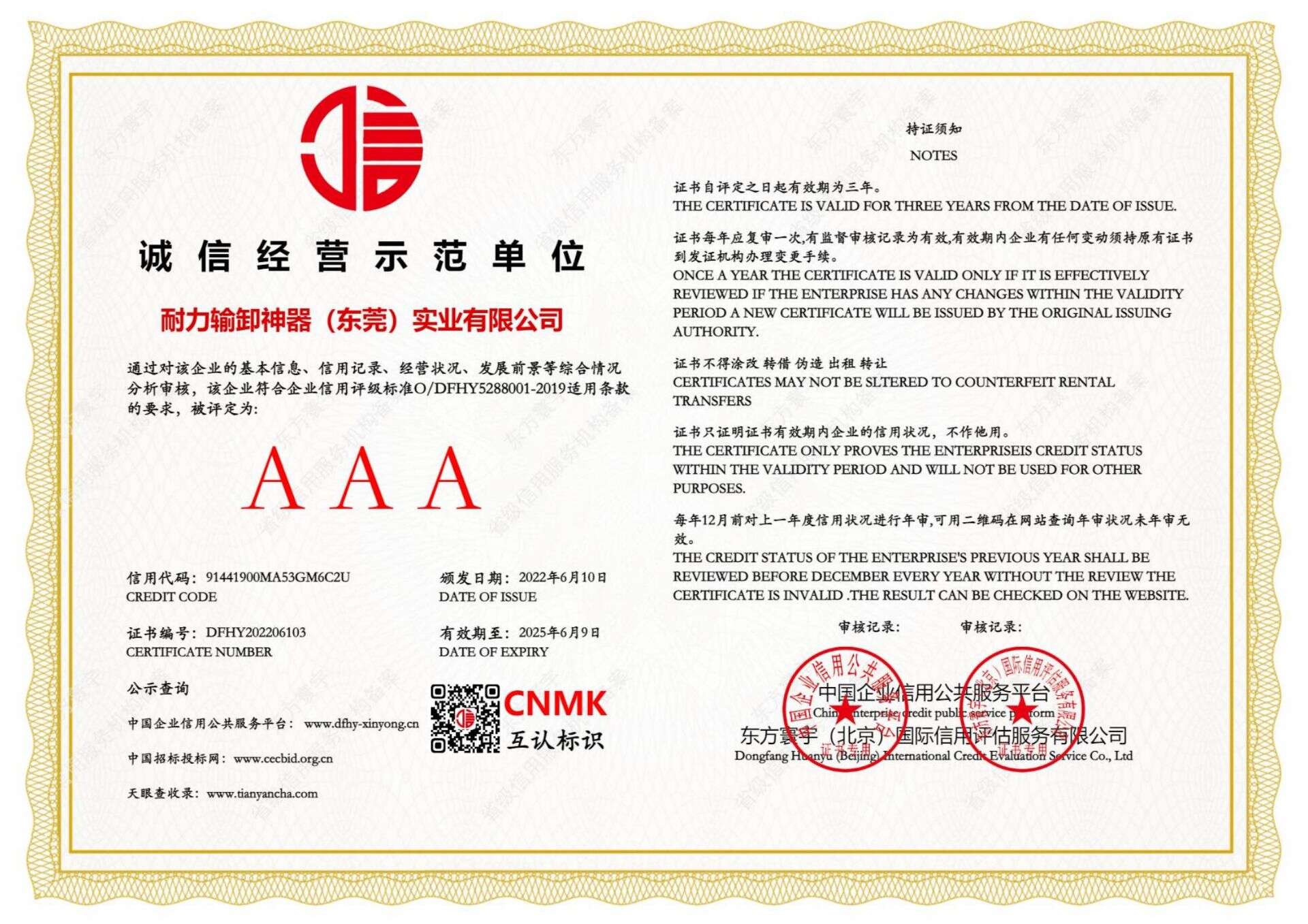
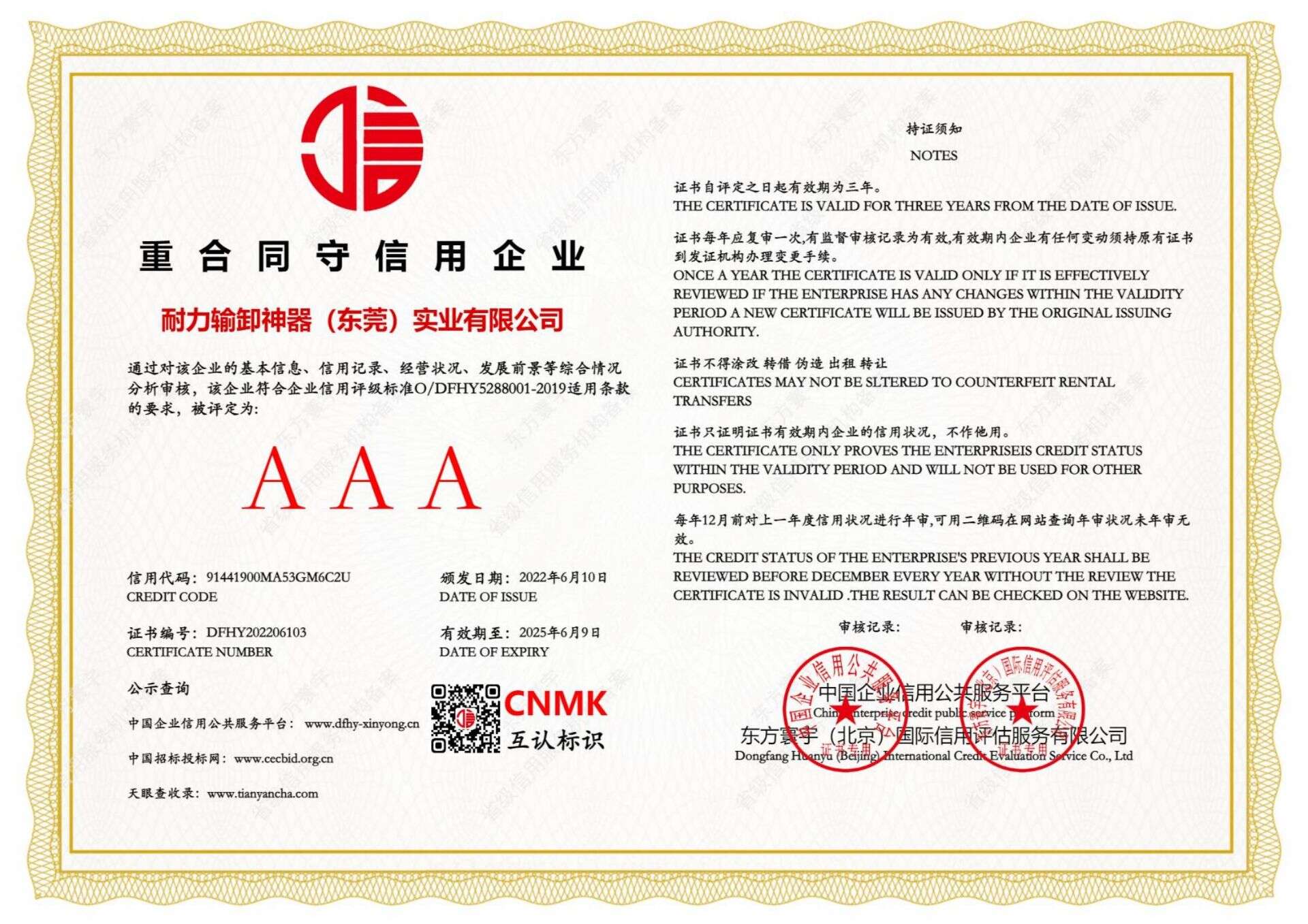
Consultez les certificats, les rapports d'essai et les certificats de brevet relatifs à ce produit afin de vérifier plus facilement ses caractéristiques et ses fondements techniques.
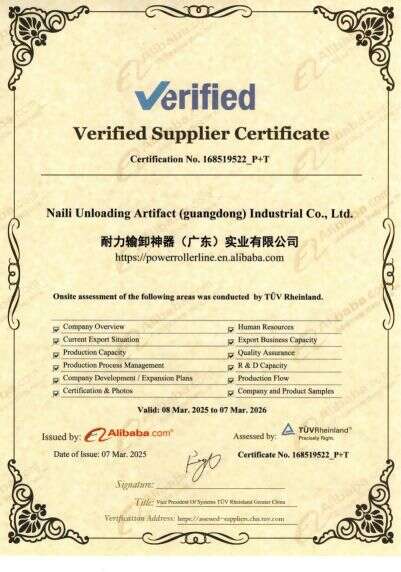
Certificats

Photos et vidéos réelles
Multi-Wedge Belt Powered Rubber-Covered Roller Conveyor Product Images
Consultez la configuration des équipements, leur état sur site et les détails de leur fonctionnement grâce à des galeries de photos et des vidéos.
Photos et vidéos réelles
Multi-Wedge Belt Powered Rubber-Covered Roller Conveyor Case Videos
Consultez la configuration des équipements, leur état sur site et les détails de leur fonctionnement grâce à des galeries de photos et des vidéos.
Photos et vidéos réelles
Vidéos de présentation des produits
Découvrez en un clin d'œil les principes de configuration et de fonctionnement de ce produit grâce à des vidéos consacrées à la sélection, à l'installation et à l'utilisation.
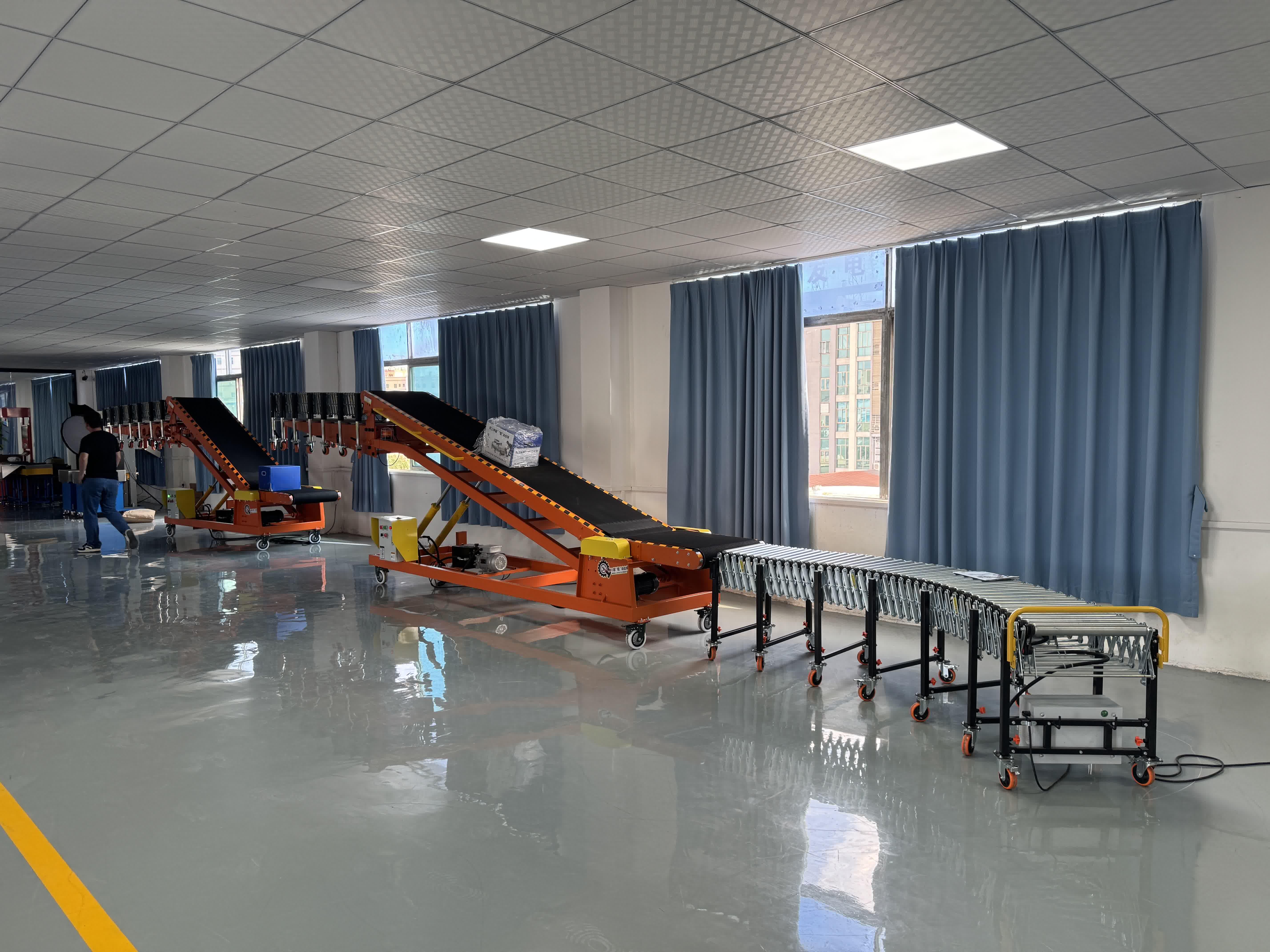
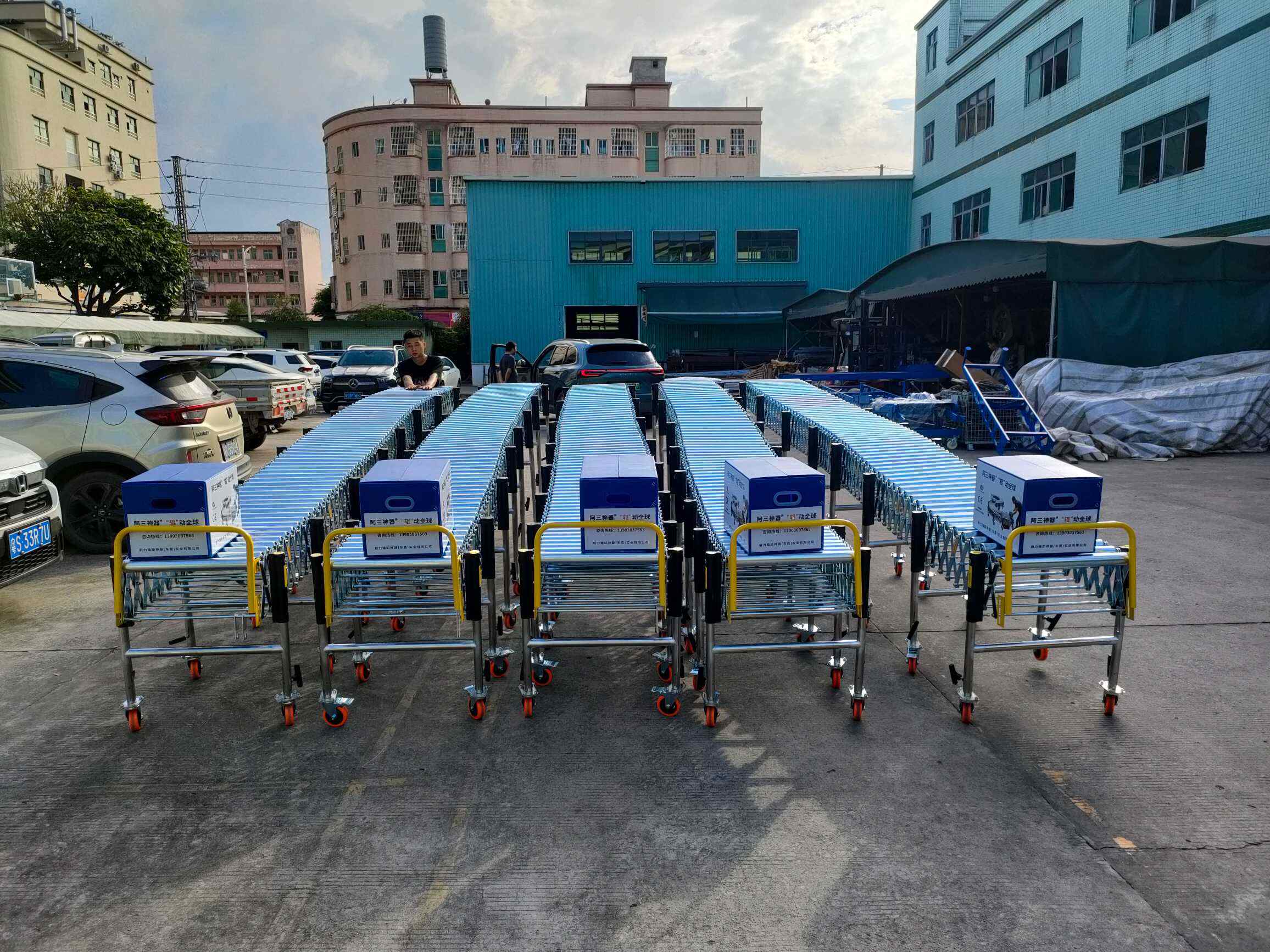
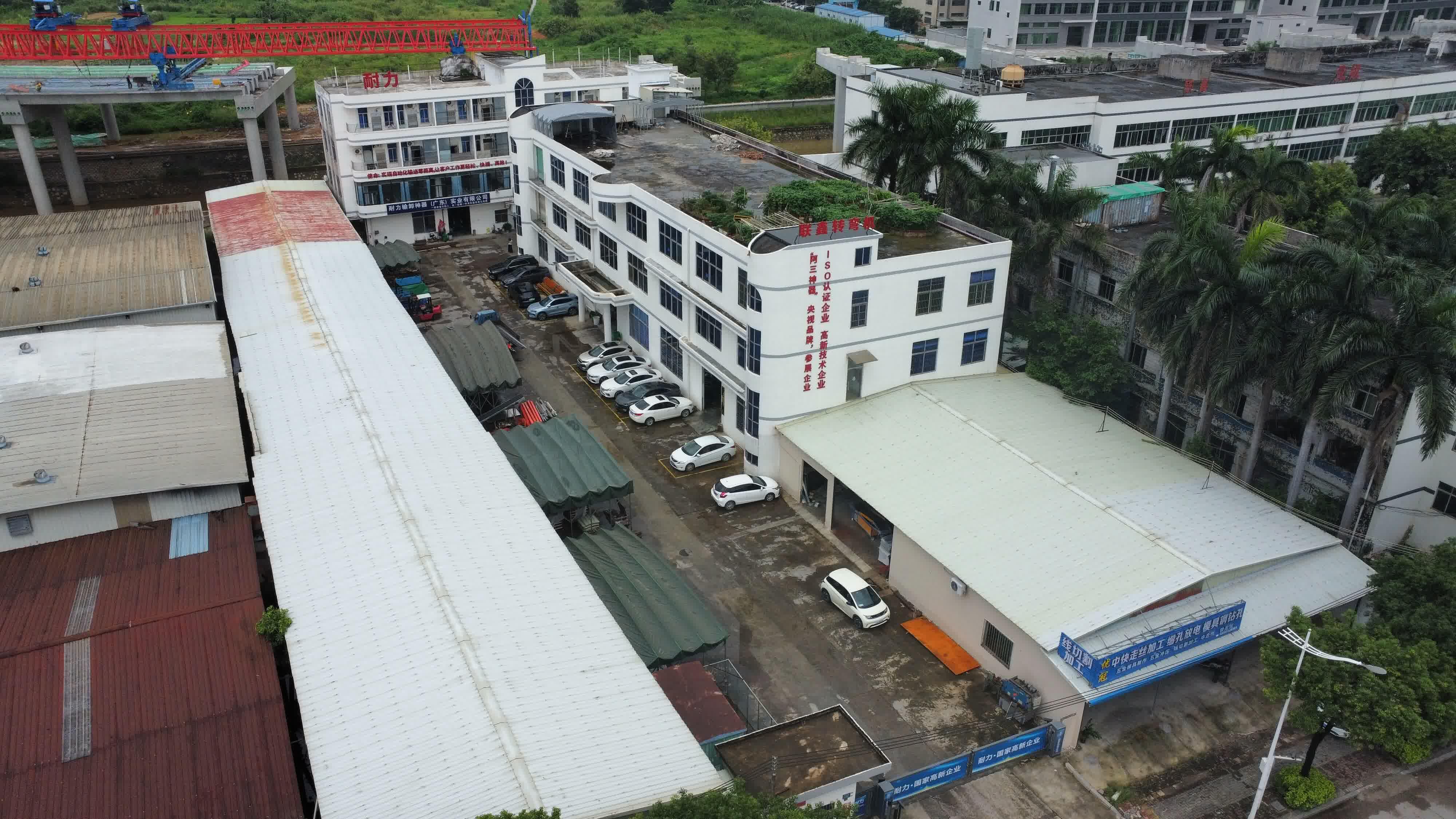
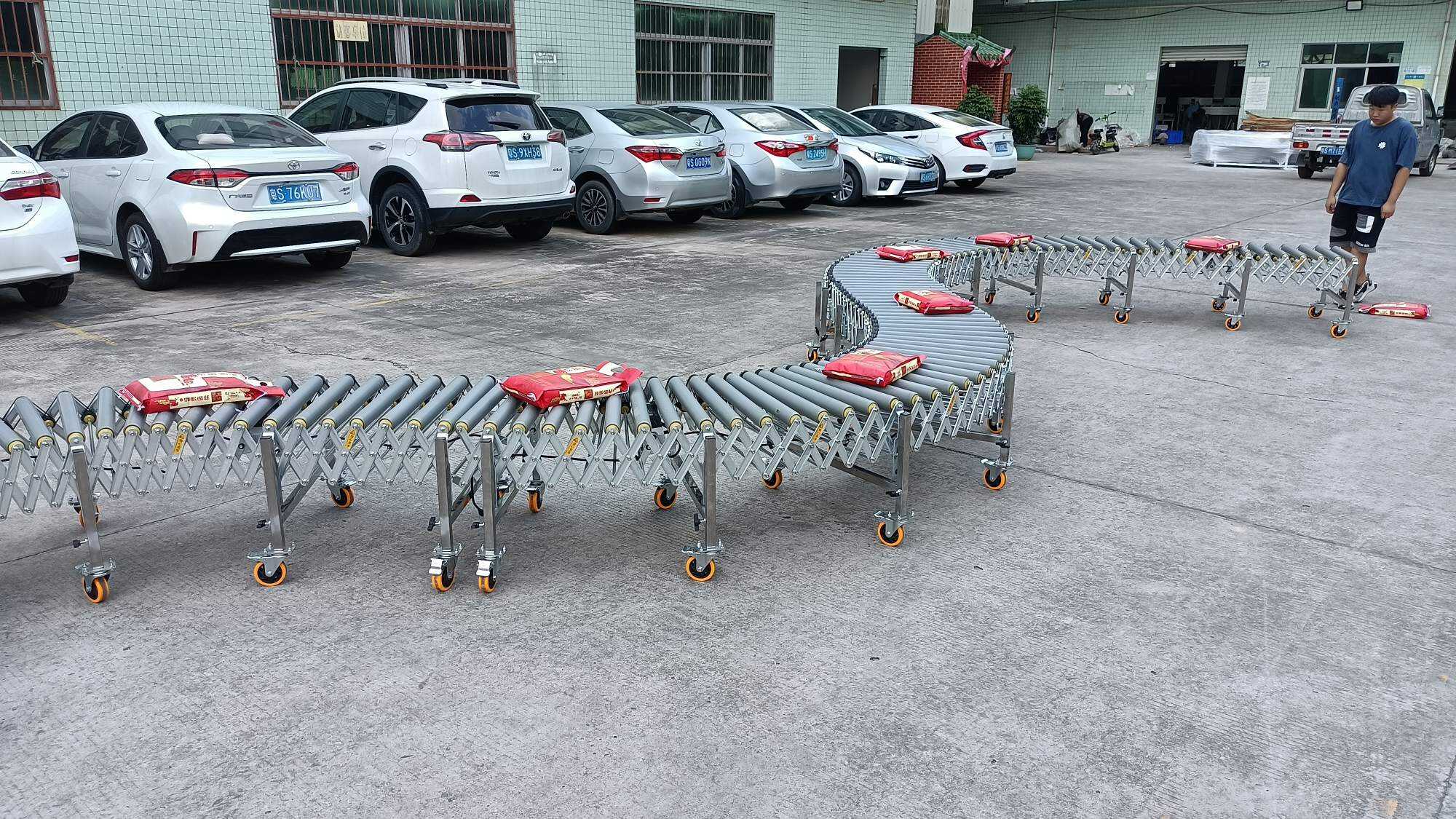
Puissance d'origine
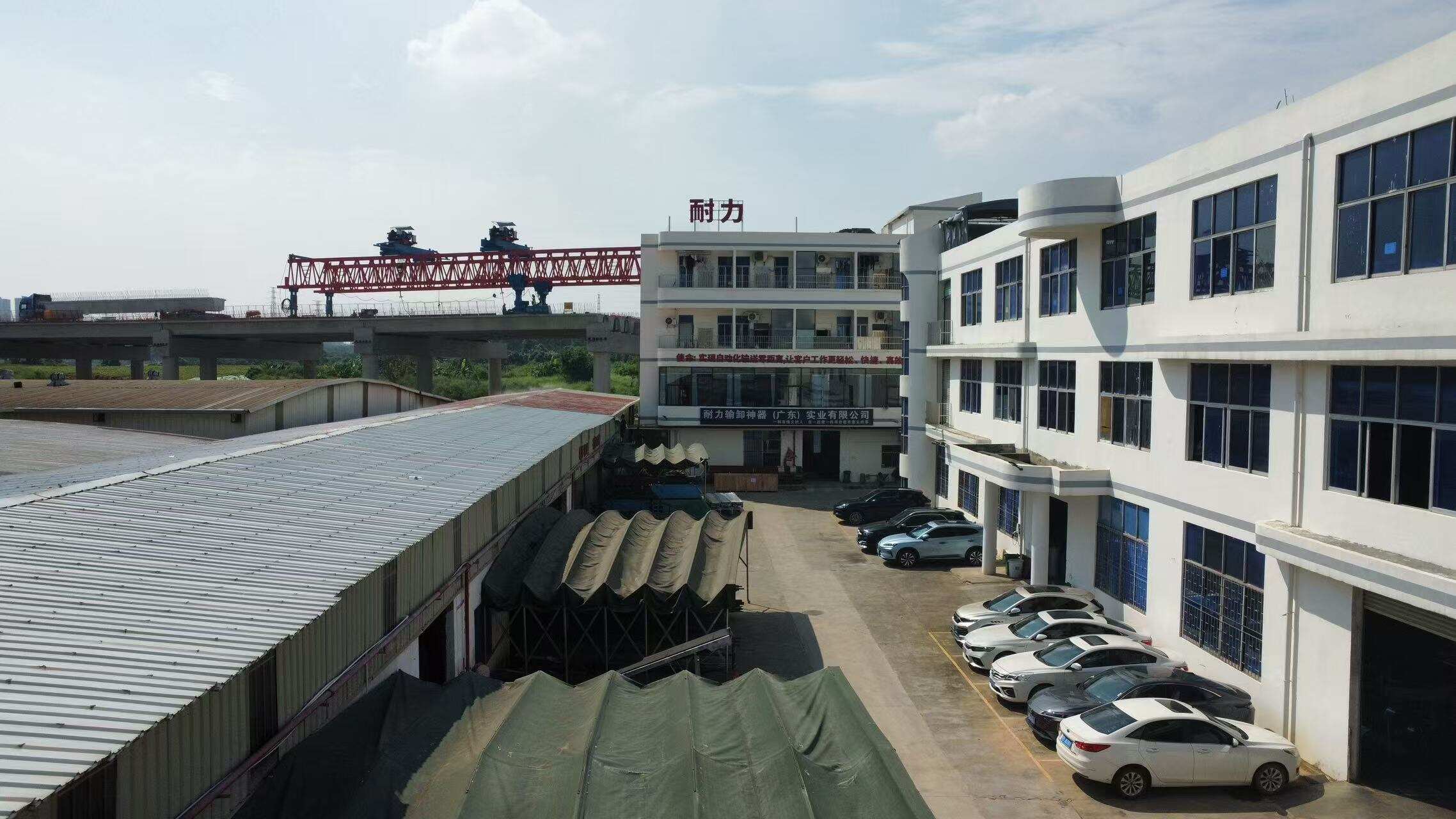
Découvrez les équipements de production, l'environnement de l'atelier, la capacité de traitement et le contrôle qualité grâce à des photos et des vidéos réelles.
Image
Photo de l'usine n° 3
Image
Image principale de l'usine
Image
Photo de l'usine n° 4
Image
Photo de l'usine n° 2
Image
Photo de l'usine 1
Caractéristiques techniques
Caractéristiques et données techniques
Consultez les paramètres essentiels, les spécifications détaillées et les documents téléchargeables par modèle.
Multi-Wedge Belt Powered Rubber-Covered Roller Conveyor Technical Specifications
PRRC-M-1.1
The multi-wedge belt Powered Rubber-Covered Roller Conveyor mainly addresses the smooth conveying of bagged goods, cartons, rolls, and some drum-type goods during in-warehouse transfer, the transition section in front of loading and unloading points, and route changes in the work area. It is suitable for sites where the cargo shape is relatively stable and the bottom can rest on the rollers and pass through smoothly, especially for on-site setups that require changing the conveying direction, length, or turning arrangement while conveying. Before purchase, check three things first: whether the weight of each item and the condition of the bottom are within the applicable range; whether the required width, length, and turning method match the model; and whether the heights and cycle times between the front and rear equipment, manual loading point, and receiving point can be connected. If the site involves multiple-section combinations, a longer line, or connection with other equipment, some length and layout parameters must be confirmed according to the final model or engineering requirements.
Sites concernés et limites relatives au fret
This type of equipment uses a multi-wedge belt drive combined with rubber-covered rollers. The focus is not on handling extra-heavy items, but on making bagged goods, soft packaging, or cargo with a surface that is prone to slipping move more smoothly during conveying. Common applicable cargo includes bagged goods, cartons, rolls, metal drums, and plastic drums, but the single-item weight boundary differs by section length model, so it cannot be regarded as fully universal just because it belongs to the same series.
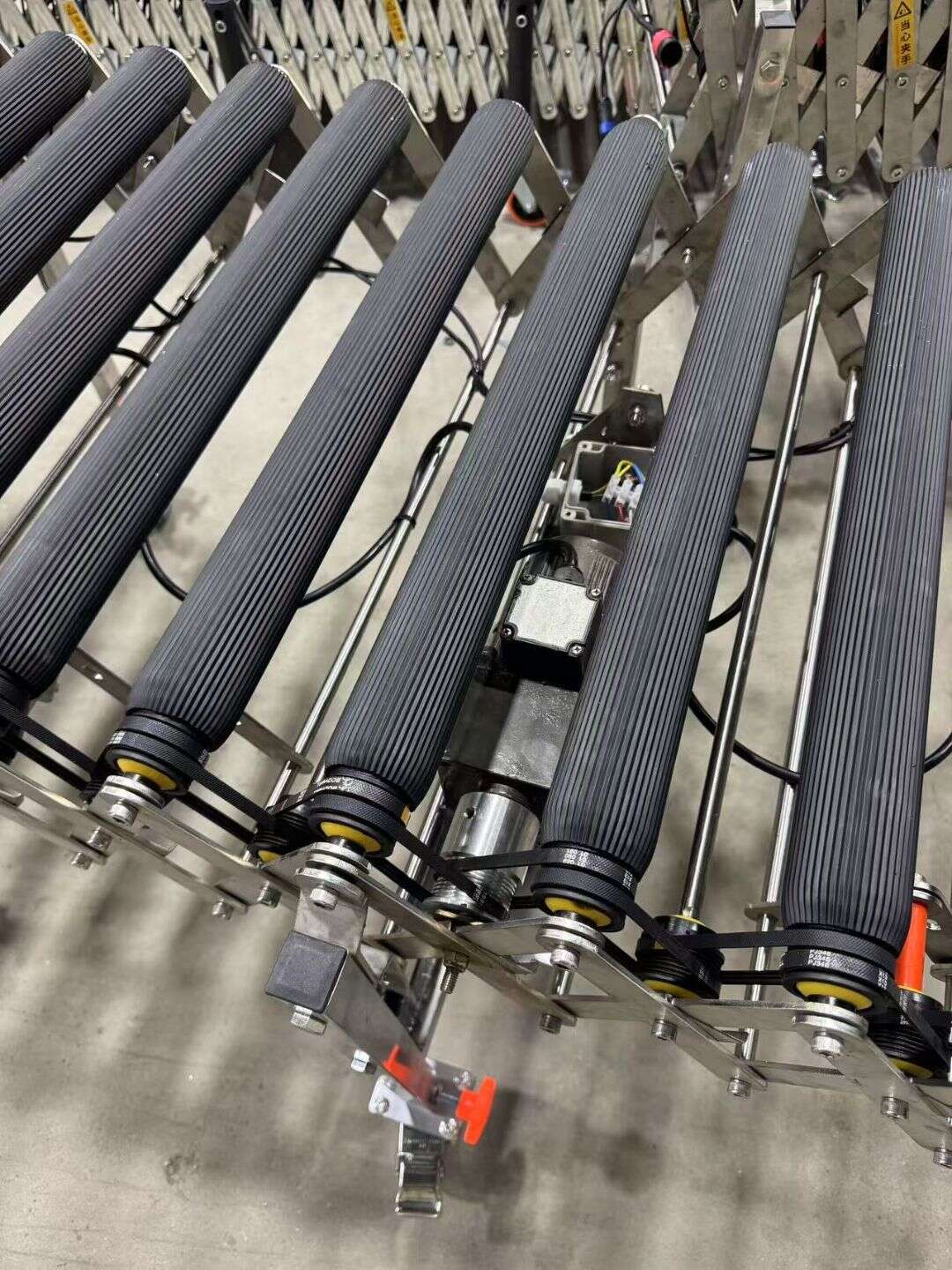
When making an on-site judgment, focus on the following situations:
- Bagged Goods: Suitable for the main scenarios of this series, but distinguish whether the bag body is soft, whether it is prone to sinking, and whether there is obvious bulging. The softer the bagged item, the more important it is to verify the weight of each item and the bottom contact area.
- Cartons and Rolls: The bottom or supporting surface must be able to move forward stably on the rollers, without easy jamming or deviation.
- Metal Drums, Plastic Drums: Can be conveyed, but the drum-bottom contact condition, rolling tendency, and manual straightening method should be confirmed.
- Sites Requiring Route Changes: Suitable for layouts in warehouses, factories, and logistics sites where the route length or direction is frequently adjusted.
- Workstations Requiring Turning or Extension: Can be used in extendable and turning layouts, but the actual turning radius, combined length, and passage occupation must be confirmed according to the final model or engineering requirements.
The following situations require a higher level of confirmation in advance:
| Site Conditions | Jugement | Recommended Handling |
|---|---|---|
| Soft bagged items, bottom easily deforms | Local sinking or posture changes may occur easily | Provide the bagged item dimensions, weight per item, and bottom contact condition, then confirm the effective width and section length first |
| Drum-type goods have a small bottom contact area | Transport becomes more dependent on posture stability | First confirm the unit weight, bucket bottom diameter, and whether manual straightening is needed |
| The line needs frequent direction changes | It is also necessary to check both the turning and folding space | Provide the aisle width, corner positions, and equipment parking positions |
| Interface with upstream and downstream equipment | Height and takt time affect passability | Provide the heights of the front and rear equipment, incoming direction, and receiving method |
| A long conveying section needs to be laid out on site | The number of sections affects the total length and drive distribution | Provide the total conveying distance and the daily folding position |
Comment interpréter les principaux paramètres
When purchasing this type of equipment, first look at 5 main parameters: effective width, unit weight limit, load capacity per meter, speed range, and the relationship between extended and retracted lengths per section.
| Paramètres | Incidence sur le choix du modèle | Comment confirmer sur place |
|---|---|---|
| Largeur utile : 500/600/800/1 000 mm | Determines whether the goods can be placed stably and whether side-by-side conveying is required | Measure the maximum overall dimensions of the goods and confirm whether they can pass in a single row |
| Load capacity: 80-120 kg/m | Determines the load that can be carried per unit length | Check the number of goods and the total weight present on the conveying section at the same time |
| Unit weight limit | There are significant differences between different section lengths in the same series | Confirm item by item according to the shape of the goods; different models cannot be judged interchangeably |
| Vitesse : 0,3 à 40 m/min | Affects manual placement, scanning, receiving, and downstream takt time | Confirm according to the manual loading speed and the speed of the downstream equipment |
| Extension ratio: 1: 1.96 / 1: 2.55 / 1: 2.86 | Determines the extended length and the footprint when folded | Measure both the working-state space and the non-working parking space |
The clearly defined limits of this series include:
- Effective width options: 500/600/800/1000 mm.
- The speed range is 0.3-40 m/min, suitable for low-speed manual loading as well as faster line integration.
- The load capacity per meter is 120 kg for the 2 m/section and 1.1 m/section models; 80 kg for the 3 m/section model.
- Roller diameter is 50 mm.
- The extended length per section is 1100 mm, 2000 mm, and 3000 mm respectively; the retracted-to-extended ratios are 1: 1.96, 1: 2.55, and 1: 2.86 respectively.
If the site needs to calculate total length, folded length, number of motors, or parking space based on multi-section splicing, the overall configuration should be confirmed according to the final model or engineering requirements.
How to choose among models in the same series
The main differences within the same series are not in the drive principle, but inSingle-section length, extension ratio, load per meter, and single-item weight limits.
- 1.1 m per section: Shorter single sections and a smaller footprint when retracted, suitable for areas with narrow aisles, many turning points, and a need for more flexible movement and layout. This model carries 120 kg per meter, with common cargo limits of metal drums, plastic drums, rolls, and cartons at no more than 100 kg per item, and bagged goods at no more than 50 kg.
- 2 m per section: Suitable for most warehouse handoff points and the transition section in front of loading and unloading openings. This model carries 120 kg per meter, with common cargo limits of metal drums, plastic drums, rolls, and cartons at no more than 80 kg per item, and bagged goods at no more than 25 kg.
- 3 m per section: Longer single sections and higher deployment efficiency, but the load capacity drops to 80 kg per meter and the single-item limit is lower as well. Common cargo limits are metal drums, plastic drums, rolls, and cartons at no more than 50 kg per item, and bagged goods at no more than 15 kg. Suitable for sites with lighter goods and a need to reduce the number of sections.
If the cargo on site is heavier, or bottom impact is more pronounced, you can also compare it with the Convoyeur à rouleaux à chaîne, recouvert de caoutchouc. This type of comparison should focus on the load-bearing method and cargo weight limits, rather than judging only by appearance or length.
How the front and rear sections are connected
The multi-wedge-belt Powered Rubber-Covered Roller Conveyor is often placed in manual sorting areas, scanning areas, the front section of loading and unloading openings, or distribution areas, to move goods from the upstream receiving point to the downstream receiving point. When connecting, focus on confirming the following four aspects:
- Height: Whether the discharge height of the front section, the receiving height of the rear section, and the manual operating height are consistent. The leg height can be adjusted manually, but the adjustment range and the overall line height difference must be confirmed according to the final layout.
- Cycle time: If upstream goods arrive quickly and downstream receiving is slow, the conveying speed should be set within a range that can be controlled manually to avoid bagged items piling up.
- Direction: The equipment supports forward and reverse rotation, making it suitable for on-site bidirectional adjustment of inbound and outbound directions, but the operating authorization and shutdown confirmation points should be clearly defined when switching.
- Transition form: If combined with a Hydraulic Conveyor or equipment extending into a truck compartment, confirm whether the transition section will have any drop, gap, or change in cargo posture.
For loading, unloading, or height-difference connections, it can be arranged in combination with Convoyeur hydraulique de taille moyenne; when a deeper reach into the truck compartment is required, you can check the Convoyeur télescopique à 4 sections. This type of combination is mainly used for connection between the inside and outside of the truck compartment, and the site should also provide the compartment floor height, door position, working aisle width, and operator standing position.
Situations in which direct use is not recommended
In the following situations, it is not suitable to place an order directly for the model on this page; the conveying method or load-bearing limits must be reconfirmed first:
- The single-item weight exceeds the cargo limit of the model for the corresponding section length.
- Bagged items are very soft and may noticeably sink, twist, or catch on the rollers.
- The cargo has a small bottom contact area, unstable shape, and is prone to rolling or deviating, while manual straightening cannot be arranged on site.
- Long-distance, high-density accumulation conveying is required, causing excessive load per unit length.
- The route includes obvious height differences, drop transitions, or requires entry into and exit from a truck compartment, which the unit alone cannot handle.
- The floor is uneven, the aisle has obvious thresholds or slopes, and stability after moving and locking needs to be reconfirmed.
If the main issue on site is the height transition between the truck compartment and the ground, this unit is usually used as a flat conveying section, while the lifting or lowering part should be handled by Convoyeur hydraulique de taille moyenne or other front- and rear-section equipment.
Aménagement et entretien sur site
The main on-site value of this type of equipment is flexible layout, but flexible does not mean it can be placed arbitrarily. In actual use, first draw out the retracted state, extended state, and turning state on the floor, then decide the number of sections and aisle positions.
Key points to confirm during layout:
- Whether the parking position after folding affects forklift traffic, pedestrian passage, and fire lanes.
- Whether there is enough manual operating space on both sides of the equipment after it is extended.
- After the swivel casters are locked, whether the equipment shifts when bags, boxes, or drums pass through.
- Whether the power supply entry point intersects with the movement path.
- If multiple sections are combined, the motor distribution and control point locations must be convenient for operation and stopping.
Routine maintenance mainly checks 4 items:
- The tension and wear condition of the multi-wedge belt.
- Whether powder, debris, or slipping materials adhere to the surface of the rubber-covered rollers.
- Whether the casters, locking wheels, and steering mechanism are flexible and reliable.
- Whether the start/stop, forward/reverse, emergency stop, and speed control functions are normal.
This series already includes basic functions such as start/stop, forward/reverse, emergency stop, stepless speed control from 0.3-40 m/min, manual height adjustment of the legs, and swivel casters with foot-operated wheel locks. If multi-machine linkage, long-distance control, or a special operating sequence is required on site, the control method must be confirmed according to the final model or the project.
FAQ
1. Is it suitable for bagged goods?
Yes, this is one of the main applications of this series. However, the single-piece weight limit for bagged items varies by section length: the 1.1 m/section model can handle up to 50 kg, the 2 m/section model up to 25 kg, and the 3 m/section model up to 15 kg. In addition to weight, you also need to consider whether the bag is prone to sagging, whether it bulges, and whether the bottom is stable.
2. Can it be used for drum or rolled goods?
It can be used for some metal drums, plastic drums, and rolled goods, but the single-item weight limit must be checked against the corresponding model, and it must be confirmed that the drum base or rolled support surface can pass stably on the rollers. If the goods are prone to deflection, a straightening or limiting solution should be arranged on site.
3. Which length parameters need to be confirmed?
First confirm the length of each section, the required total conveying length, the parking length after folding, the footprint after turning, and the transfer position between the front and rear sections. The total length and folded length after combining multiple sections must be confirmed according to the final model or the project.
4. What should be the main focus when connecting the front and rear sections of equipment?
Focus on height, speed, incoming direction, receiving method, and operator position. If there is a significant height difference between the front and rear sections, or if the unit needs to extend into a truck compartment, the flat conveying section and the climbing or telescopic equipment should be confirmed separately.
Confirmation before purchase
Before placing an order, it is recommended to confirm the following information at once for faster communication:
| Informations à fournir | Objectif |
|---|---|
| Cargo type: bagged / carton / rolled / metal drum / plastic drum | Determine the roller contact condition and conveying stability |
| Single-item weight, dimensions, bottom condition | Determine the suitable model and effective width |
| Required effective width: 500/600/800/1000 mm | Determine whether the goods can pass stably in a single file |
| On-site total conveying length, folded parking space | Determine the section length and number of sections |
| Whether turning is required, turning position, and aisle width | Determine the layout and footprint |
| Name and height of the front and rear section equipment | Confirm the connection method |
| Ground conditions, whether movement is frequent | Confirm caster wheels and locking usage conditions |
| Manual loading, sorting, scanning, and receiving positions | Confirm the speed range and operating side |
If the on-site setup is planned to connect to the warehouse conveyor line, you may also take a look. Convoyeur à rouleaux motorisé recouvert de caoutchouc Other models in the category; if your focus is smooth transportation of heavier goods, you can also check them at the same time. Chain Powered Rubber-Covered Roller Conveyor suitable range.