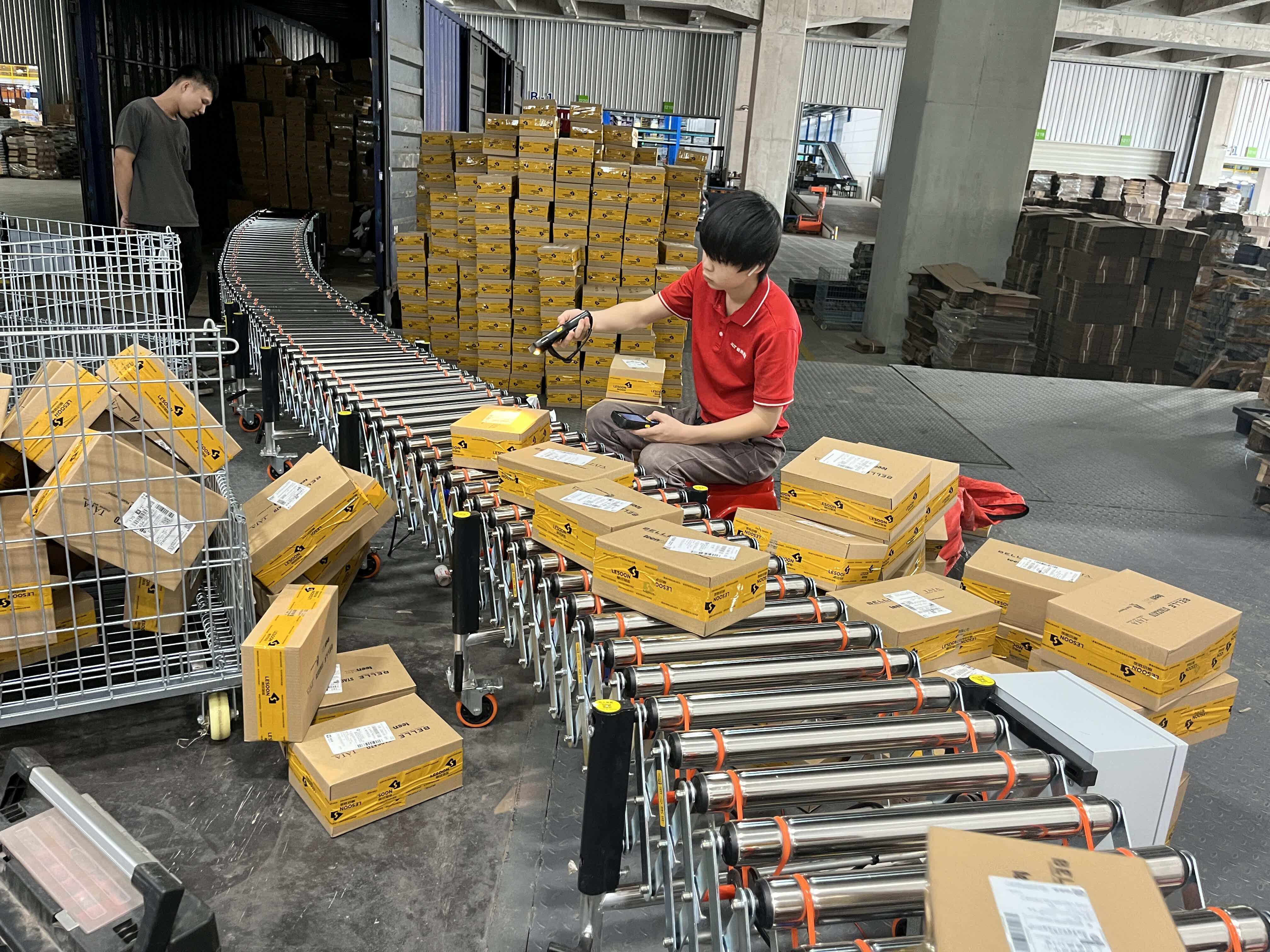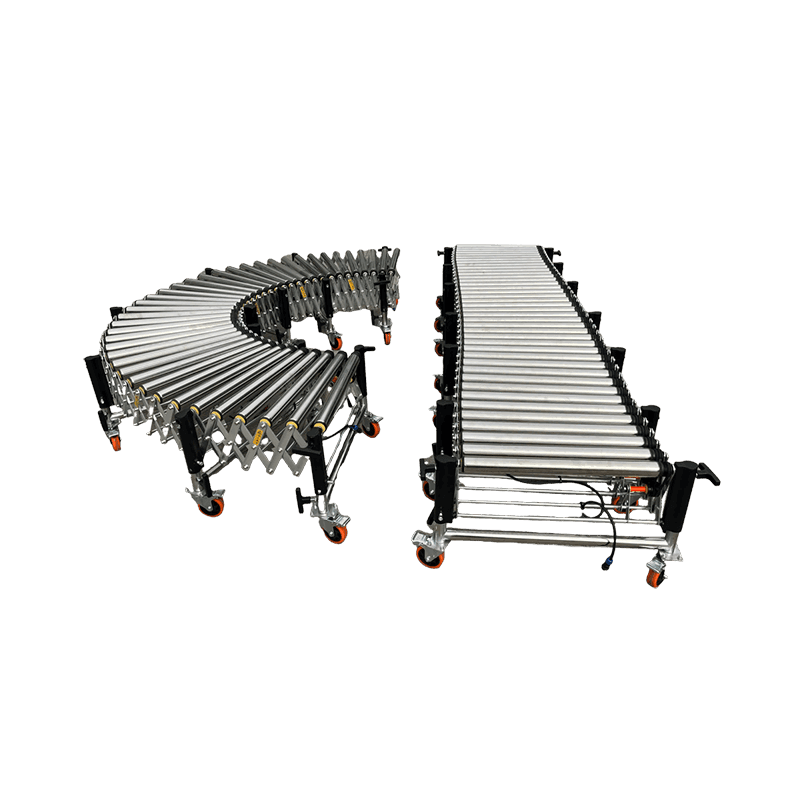
In the logistics loading and unloading stages of industries such as feed and grain, bagged goods in the 25 kg specification, due to their moderate weight and frequent handling, place high demands on loading and unloading efficiency. The customer needed a mechanized solution for a 9.6 m truck that could both load quickly and unload flexibly, replacing traditional purely manual operations and reducing labor intensity. Naili Conveyor successfully met this need by configuring a combination of a medium incline conveyor and a rubber-covered Multi-Wedge Belt Powered Roller Conveyor.
Core equipment configuration of the solution
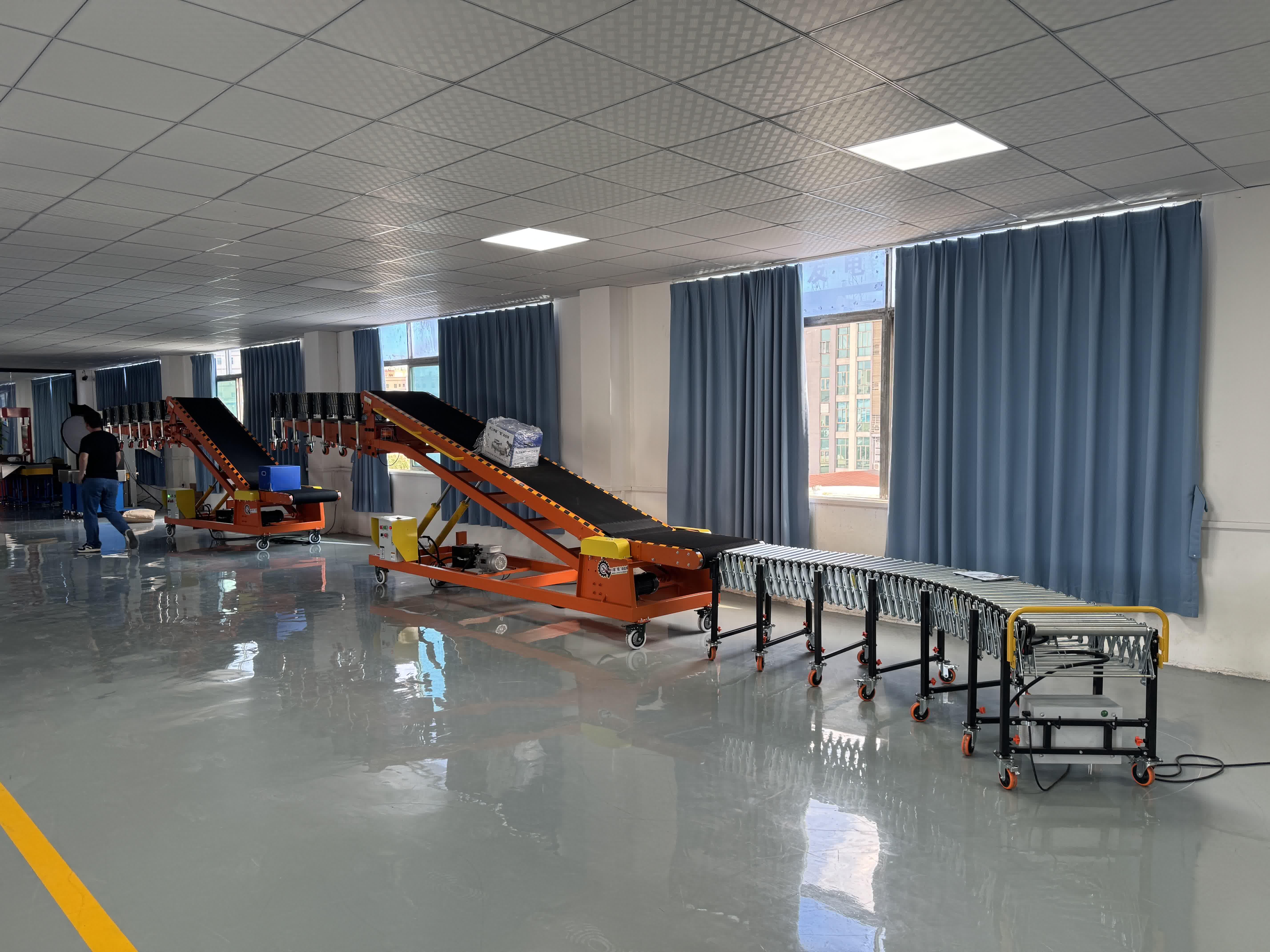
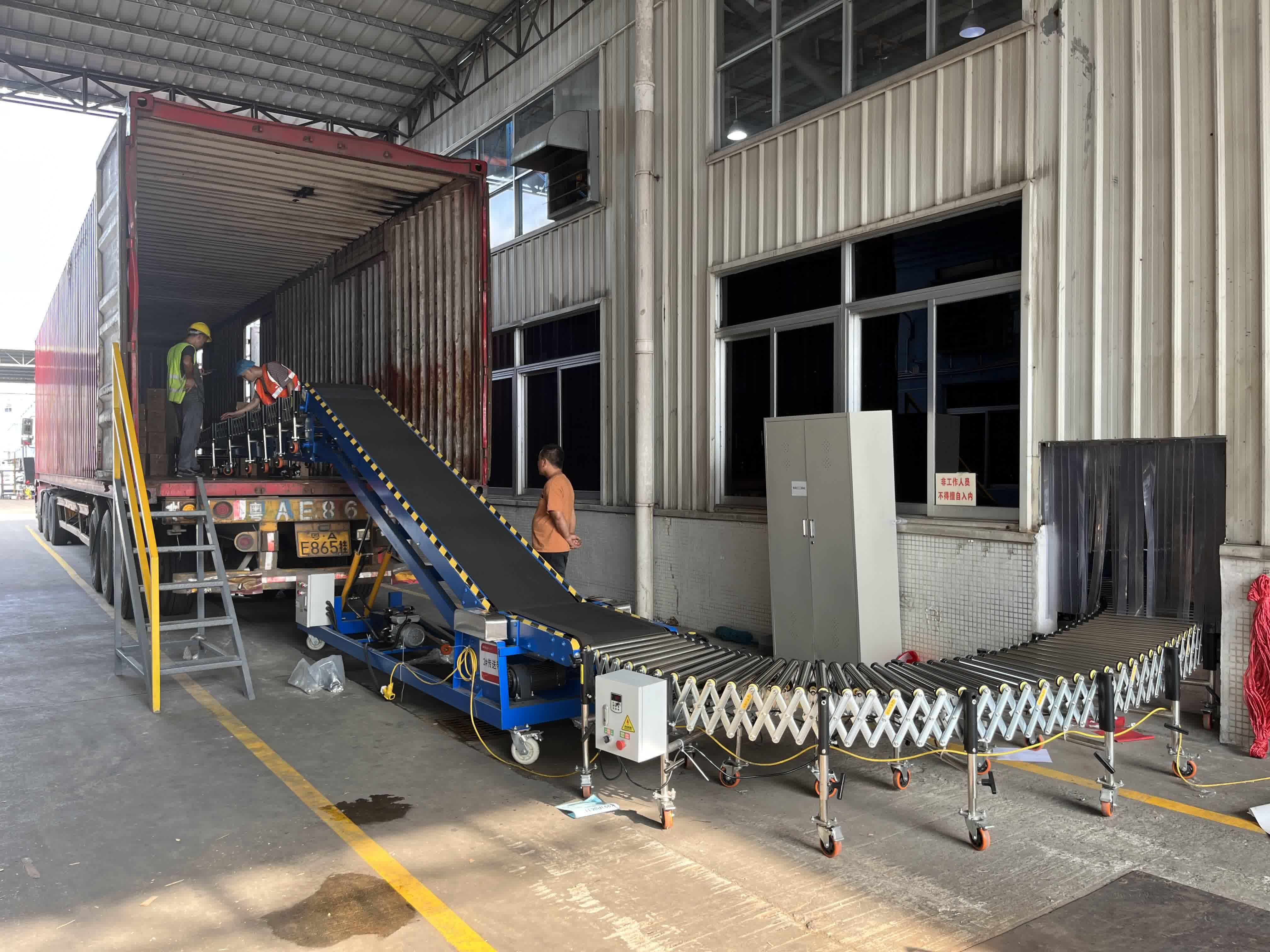
The core of this case lies in Medium incline conveyor et rubber-covered Multi-Wedge Belt Powered Roller Conveyor coordinated operation. The incline conveyor is responsible for solving the height difference between the warehouse dock and the bottom of the truck bed, while the roller conveyor is responsible for smoothly conveying the goods to the designated position inside the truck bed.
Key role of the medium incline conveyor
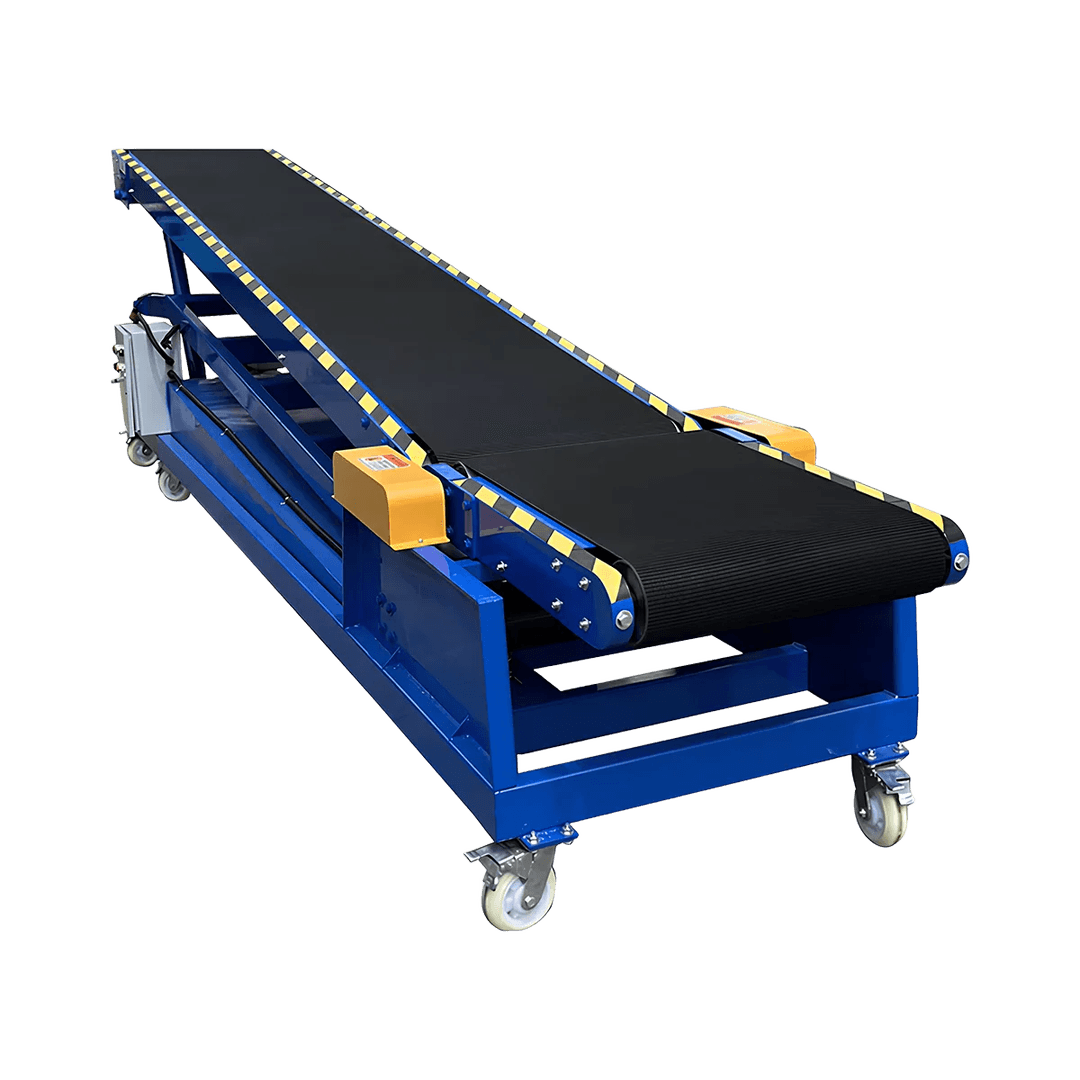
[product slug="hydraulic-conveyor-medium"]The medium incline conveyor plays the role of a "bridge" in this solution. Its hydraulic lifting system can flexibly adjust the height, perfectly matching the height changes of the truck bed floor of a 9.6 m truck under different load conditions. After the operator raises the incline conveyor platform to be level with the truck bed floor, the roller conveyor mounted on it can be smoothly pushed into the truck bed, forming a continuous conveying channel from the warehouse to the inside of the truck bed.
10m rubber-covered Multi-Wedge Belt Powered Roller Conveyor
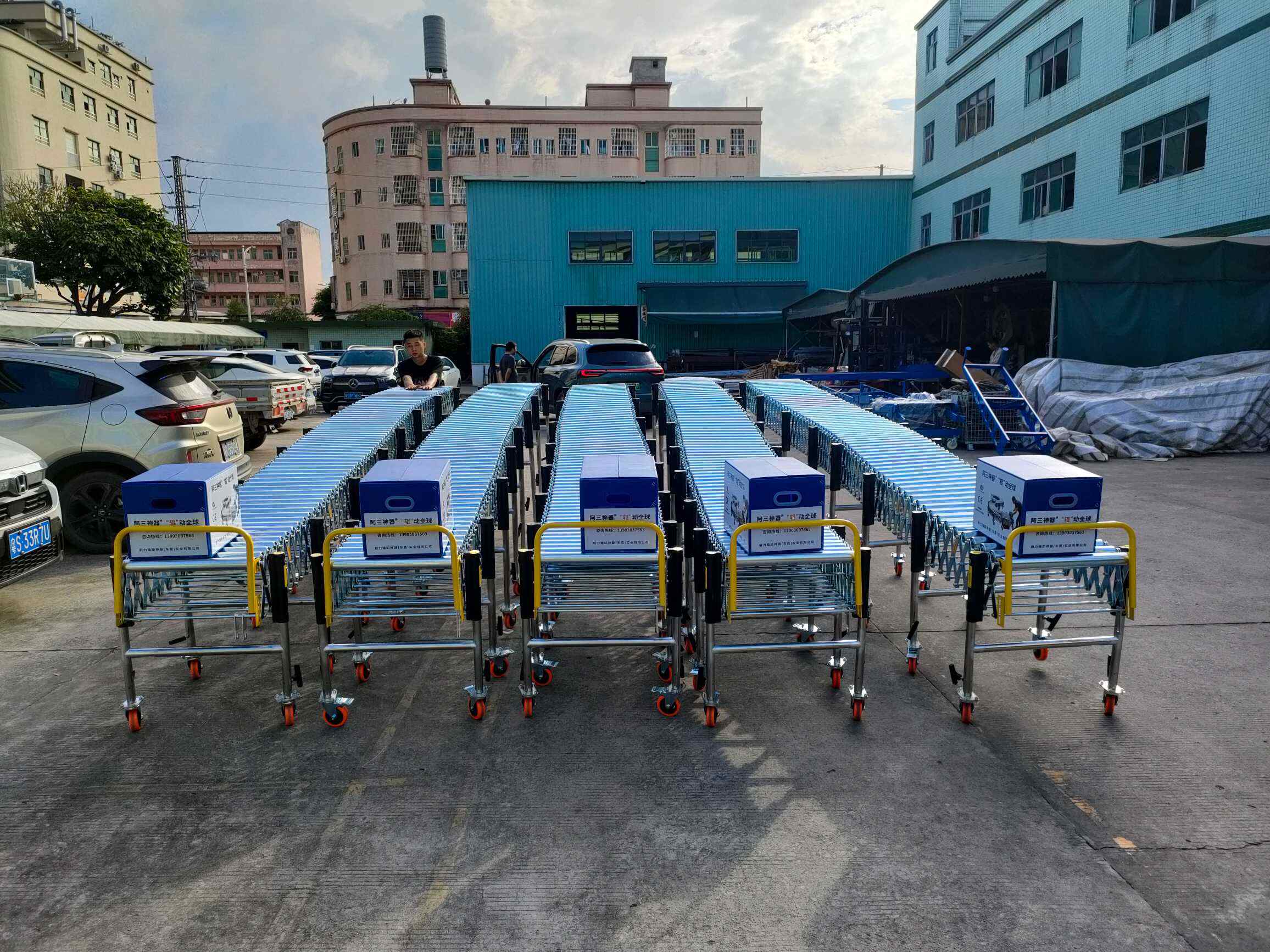
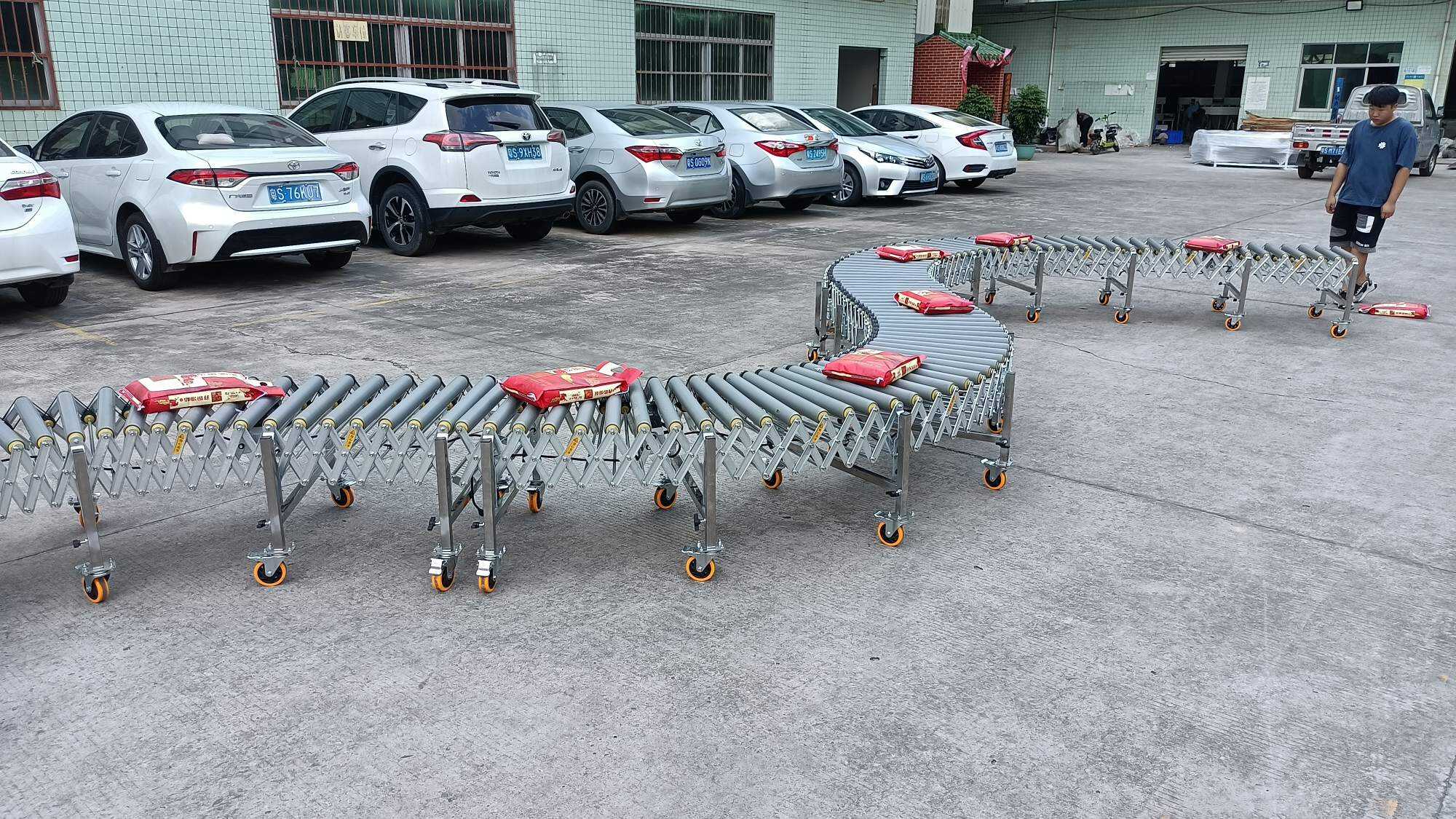
[product slug="powered-rubber-roller-conveyor-multi-wedge-belt"]For this solution, we selected a 10 m-long rubber-covered Multi-Wedge Belt Powered Roller Conveyor. The choice of rubber-covered rollers was mainly based on the fact that the surface material of 25 kg bagged feed (usually woven bags) provides sufficient friction with rubber, ensuring that the goods do not slip or deviate during conveying. The Multi-Wedge Belt drive runs smoothly and with low noise, making it very suitable for conveying bagged goods. A length of 10 m is enough to cover most of the bed depth of a 9.6 m truck, ensuring that goods can be conveyed directly to the very front of the truck bed and reducing the manual handling distance inside the truck.
Detailed explanation of the loading and unloading process
Loading process
- Preparation stage: The truck reverses to the warehouse dock and comes to a stop. The operator pushes the medium incline conveyor to the rear of the truck bed, starts the hydraulic system, and raises the platform until it is level with the truck bed floor.
- Docking stage: Install the 10 m rubber-covered roller conveyor on the incline conveyor platform and slowly push it into the truck bed.
- Conveying stage: At the warehouse end, workers place the 25 kg bagged feed one by one onto the start of the roller conveyor line. After the power is turned on, the roller conveyor uses power to smoothly convey the feed bags into the truck bed.
- Stacking stage: Arrange 1-2 workers inside the truck bed to neatly stack the feed bags conveyed into the truck bed according to the stacking rules.
Unloading process
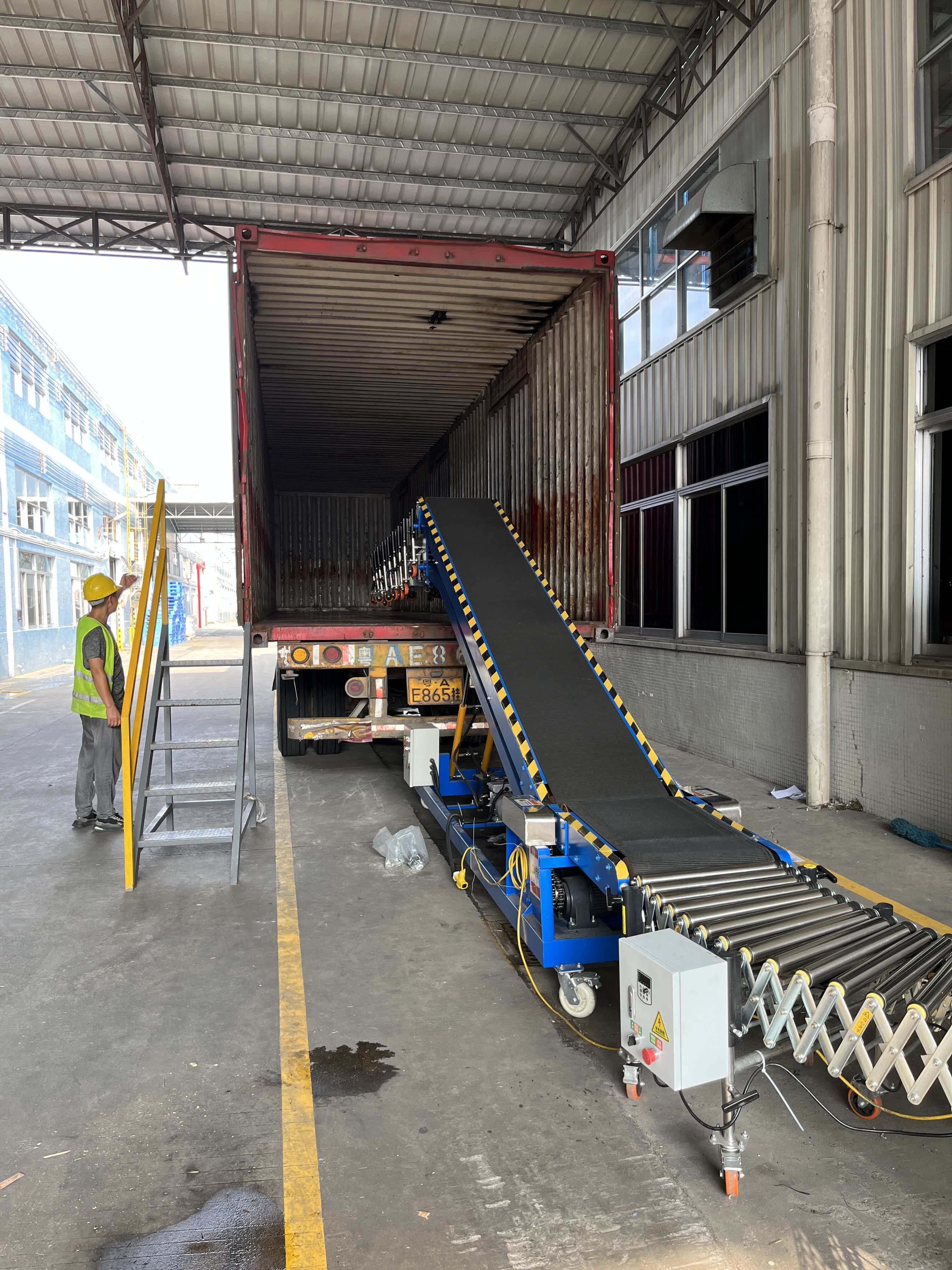
One of the major advantages of this solution is that the equipment can be used in reverse, easily switching to unloading mode. When unloading from a truck to a warehouse, simply reverse the running direction of the roller conveyor.
- Equipment in position: A medium-sized ramp conveyor is also used to build a transport channel from the truck body to the platform.
- Reverse transport: Workers inside the truck body place the feed bags onto the roller line, and the equipment runs in reverse, transporting the goods to the warehouse platform.
- Subsequent processing: Workers or forklifts at the platform transfer the goods to the warehouse storage area.
This bidirectional transport capability greatly improves equipment utilization and operational flexibility, achieving "one machine, two uses." For more details on the collaborative loading and unloading of ramp conveyors and roller lines, please refer to the article Collaborative loading and unloading practices of Multi-Wedge Belt Powered Roller Conveyor and medium-sized ramp conveyors.
Solution Advantages and Applicable Scenarios
- Efficient and Labor-saving: Mechanized transport replaces manual carrying, significantly improving the loading and unloading speed of 25kg bagged feed and reducing the labor intensity for workers.
- Flexible and Versatile: Loading and unloading functions can be quickly switched to adapt to logistics round-trip operational needs.
- High Adaptability: The medium-sized ramp conveyor is height-adjustable to accommodate different truck models and load conditions; the rubber-covered rollers provide good gripping force for bagged goods.
- Safe and Stable: Powered transport is stable, reducing the risk of goods falling and being damaged, while also ensuring the safety of the workers.
This solution is not only suitable for the feed industry but also for loading and unloading scenarios of all goods packed in bags of around 25kg, such as fertilizers, grains, and chemical raw materials. For loading and unloading of bagged goods of other specifications, you can also refer to 60m rubber-covered roller conveyor line in the edible oil workshop the long-distance transport approach in the case study.