
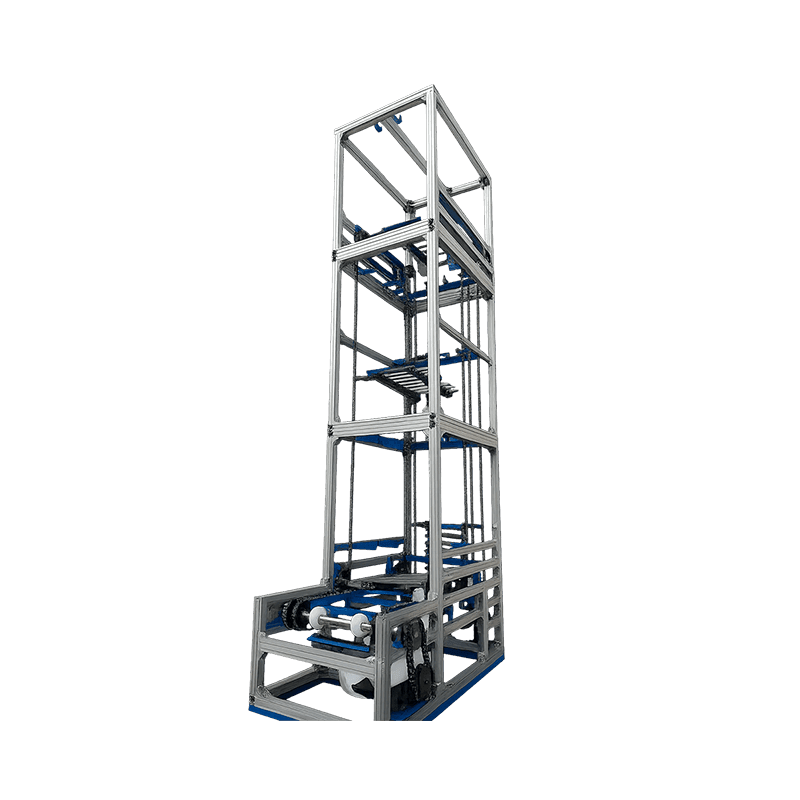









The 100 kg/m Z-type Vertical Conveyor mainly solves cross-floor conveying, upper-lower level transfer, and high-low station connection issues in warehouses, factories, and logistics sites. It is suitable for cartons, rolls, metal drums, and plastic drums with a single-item weight of no more than 100 kg, and it can also be used for bagged goods. However, the bottom support, posture stability, and contact condition with the conveying surface of bagged goods must be confirmed first. Before purchase, check three boundaries: first, the lifting height; this series covers 4-20 meters. Second, the cargo size and load capacity; look not only at the single-item weight but also at the effective size of the conveying surface. Third, how the front and rear sections are fed and discharged, especially the height and direction when connecting with a Hydraulic Conveyor, roller conveyor, or floor opening platform.
Límites aplicables a las instalaciones y a la carga
The Z-type structure is suitable for layouts with infeed at the lower end and outfeed at the upper end, or for upper-lower transfer arrangements that need to bypass floor slabs, platforms, and equipment areas. For the site, the key is not the name, but whether the goods can maintain stable posture during lifting, without edge jamming or uneven loading.
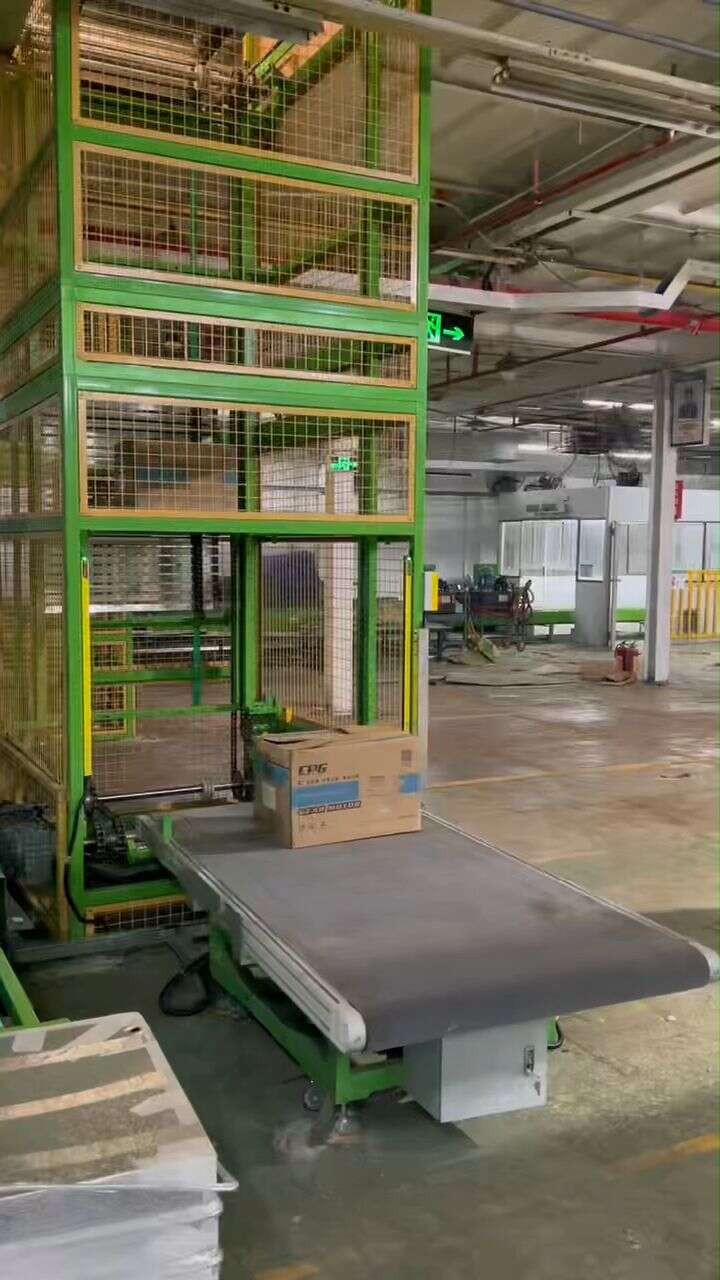
The applicable cargo range can be understood as follows:
- Cartons: suitable for boxed goods with intact boxes and sufficient bottom support.
- Rolls: the placement posture of the roll material, rolling risk, and positioning method must be confirmed.
- Metal drums and plastic drums: the contact surface at the drum bottom, center of gravity, and guiding during infeed and outfeed must be confirmed.
- Bagged goods: before on-site use, confirm the flexibility of the bag body, bottom load-bearing condition, and whether another supporting method is needed.
The load capacity of this model series is 100 kg/m, and the cargo restrictions also define a boundary of no more than 100 kg per piece. When purchasing, these two conditions must be checked at the same time: the weight per piece must not exceed the boundary, and the actual load distribution on the conveying surface must also be within the allowable range. If the cargo has obvious concentrated force, a very small bottom area, or a high center of gravity, the load capacity and conveying method need to be confirmed again.
Cómo interpretar los parámetros clave
What has the greatest impact on on-site assessment is not checking the key dimensions first, but checking several key parameters first:
| Parámetro | Repercusión en la selección del modelo | Cómo confirmarlo in situ |
|---|---|---|
| Altura de elevación | Determines the model length range and motor power range | Measure the actual height from the floor to the target discharge surface, including the platform, floor opening, or equipment inlet height |
| Capacidad de carga | Determines the cargo weight limit | Check the unit weight, the distributed weight per unit length, and whether there is any concentrated load |
| Effective dimensions | Determines whether the cargo can pass through smoothly | Check the cargo length and width against the effective dimensions of the conveying surface one by one |
| Infeed and outfeed direction | Determines the site layout and front/rear section connection | Clearly define the direction of lower-end feeding and upper-end discharging, and confirm the location of the floor opening and passage |
| Modo de conducción | Affects maintenance and the configuration of operating components | This series uses chain drive, so space must be reserved for inspection and tensioning maintenance |
| Motor power | Related to the lifting height | Check the power supply conditions and control cabinet layout position according to the height range |
This series covers a height range of 4-20 m, corresponding to models from 4 m to 20 m. The listed motor power distribution can be used as an electrical confirmation item during on-site layout: about 750 W for 5 m, about 1500 W for 6-9 m, about 2200 W for 10-13 m, about 3700 W for 14-17 m, and about 5500 W for 18-20 m. Some details for the 4 m model need to be confirmed according to the final model or project requirements.
The effective dimensions of the conveying surface are given in three formats: 0.6 × 0.8 m, 0.8 × 0.8 m, and 0.8 × 1.2 m. Since this directly affects the cargo placement direction and passing stability, this parameter should be confirmed according to the final model or project requirements, and the site should not be preset based on only one size.
How the front and rear section equipment connects
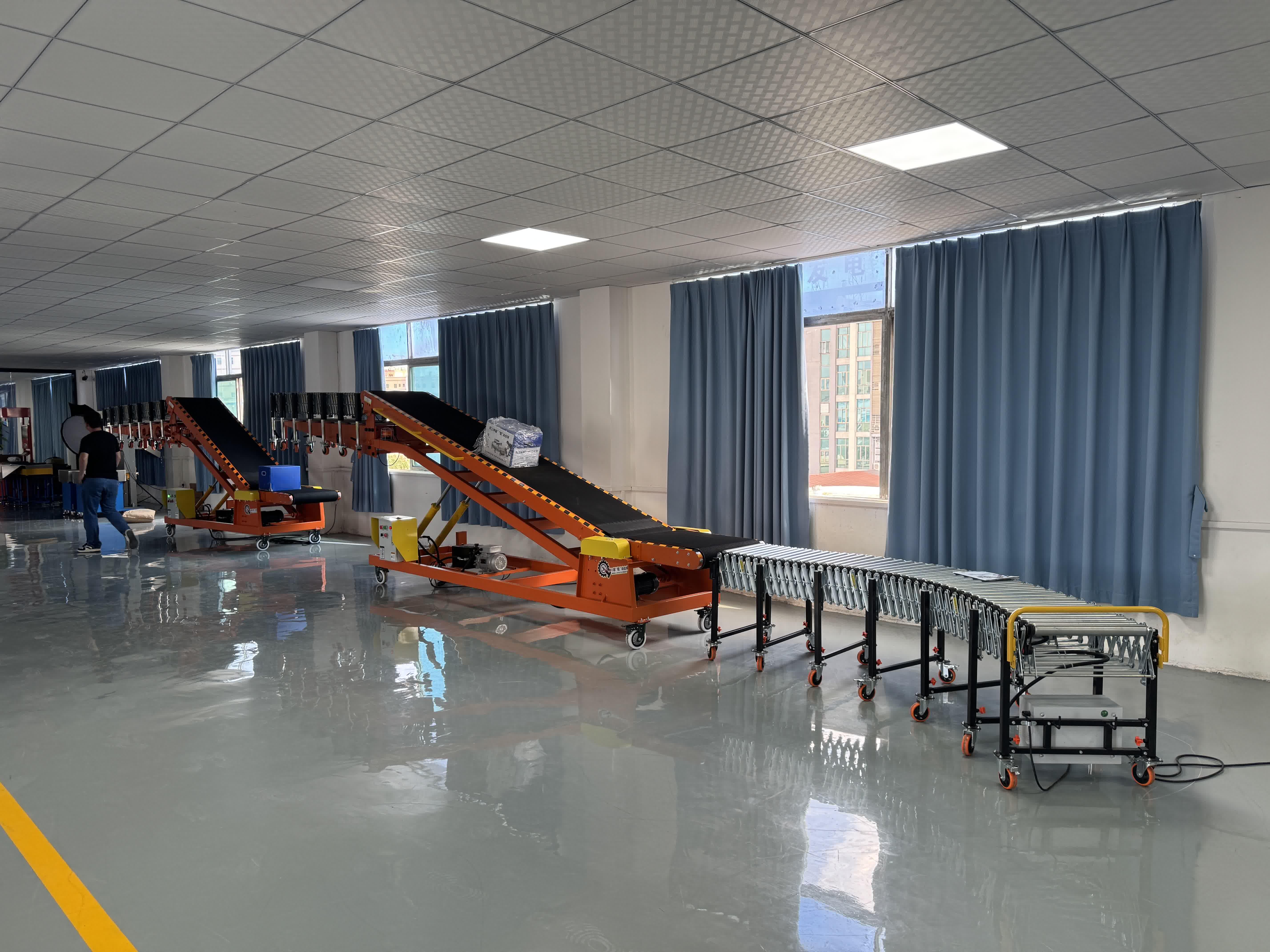
This type of Vertical Conveyor is usually not used alone; the key is how the upstream and downstream sections are connected. Common lower-end setups include manual loading, platform transfer, or connection with Transportador de rodillos motorizado for transfer; when there is a height difference between the workshop and the warehouse, it is also used together with Transportador hidráulico to move goods from the floor or truck opening to the infeed end of the Vertical Conveyor.
When connecting, focus on confirming the following items:
- Infeed height: the discharge height of the front-end equipment must match the infeed opening of the Vertical Conveyor.
- Discharge height: the upper discharge surface of the Vertical Conveyor must match the floor opening platform, roller line, or receiving station.
- Cargo direction: for cartons and rolls, the placement direction should be decided before entering the Vertical Conveyor to avoid needing a second turn after reaching the upper level.
- Cycle coordination: if the front section is powered conveying, confirm the loading spacing to prevent cargo accumulation at the infeed opening.
- Personnel positioning: loading and receiving positions should stay clear of the transfer point and safety protection area.
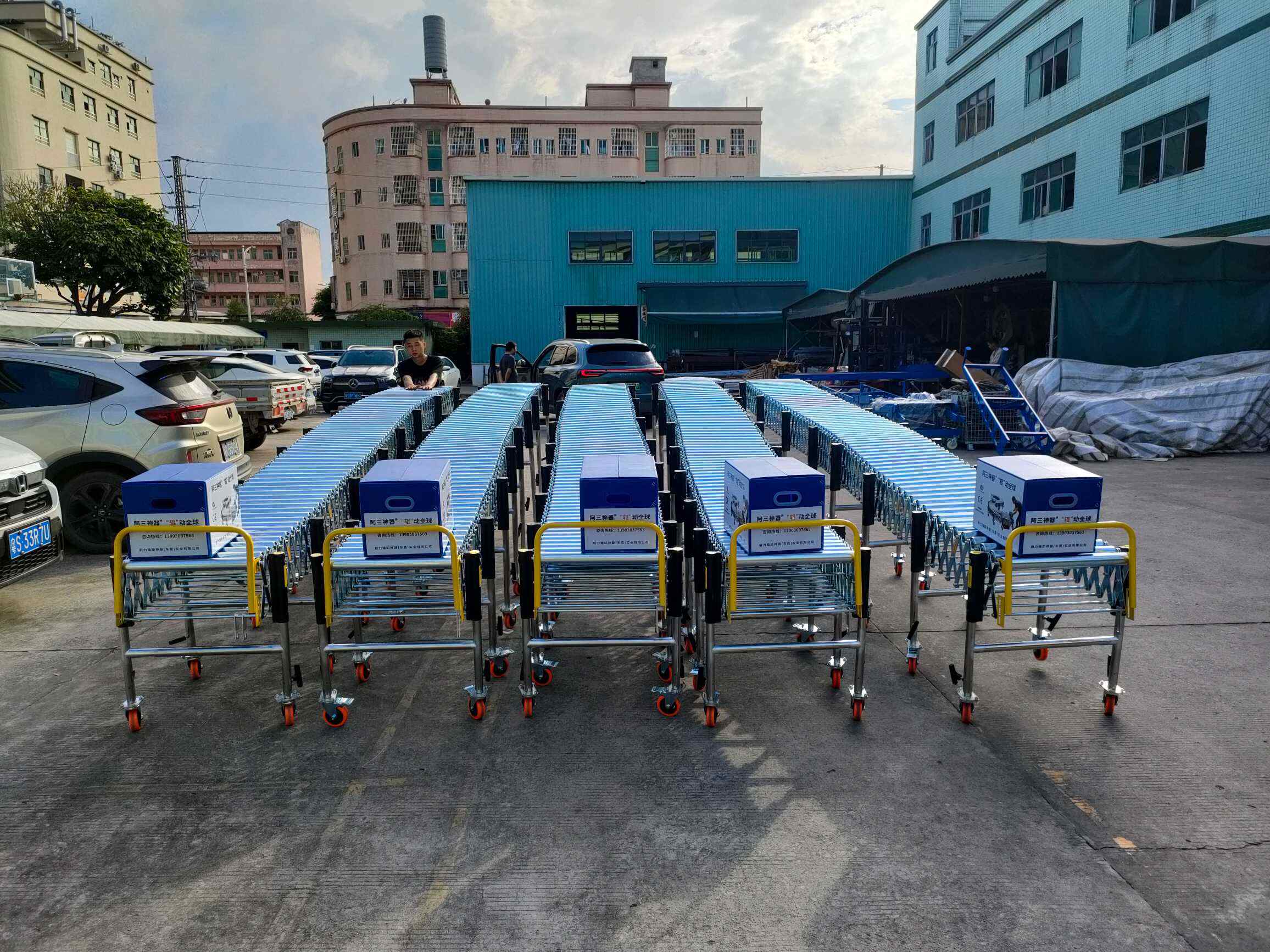
If it needs to be matched with a roller line, the common connection equipment is Multi-rib belt Powered Roller Conveyor o O-belt Powered Roller Conveyor. The former is suitable for smoother powered transfer, while the latter is suitable for standard carton circulation. If the front section comes from a truck unloading point, first use Transportador hidráulico mediano o Transportador hidráulico de gran tamaño Bring the goods to the floor-level plane, then transfer them to the Vertical Conveyor, which makes on-site layout easier.
How to distinguish between the same series and similar structures
For the same Vertical Conveyor, first distinguish by load capacity and structural type.
- y Transportador vertical tipo Z de 50 kg/m Distinction: when the weight of a single item, the load per unit length, or the boundary of barrelled/coiled goods is close to 100 kg, check it directly against the 100 kg/m class and do not assume a lower-capacity model.
- y Transportador vertical tipo C de 100 kg/m Distinction: when both models have the same load class, focus on the site’s material infeed and outfeed direction and the structural layout. If the upper and lower levels need to bypass space along a Z-type path for bottom-in/top-out transfer, the Z-type is easier to arrange; if the site uses a different elevation-based infeed/outfeed relationship, confirm it against the C-type structure.
- y Transportador vertical tipo C de 50 kg/m Distinction: when there are differences in both load class and structural type, first determine the cargo weight during procurement, then determine the on-site infeed/outfeed path.
If the cargo exceeds 100 kg, or is too large to fit within the effective size ranges of 0.6 × 0.8 m, 0.8 × 0.8 m, or 0.8 × 1.2 m, engineering confirmation, an additional solution, or a recheck of the load capacity and conveying method is required.
Diseño y mantenimiento in situ
The Z-type Vertical Conveyor is fixed-layout equipment. Before installation, first check the vertical height, then check the discharge and receiving space at the upper and lower ends. In addition to the machine position itself, reserve the following areas:
- Lower infeed buffer area to prevent the cargo from hitting the inlet directly.
- Upper receiving area to prevent cargo from accumulating immediately at the floor opening after discharge.
- Side maintenance access for chain drive component servicing.
- Motor and control location for wiring, operation, and shutdown confirmation.
In daily use, the warehouse supervisor or equipment engineer will usually focus on the following:
- Tensioning, lubrication, and wear inspection of the chain drive components.
- Whether the guiding and protection areas affect the passage of barrelled or coiled goods.
- Whether the infeed and outfeed openings create bottlenecks due to floor level, platform, or external conveyor misalignment.
- Whether sufficient maintenance space is reserved after installation for long-height models.
If the site is a floor opening, mezzanine platform, or wall-mounted installation, the hoisting route, landing position, and later disassembly/reassembly access must also be checked. For 17-20 m models, the overall equipment size is longer, so the routes for delivery, warehousing, and on-site transfer should also be confirmed in advance.
Common questions
1. Is it suitable for conveying barrelled and coiled goods?
It is suitable provided that the weight of a single item does not exceed 100 kg and the bottom of the cargo is in stable contact with the conveying surface. When barrels have a high center of gravity or coiled goods are prone to rolling, the guiding and positioning method must be confirmed first.
2. Is it suitable for long-term fixed transfer between floors?
It is suitable for lifting and transfer between fixed floor openings, mezzanine platforms, and workstations at different heights. During procurement, focus on confirming the lifting height, installation position, and the height of upstream and downstream equipment.
3. Which dimensions need to be confirmed?
First verify the lifting height, cargo length/width/height, weight per item, heights of the infeed and outfeed openings, and the usable space at the upper and lower ends. The effective size of the conveying surface and some model details must be confirmed according to the final model or engineering requirements.
4. What should be noted when matching with a roller conveyor?
Focus on height consistency, the direction of cargo entry, the length of the buffer section after discharge, and the cycle-timing coordination between power sections to prevent cargo from accumulating at the transfer point.
Confirmation before procurement
To make it easier to quickly identify the model, it is recommended that you provide the following information directly during procurement or technical communication:
| Aspectos que hay que confirmar | Datos que hay que facilitar |
|---|---|
| Operating floor relationship | Which floor to which floor, and the actual height from the floor to the discharge surface |
| Cargo Information | Cartons, rolls, metal drums, plastic drums, or bagged goods; single-item weight; length, width, and height |
| Operating Mode | Manual loading, infeed from the front-end roller line, or connection with Hydraulic Conveyor |
| Infeed and discharge direction | Which side does the lower end enter from, and is the upper end conveyed to a platform, floor opening, or roller line? |
| Site Space | Length and width of the equipment installation area, floor opening dimensions, and whether the side is against a wall |
| Electrical Conditions | On-site power supply conditions, control position, and shutdown operation position |
| Delivery and Installation | Route for bringing in long equipment, lifting conditions, and whether sectional entry is required |
If other conveying equipment also needs to be integrated on site, please indicate whether it is Vertical Conveyor, Transportador de rodillos motorizado o Transportador hidráulico to connect with it. For layouts involving metal sheet transfer across floors, you can also refer to related cases: Case of a warehouse Vertical Conveyor transporting metal sheets to the second floor.