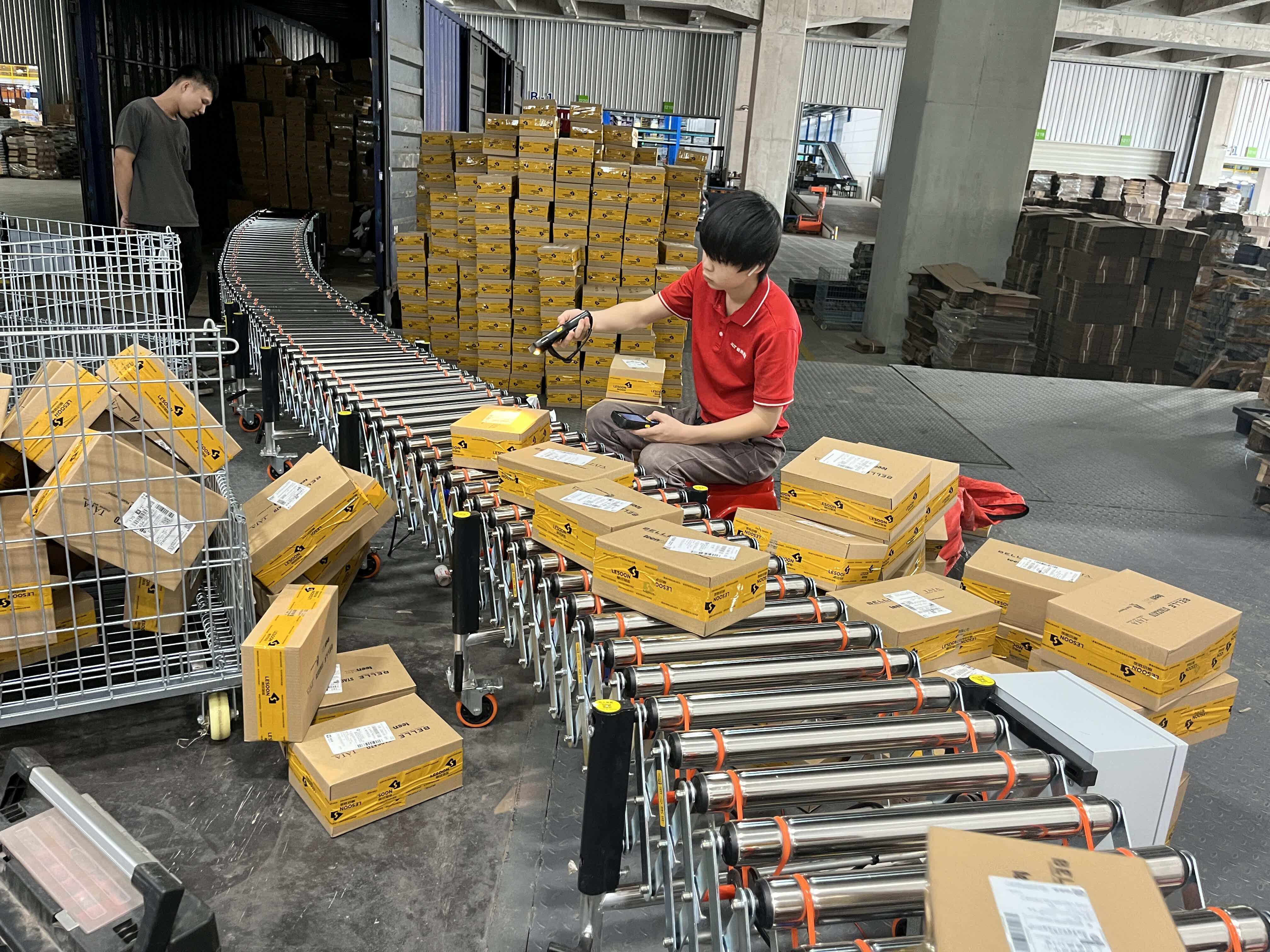
In factory finished-goods warehouse loading operations, the traditional approach relies on forklifts shuttling back and forth and workers moving around frequently, which is not only inefficient but also carries certain safety risks. To solve this problem, we designed an efficient loading conveyor solution for a factory's finished-goods warehouse. By seamlessly connecting a fixed ground section, an incline section, and a movable section inside the trailer, the solution enables continuous and smooth conveying of goods, transforming loading operations from intermittent handling into an assembly-line process.
Solution Configuration and Equipment Selection
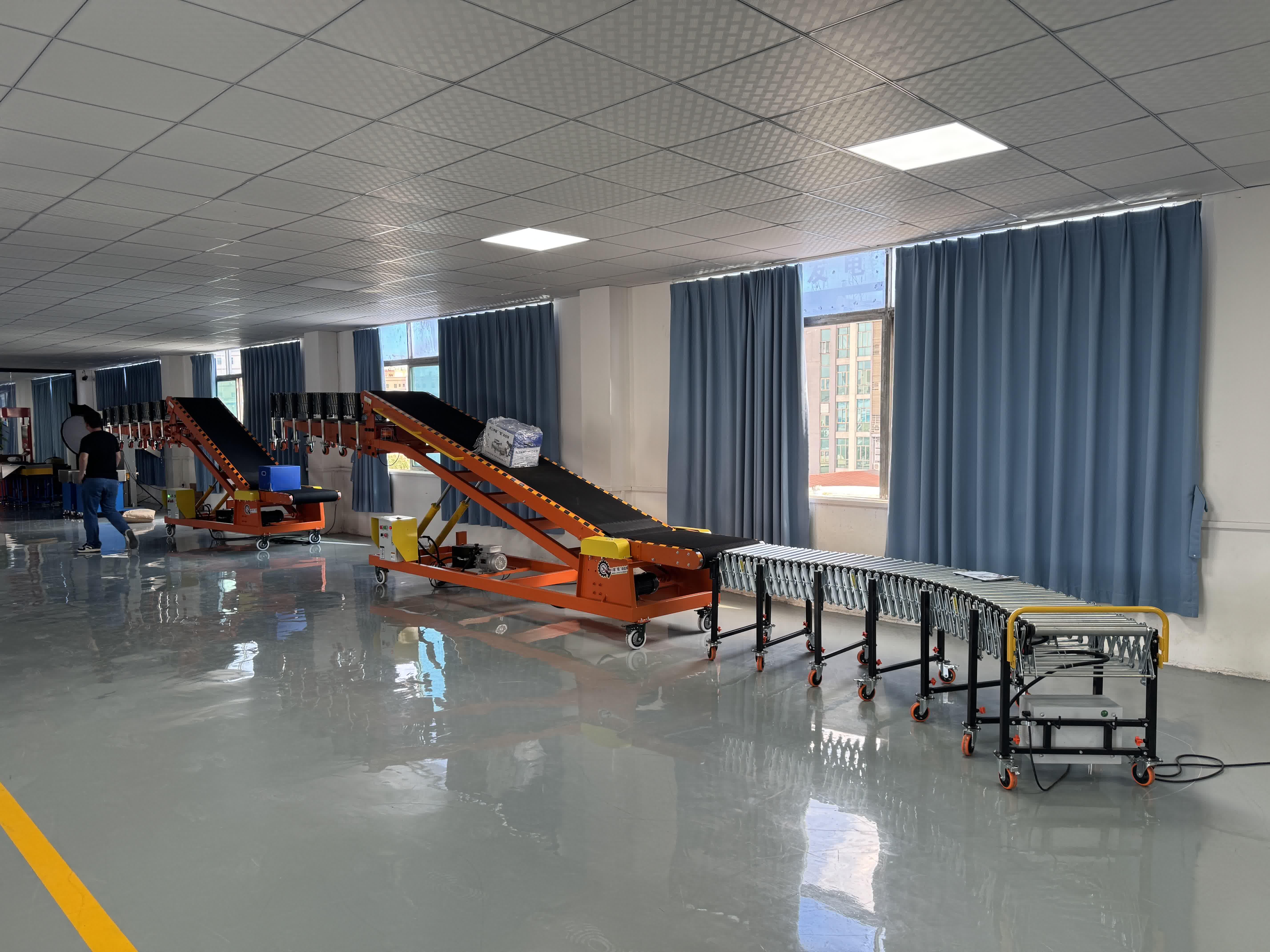
The core of this solution lies in a three-section conveyor combination. The ground section uses a 10-meter-long Multi-Wedge Belt Powered Roller Conveyor to steadily move finished goods out of the warehouse. The middle section uses a medium incline conveyor to lift goods from the ground to the trailer floor height. The section inside the trailer is configured with another 10-meter-long Multi-Wedge Belt Powered Roller Conveyor, which can extend into the trailer and deliver goods directly to the designated position.
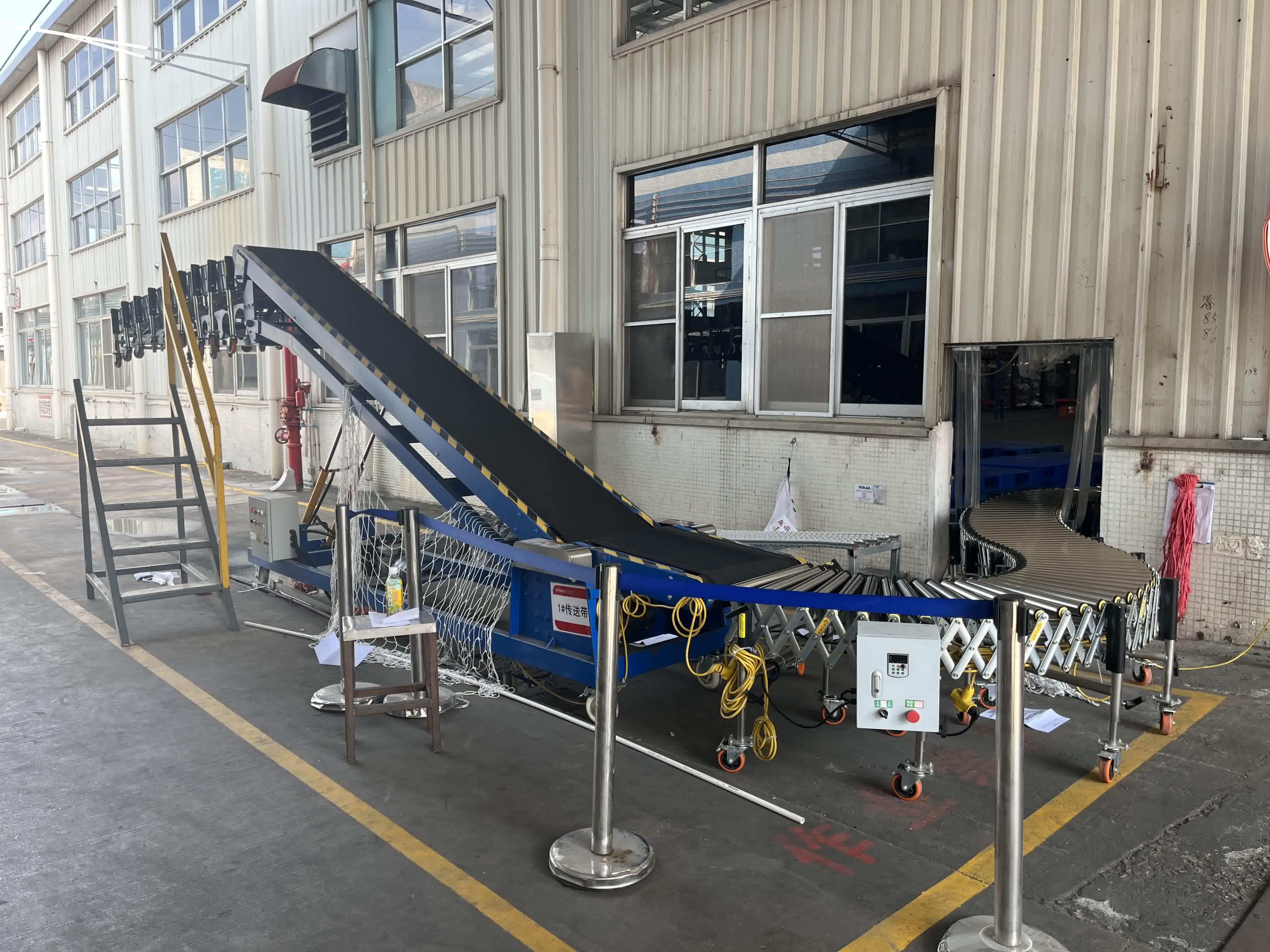
Key Equipment: Medium Incline Conveyor
The medium conveyor plays a key role in this solution as the link between the ground and the truck bed. Its hydraulic lifting system can smoothly raise the conveyor surface from ground level to be flush with the floor of a typical truck bed, effectively overcoming the height difference between the loading platform and the truck. The belt surface features anti-slip texture to ensure that cartons or palletized goods do not slide during the incline process. Its stable load capacity and adjustable conveyor speed match the pace of the roller lines at both ends very well.
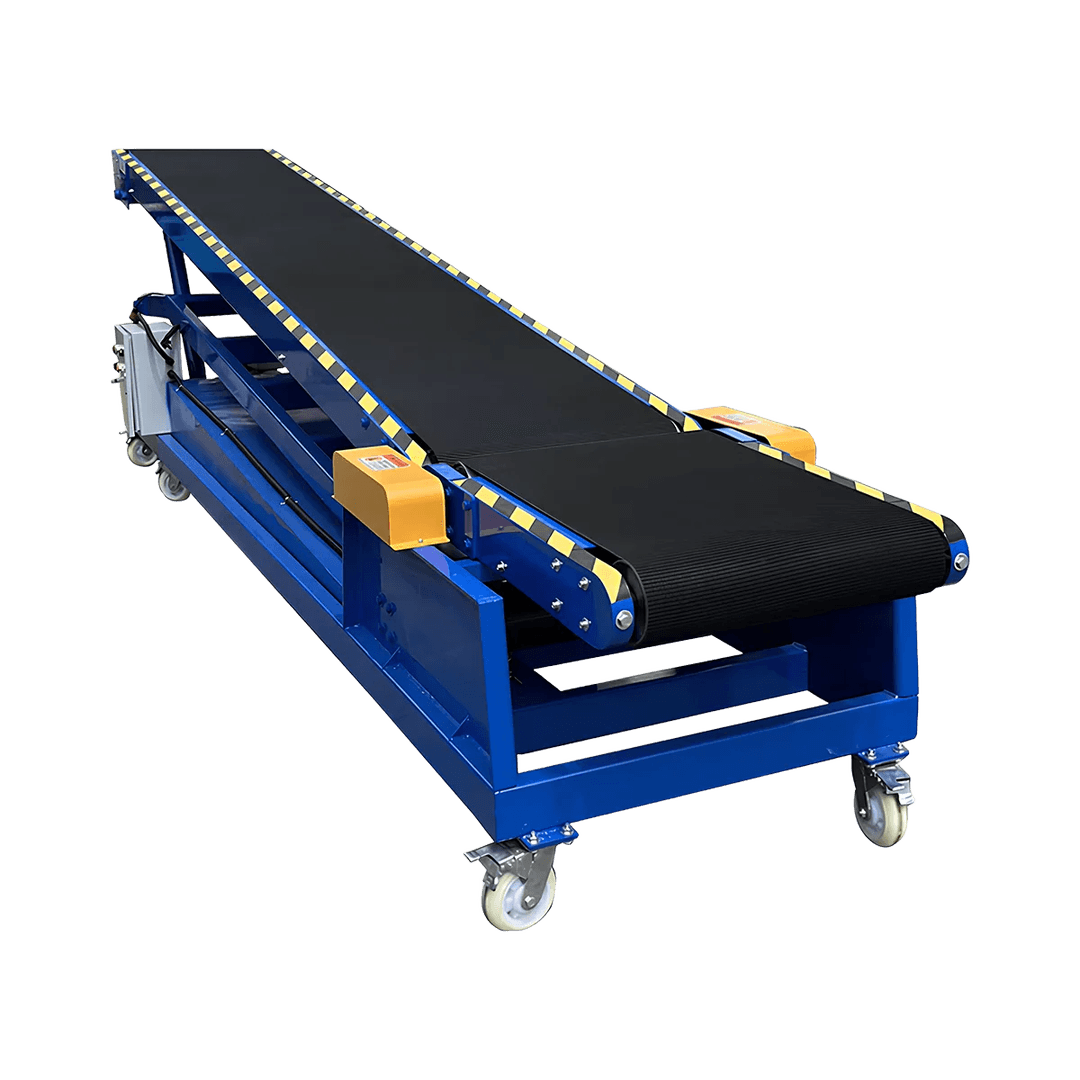
Transportador hidráulico mediano
Medium Hydraulic Conveyor is specially designed for sites without loading and unloading platforms and is suitable for trucks under 40 ft. The hydrauli...
 Bidón metálico
 Bidón de plástico
 Rodar
Rodar
 Caja de cartón
 En bolsa
Key equipment: Multi-Wedge Belt Powered Roller Conveyor
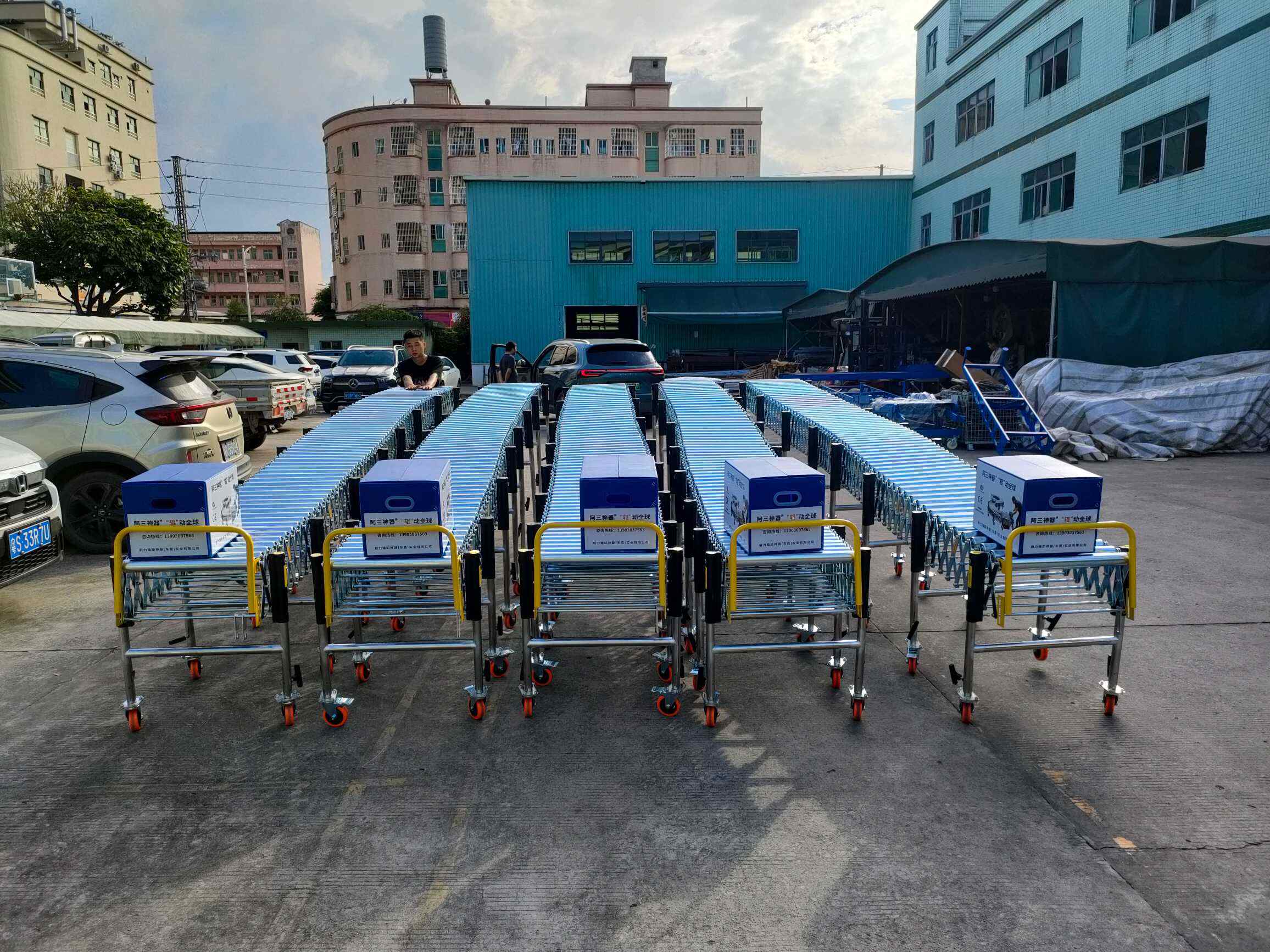
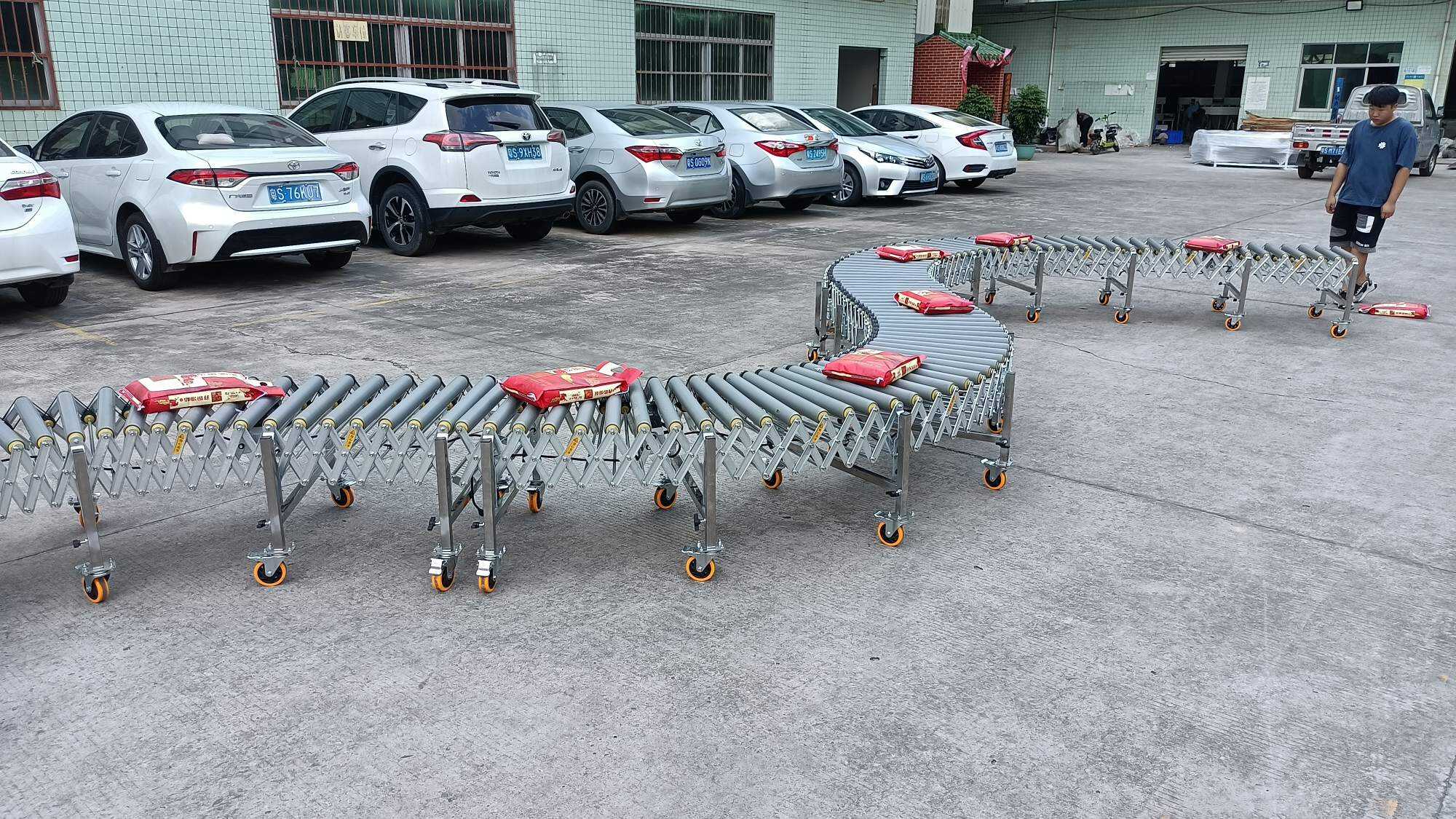
Both ends of the solution use Multi-Wedge Belt Powered Roller Conveyor. This conveyor uses a multi-wedge belt to drive all rollers in sync, delivering smooth power transmission and low noise, making it ideal for conveying regular cartons or palletized goods. The 10-meter fixed line on the ground serves as the starting conveyor section, while the 10-meter line inside the truck can be telescopically adjusted according to the truck’s parking position and cargo box depth, ensuring goods can be conveyed to the deepest part of the truck and maximizing use of the cargo space.
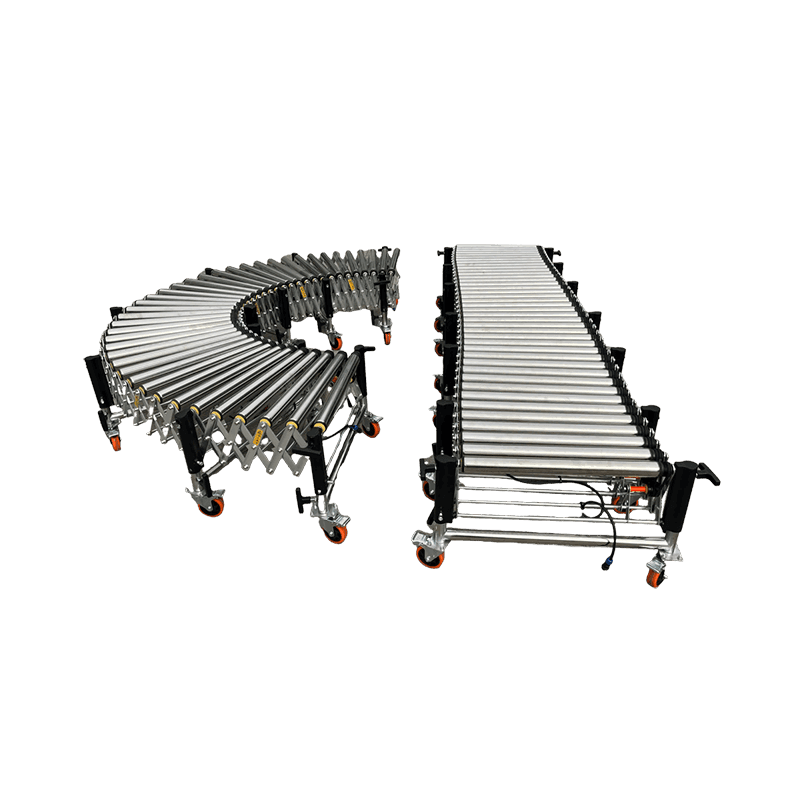
Transportador de rodillos accionado por correa de múltiples cuñas
The multi-wedge belt Powered Roller Conveyor uses a multi-wedge belt drive design to achieve smooth and efficient cargo conveying. Motor spacing range...
Bidón de plástico
Bidón metálico
Caja de cartón
Rodar
Workflow and Efficiency Improvement
During actual operation, workers only need to place the finished products on the ground roller line at the warehouse side, and the goods are automatically lifted by the conveyor, then continue through the roller line inside the truck bed to the designated position. Workers inside the truck only need to perform simple stacking and organizing.
This process brings a significant efficiency boost: first, it completely eliminates the need for forklifts to shuttle back and forth over short distances between the warehouse and the truck, reducing fuel consumption and equipment wear while also eliminating the associated collision risks. Second, it reduces the walking distance and manual handling intensity for ground workers, allowing them to focus more on stacking quality. The entire loading process becomes continuous and smooth, greatly shortening loading time. Related practice also shows that, Multi-Wedge Belt Powered Roller Conveyor works with the medium conveyor for loading and unloading it can effectively form an efficient loading and unloading production line.
Solution Advantages and Applicable Scenarios
The advantages of this solution lie in its flexibility, efficiency, and worker-friendliness. The three sections of equipment can be flexibly combined and adjusted according to different vehicle types and platform conditions. It is especially suitable for factory finished-goods warehouses, logistics distribution centers, and similar scenarios where daily shipment volume is high and product specifications are relatively uniform (such as boxed finished goods and palletized goods). For companies looking to improve automation in loading operations, reduce worker labor intensity, and control costs at the same time, this is a very practical solution. Similar efficient combinations have also been successfully applied in Logistics Warehouse Loading Conveyor Solution other cases.
Summary
By adopting the configuration of "ground roller line + medium conveyor + truck-bed roller line, " this factory finished-goods warehouse successfully upgraded loading operations from a traditional mixed manual and mechanical mode to a semi-automated continuous conveying mode. This not only directly improved loading and unloading efficiency and shortened vehicle waiting time, but also improved the working environment and reduced overall operating costs. This case proves that a reasonable combination of conveyor equipment can economically and effectively solve bottlenecks in the loading and unloading process.