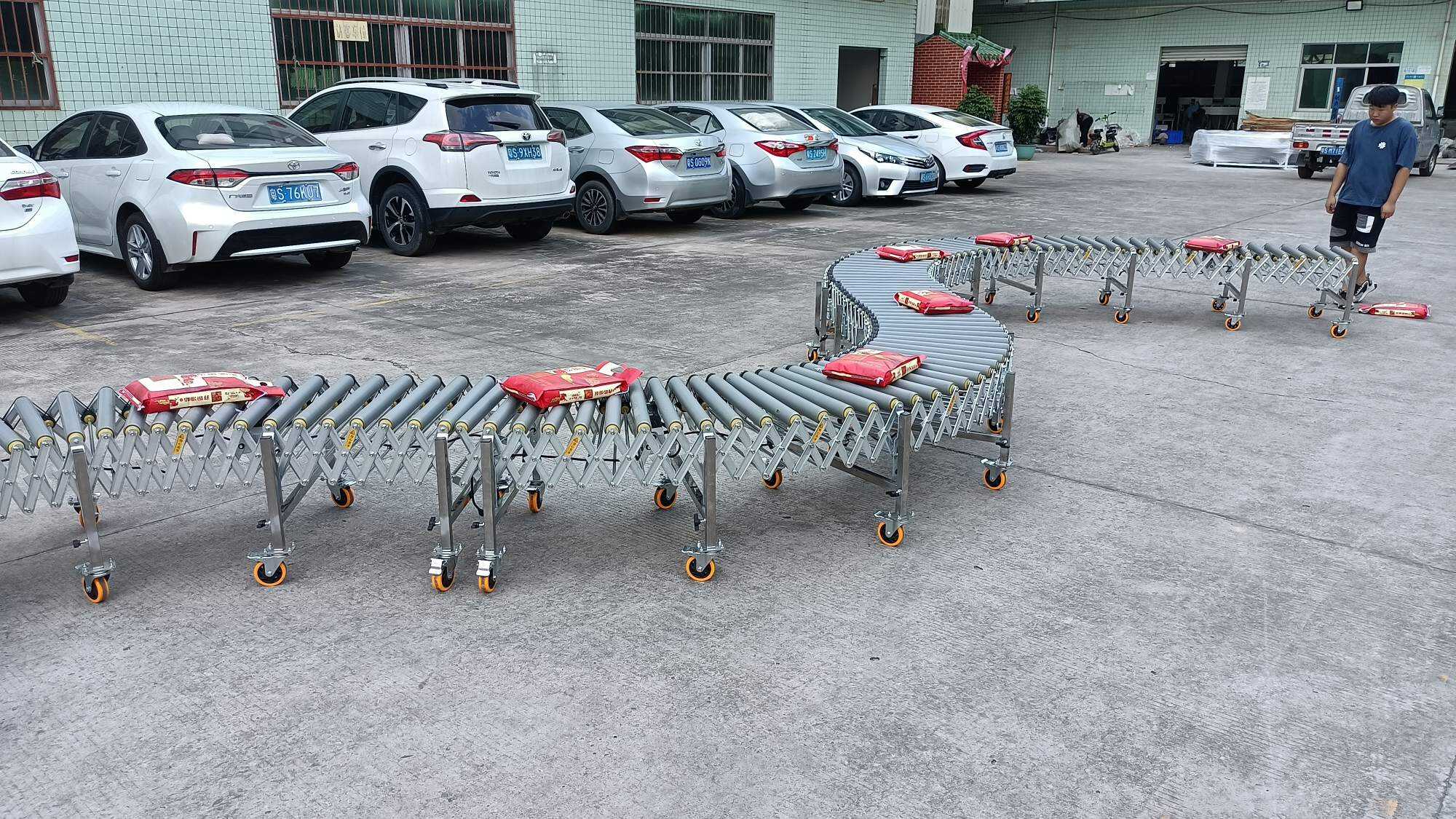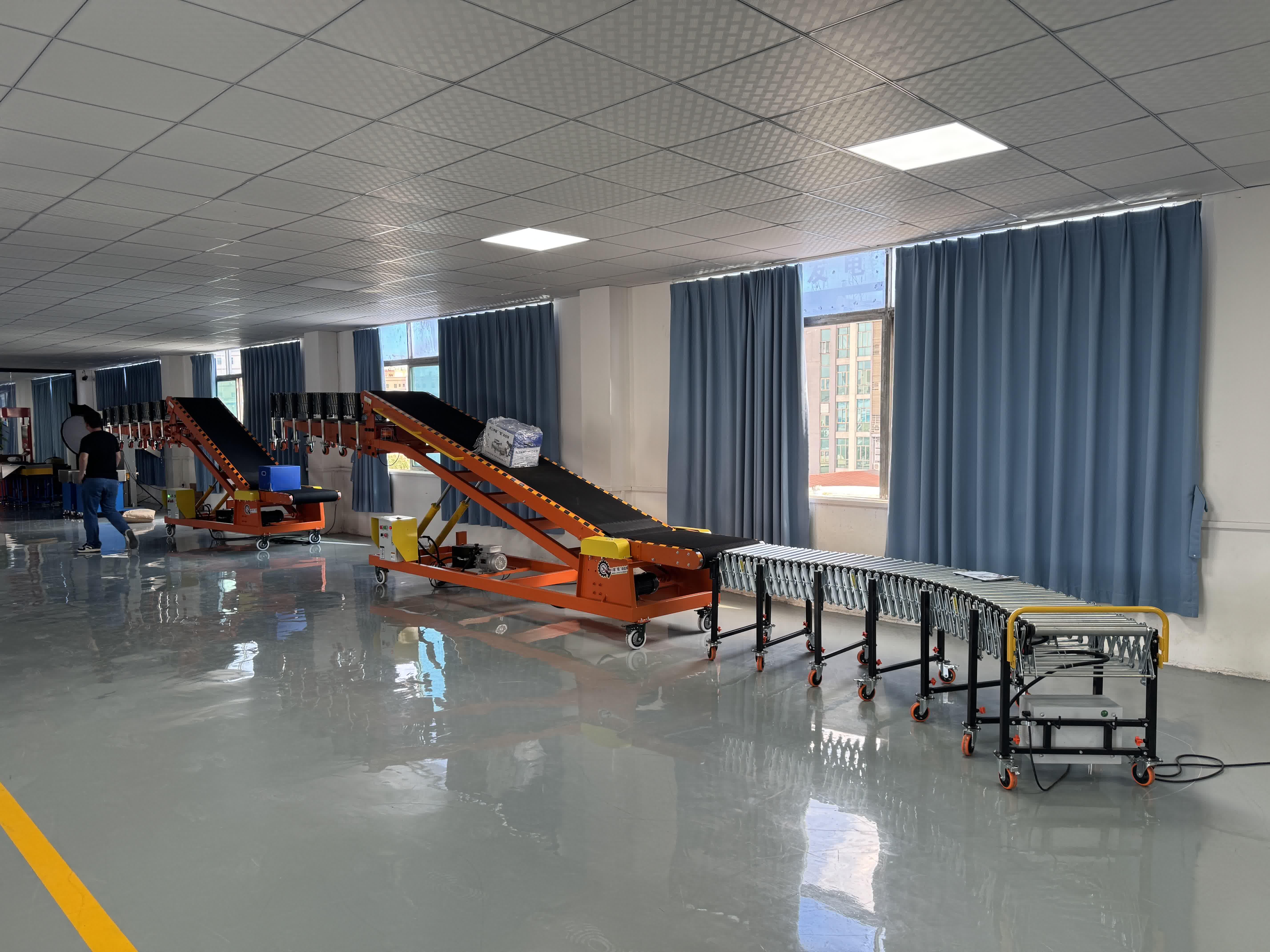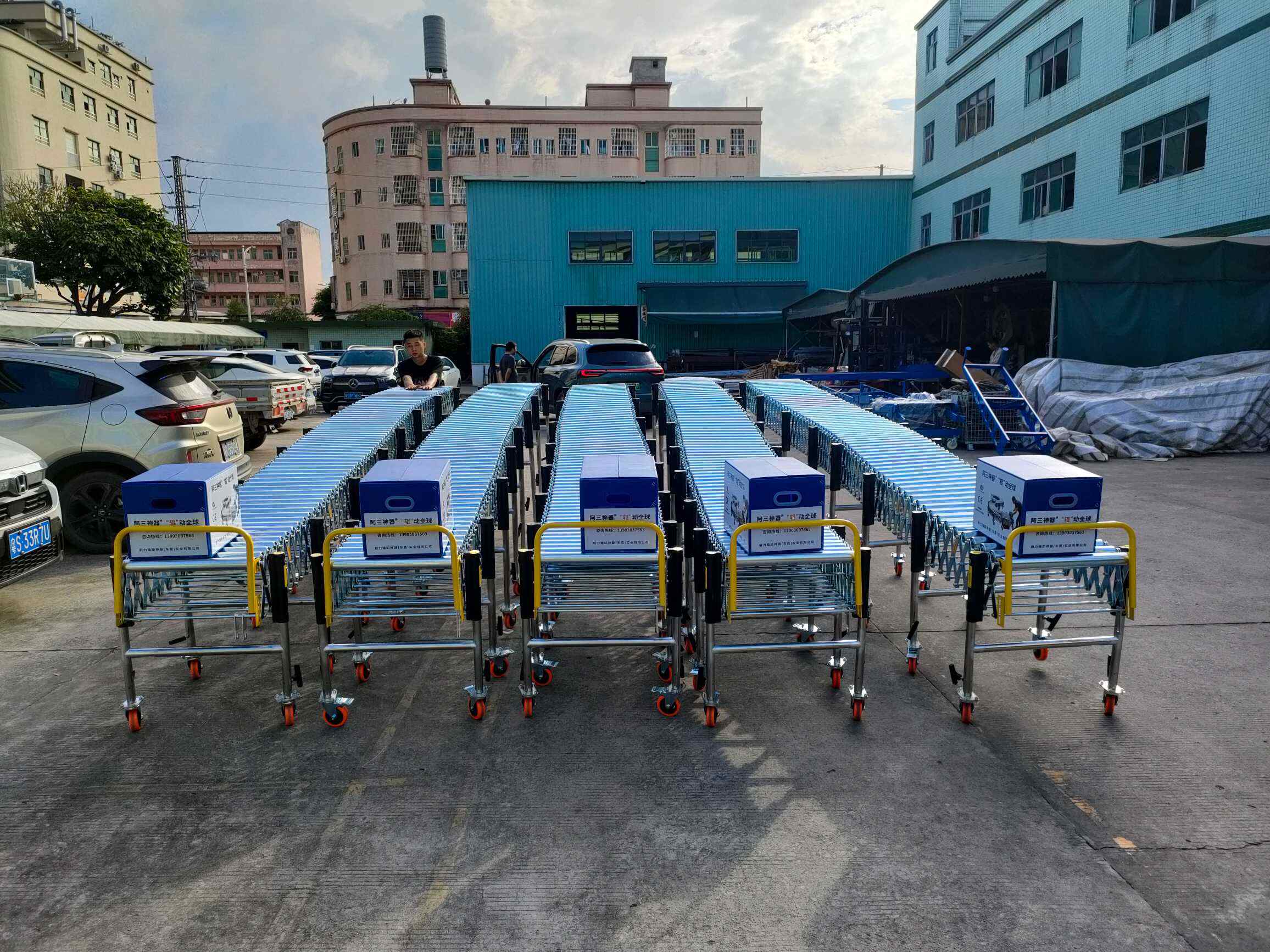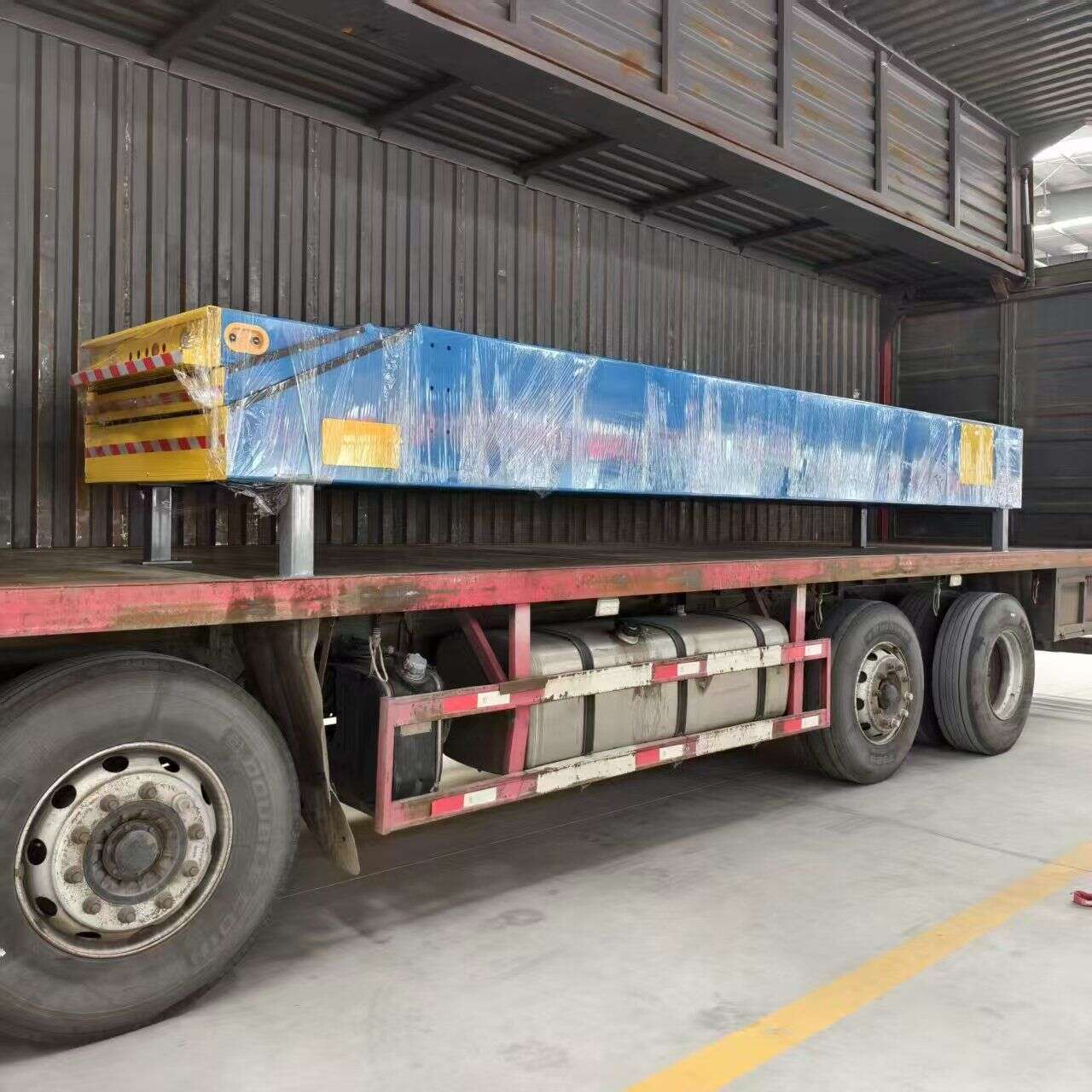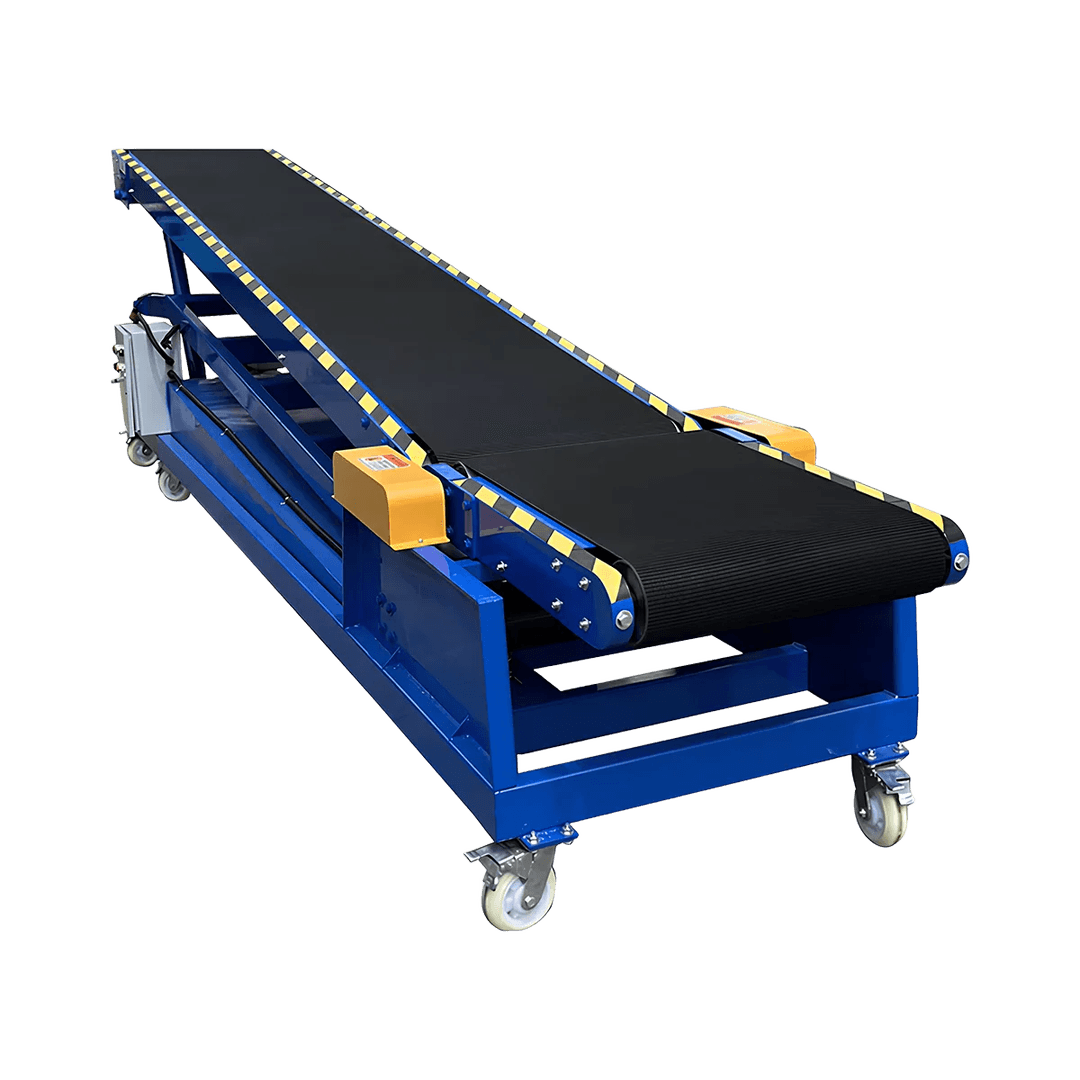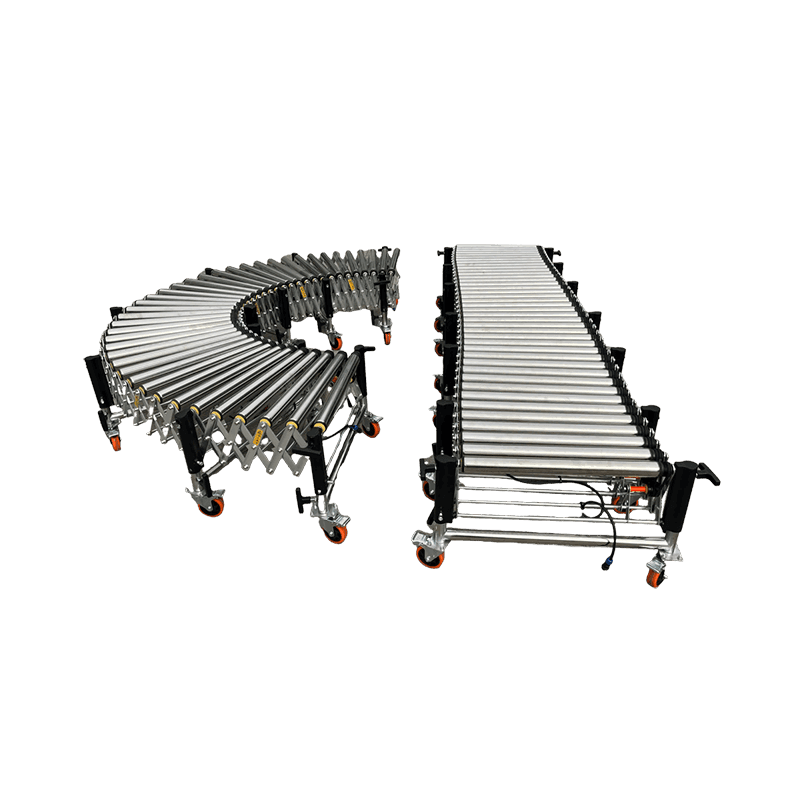
The customer is a tobacco warehouse that requires frequent loading into trucks daily. The warehouse already has a loading and unloading platform, and the truck floor is at the same height as the warehouse floor. Based on the characteristics of light weight and stable rhythm of the goods, Naili Conveyor configured a powered roller conveyor line to directly connect the first-floor buffer zone with the truck body, enabling two people to collaboratively complete the loading of an entire truck of cigarettes.
Project Background: Loading Pain Points in Tobacco Warehouses
Loading/Unloading Environment and Operational Characteristics
- Cargo Form: Cigarettes in cardboard boxes; individual boxes are relatively light, but the batch size is large and the frequency is high.
- Site Conditions:
- The warehouse has a fixed loading and unloading platform;
- The truck floor and platform floor are at the same height, with no significant height difference;
- Goods are first concentrated in the first-floor buffer zone and then loaded into the truck.
- Operational Requirements:
- Minimize manual lifting and travel distance;
- Control the loading rhythm to ensure that cigarette boxes are stacked neatly without being squeezed or deformed.
Problems with Traditional Manual Handling
- Frequent personnel movement, mixed use of trolley pushing, shoulder carrying, and manual handling, long routes, and unstable rhythm;
- Limited space inside the truck body, frequent personnel entry and exit, and risks of tripping or bumping;
- Multiple people are required simultaneously during peak periods, leading to high overall labor occupancy.
Solution: Gravity Roller Conveyor directly connected to the truck body
Given the existing loading and unloading platform and the fact that the truck and warehouse floors are at the same height, Naili Conveyor recommends using a gravity roller conveyor line to directly connect the first-floor buffer zone with the interior of the truck. Once the cargo boxes are placed on the conveyor, they can move forward with a light manual push, requiring no additional motor drive.
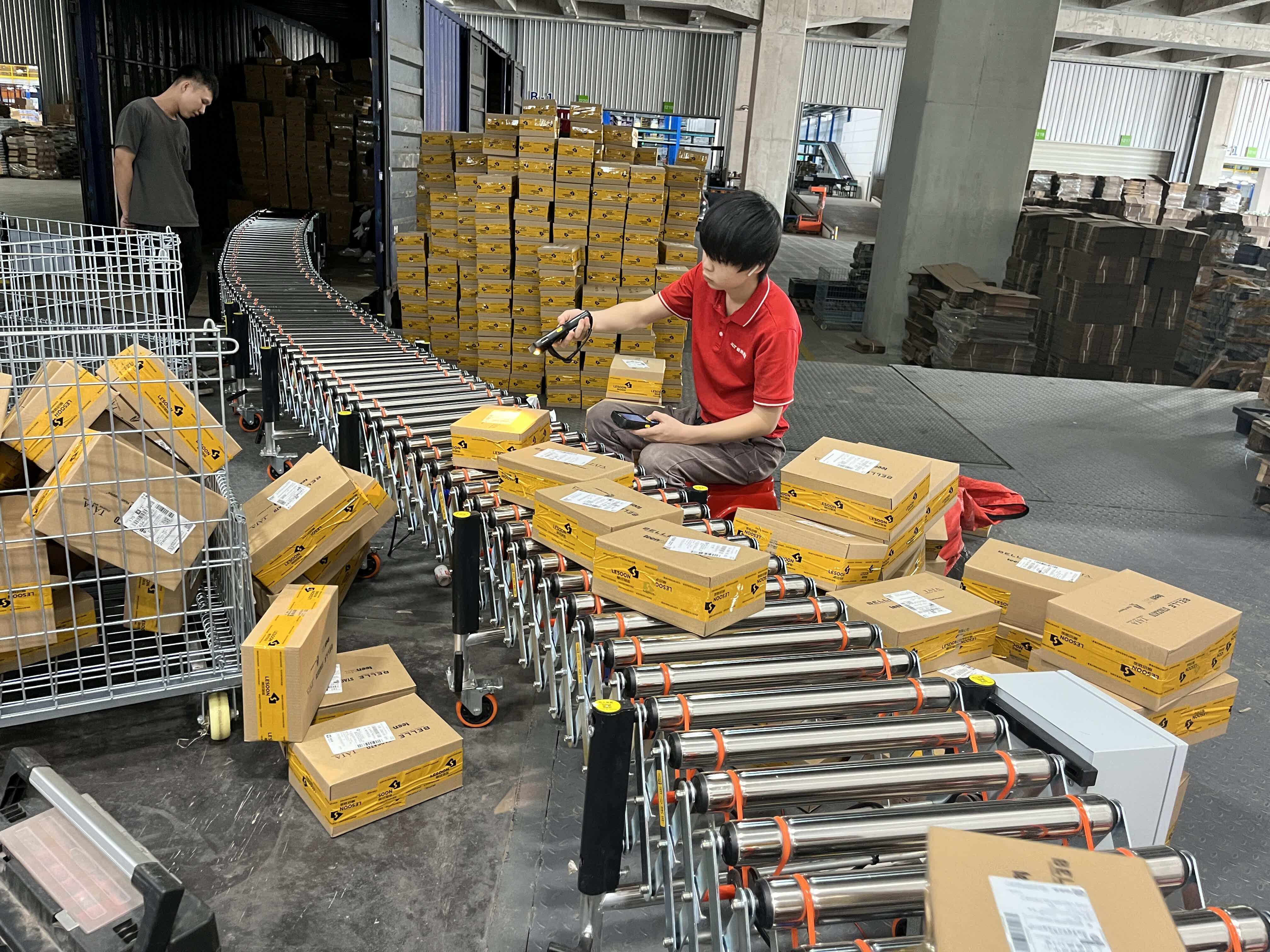
In this type of loading scenario, the gravity roller structure is simple, requires little maintenance, and relies on operators mainly for "loading" and "receiving" goods, which can significantly reduce physical effort while still keeping human involvement.
[product-category slug="gravity-roller-conveyor"]Conveyor line layout
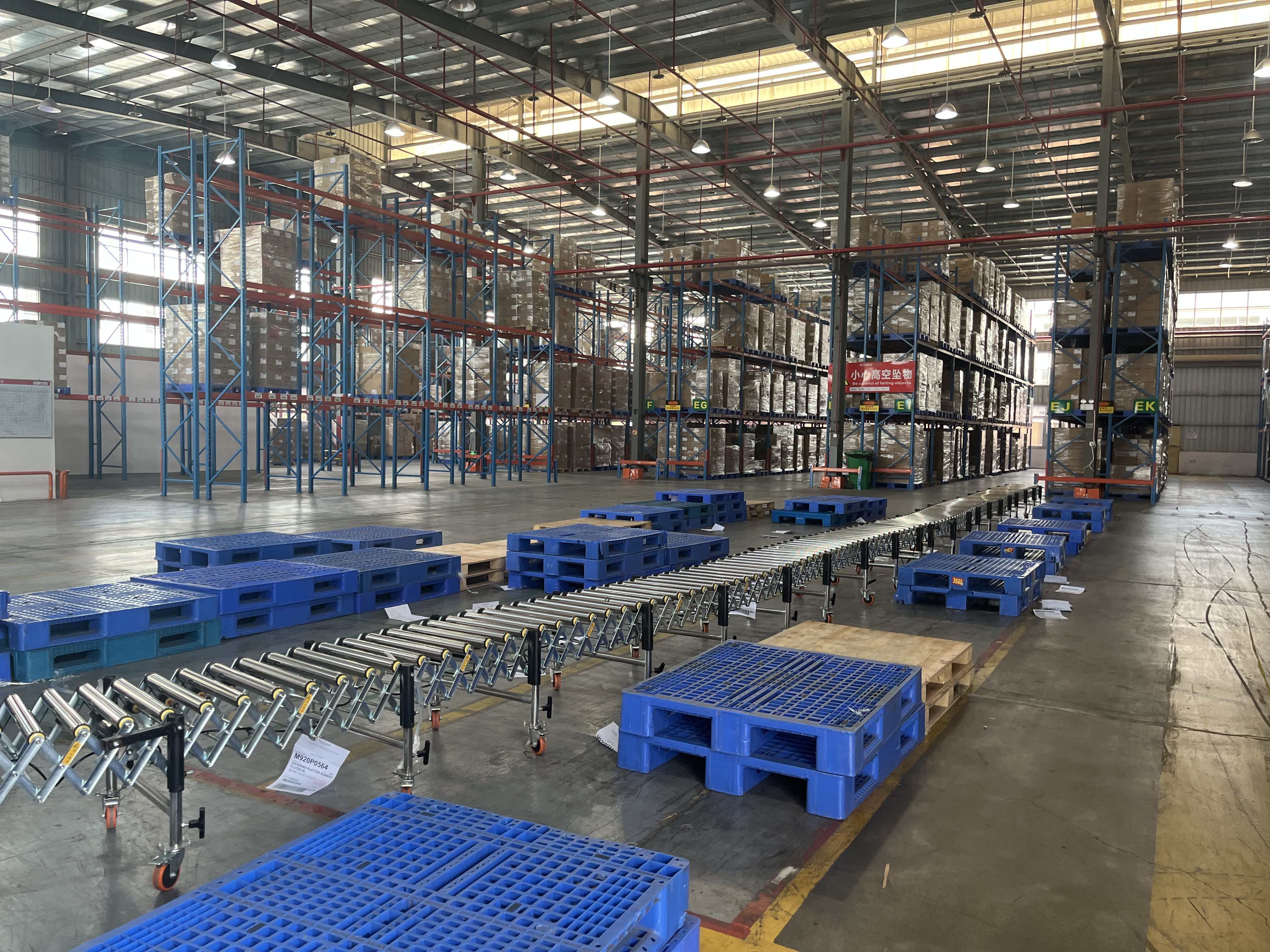
- Layout principles:
- Keep the line as straight as possible, extending directly from the first-floor buffer area into the truck compartment;
- Ensure operators have enough room to stand and turn around at both the warehouse end and the truck end.
- Typical layout:
- One end is fixed near the first-floor buffer area of the warehouse, making it easy for upstream stations to consolidate the cigarette cartons and send them directly onto the line;
- The other end extends toward the loading platform and goes a certain distance directly into the truck compartment, making it easy for workers inside the compartment to take and stack goods nearby;
- Depending on the truck model and compartment length, the roller conveyor can reserve some telescoping space and be moved or adjusted to fit different vehicle positions.
Staffing and actual workflow
Once the loading process is running smoothly, only two operators are needed on site:
- Warehouse end: 1 person is responsible for connecting incoming materials from upstream, moving the cigarette cartons from pallets or transfer carts onto the roller conveyor, and placing the goods onto the line at a steady pace;
- Truck end: 1 person stands inside the truck compartment, receives the cigarette cartons delivered by the roller conveyor, and stacks them layer by layer according to the cargo placement requirements.
Workflow diagram:
- The upstream station consolidates the cigarette cartons in the first-floor buffer area;
- The warehouse operator places the cigarette cartons onto the roller conveyor and gently pushes them into the line;
- The cartons roll along the roller conveyor into the truck compartment, where workers inside arrange and stack them according to the loading plan;
- After one layer is filled, the workers inside the truck adjust their position, continue receiving cartons, and keep going until the entire vehicle is loaded.
Throughout the process, the roller conveyor acts like a "moving floor, " greatly shortening the distance for manual handling. However, each carton is still manually placed onto, taken off, and stacked from the conveyor, and the operating pace can be flexibly adjusted according to actual on-site conditions.
Application result: two people can complete a full truckload of cigarettes
Physical labor intensity is significantly reduced
- Traditional method:
- Workers need to move back and forth frequently between the warehouse and the truck compartment, and some sections also require bending, turning, and lifting;
- After using a roller conveyor:
- The warehouse operator’s main actions become "take carton → place on roller → gently push, " and they basically no longer need to enter or exit the truck compartment;
- Workers inside the truck only need to receive cartons and stack them within a fixed area, reducing the distance of "carrying cartons around";
- Overall physical effort is concentrated in short-distance loading and unloading, making the labor intensity easier for employees to accept.
Labor requirement reduced from several people to 2
- According to feedback from the customer site, when the goods are mainly cigarette cartons and the loading pace is stable:
- In the past, the same workload usually required 3–4 people working together;
- Now, with a single gravity roller line, two people can complete the same loading task;
- The time freed up by staff can be reassigned to other warehouse processes or management tasks.
More stable loading pace, cleaner site
- The roller conveyor keeps the flow of goods on a fixed line, so goods do not pile up randomly in the aisle;
- The warehouse side loads at a steady pace, and the truck side receives and stacks at a steady pace, making it easy for both sides to form a stable "rhythm coordination";
- During rolling, the cigarette cartons remain relatively stable in position, reducing outer-box deformation and wear caused by improper handling.
Scope of application: more light-duty carton goods scenarios
In addition to the tobacco industry, this solution is also suitable for the following typical scenarios:
- Light-duty cartons containing daily chemicals, food, medicine, etc.;
- Vehicles are mainly box trucks, and the truck bed height is level with the warehouse loading and unloading platform;
- The loading distance is relatively limited, and you want to reduce manual back-and-forth movement with simple equipment.
For similar customers, if:
- The goods are mainly cartons and plastic crates;
- You want to reduce labor intensity with simple, low-maintenance equipment;
- You accept that the "placing" and "receiving" of goods are still done manually rather than fully automated loading;
then you can give priority to a Gravity Roller Conveyor solution and customize the layout according to the on-site space and vehicle length.
If you later need to use skate-wheel conveying equipment at the unloading end, you can further learn about the structural and application advantages of Gravity Skate Wheel Conveyor in unloading operations and plan the overall conveying solution in a unified way based on the needs of both loading and unloading ends.
Project Summary and Selection Recommendations
In this tobacco warehouse project, the reason for choosing Gravity Roller Conveyor was mainly based on the following points:
- The truck bed and the warehouse floor are level, so no additional climbing equipment is needed;
- Each cigarette carton is relatively light, and can be conveyed with a simple manual push;
- The customer wanted to significantly reduce back-and-forth handling and the number of times goods enter and leave the truck while still keeping manual control over pace and quality.
If your site has similar conditions:
- There is a fixed loading and unloading platform or an area of similar height;
- The goods are relatively light and each box is of a uniform size;
- The main operation is straight-line loading, with no need for complex turns;
You can prioritize evaluating a Gravity Roller Conveyor line as a substitute for "manual handling.".
When the following changes occur later, you can further consider upgrading or expanding:
- If there is a height difference and goods need to be lifted from the ground into the truck, you can introduce hydraulic or medium-duty climbing conveying equipment;
- If it needs to work with upstream sorting, scanning, and automated warehousing systems, you can refer to application scenarios and advantages of using Powered Roller Conveyor with photoelectric sensors to achieve gap-controlled conveying of goods and introduce powered rollers and detection devices at key positions.
Guangdong NAILI Logistics Special Equipment Manufacturing CO., LTD. (Guangdong NAILI Logistics Special Equipment Manufacturing CO., LTD.) has similar roller-conveyor loading practices in the tobacco, express delivery, and e-commerce industries. According to different goods and site conditions, it can adaptively design roller specifications, line length, and support arrangement, and under the premise that people are still involved, let the conveying equipment handle as much of the physical labor as possible.