Core Pain Points and Needs at the Loading Dock
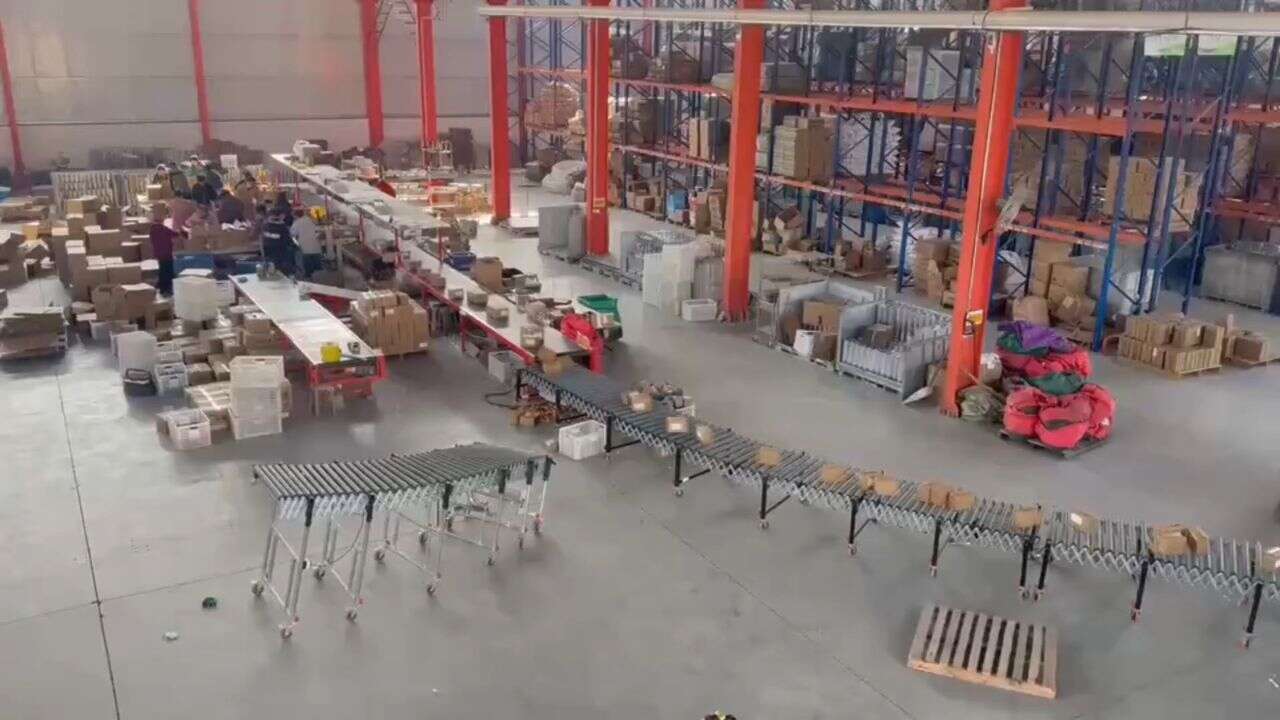
In loading dock scenarios, the value of an adjustable roller conveyor is not just to "move goods forward, " but to bridge the gap that often exists between truck beds, platforms, and in-warehouse conveyor lines. Many on-site problems are not caused by insufficient conveying capacity, but by constant changes in truck position, height, length, packaging format, and aisle conditions, which makes fixed-length, fixed-height equipment difficult to use reliably over the long term. As a result, once the goods reach the truck side, they often fall back into manual lifting, relay transfer, temporary staging, and secondary handling.
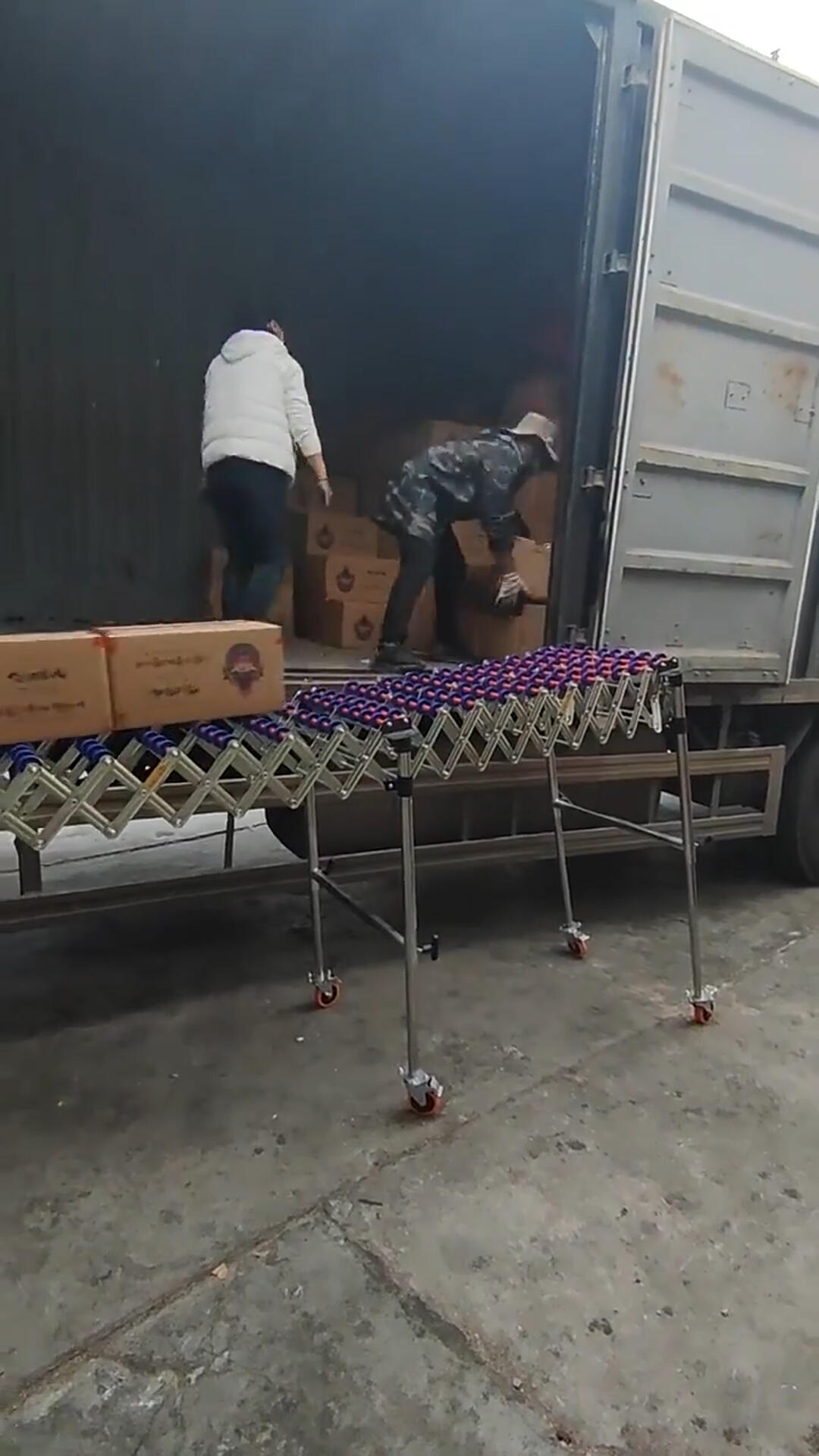
These breakpoints directly affect cycle time and safety. When vehicles come and go frequently, the height of the truck bed is often inconsistent; at the same loading dock, one day may involve cartons, the next turnover bins, bagged goods, or packaging with weaker bottom support; and warehouse aisles sometimes need to reserve space for forklifts and pedestrian traffic, so the equipment must also be able to retract quickly and be moved as needed. Once fixed equipment does not match the site, operators can only make up the distance by lifting, dragging, pushing, and carrying, which increases labor intensity and the risk of impacts.
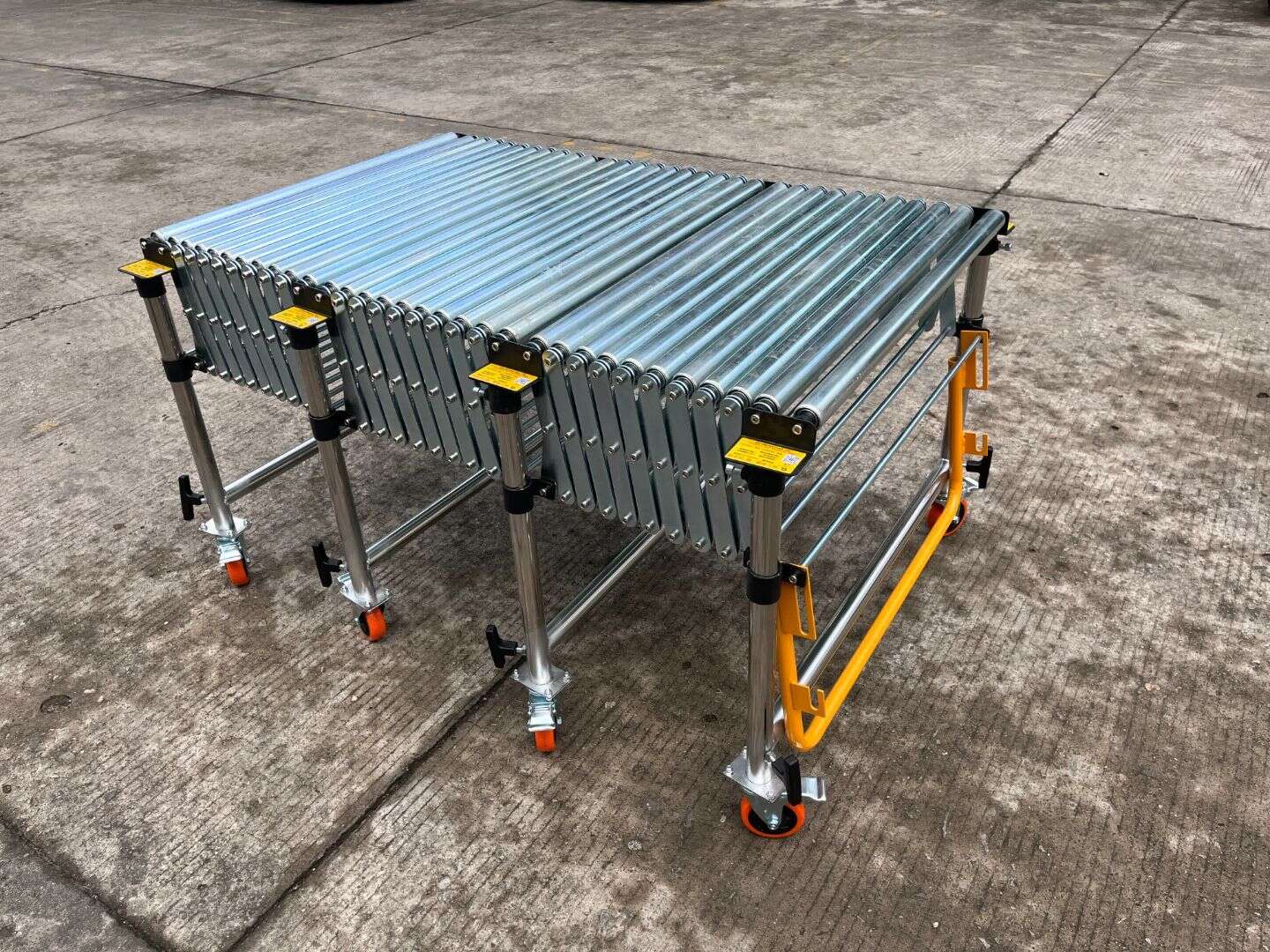
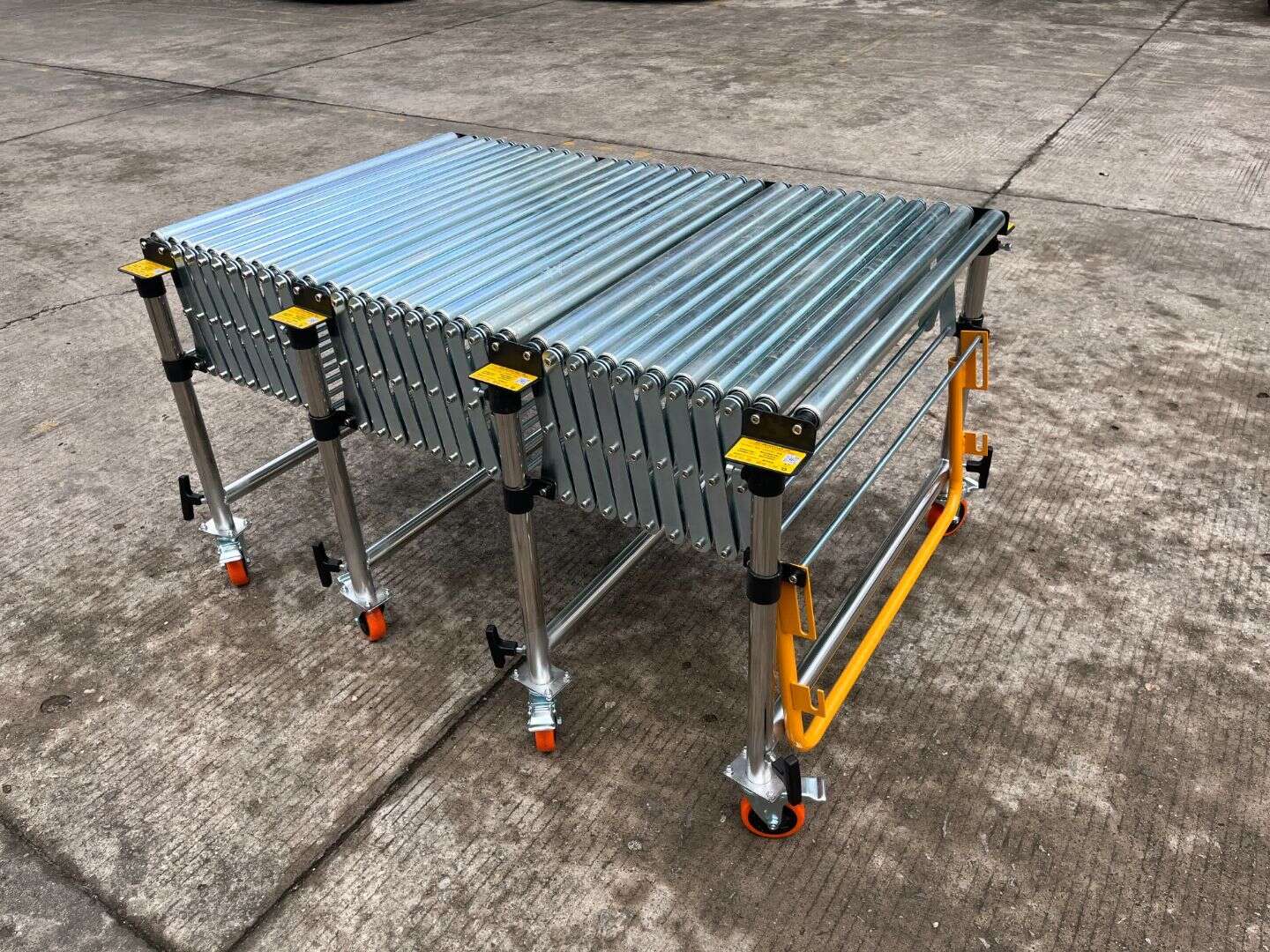
Therefore, loading docks need a transition device that can adjust to changing operating conditions: it should extend toward the goods during operation and retract afterward to reduce floor space; it should align with different truck-bed heights and also move between multiple stations. Adjustable roller conveyors create value precisely around these practical needs. If you would like to learn more about selection boundaries for similar equipment in warehousing and loading operations, you can also refer to Guide to Selecting and Maintaining Telescopic Roller Conveyors for Warehousing and Loading.
How Adjustable Roller Conveyors Solve Docking and Adaptation Challenges
For docking and loading, the core of an adjustable roller conveyor is not a single structure, but a combination of three capabilities—telescopic docking, adjustable height, and mobile deployment—that minimizes manual handling to shorter distances, fewer times, and lighter intensity.
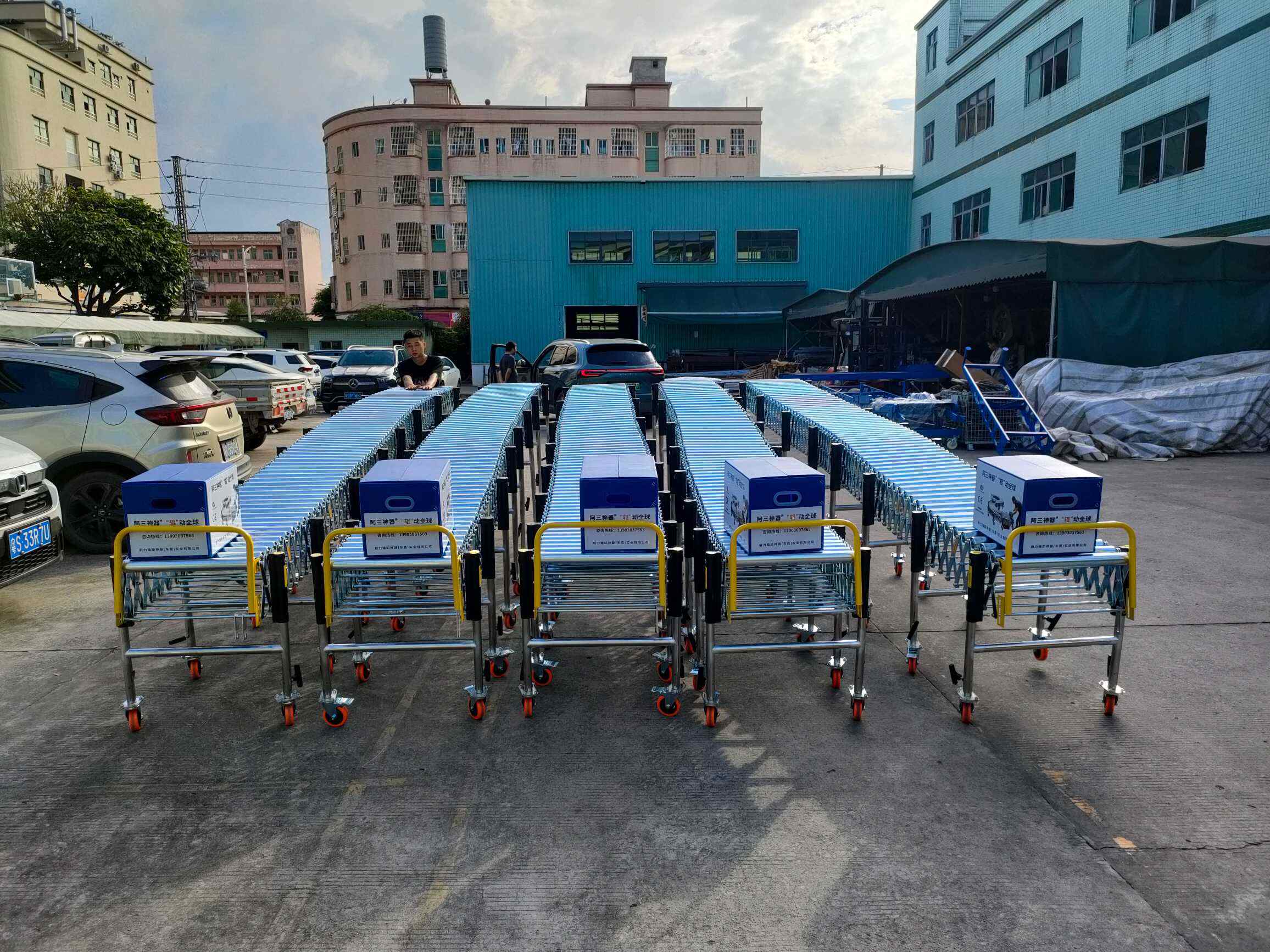
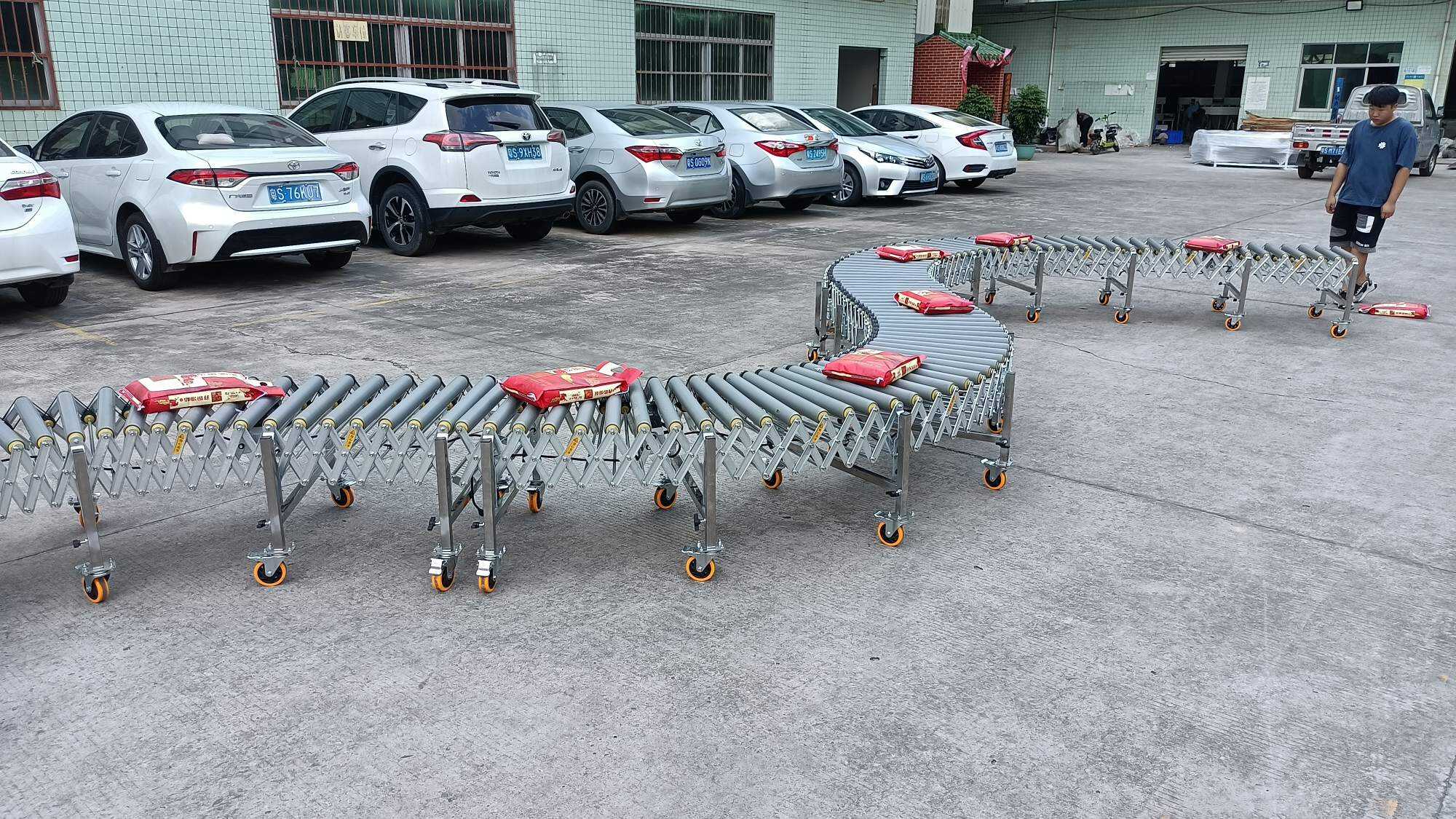
- Telescopic Docking: Through a multi-stage telescopic structure, the conveying section can extend toward the truck bed or container, getting as close as possible to the pick-and-place point and reducing back-and-forth carrying inside the truck as well as intermediate ground transfers. After the operation ends, the equipment can be retracted to a shorter length, freeing up space for the loading dock and warehouse aisle.
- Adjustable Height: By using adjustable legs, supports, or front-and-rear height matching, the conveying surface can be brought closer to the height of the truck bed, loading ramp, or downstream conveyor line. For gravity systems, height adjustment also directly affects the slope, which in turn affects whether goods can slide smoothly and whether they are likely to run out of control.
- Mobile Deployment: Models with casters are better suited to multiple dock doors, temporary workstations, and flexible seasonal expansion. The equipment does not have to stay fixed at one door; it can be pushed into position, locked, and adjusted in height before use, then moved or stored afterward.
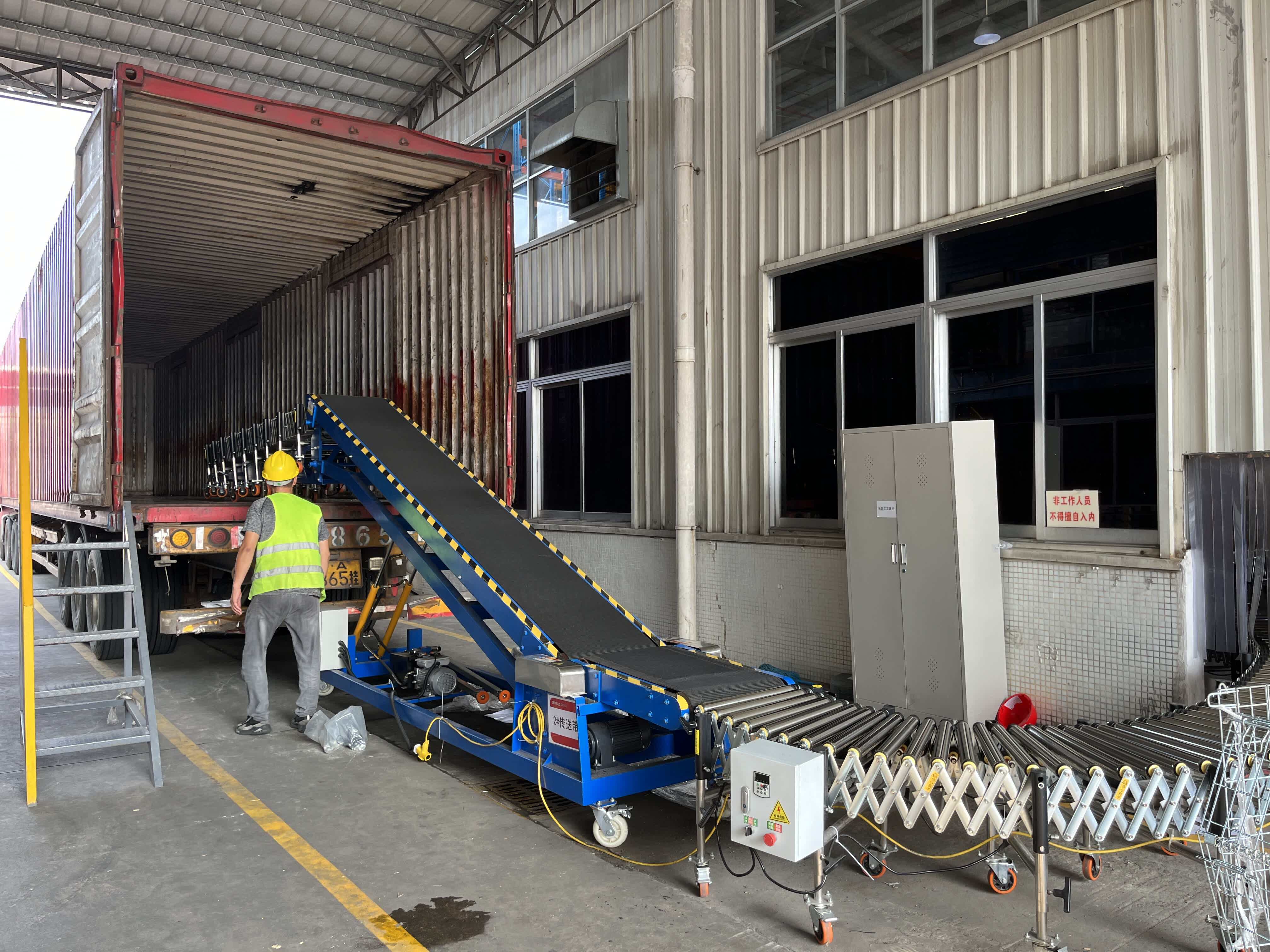
It should be noted that adjustable height does not mean it can replace all lifting equipment. If there is a large height difference on site, relying only on the legs to raise the equipment is often not enough to achieve both goals at the same time: "raising the front end to truck-bed height" and "extending the conveyor section further into the truck." In such cases, the more common approach is to let a hydraulic ramp or lifting device complete the main lift first, and then use an adjustable roller conveyor to finish the transition and extension near the truck side.
From the perspective of drive type, this equipment can be either gravity-driven or powered. Gravity systems have a relatively simple structure and are suitable for sites that are more sensitive to energy consumption, maintenance, and flexibility; powered systems are more suitable for operations that need to maintain a continuous cycle, control conveying speed, and work in coordination with upstream and downstream equipment.
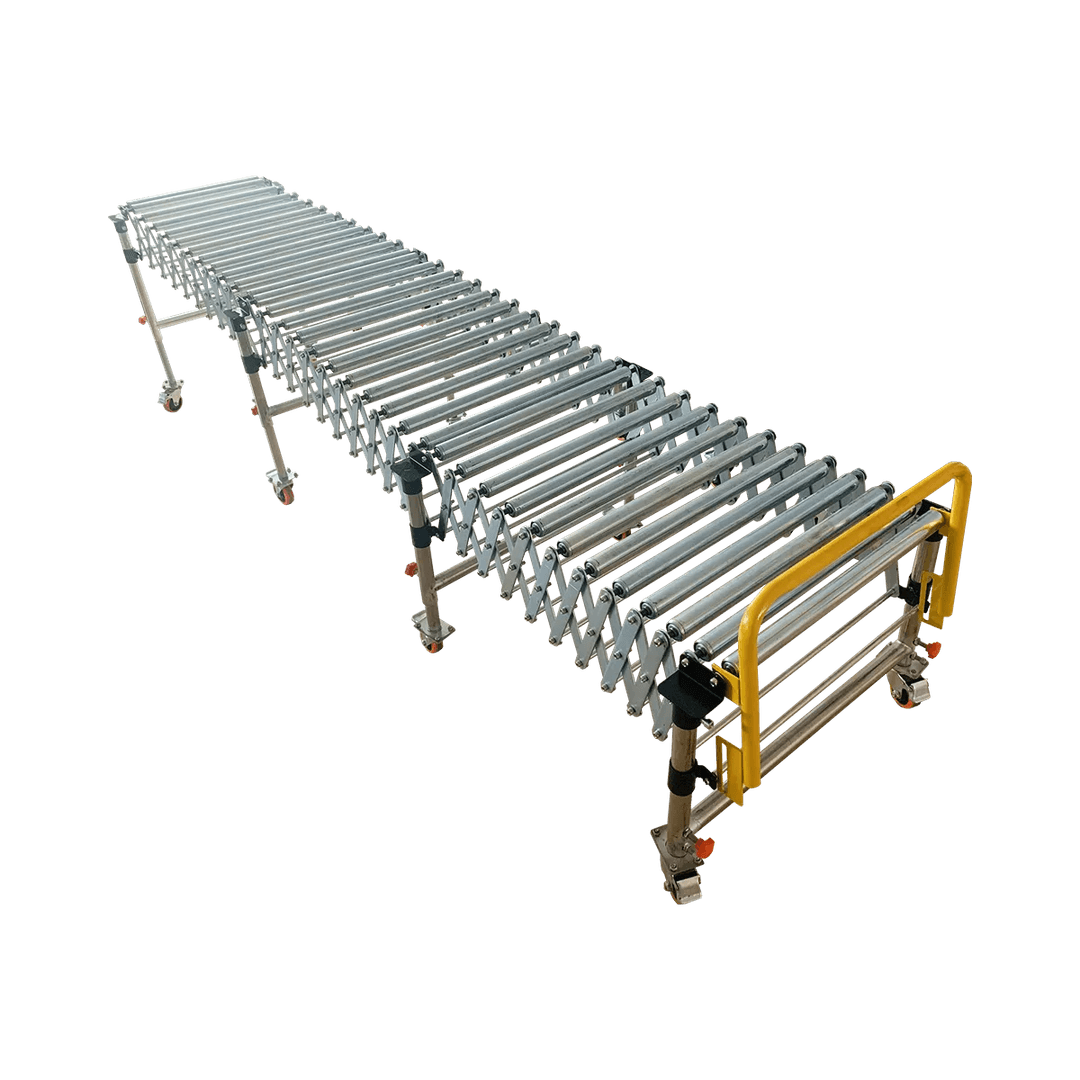
Serie de transportadores de rodillos por gravedad
Gravity Roller Conveyor is specifically designed to withstand impact and is an ideal choice for the front end of loading and unloading systems. Compar…

Caja de cartón
Key Structures and Configuration Options (understood by capability, not on-site values)
When selecting a model, do not focus only on a single dimension such as length or width; first understand what combination of capabilities the equipment needs to provide. Different structures directly determine whether it can adapt to your goods type, site, and cycle time.
- Telescopic Conveyor Frame and Guide Support: A multi-stage nested frame works with guide and support structures to achieve smooth extension and retraction. Telescopic capability affects how deep the equipment can enter the truck, and also affects the footprint after retraction. If aisle space is tight and station changes are frequent, the retracted length becomes critical.
- Conveying Surface Type:
- Steel Rollers: Suitable for common regular goods such as cartons and turnover bins, durable and widely adaptable, making it appropriate for most general loading docks. Scenarios like Golden Needle Mushroom Factory Roller Conveyor Transfer demonstrate the stability of roller lines in box handling.
- Rubber-Coated Rollers: Better friction and cushioning, making them more suitable for bagged goods, soft packages, or items with easily damaged surfaces, and also better for situations where slip and impact need to be reduced.
- Skate Wheel Conveying Surface: Better suited to light loads, flat bottoms, and scenarios that require easy movement and rapid deployment. It has advantages in manual pushing and flexible layout, but it does not mean it can replace all roller conveyor applications.
- Drive Type:
- Gravity-Driven: Conveying relies on slope or manual pushing. The structure is simpler, maintenance points are relatively fewer, and it is suitable for sites with limited power supply, more temporary deployments, or medium cycle-time requirements.
- Powered: Provides more stable horizontal conveying capability and includes basic control functions such as speed control, forward and reverse operation, and emergency stop. It is better suited to workflows that require continuous flow and cycle-time matching with upstream and downstream sections. If you are comparing the two, you can continue reading Comparison Guide to Powered and Gravity Roller Conveyor Warehouse Selection.
- Caster and Locking Structure: Mobile equipment cannot do without reliable braking and support. Whether it can be locked securely determines the risk of wobble during operation and also affects whether it is prone to shifting during docking.
- Modular Connection Capability: When the distance from the truck side to the warehouse interior is greater, or the work area changes frequently, whether multiple conveyor sections can be quickly connected and disconnected directly affects on-site layout efficiency.
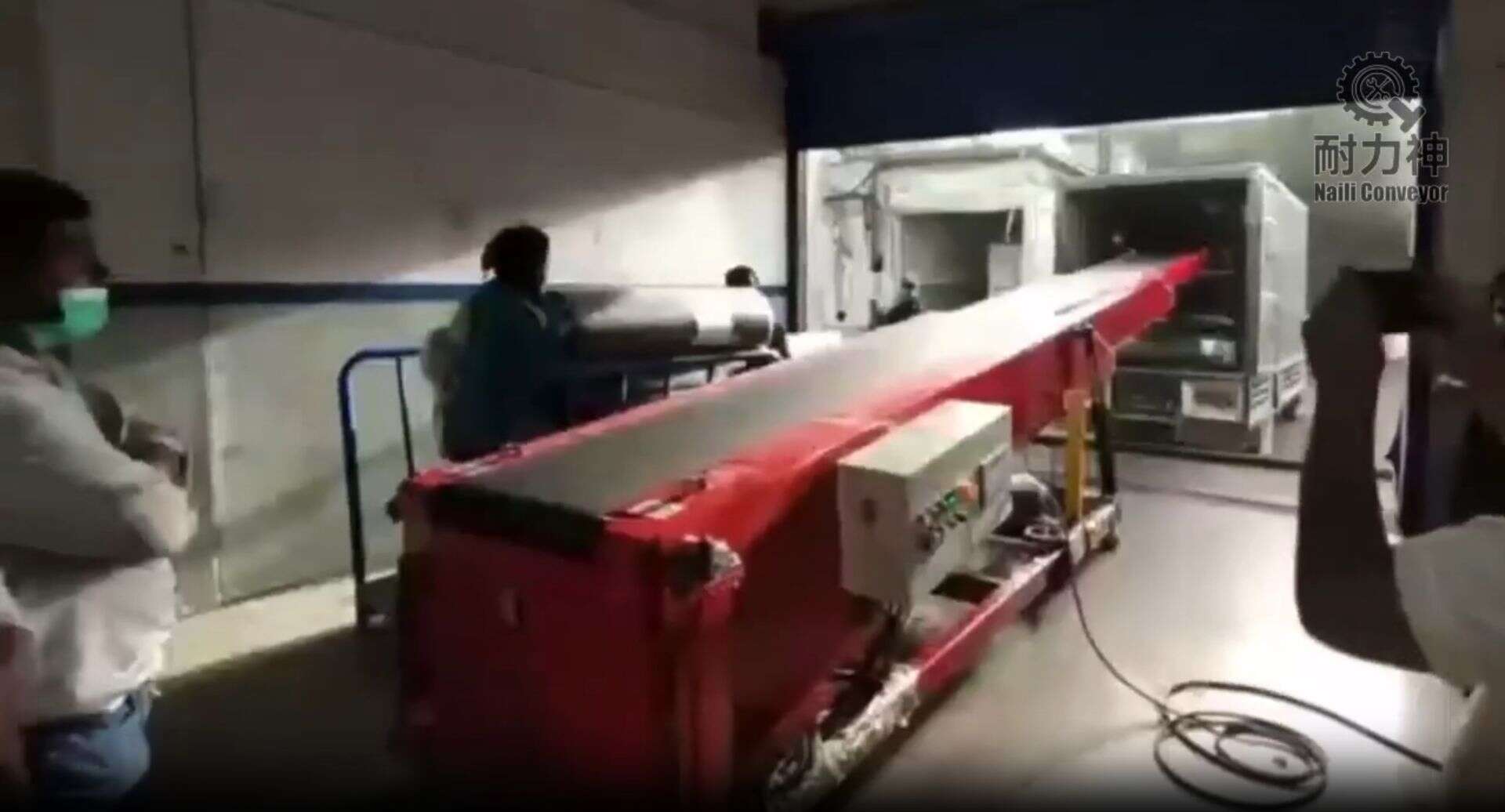
If your site is not a simple flat transfer, but needs to connect with longer loading equipment or an in-warehouse conveyor section, then beyond selecting the individual machine, you should also consider the continuity of the entire process in advance. If you are interested in longer-distance truck loading and unloading solutions, you can also refer to Telescopic Conveyor Truck Loading and Unloading Selection Guide, to help determine the position of the roller section in the entire line.
Series Systems with Other Loading and Unloading Equipment, Operations, Maintenance, and Safety Reminders
In many projects, an adjustable roller conveyor is not an isolated piece of equipment; rather, it serves as a transition section at the truck side or warehouse side, connected in sequence with other loading and unloading equipment to form a more continuous logistics channel. Its advantage lies in flexibility: it can extend forward toward the truck compartment, or connect backward to incline, lifting, or other conveyor sections.
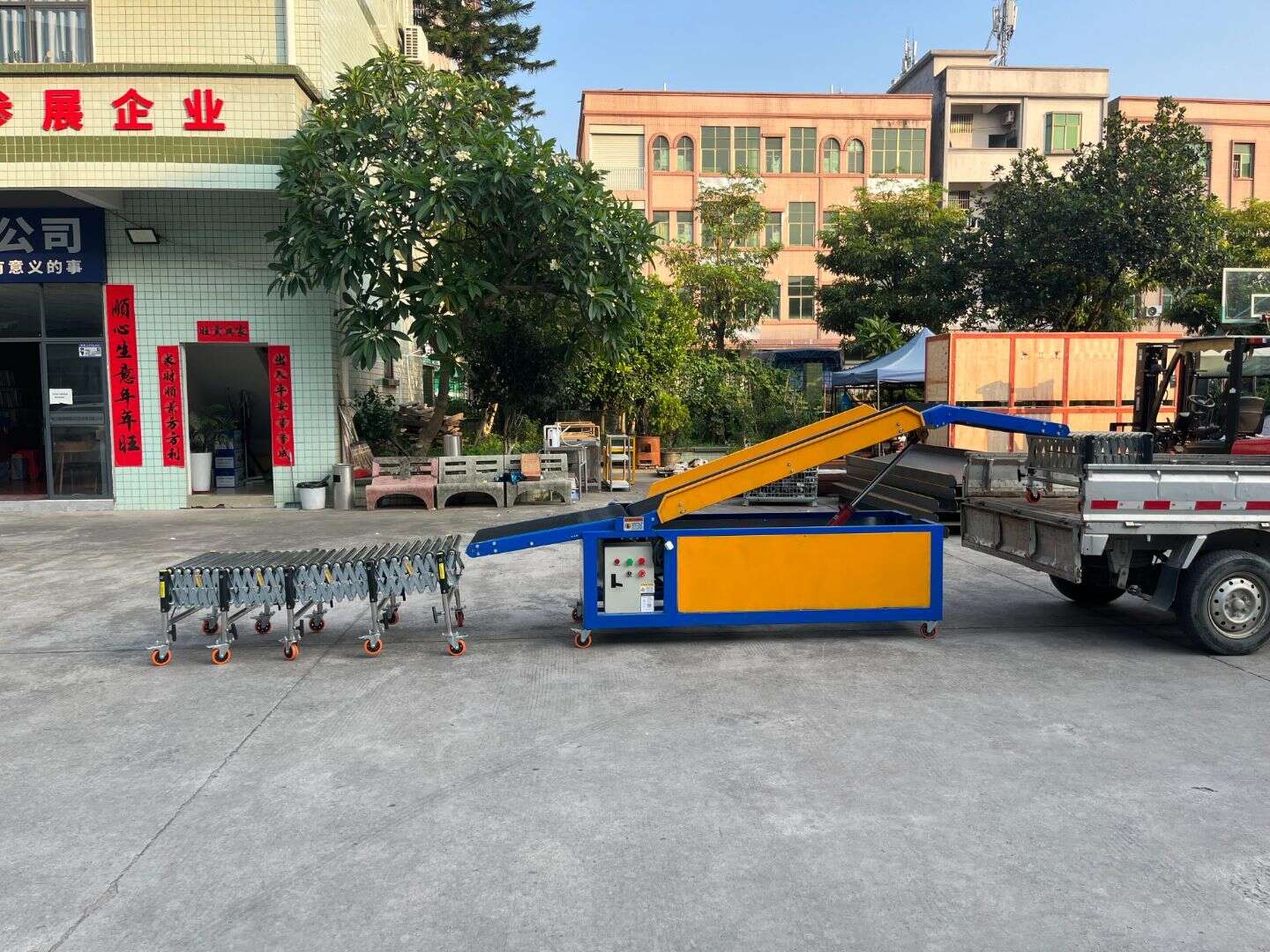
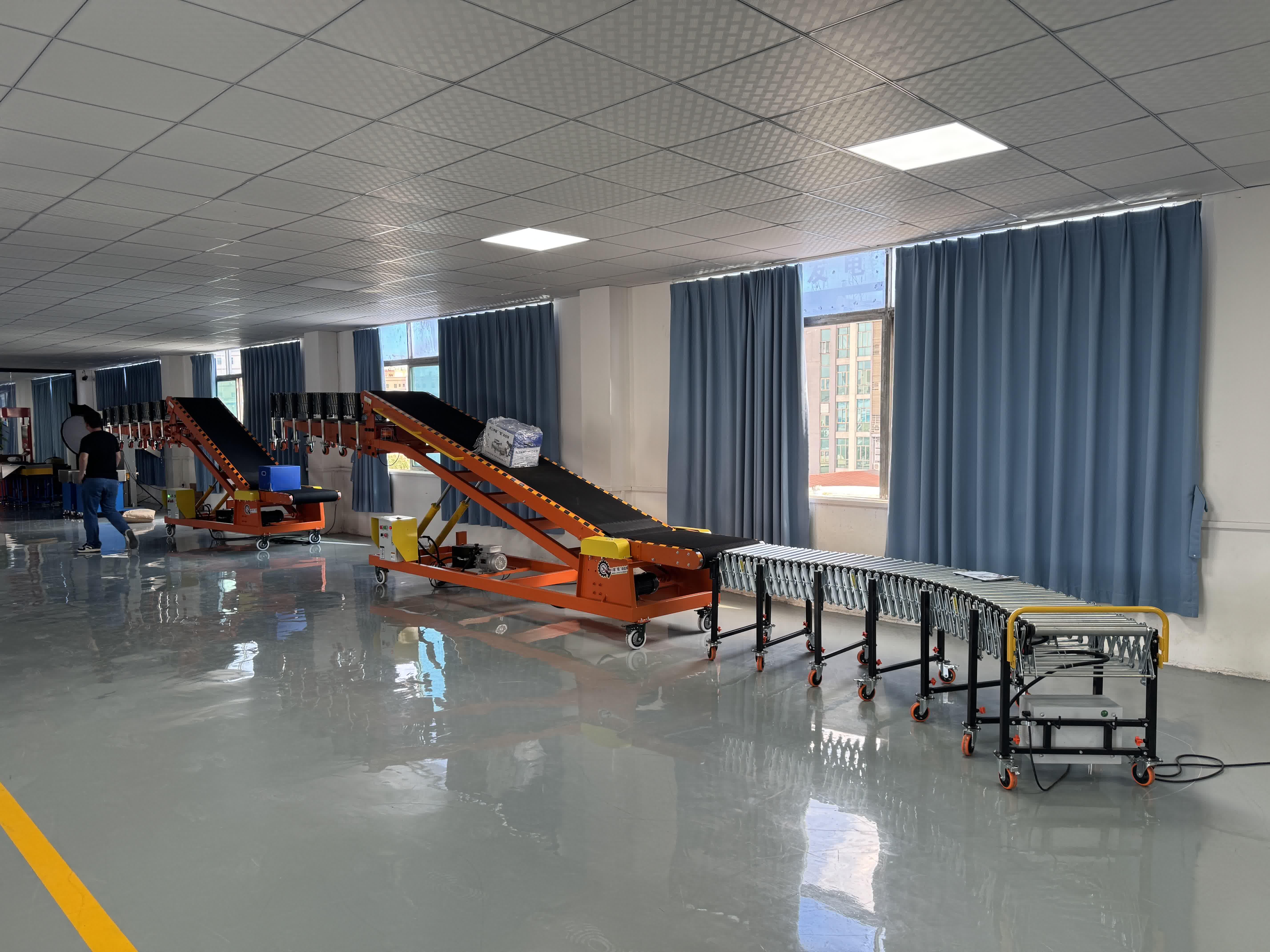
- Sequential Connection with Hydraulic Incline or Lift Conveyor: When there is no platform, the truck compartment is higher, or the on-site height difference is significant, hydraulic equipment can handle the main lifting, and then the roller section can complete the truck-side transition and extension into the work area. This combination is more suitable for loading and unloading openings that require both lifting capacity and close-range work at the truck side.
- Front and Rear Connection with a Telescopic Conveyor: In scenarios with fixed dock points, high throughput, or a need for a longer operating radius, the adjustable roller section can serve as a buffer, collection, or diversion section at the front and rear, helping the main equipment maintain continuous feeding and reducing downtime caused by material shortages.
- As Part of a Temporary Loading and Unloading Station Setup: Rented warehouses, temporary warehouses, and peak-season expanded workstations often do not have complete dock conditions. In such cases, the adjustable roller conveyor is more suitable as part of a rapid on-site deployment because it is easy to move and store.
- Compatibility Boundaries: Different devices may not be suitable for direct mechanical integration into one unit, but they can be connected in sequence according to the workflow. When selecting a model, priority should be given to confirming the functional boundary of each section rather than simply stacking nominal capacity.
In addition to the layout method, daily operation and maintenance also determine whether the equipment can be used stably over the long term. For both non-powered and powered models, it is recommended to establish basic inspection habits:
- Roller and Skate Wheel Rotation Status: Check for sticking, unusual noise, uneven wear, and localized non-rotation to prevent cargo from being blocked at specific points and causing accumulation or impact.
- Connectors and Height-Adjustment Structure: Regularly check whether bolts, connectors, legs, and support points are loose. For equipment that is moved and height-adjusted frequently, special attention should be paid to preventing enlarged structural gaps.
- Power Component Inspection: For powered models, pay extra attention to belt wear and tension, the operation of the motor and control components, whether the cable is damaged, and whether the emergency stop function responds properly.
- Casters and Brakes: Before each operation, confirm that the brake lock is effective. If necessary, check whether the grounding supports are stable to prevent the equipment from shifting under load.
From a safety perspective, the most common problem at loading and unloading openings is not that the equipment itself cannot work, but that the method of use exceeds the design limits. For example, when using a non-powered conveyor, if the slope is too steep, cargo will slide too fast; on a powered conveyor, prolonged jamming and buildup will increase wear on transmission parts; starting loading and unloading before the equipment is locked can easily cause alignment deviation; and cargo exceeding the load range may lead to roller deformation, abnormal frame stress, or even cargo falling. Proper practice should include: locking the casters and confirming stability before operation; strictly controlling the load and single-item condition; keeping personnel away from motion and pinch-point areas; and using a more suitable conveying surface and gentler pace for items that are slippery, loose, or easily damaged.
Overall, an adjustable roller conveyor for loading and unloading openings is better understood as a "flexible transition capability" rather than merely a single conveyor line. It is especially suitable for scenarios with multiple vehicle types, multiple dock points, temporary workstations, obvious changes in compartment depth, and a desire to reduce manual transfer. If the site has a greater height difference, a longer link, or higher cycle speed, it should be considered as part of the entire loading and unloading process, combined in sequence with incline, lifting, or telescopic equipment. The topic "improving unloading efficiency with rubber roller hydraulic conveyors" in the original extended reading is also strongly related to this article and can continue to be used as a reference for similar solutions.