Challenges in Handling Wine and Spirits Cases
In wine and spirits distribution warehouses, rubber-covered powered roller conveyors are discussed more often for moving wine cases because the cases have a dual nature: they are both heavy and fragile. A full case of 12 bottles of wine usually weighs about 16–20 kg, and a full spirits case may exceed 20 kg; meanwhile, glass bottles are very sensitive to impact, vibration, and sudden movements.
In addition, alcohol packaging comes in many forms (cartons, wooden crates, etc.). Among them, carton outer surfaces are often laminated or have relatively smooth paper finishes, which makes them more likely to slip on standard metal rollers. Wine cellars or temperature-controlled warehouses often have relatively higher humidity, further increasing the risk of stop-and-slip movement and rear-end collisions. For sites with a high daily throughput, even a very small breakage rate can still lead to significant losses, cleanup work, and management costs.
Main Risk Points of Manual Wine Case Handling
Under the pressure of operations that demand both speed and gentle handling, relying on manual carrying makes it easier for risks to accumulate on both the cargo and the workers:
-
Cargo damage risk
- Drops: even a fall from a low height may break multiple bottles
- Collisions: rubbing and squeezing can occur when passing through racks, door openings, or turns
- Improper stacking: unstable pallet stacking or crushing the bottom cartons
- Transport vibration: excessive shaking during handling may affect the quality of some products, especially aged wine
- Label wear: rough handling damages labels, affecting product value and sales
-
Worker safety risks
- Lower back strain: the size and weight of wine cases make it harder to maintain a proper posture for long periods
- Repetitive strain injury: frequent handling creates cumulative damage
- Broken-bottle risk: shattered glass and wine may cause slips or cuts
- Fatigue-related accidents: attention drops toward the end of a shift, increasing the probability of accidents
Applicable Equipment: Key Capabilities of a Rubber-Covered Powered Roller Conveyor
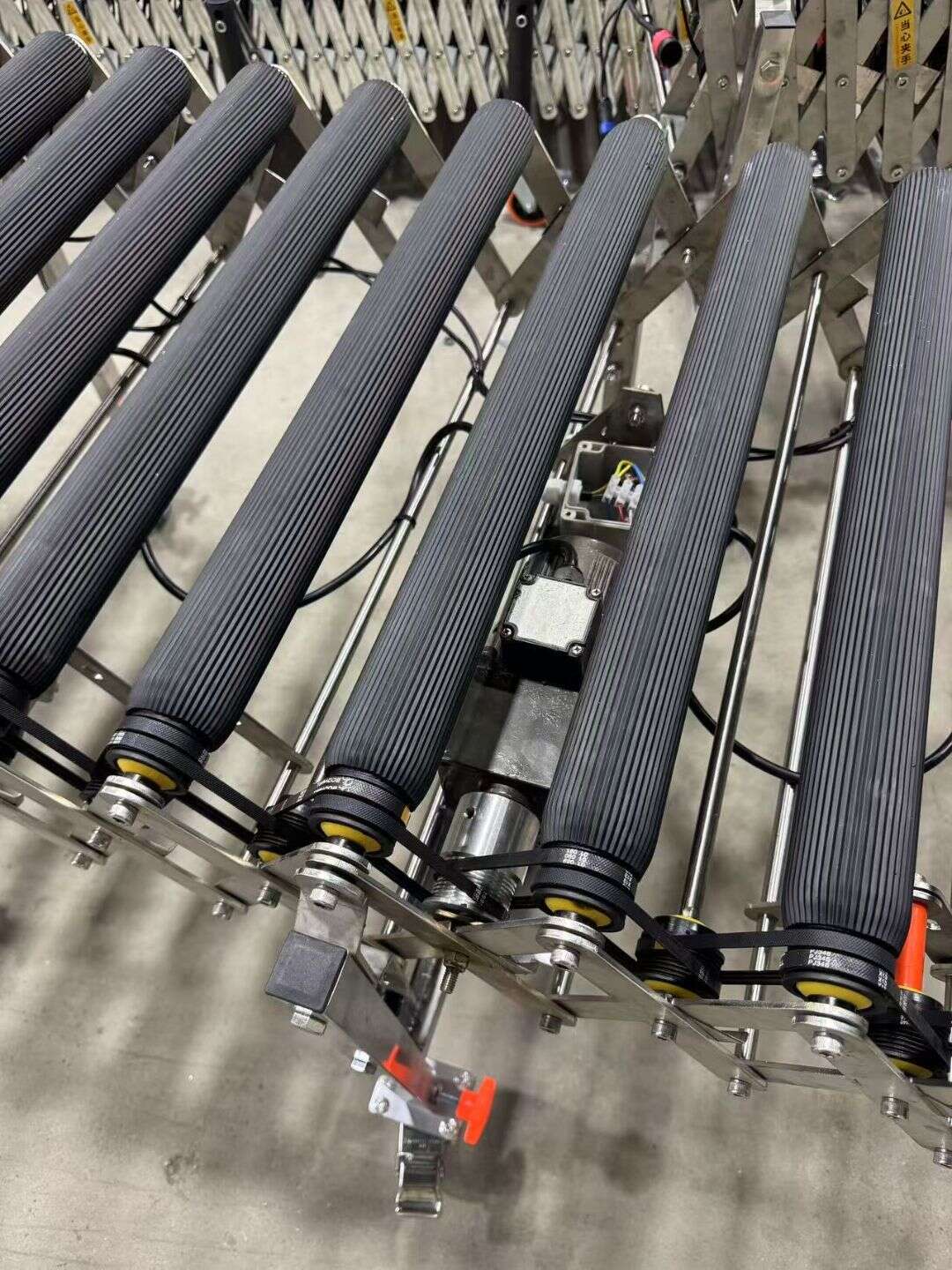
To address the above issues, the idea behind using a rubber-covered powered roller conveyor to move wine cases is to turn friction, pacing, and impact into controllable variables, keeping the cases moving steadily, gently, and predictably along the conveyor line.
1) Anti-slip and spacing control: helping cartons stay put when the line stops
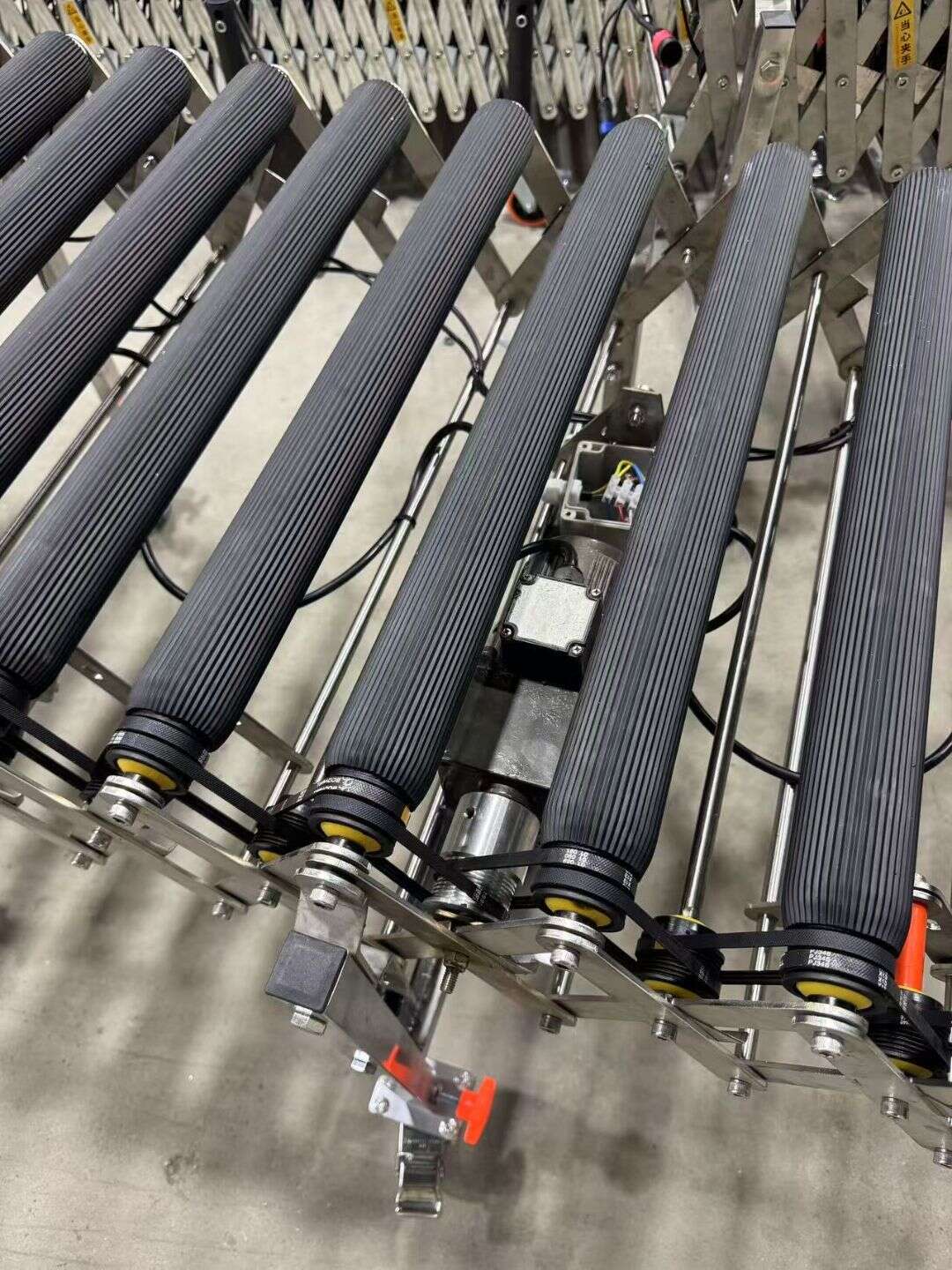
One of the core values of rubber-covered rollers is increasing friction against the carton surface, reducing accidental slipping during stoppages, slight inclines, or high-humidity conditions. On this basis, conveyor pacing and spacing control help maintain a proper distance between cartons, reducing rear-end collisions, compression deformation, and surface wear.
2) Gentle conveying: variable speed and smooth start/stop to reduce impact and vibration
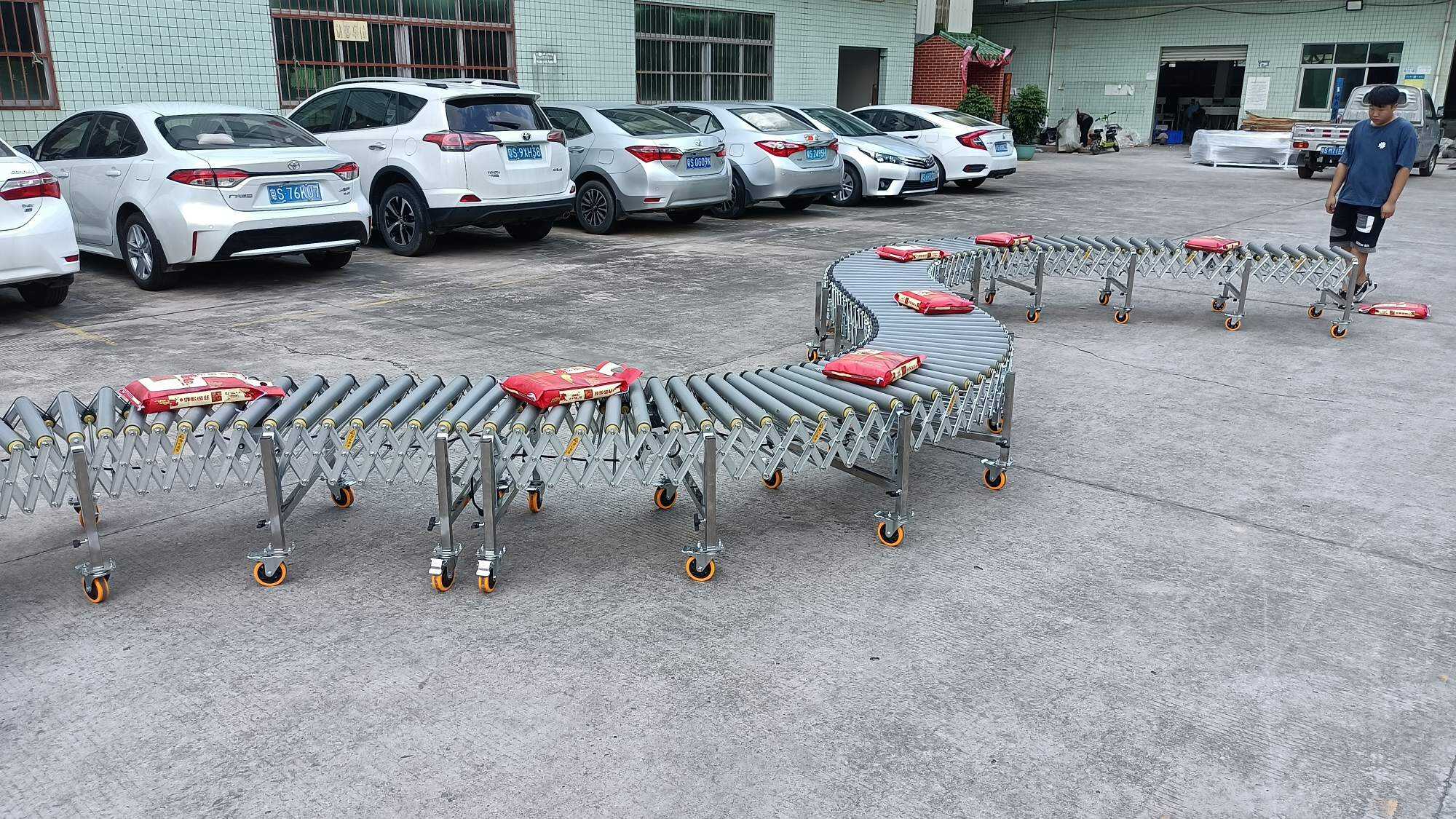
The fragility of glass means that sudden starts and emergency stops are high-risk actions. Rubber-covered powered rollers usually support variable speed and smooth start/stop control, allowing wine cases to pass through inspection and verification points at a more suitable speed. The rubber covering also helps absorb some micro-vibration. Some solutions also support bidirectional operation for precise positioning or return-flow adjustments, reducing repeated manual handling.
3) Load-bearing and structural focus: maintaining continuous support under concentrated heavy loads
Wine cases may look small, but they are concentrated-weight cargo. During selection and configuration, special attention should be paid to the conveyor’s adaptability to concentrated loads and the continuous support capability brought by roller spacing, so as to avoid suspended carton bottoms that cause shaking, jamming, or damage to carton edges and corners.
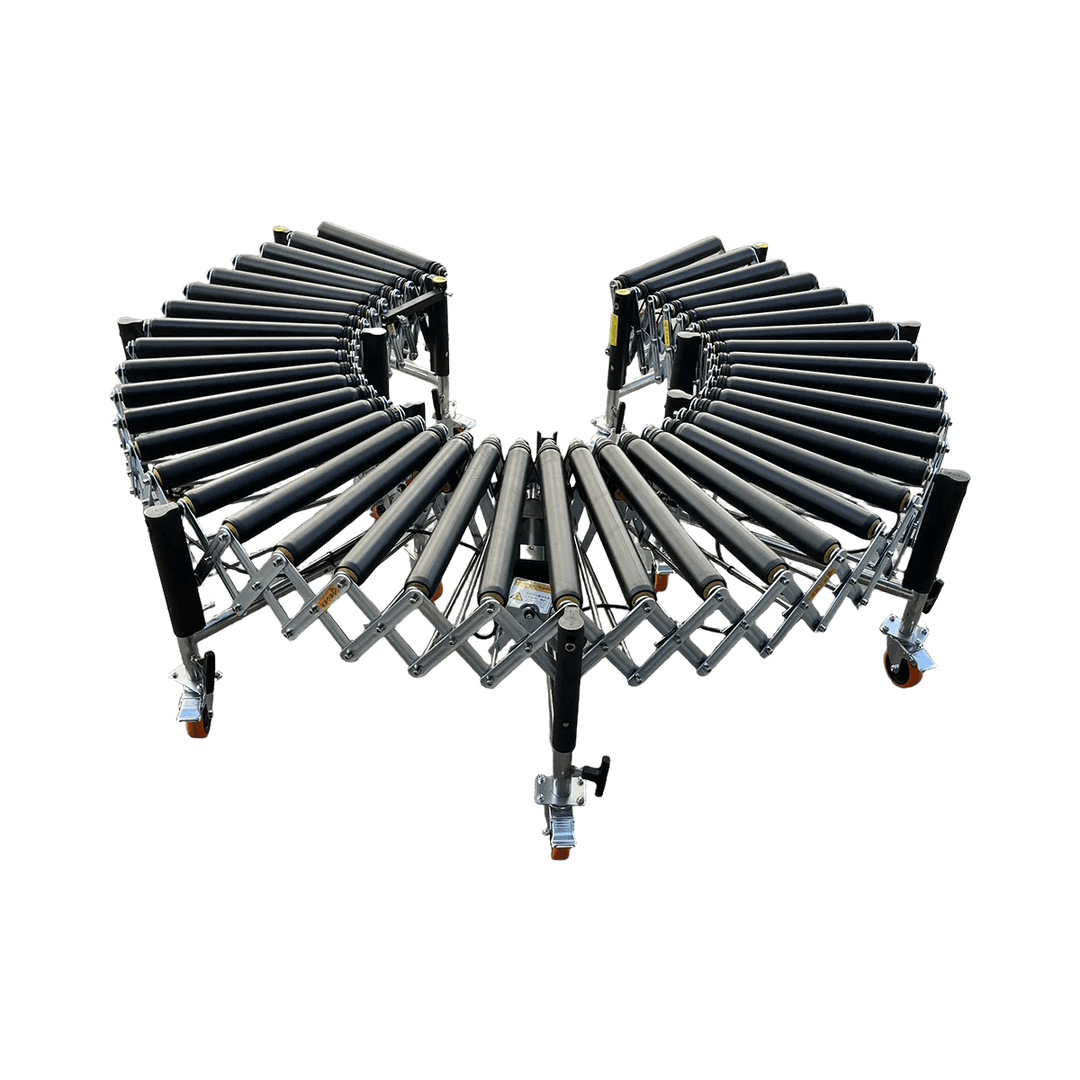
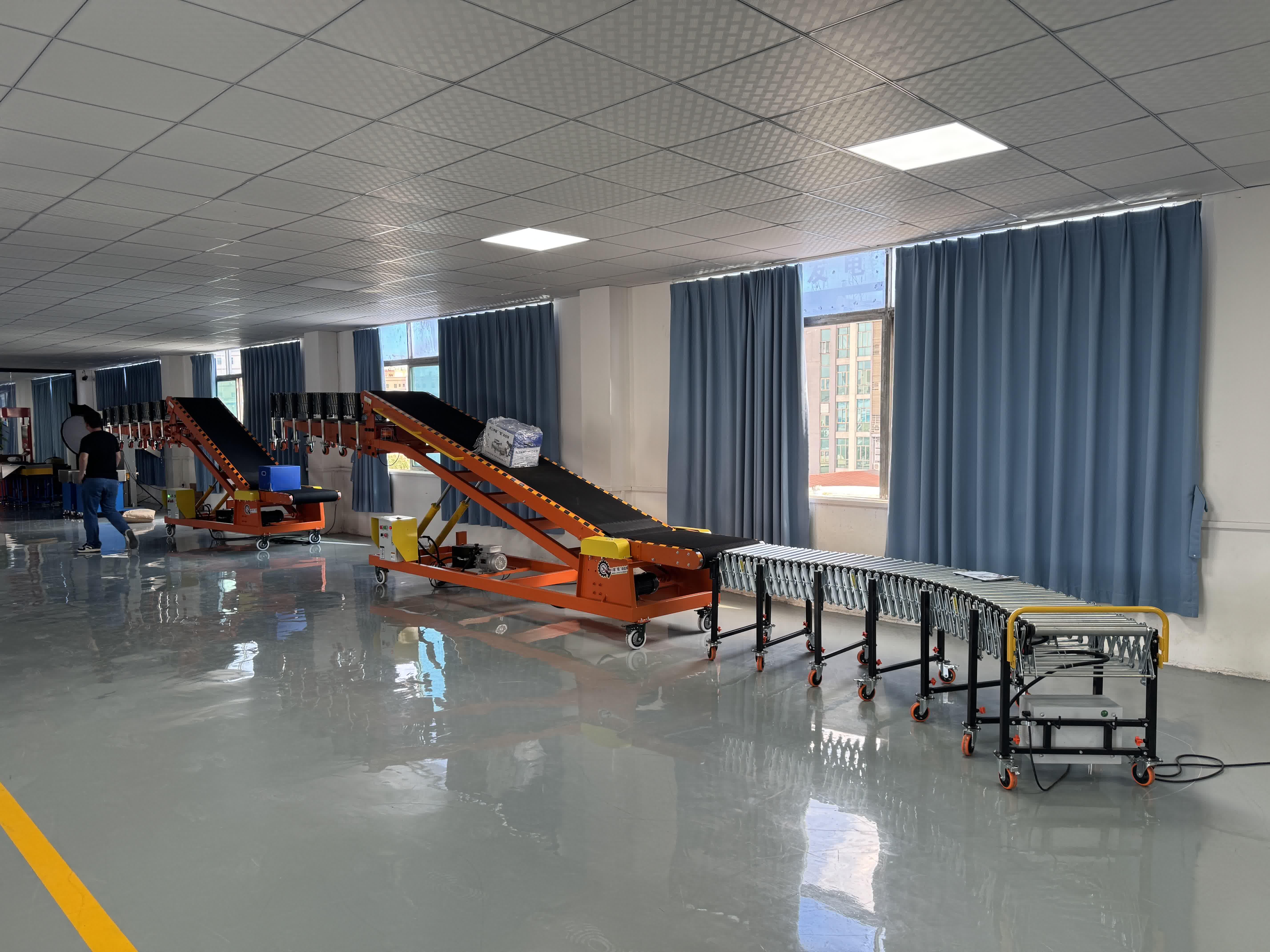
Multi-Wedge Belt Powered Rubber-Covered Roller Conveyor
The multi-wedge-belt Powered Rubber-Covered Roller Conveyor is specifically designed for the smooth conveying of bagged goods. It uses multi-wedge-bel…

Bidón metálico

Bidón de plástico

Rodar

Caja de cartón

En bolsa
Connection Methods and Precautions in Receiving, Warehousing, and Shipping
Putting rubber-covered powered roller conveyor wine-case handling into actual warehouse operation mainly comes down to organizing the process around three goals: reducing contact points, controlling pacing, and lowering handling intensity.
Receiving: unload the pallet and feed it to the line, replacing "fast walking and fast carrying" with controlled pacing
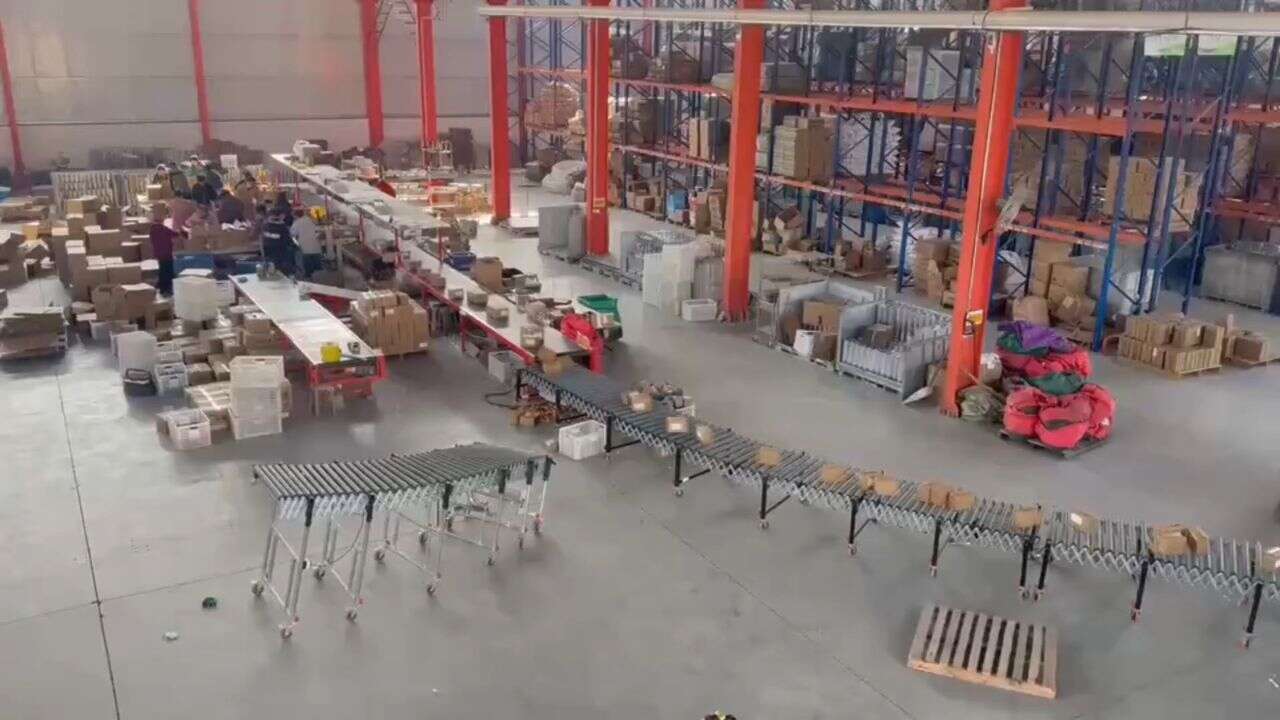
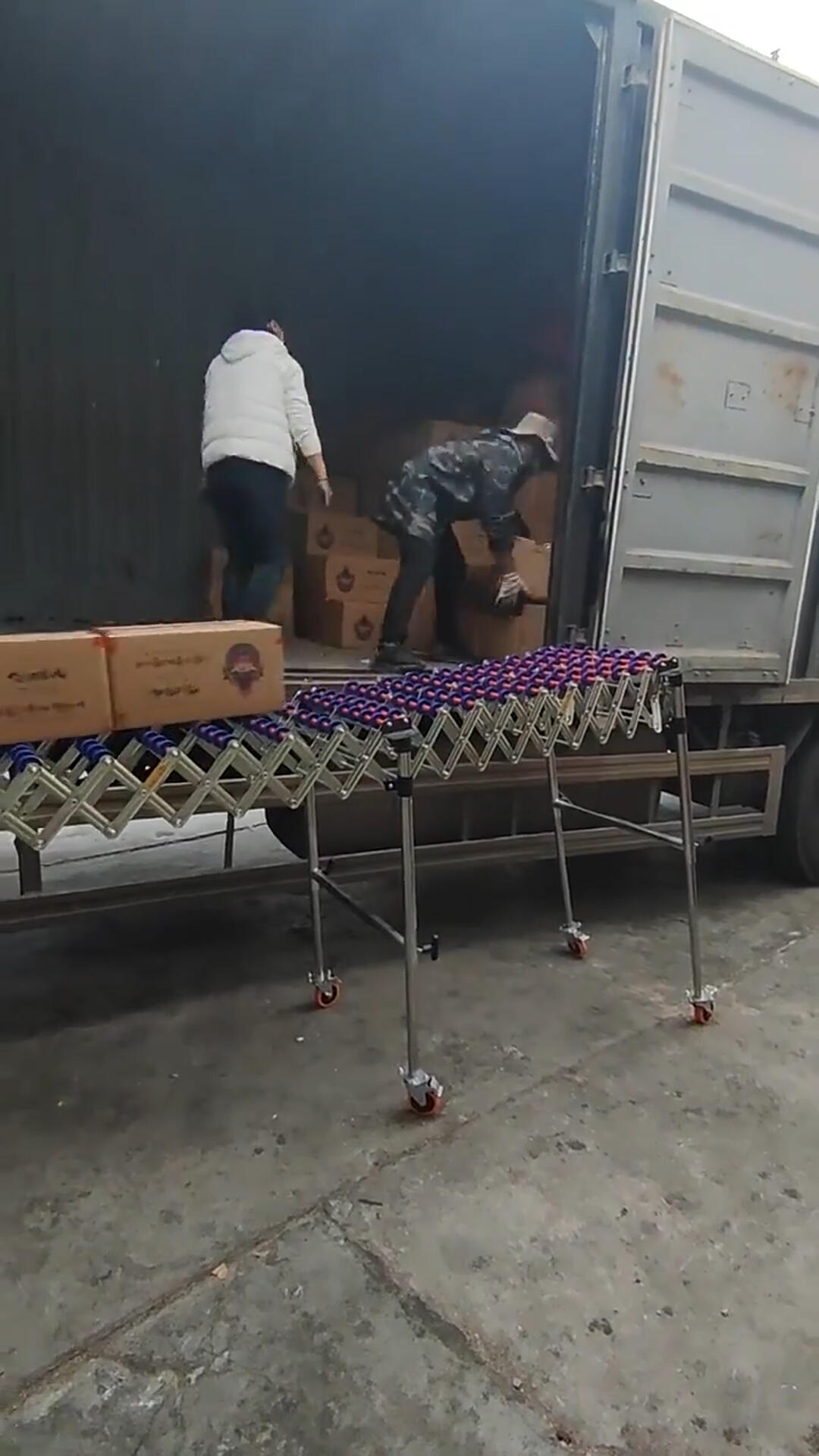
A typical process can be organized as "unload the pallet → feed to the line → inspection point → sort into storage". For more conveyor solutions for carton unloading, see: Powered Roller Conveyor carton unloading After workers remove the wine cases from the pallet, they place them directly onto the conveyor line, where they move at a controlled speed through quality inspection or barcode verification points before being routed to the corresponding storage area. This shortens manual carrying distances and reduces the likelihood of drops and collisions caused by repeated handling.
Internal transfer: organize logistics with straight-line paths to reduce aisle congestion
In warehouse replenishment, relocation, and picking replenishment, the conveyor line is better suited to stable straight-line transfer, reducing cross-traffic and congestion caused by forklifts and hand trucks during peak periods. At the same time, setting appropriate loading and unloading heights can lower physical exertion and operational risk to a more controllable level without pursuing "faster" speeds.
Loading: direct delivery to the trailer after verification, minimizing intermediate contact points
In the outbound process, the conveyor line can be arranged as a direct route from the collection/verification point to the loading position, delivering wine cases to loading staff at a steady pace. For different packaging forms (cartons, wooden crates, etc.) and products of different value levels, corresponding speed and operating standards should be established to avoid impact caused by sudden starts and stops.
For more references on conveyor line connection and layout on site, see:
Multi-Wedge Belt Powered Rubber-Covered Conveyor Line Connection