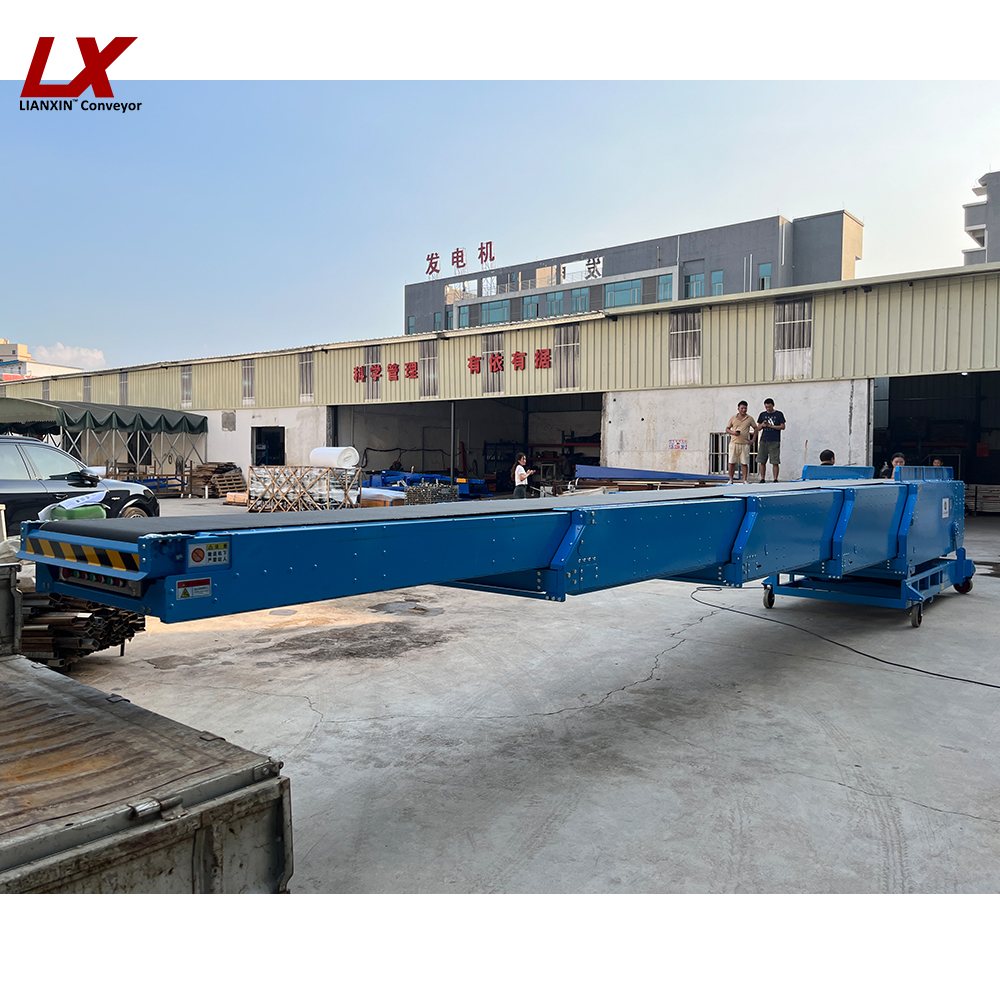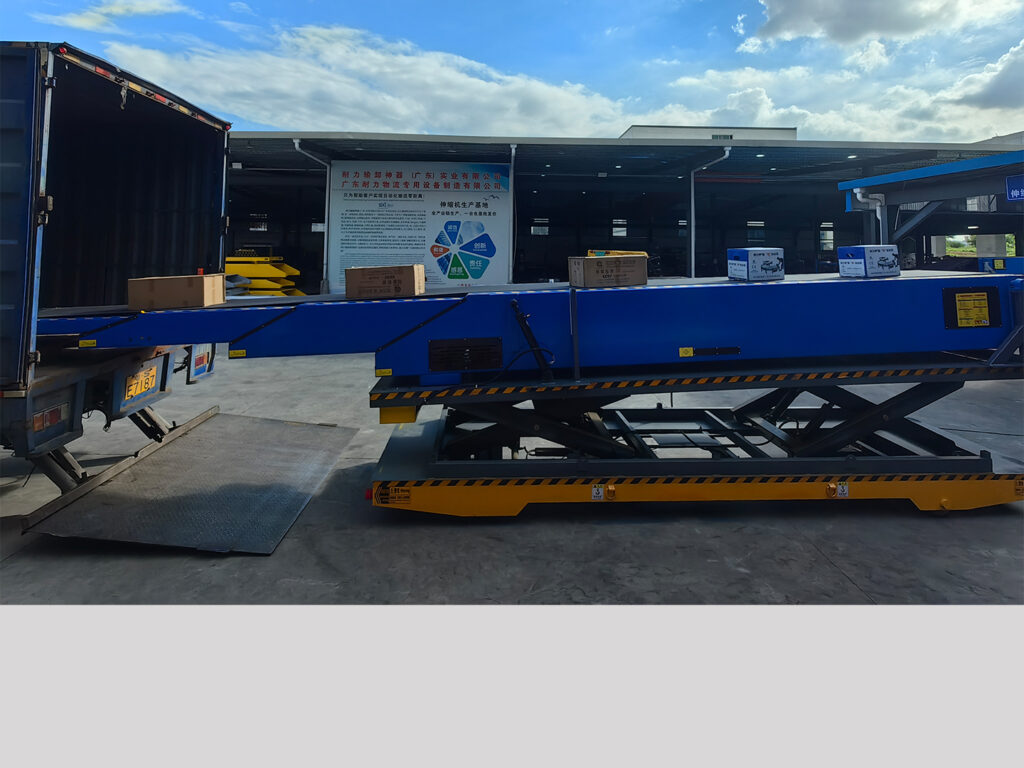
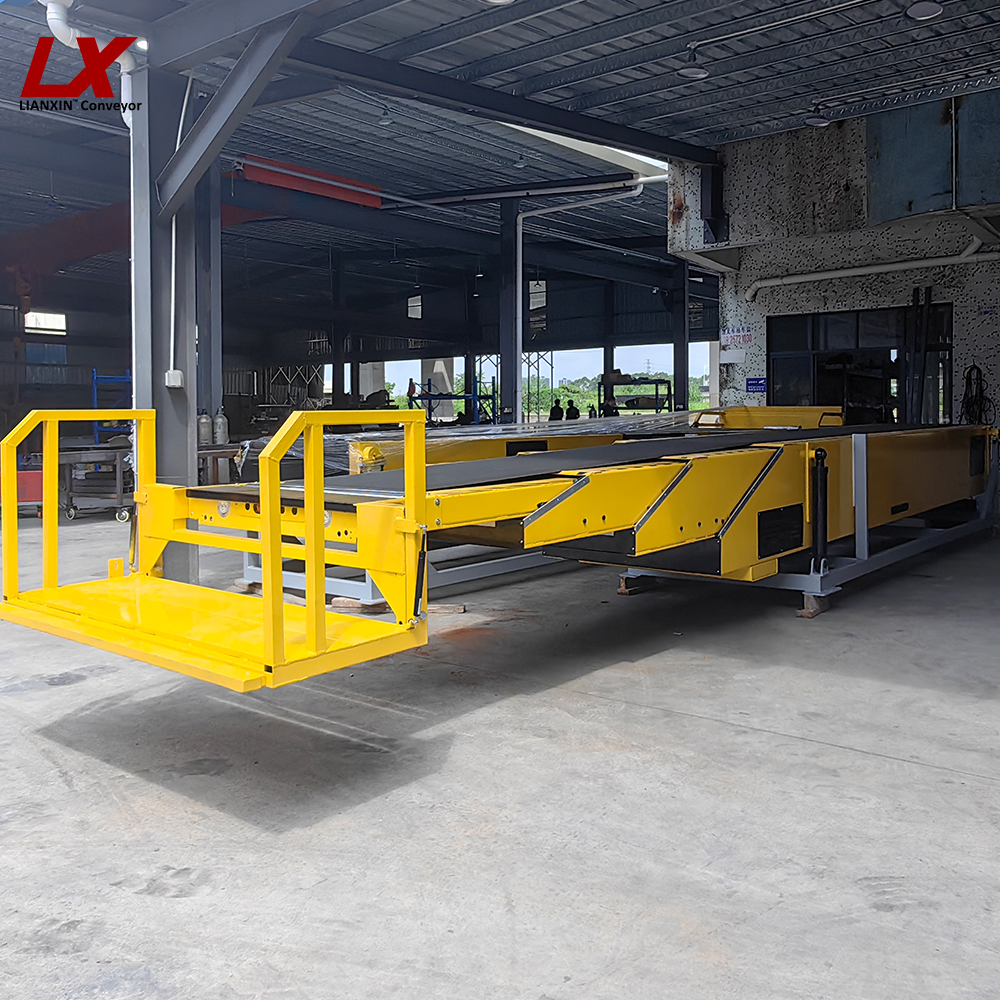
Choosing the right number of sections is important when selecting a telescopic conveyor for truck or container loading and unloading. The required configuration depends mainly on the vehicle length, required conveyor reach, installation conditions, and how far the conveyor needs to extend into the loading area.
Naili telescopic belt conveyors are available in 2-section, 3-section, 4-section, and 5-section configurations, with different fixed section lengths, total conveyor lengths, and telescopic extensions.
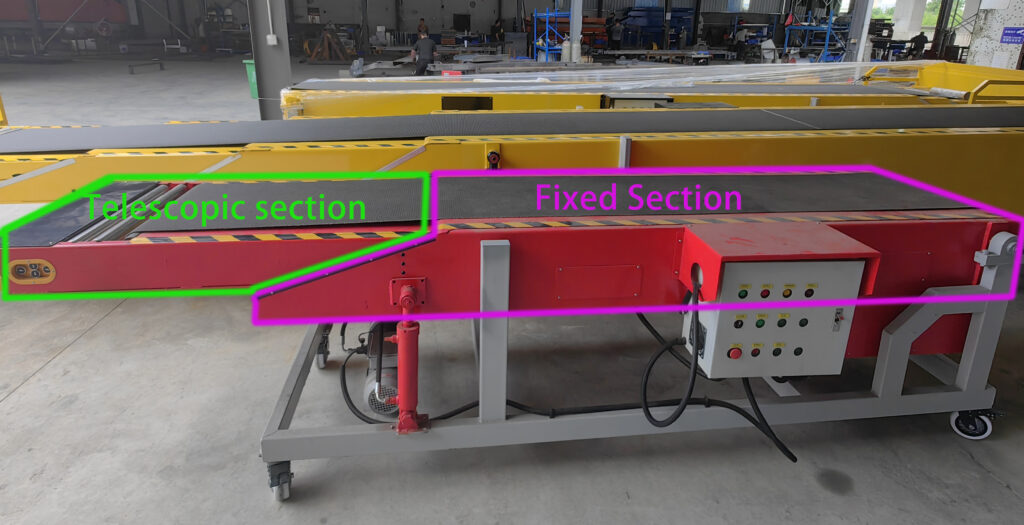
What Does “Section” Mean on a Telescopic Conveyor?
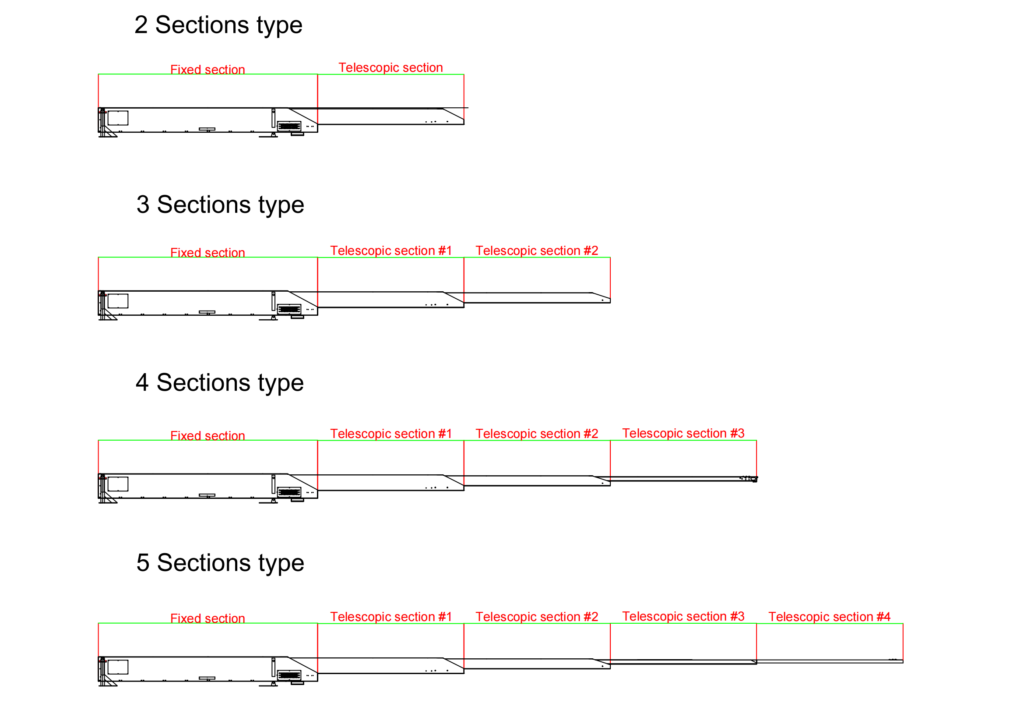
The number of sections refers to the total number of conveyor sections, including the fixed section and telescopic sections.
For Naili telescopic belt conveyors:
- 2-section: 1 fixed section + 1 telescopic section
- 3-section: 1 fixed section + 2 telescopic sections
- 4-section: 1 fixed section + 3 telescopic sections
- 5-section: 1 fixed section + 4 telescopic sections
This means that a higher section number does not simply mean a longer fixed conveyor. It means that more telescopic sections are used to achieve a greater extension within the overall conveyor structure.
What Is the Difference Between Conveyor Length and Telescopic Extension?
When comparing telescopic conveyor models, two different measurements should not be confused:
Fixed Section Length
The fixed section is the stationary section of the conveyor connected to the installation or mobile structure.
Telescopic Extension
The telescopic extension is the additional length created when the telescopic sections are fully extended.
Total Conveyor Length
The total conveyor length is the full length of the conveyor when completely extended.
The relationship is:
Total Length = Fixed Section Length + Telescopic Extension
For example:
5m fixed section + 7m telescopic extension = 12m total conveyor length
This distinction is important when selecting a conveyor for a specific truck or container.
How Many Sections Are Available for Naili Telescopic Belt Conveyors?
Naili currently offers telescopic belt conveyor configurations from 2 sections to 5 sections.
| Configuration | Structure | Typical Total Length Range | Typical Application |
| 2-Section | 1 Fixed + 1 Telescopic | 5–13m | Shorter reach applications |
| 3-Section | 1 Fixed + 2 Telescopic | 9-16m | 20ft containers and truck loading |
| 4-Section | 1 Fixed + 3 Telescopic | 14-25m | 40ft containers and longer reach |
| 5-Section | 1 Fixed + 4 Telescopic | 22-24m | Long-reach applications |
Which Telescopic Conveyor Is Suitable for a 20ft Container?
For a 20ft container, Naili’s 3-section, 5m + 7m configuration is designed to provide a suitable reach based on the internal length of a 20ft container and the structural requirements of the machine.
| Item | Configuration |
| Sections | 3 |
| Fixed Section | 5m |
| Telescopic Extension | 7m |
| Total Length | 12m |
| Recommended Application | 20ft Container Loading & Unloading |
The conveyor can operate in both directions, allowing the same machine to be used for both container loading and unloading.
Which Telescopic Conveyor Is Suitable for a 40ft Container?
For a 40ft container, Naili’s 4-section, 6m + 12m configuration is designed based on the internal length of a 40ft container and the structural requirements of the conveyor.
| Item | Configuration |
| Sections | 4 |
| Fixed Section | 6m |
| Telescopic Extension | 12m |
| Total Length | 18m |
| Recommended Application | 40ft Container Loading & Unloading |
This configuration provides a longer telescopic reach for applications where goods need to be handled deeper inside a 40ft container.
Does a Higher Number of Sections Always Mean a Better Conveyor?
No.
The number of sections should be selected according to the required reach and installation conditions rather than simply choosing the largest configuration.
A longer conveyor with more sections can provide greater reach, but the appropriate configuration also depends on:
- Vehicle or container length
- Installation position
- Required conveyor reach
- Available floor space
- Loading and unloading method
- Conveyor height
- Machine weight
- Mobility requirements
For example, a 2-section conveyor may be sufficient for a shorter loading application, while a deeper 40ft container may require a 4-section configuration.
How Do You Choose the Right Number of Sections?
A practical selection process is:
Step 1: Identify the Vehicle or Container
Determine whether the conveyor will be used for:
- Short trucks
- Longer trailers
- 20ft containers
- 40ft containers
- Other loading areas
Step 2: Determine the Required Reach
Measure how far the conveyor needs to reach from its installation position to the deepest loading or unloading point.
Do not use the total conveyor length alone when making this decision.
The telescopic extension is particularly important when determining how far the conveyor can reach into a vehicle or container.
Step 3: Check the Installation Position
Determine whether the conveyor will be installed:
- On a loading dock
- On the floor
- On a mobile platform
- In another fixed loading area
Step 4: Determine Whether Mobility Is Required
If the conveyor needs to serve multiple loading positions, a mobile configuration may be more suitable.
If the machine can remain permanently installed in one location, a fixed configuration may be considered.
Step 5: Confirm Conveyor Height
The minimum standard belt surface height is approximately 900mm from the ground.
If the conveyor needs to reach a significantly higher elevation, a customized hydraulic lifting configuration may be required.
Naili has produced customized configurations where the front conveying surface can reach approximately 10m above the ground, using an extended hydraulic cylinder.
2-Section vs 3-Section vs 4-Section vs 5-Section
| Feature | 2-Section | 3-Section | 4-Section | 5-Section |
| Fixed Sections | 1 | 1 | 1 | 1 |
| Telescopic Sections | 1 | 2 | 3 | 4 |
| Reach Potential | Shorter | Medium | Long | Longer |
| 20ft Container | Depends on configuration | Recommended configuration available | Usually more than required | Usually more than required |
| 40ft Container | Depends on configuration | Depends on configuration | Recommended configuration available | Depends on configuration |
| Long-Reach Applications | Limited | Suitable | Suitable | Suitable |
| Structural Complexity | Lower | Medium | Higher | Higher |
What Other Factors Should Be Considered Besides the Number of Sections?
The number of sections is only one part of the selection process.
Other important factors include:
Conveyor Width
Naili’s standard belt widths are:
600mm and 800mm
Custom widths are available, with 1100mm being the widest configuration currently supplied.
Load Requirement
The rated load is:
80 kg/m
The conveyor can handle up to approximately 100 kg/m under suitable operating conditions, but continuous operation above the rated load is not recommended.
Conveyor Speed
The standard operating speed range is:
10–30 m/min
The speed can be adjusted to higher levels, up to approximately 50 m/min, but continuous operation at this speed is not recommended.
Loading and Unloading Direction
Naili telescopic belt conveyors support:
Forward and reverse conveying
This allows the same conveyor to be used for both loading and unloading.
Fixed or Mobile: Which Telescopic Conveyor Should You Choose?
The choice between fixed and mobile construction depends mainly on the loading site.
Fixed Telescopic Conveyor
A fixed model can be anchored to the loading dock or floor.
It is suitable when the conveyor can remain in a permanent operating position.
Mobile Telescopic Conveyor
A mobile model is suitable when the conveyor needs to move between loading positions or when there is no permanent installation position.
Naili offers several mobility configurations, including manual caster systems, powered mobile platforms, pallet jack and tank roller systems, and powered drive systems.
One steering-wheel-based mobile structure is limited to 3-section models and machines weighing below 3 tons.
Can a Telescopic Conveyor Be Customized?
Yes.
The number of sections and overall dimensions can be configured according to the application.
Possible customization areas include:
- Fixed section length
- Telescopic extension
- Total conveyor length
- Belt width
- Conveyor height
- Hydraulic lifting configuration
- Motor brand
- Mobility system
- Cargo detection
- Counting system
- Warehouse system integration
For high-level applications, an extended hydraulic cylinder can be used to achieve a significantly higher front conveying height.
What Optional Equipment Can Be Added?
Depending on the application, additional equipment and functions can be integrated with the telescopic conveyor.
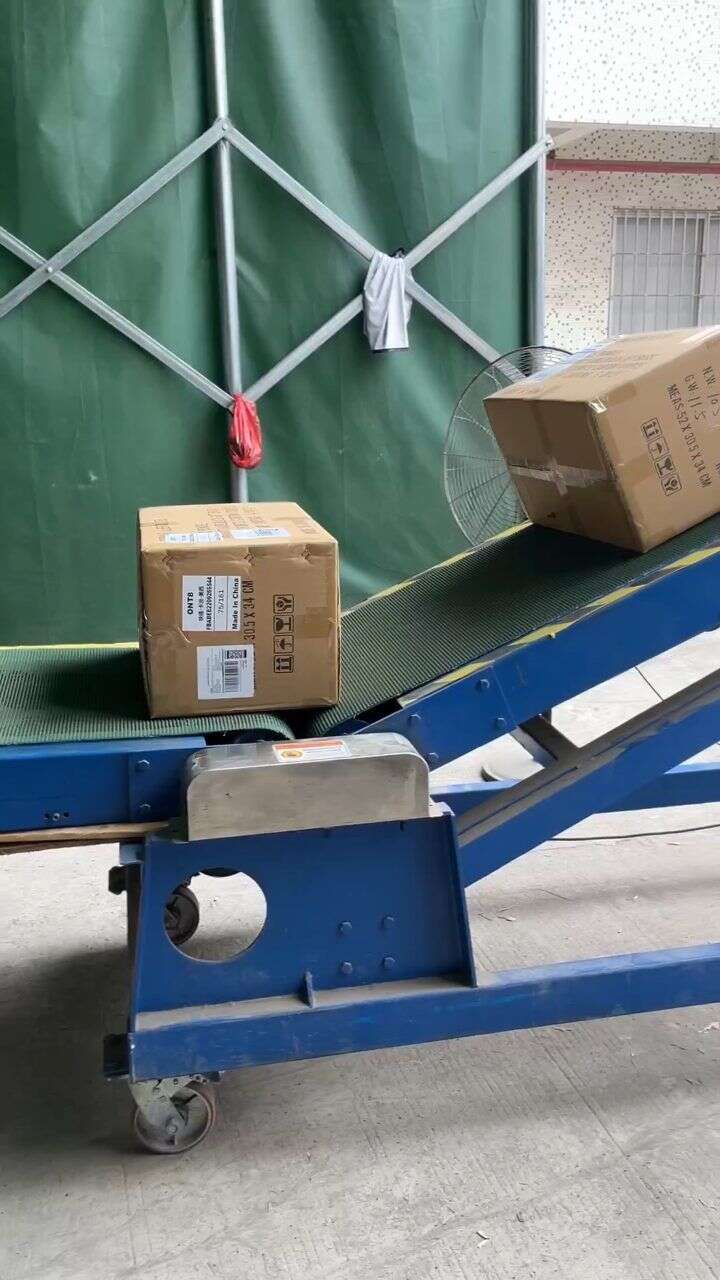
Rear Incline Belt Conveyor
A 4m rear incline belt conveyor can be integrated with the main conveyor.
Its angle can be adjusted, and its conveying speed follows the main conveyor.
This configuration can be useful when the main conveyor is installed at a high position and the belt surface is too high for direct ground-level loading.
The rear incline conveyor can connect with another conveyor on the ground or allow operators to manually place goods onto the conveyor.
Cargo Presence Detection
A laser sensor can be installed near the front of the conveyor.
When goods remain in the detection area, the conveyor stops. Once the goods are removed, conveying resumes.
This can help prevent goods from continuing forward and falling when workers have not removed the previous item in time.
Counting and System Integration
Counting functions and connection with an existing warehouse system are optional configurations and can be added according to customer requirements.
Frequently Asked Questions
What does 3-section mean on a telescopic conveyor?
Answer:
A 3-section telescopic conveyor consists of one fixed section and two telescopic sections. When fully extended, the total conveyor length is the fixed section length plus the telescopic extension.
What is the difference between telescopic extension and total conveyor length?
Answer:
Telescopic extension refers to the additional length created when the telescopic sections extend. Total conveyor length is the full conveyor length when completely extended. For example, a 5m fixed section with a 7m extension provides a 12m total conveyor length.
Which telescopic conveyor is suitable for a 20ft container?
Answer:
Naili’s 3-section configuration with a 5m fixed section and 7m telescopic extension is designed to suit 20ft container loading and unloading applications based on the container’s internal length and the conveyor’s structural design.
Which telescopic conveyor is suitable for a 40ft container?
Answer:
Naili’s 4-section configuration with a 6m fixed section and 12m telescopic extension is designed for 40ft container loading and unloading applications.
Can a telescopic belt conveyor load and unload containers?
Answer:
Yes. Naili telescopic belt conveyors support forward and reverse belt movement, allowing the same machine to be used for both loading and unloading.
What is the standard belt width?
Answer:
The standard belt widths are 600mm and 800mm. Custom widths are available, and Naili has supplied configurations up to 1100mm wide.
Can the conveyor be made higher than the standard height?
Answer:
Yes. The minimum standard belt surface height is approximately 900mm from the ground. Customized hydraulic configurations can provide substantially higher conveying positions. Naili has produced customized configurations where the front conveying surface reaches approximately 10m above the ground.
Can a telescopic conveyor be mobile?
Answer:
Yes. Naili offers both fixed and mobile telescopic conveyor configurations. Different mobility systems can be selected according to machine length, weight, and site conditions.
How to Choose the Right Telescopic Conveyor for Your Application
The correct telescopic conveyor should be selected based on the complete operating condition rather than the number of sections alone.
Before requesting a quotation, it is useful to prepare:
- Vehicle or container type
- Required conveyor reach
- Installation height
- Required belt width
- Approximate cargo weight
- Loading or unloading application
- Fixed or mobile requirement
- Available installation space
Naili can then recommend a suitable section configuration and conveyor specification according to the application.
Need Help Choosing the Right Telescopic Conveyor?
Tell us your container or truck type, required reach, belt width, and installation conditions. Our team can recommend a suitable telescopic conveyor configuration for your loading and unloading application.
Request A Quote–Click the INQUIRE button in the top right corner.