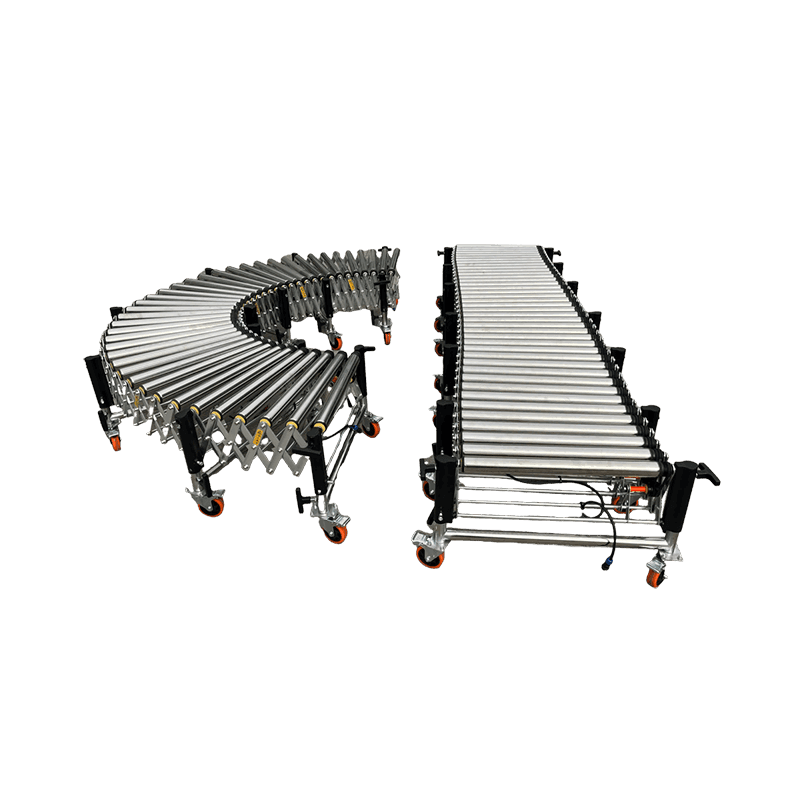
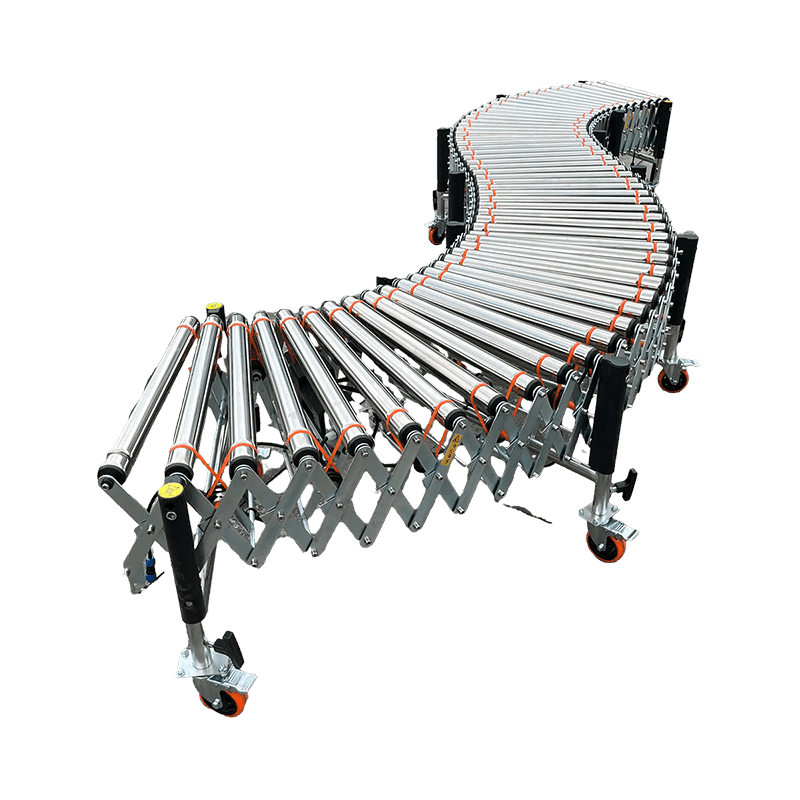
Application boundaries of powered roller conveyors: solving the continuous conveying of the "last stretch" in loading and unloading
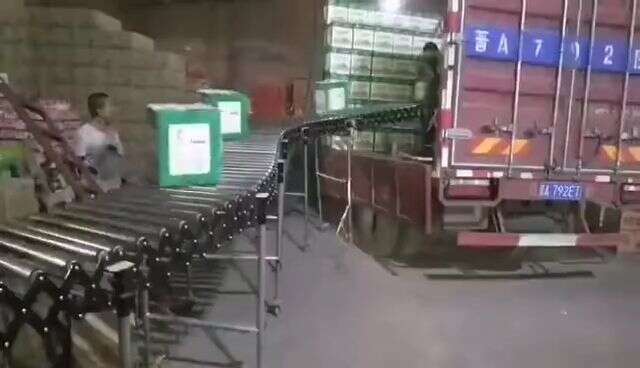
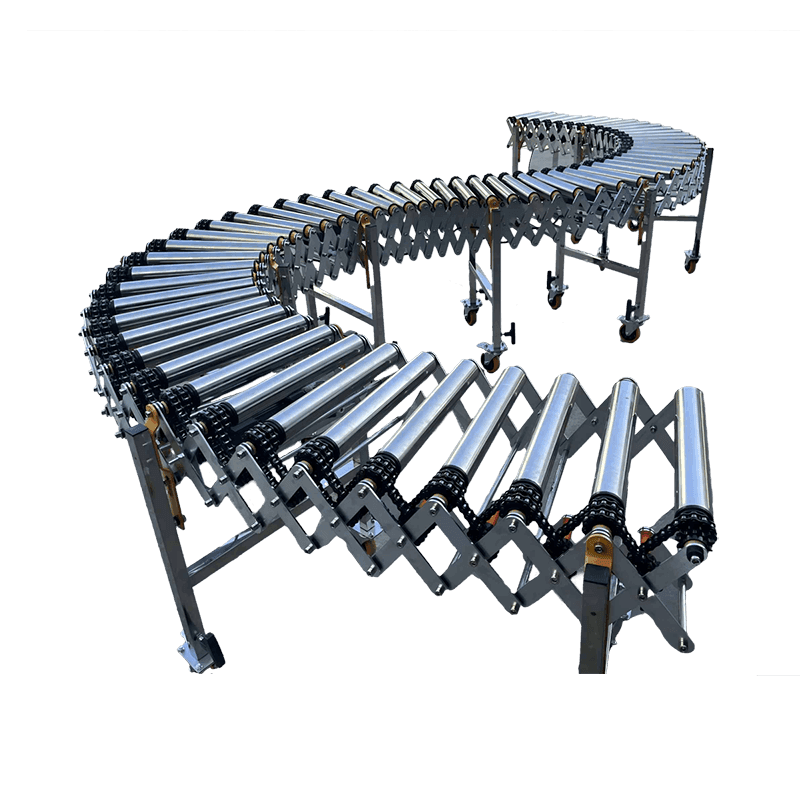
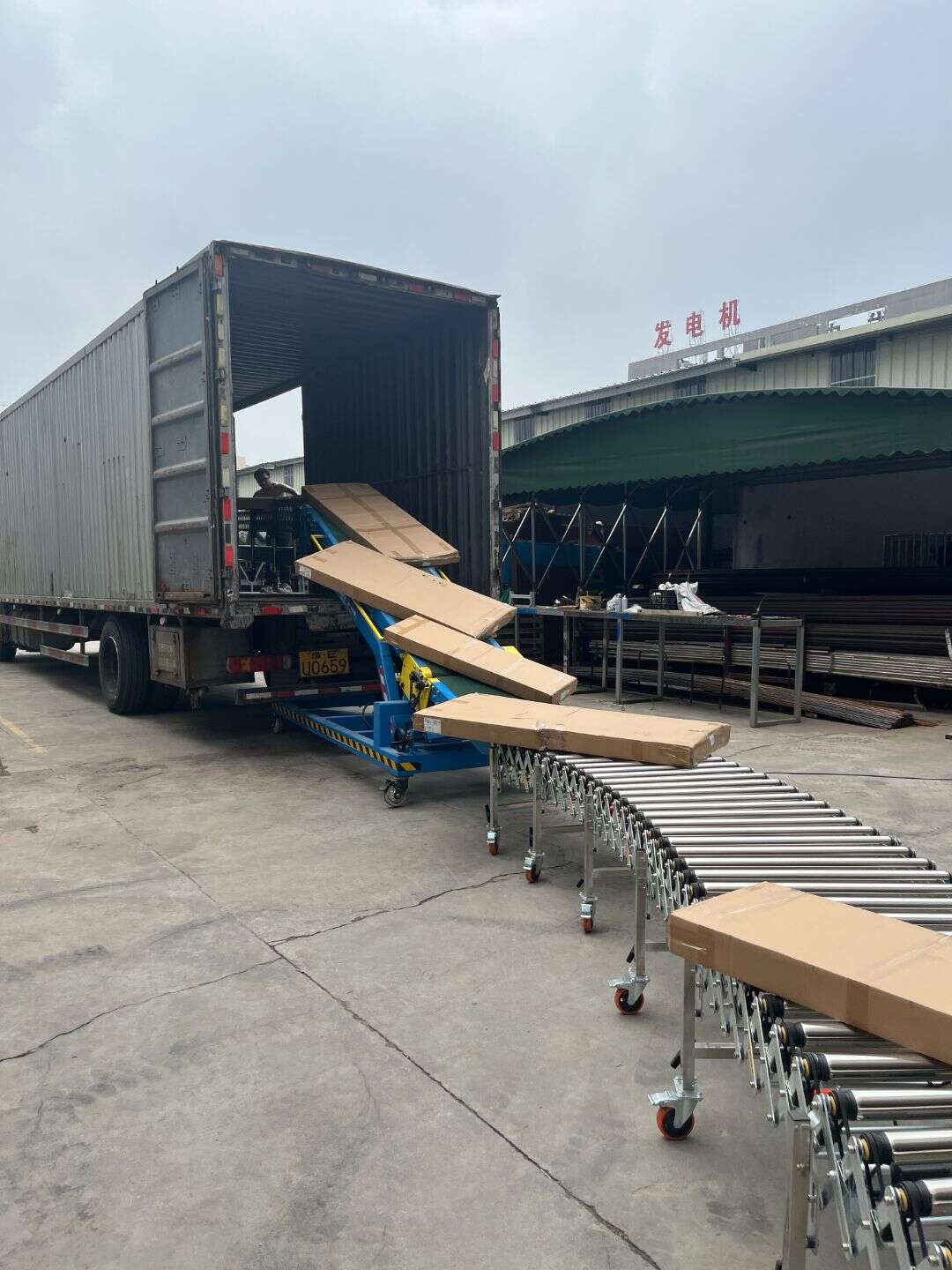
What powered roller conveyors are better at is not "sending every item anywhere, " but connecting natural break points such as trucks and warehouses, or loading docks and indoor storage, so material flow changes from intermittent handling to continuous advance. In many loading and unloading scenarios, what really slows the pace is not the walking distance inside the warehouse, but the stop-and-go caused by vehicle-side handoff, repeated lifting, and waiting.
When you want loading and unloading to maintain a steady pace, reduce the back-and-forth movement of staff at the vehicle opening, and shift manual handling into a "monitoring + adjustment" work mode, the value of powered drive becomes more obvious. On the other hand, if the operation itself is low-frequency, small-volume, and can tolerate intermittent advancement, or if forklifts are mainly used for moving large items, a powered roller conveyor may not be the best investment.
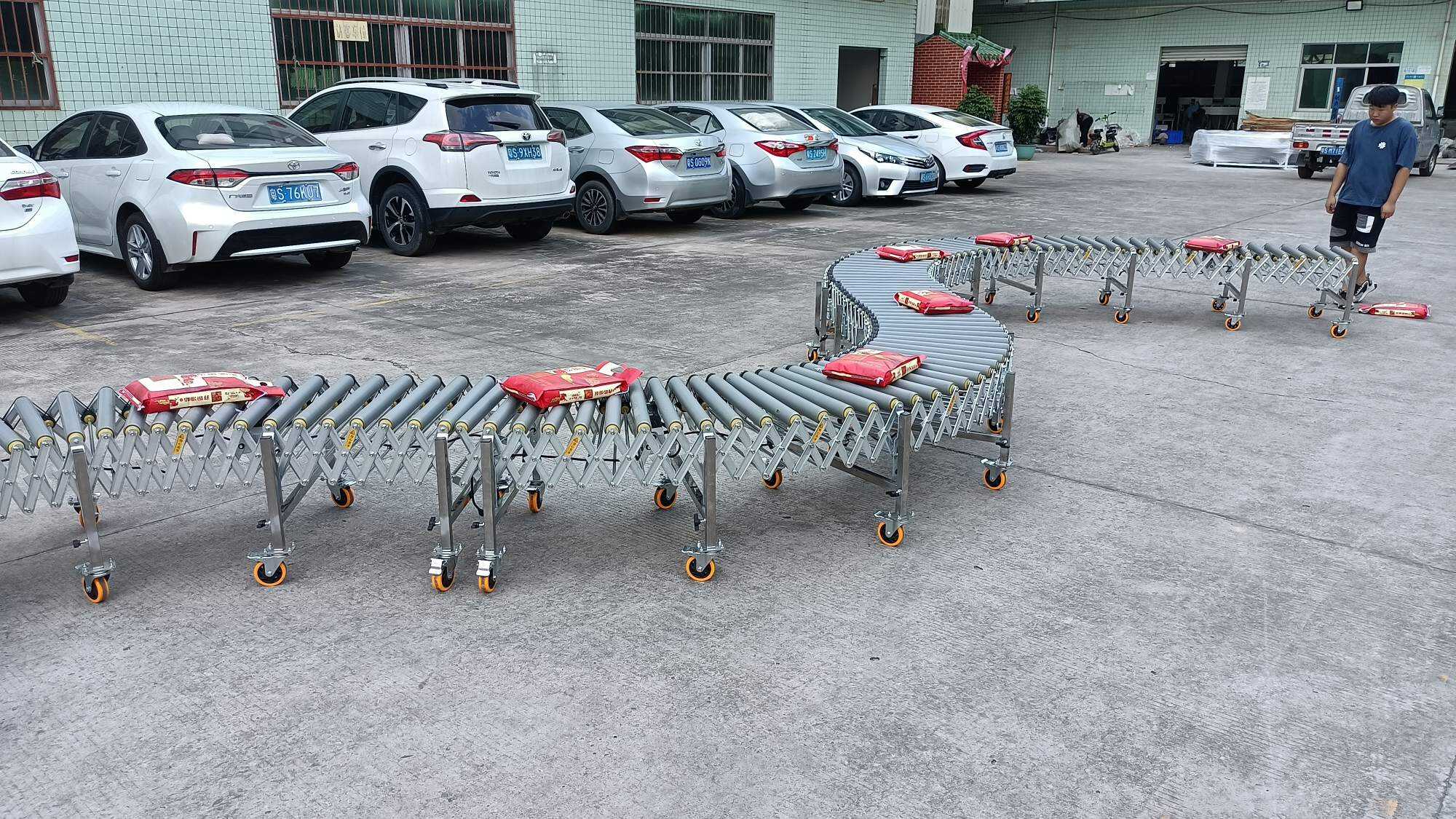
The significance of a mobile powered roller conveyor lies in cross-station allocation: when one unit serves multiple loading docks, temporary orders, or seasonal peaks, it brings continuous conveying capability wherever it is needed. But "movable" does not automatically mean "easy to use"; whether the connection points are stable, whether the work aisle is blocked, whether the floor is level, and how the height difference at the vehicle opening is transitioned often matter more than mobility itself.
If these signs appear on site, it is usually not recommended to force a powered roller conveyor as the only solution: the path requires frequent sharp turns, significant lifting or crossing floors is needed, the cargo bottom is soft/uneven/easily deformed so roller contact is unreliable, or the packaging is very easy to be worn by roller edges. In such cases, it is better to think in terms of a "line combination": assign flat, continuous conveying to the powered roller conveyor, and let drops, reaching into the truck, turning, and three-dimensional transfer be handled by more suitable equipment.
Understanding the three common machine types by drive and structure: how to choose between chain, multi-wedge belt, and O-belt
Even though they are all called "powered roller conveyors, " the key differences are often not in appearance, but in the drive method, which affects driving power, running smoothness, maintenance method, and environmental adaptability. When selecting a model, it is best to first make an intuitive judgment: do you care more about "can it carry the load and stay steady, " or "smooth running and noise control, " or "sectional control and light-load takt.".
Chain powered rollers are more focused on driving force and stable takt, and are often used for main loading/unloading lines and continuous conveying tasks. They are also easier to make robust when facing more complex loading and unloading rhythms. Rather than only asking whether "chain is stronger, " pay more attention to whether the transmission layout is maintenance-friendly, whether tensioning and guarding are reasonable, and whether long-term access and cleaning are convenient; for a specific model, you can start with Chain Powered Roller Conveyor to learn more.
Multi-wedge belt powered rollers place more emphasis on a continuous, smooth operating experience and are suitable for dock interfaces, loading lines, and indoor transfer tasks that require a "push steadily, keep the flow moving" workflow. Its suitability depends greatly on the site’s dust and debris levels: the more complex the environment, the more important it is to compare the convenience of daily cleaning and long-term maintenance habits on equal footing; to quickly compare this type of solution, you can check Multi-Wedge Belt Powered Roller Conveyor.
O-belt powered rollers are commonly used for light-load takt conveying such as cartons and totes, and they are better suited to achieving takt matching between workstations under a "sectional drive, zoned control" approach. When discussing a solution, it is recommended to focus on station rhythm, whether short pauses and buffering transitions are needed, rather than only asking whether it "can run"; for the corresponding model, see O-Belt Powered Roller Conveyor.
When making trade-offs in the same operating condition, prioritize three things: whether the cargo bottom contact condition is stable, whether sectional or buffering handling is needed to absorb takt fluctuations, and whether the line has merge points and pause points. Once these three points are clear, the choice of drive type will usually become obvious, avoiding a one-size-fits-all decision based only on name or experience.
Implementing by scenario: layout ideas for loading, unloading, in-warehouse transfer, and end-of-line distribution transfer
In finished-goods warehouse continuous loading scenarios, the common value of a powered roller conveyor is to turn the "shipping outlet—loading dock—truck opening" into a continuous conveying channel, making loading a matter of steady pacing rather than manual lifting. In layout planning, you usually need to consider the warehouse outlet’s accumulation method together with the stability of the truck-side connection; otherwise, even if the warehouse side is smooth, the truck opening will still become a waiting point.
The core contradiction in unloading and warehousing is often "accumulation and backflow": the stretch from the truck door to the dock/inside the warehouse can easily get blocked because of height differences, crowded aisles, or delayed downstream transfer, and the problem tends to surface at the truck opening. A more reliable approach is to consider the height transition, the docking position, and the temporary storage or sorting transfer after goods enter the warehouse together, instead of optimizing only the truck opening as a single point, which ultimately shifts the pressure onto the operators.
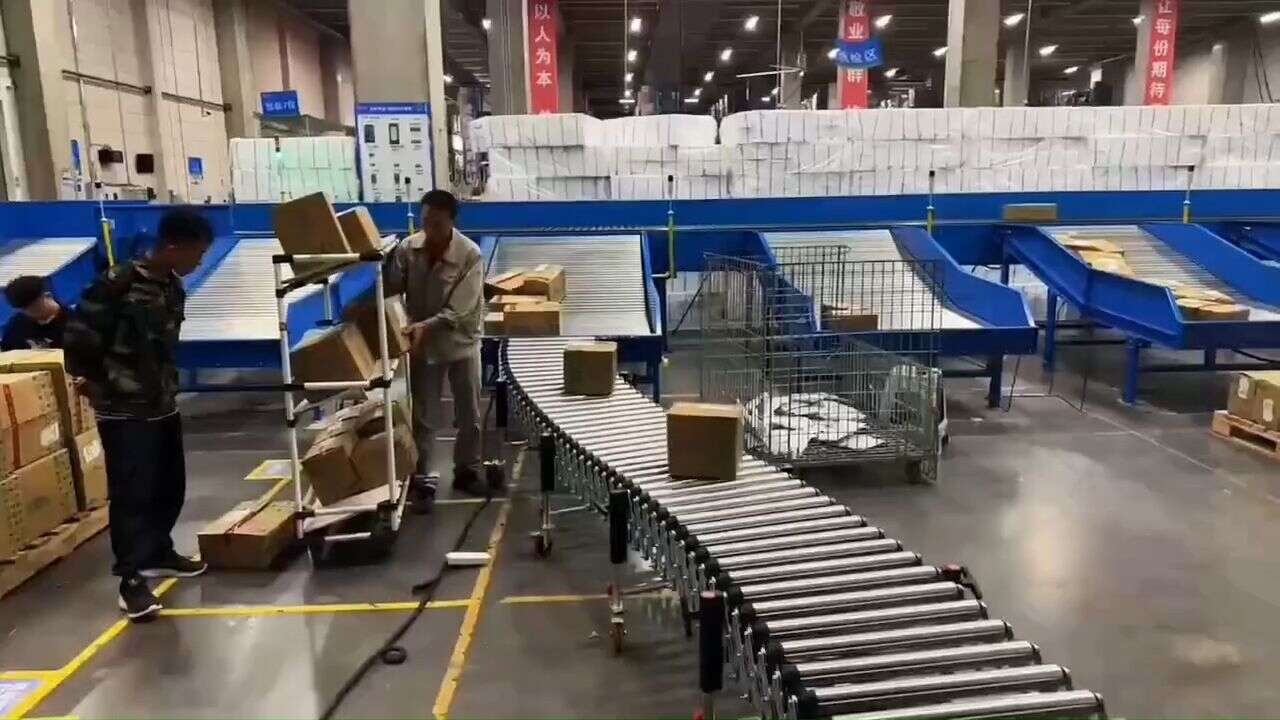
The final transfer stage in a distribution center puts stability and buffering capacity to the test: once the upstream merged flow reaches the end and the takt time falls behind, a chain reaction occurs, with the upstream line still running while the downstream end gets jammed. In such scenarios, selecting a powered roller conveyor usually requires greater attention to running consistency, the buffering capacity of the buffer section, and alignment with the operating rhythm of the end loading and unloading platform; if you are still comparing a more suitable equipment combination, you can also refer to Telescopic Conveyor and the coordination method with the roller line at the end.
Continuous conveying from the workshop to the dock is a cross-area transfer: in addition to the conveying itself, you also need to account for on-site traffic organization and transfer coordination, and the turning points and height-change points often determine the sustainability of the whole line. When necessary, using a combination of equipment to smooth out the key break points is more effective at reducing later operating fluctuations than simply lengthening a roller line.
Combination methods with related equipment: turning "flat conveying" into a complete loading and unloading line
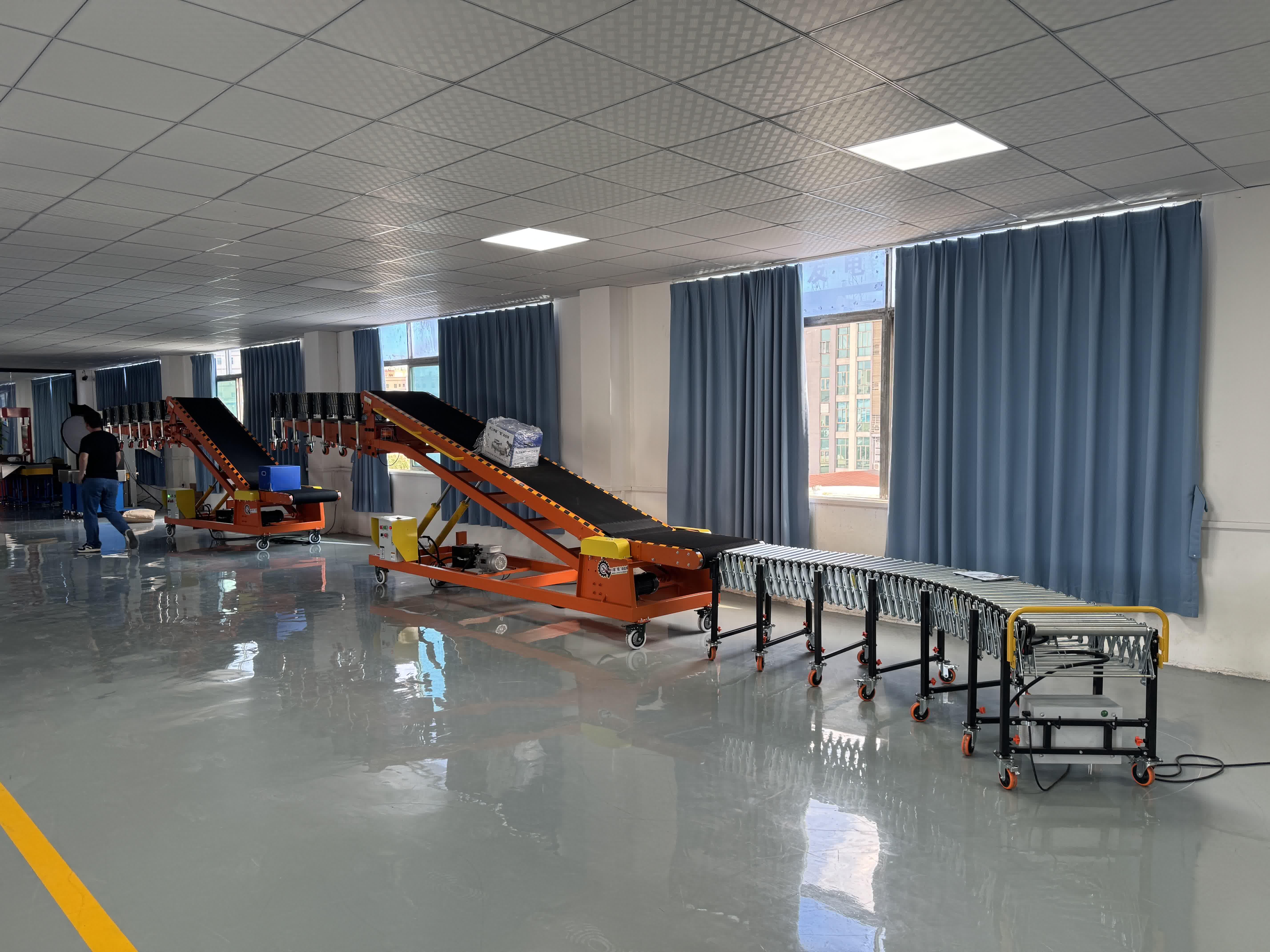
A powered roller conveyor solves continuous horizontal movement, but common weak points in a loading and unloading line include temporary connections, deep truck-bed coverage, height transitions, and three-dimensional transfer. Understanding "which weak point is being compensated for" helps you judge more quickly whether a solution has clearly addressed the key break points.
and Gravity Roller Conveyor When combining them, the common logic is to assign non-critical continuous sections, manual-assist sections, or temporary connection sections to a gravity solution, while letting the powered roller conveyor handle the critical continuous sections, achieving a balance between investment and user experience. For temporary operations, short-distance transfer, or sections where you do not want to introduce drive maintenance, a gravity solution is often more worry-free.
When the coverage range inside the truck bed determines how far personnel need to walk, introducing Telescopic Conveyor usually makes it easier to extend the operating radius deep into the truck bed, making loading and unloading more continuous and better aligned with on-site operating habits. Its value is not just that it can "reach inside, " but that it reduces takt fluctuations caused by operators repeatedly entering and leaving the truck bed.
Height differences directly create break points and impact: if the gap between the dock and the truck bed, or between the warehouse floor and the truck opening, is handled only by manually shimming up or frequently adjusting the docking position, it often leads to jamming and wear. In such cases, it is better to prioritize using Hydraulic Conveyor to smooth the transition and fully leverage the continuous conveying capability of the roller line.
When cross-floor or three-dimensional transfer is required, the powered roller conveyor is more suitable as the horizontal conveying section before and after the change, while Vertical Conveyor takes care of the height change. The advantage of this approach is that it separates "three-dimensional changes" from "horizontal takt, " making the line clearer and making it easier to identify problems and optimize the rhythm during later operation.
Key variables in selection communication: how cargo characteristics, takt stability, and the site environment affect the solution
What makes a powered roller conveyor "easy to use" is often not determined by a single configuration, but by the combined effect of the cargo, the takt, and the environment. Clarifying these variables in advance can significantly reduce misunderstandings when comparing solutions from different manufacturers.
It is recommended to start by evaluating stability from the cargo bottom surface and contact conditions: cartons, turnover bins, bagged goods, and similar items differ greatly in how controllable they are on rollers, which directly affects whether a rubber-covered roller approach that emphasizes friction and anti-slip performance is needed. If the cargo tends to slip, run off-center, or has a soft bottom surface on the rollers, you will usually be more inclined to compare Powered Rubber-Covered Roller Conveyor for this type of solution.
It is also important to discuss the control method around loading and unloading takt and continuity: whether short pauses are allowed, whether there is downstream merging or line combining, and whether buffering between workstations is needed will all affect the priority of segmented control and transmission type. Many solutions that "look almost the same" differ mainly in their tolerance for takt fluctuations and their buffering strategy.
The site and traffic flow also change the structural choice: when frequent movement is required, aisles are narrow, or people and vehicles cross paths, the equipment’s protection method, docking stability, and ease of use have a greater impact on the daily experience than its "theoretical conveying capacity." Movement is not the goal; reducing interference and making the operating path smoother is.
Environmental factors are used to calibrate expectations for reliability: dust, debris, and moisture increase maintenance difficulty, and long-term stable operation depends more on maintainability and ease of cleaning. When comparing manufacturers, it is worth asking more about how they deal with these environmental factors, rather than looking only at the drive type or exterior workmanship.
Common questions: price discussions, maintenance challenges, and why something "looks usable but performs poorly on site"
A more effective way to discuss price is to bring the topic back to "working-condition fit and line combination." Even with the same powered roller conveyor, differences often come from whether the docking method is stable, whether telescopic, climbing, or buffering sections are needed to fill the break points, and different control and maintenance orientations, rather than just the unit length or whether it "looks sturdier.".
The common root causes of jamming, accumulation, and takt imbalance usually fall into three categories: poor upstream/downstream connection causing frequent break points, mismatched takt between the final transfer stage and the operating rhythm of the loading and unloading platform, and underestimating the cargo bottom contact conditions. Many problems are not because the equipment "cannot be used, " but because a key point in the line has not been treated as part of a system, causing the contradiction to surface at the truck opening or at the end.
Mobile use is not automatically better either: mobility expands coverage, but unstable docking, changing floor conditions, and traffic interference increase fluctuation risk. A more reliable approach is usually to consider both the feasibility of fixed docking points and the operability of the mobile route, making mobility a form of "capacity allocation" rather than leaving all uncertainty to on-site operation.
Maintenance difficulty is often not about "whether it breaks, " but about "how easy it is to maintain": the accessibility of transmission components, the convenience of daily cleaning, and on-site dust and debris all determine long-term stability. When comparing solutions, discussing the maintenance path and environmental adaptability as core differentiators often helps identify the reasons why something "looks usable but performs poorly on site" earlier than simply comparing configurations.