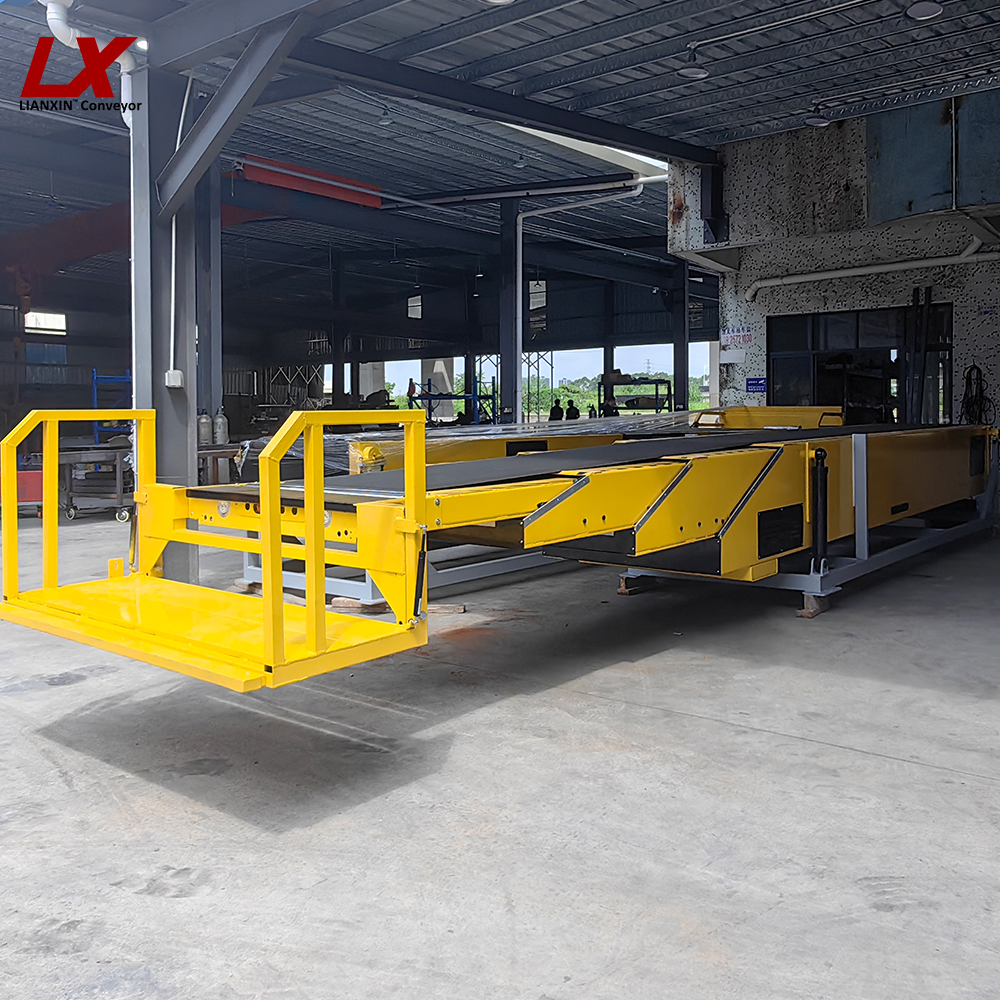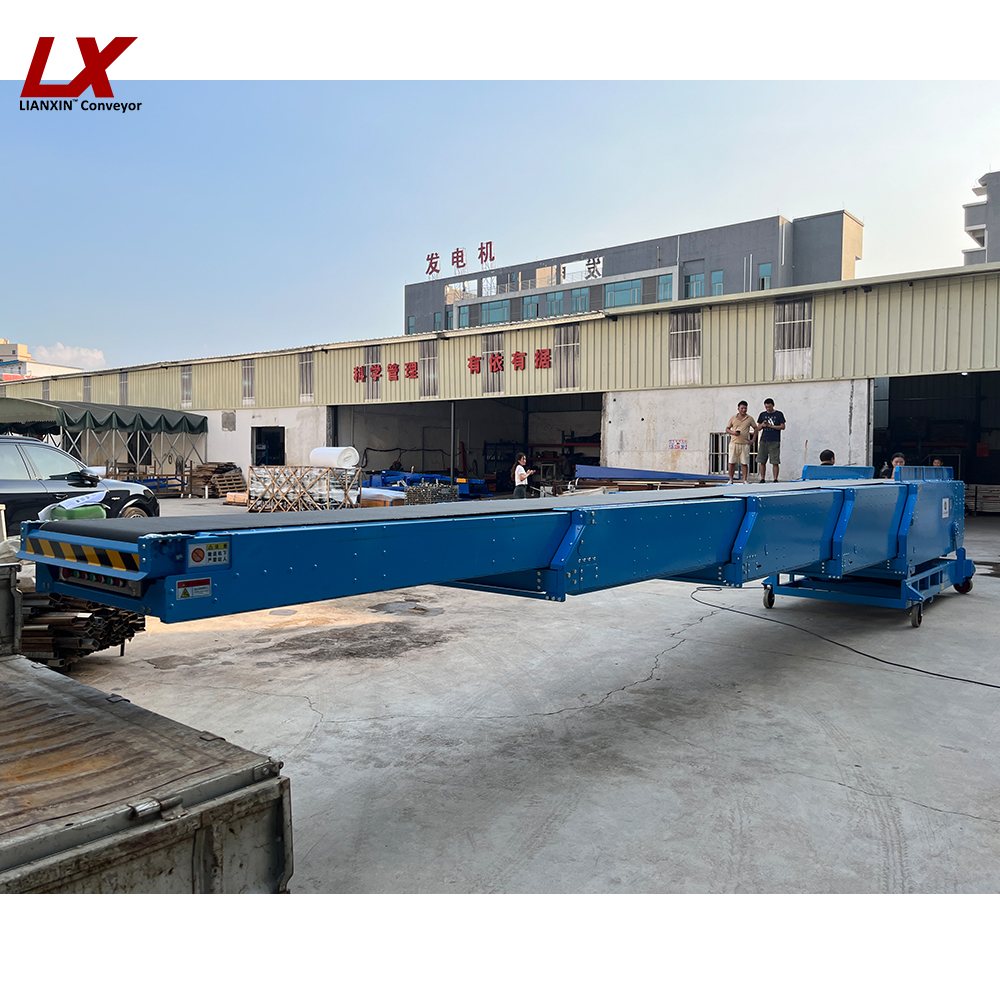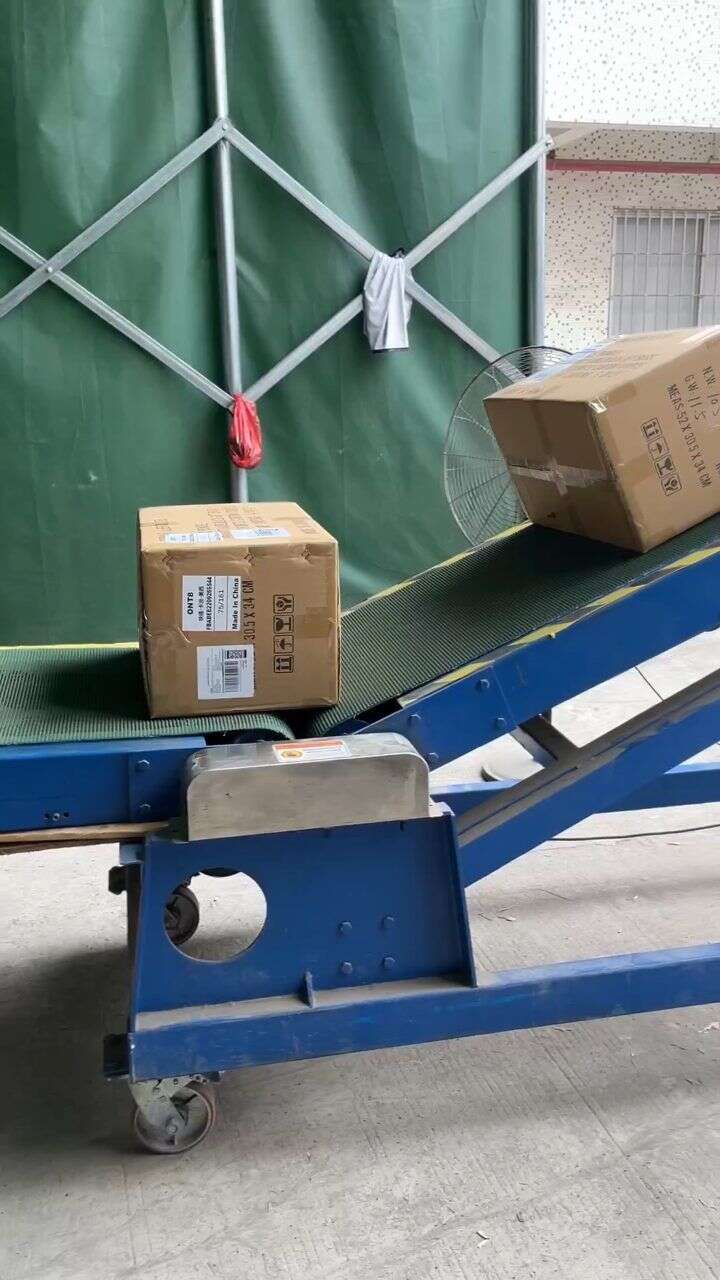
For carton, parcel and package loading, a telescopic belt conveyor is generally one of the most suitable conveyor types for loading a 40ft container.A telescopic belt conveyor uses an extendable boom that can move into the container. Instead of requiring operators to carry goods from the container entrance to the loading position, the conveyor transports the goods closer to where they need to be placed.For applications where goods need to be accumulated, transferred or sorted before entering the container, a powered roller conveyor can also be integrated with the telescopic conveyor as part of a complete loading system.
Common Conveyor Options for 40ft Container Loading
| Conveyor Type | Typical Application | Suitability for 40ft Container Loading |
|---|---|---|
| Telescopic Belt Conveyor | Cartons, parcels and packages | Highly suitable |
| Powered Roller Conveyor | Continuous carton conveying | Suitable as part of a system |
| Gravity Roller Conveyor | Manual carton movement | Suitable for shorter distances |
| Belt Conveyor | Production and warehouse conveying | Suitable depending on layout |
| Hydraulic Lift Conveyor | Height adjustment and loading applications | Suitable when height adjustment is required |
Why Use a Telescopic Conveyor for 40ft Container Loading?
-
Reach Further Into the Container
The telescopic boom can extend toward the interior of the container, reducing the distance operators need to walk while loading goods. -
Reduce Manual Material Handling
Instead of repeatedly carrying cartons from the container entrance, operators can receive goods closer to the working position. -
Create Continuous Material Flow
The powered belt continuously moves goods into the container, helping maintain a more consistent loading process.
-
Adapt to Different Vehicle Positions
Depending on the conveyor configuration, lifting and positioning mechanisms can help the conveyor adapt to different vehicle and container loading heights. -
Improve Loading Efficiency
By combining powered conveying and telescopic extension, the system can reduce unnecessary movement during loading and unloading.
How Does a Telescopic Conveyor Load a 40ft Container?
The basic loading process is:
Warehouse → Conveyor → Telescopic Boom → Container Interior
A typical operation works as follows:
Step 1: Position the Conveyor
The conveyor is positioned at the container entrance and adjusted to the required working height.
Step 2: Extend the Boom
The telescopic sections extend into the container toward the required loading position.
Step 3: Start the Conveyor
Cartons, parcels or other suitable goods are placed onto the belt.
Step 4: Transport Goods Into the Container
The powered belt continuously moves the goods toward the extended end.
Step 5: Adjust the Loading Position
As the container is filled, operators can adjust the conveyor position and extension according to the loading pattern.
What Factors Should You Consider When Choosing a Conveyor?
1. Cargo Type
The first consideration is the type of cargo being transported. Common applications include cartons, parcels, packages, bags and boxes.
2. Cargo Weight
The standard load capacity is 80 kg/m. The conveyor can also handle loads of up to 100 kg/m, but continuous operation at maximum load is not recommended.
3. Required Conveyor Reach
The required conveyor length and telescopic extension depend on the vehicle size, loading position and available working space. Naili can customize the conveyor configuration according to the customer’s application requirements.
4. Conveyor Width
Standard conveyor widths are 600 mm and 800 mm. Custom belt widths are available up to 1100 mm according to the application requirements.
5. Conveyor Speed
Conveyor speed is typically 10–30 m/min, depending on the configuration and application requirements.
Container and Loading Height
The standard minimum working height is 900 mm. The conveyor height can be customized according to the vehicle, container and site requirements.
Telescopic Belt Conveyor vs. Roller Conveyor for Container Loading
| Feature | Telescopic Belt Conveyor | Powered Roller Conveyor |
|---|---|---|
| Extendable structure | Yes | Usually fixed or modular |
| Reaching deep into container | Excellent | Depends on configuration |
| Carton conveying | Excellent | Excellent |
| Parcel conveying | Excellent | Suitable |
| Irregular-shaped goods | Generally suitable | Depends on cargo |
| Continuous conveying | Yes | Yes |
| Container loading | Excellent | Suitable with proper configuration |
| Integration with warehouse systems | Yes | Yes |
For a system specifically designed to reach into a 40ft container, a telescopic belt conveyor provides a direct solution.A powered roller conveyor can be used upstream or downstream to create a complete loading system.
How Many Sections Does a Telescopic Conveyor Need?
Telescopic conveyors can be configured with different numbers of telescopic sections.Naili’s telescopic conveyor series includes:
- 2-Section Telescopic Conveyor
- 3-Section Telescopic Conveyor
- 4-Section Telescopic Conveyor
- 5-Section Telescopic Conveyor
| Configuration | Fixed section length | Extendable length into the container | Typical Reach | Suitable For |
|---|---|---|---|---|
| 2-Section | 3-7 m | 2-6 m | Short-Reach Applications | Short-Distance Truck And Container Loading And Unloading |
| 3-Section | 5-7 m | 7-9 m | Medium-Reach Applications | Truck Loading And Unloading, Warehouses And Distribution Centers |
| 4-Section | 6-8 m | 9-19 m | Long-Reach Applications | Deep Truck And 20ft/40ft Container Loading And Unloading |
| 5-Section | 6-7 m | 16-17 m | Extra-Long-Reach Applications | Deep 40ft Container Loading And Unloading |
The appropriate configuration depends on the required reach rather than simply the container size.Shorter reach → fewer sectionsLonger reach → more telescopic sectionsFor exact selection, the required extension length, fixed-end length, vehicle dimensions and warehouse layout should be evaluated together.
Can a Telescopic Conveyor Be Used for Container Unloading?
Yes. Naili telescopic belt conveyors can be used for both loading and unloading. The conveyor belt is designed to run in both forward and reverse directions, allowing goods to be transported into or out of trucks and containers.For loading, the conveyor transports goods from the warehouse or production line into the truck or container. For unloading, the belt runs in the opposite direction to move goods from the truck or container back into the warehouse or onto the connected conveyor line.This bidirectional operation allows one telescopic conveyor to handle both loading and unloading tasks, making it a flexible solution for warehouses, distribution centers and logistics operations.
What Other Equipment Can Be Integrated With a Telescopic Conveyor?
A telescopic conveyor can be integrated with existing conveyor lines and warehouse systems to create a more complete loading and unloading solution. Instead of operating as a standalone machine, it can connect the loading area with conveyors inside the warehouse or production line and exchange operating data with existing systems.
Connect With Roller And Belt Conveyor Lines
The telescopic conveyor can be connected to powered roller conveyors, belt conveyors and other conveyor lines. This allows goods from deeper inside the warehouse or directly from a production line to be continuously transported to trucks or containers for loading.This configuration creates a continuous material flow from the warehouse or production line to the vehicle, reducing the need for manual handling between different conveying sections.
Production Line / Warehouse Conveyor → Telescopic Conveyor → Truck / Container
Integrate With Existing Warehouse Systems
The telescopic conveyor can also be integrated with an existing warehouse management or logistics system. With an optional counting device, the conveyor can collect conveying data such as the number of items transported and transmit the data to the customer’s existing system, depending on the system interface and integration requirements.This allows the conveyor to become part of the customer’s existing material handling and data management workflow rather than operating as an isolated piece of equipment.
What Information Should You Provide When Requesting a Conveyor?
- · Application
- · Vehicle
- · Cargo Type
- · Maximum Cargo Weight
- · Cargo Dimensions
- · Required Conveyor Reach
- · Required Belt Width
- · Required Conveying Speed
- · Warehouse Floor Height
- · Available Installation Space
- · Photos or Layout Drawings
Frequently Asked Questions
What Is the Best Conveyor for Loading a 40ft Container?
For cartons, parcels and packages, a telescopic belt conveyor is one of the most suitable solutions for 40ft container loading. Its telescopic boom can extend into the container, allowing goods to be transported closer to the required loading position and reducing unnecessary manual handling.
Can a Telescopic Conveyor Be Used for Container Unloading?
Yes. Naili telescopic belt conveyors can be used for both loading and unloading. The conveyor belt can run in both forward and reverse directions, allowing goods to be transported into or out of trucks and containers.
How Far Can a Telescopic Conveyor Extend?
The telescopic extension depends on the conveyor configuration. Naili offers different configurations with telescopic extensions ranging from approximately 2 m to 17 m, while the longest configuration can extend up to 19 m according to the application and customized design requirements.
How Many Sections Does a Telescopic Conveyor Have?
Naili telescopic conveyors are available in 2-section, 3-section, 4-section and 5-section configurations. The number of sections is selected according to the required telescopic reach, vehicle or container size and loading layout.
Which Telescopic Conveyor Is Suitable for a 20ft or 40ft Container?
The appropriate configuration depends on the required reach and loading layout rather than container size alone. Naili offers different configurations for different reach requirements, including models suitable for 20ft and 40ft container loading and unloading. For applications requiring longer reach, extended configurations are available.
What Is the Standard Load Capacity of a Telescopic Conveyor?
The standard load capacity is 80 kg/m. The conveyor can also handle loads of up to 100 kg/m, but continuous operation at the maximum load is not recommended.
What Conveyor Widths Are Available?
Standard conveyor belt widths are 600 mm and 800 mm. Custom belt widths are available up to 1100 mm, depending on the application and conveyor configuration.
The typical conveyor speed is 10–30 m/min, depending on the conveyor configuration and application requirements.
What Is the Minimum Working Height of a Telescopic Conveyor?
The standard minimum working height is 900 mm. The conveyor height can be customized according to the vehicle, container and site requirements.
Can a Telescopic Conveyor Connect to an Existing Conveyor Line?
Yes. A telescopic conveyor can be connected to powered roller conveyors, belt conveyors and other conveyor lines. This allows goods from deeper inside a warehouse or directly from a production line to be continuously transported to trucks or containers for loading.
Can a Telescopic Conveyor Be Integrated With an Existing Warehouse System?
Yes. The telescopic conveyor can be integrated with an existing warehouse or logistics system. With an optional counting device, conveying data such as the number of items transported can be collected and transmitted to the customer’s existing system, depending on the system interface and integration requirements.
Can a Telescopic Conveyor Be Customized?
Yes. Naili telescopic conveyors can be customized according to the customer’s application requirements. Customization can include conveyor length, telescopic extension, belt width, working height, conveying speed, load capacity and system integration requirements.
What Information Do I Need to Provide to Choose the Right Telescopic Conveyor?
To recommend a suitable telescopic conveyor, please provide the application, vehicle or container type, cargo type, maximum cargo weight, cargo dimensions, required conveyor reach, required belt width, conveying speed, working height and available installation space. Photos, videos or a simple layout drawing of the loading area can also help our engineers evaluate the application.
Need Help Choosing a Conveyor for Your 40ft Container?
Send us your cargo type, maximum cargo weight, container type, required reach, warehouse floor height and site photos or drawings.The Naili engineering team can recommend a suitable telescopic conveyor configuration for your loading or unloading application.
Request a Quote