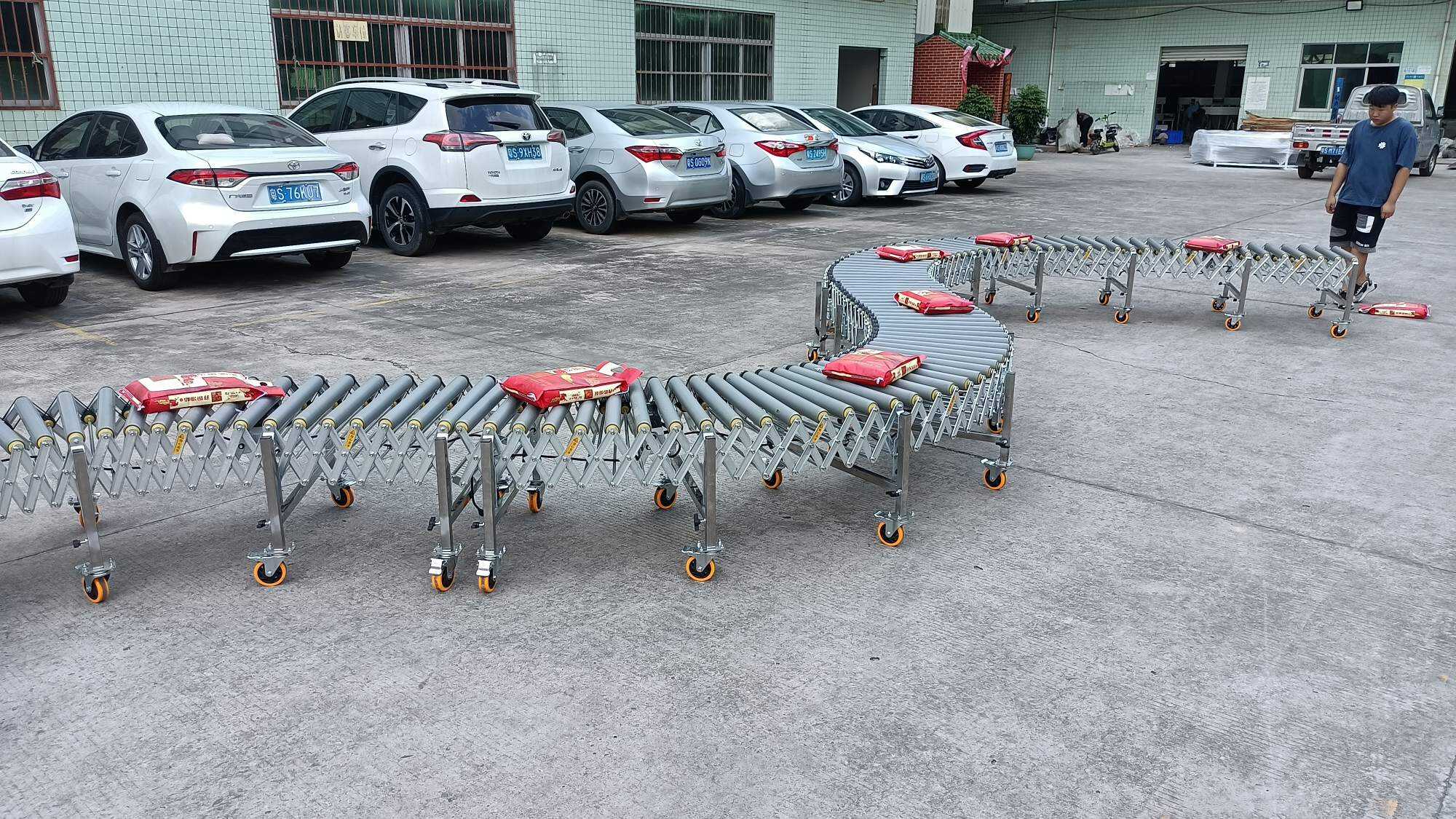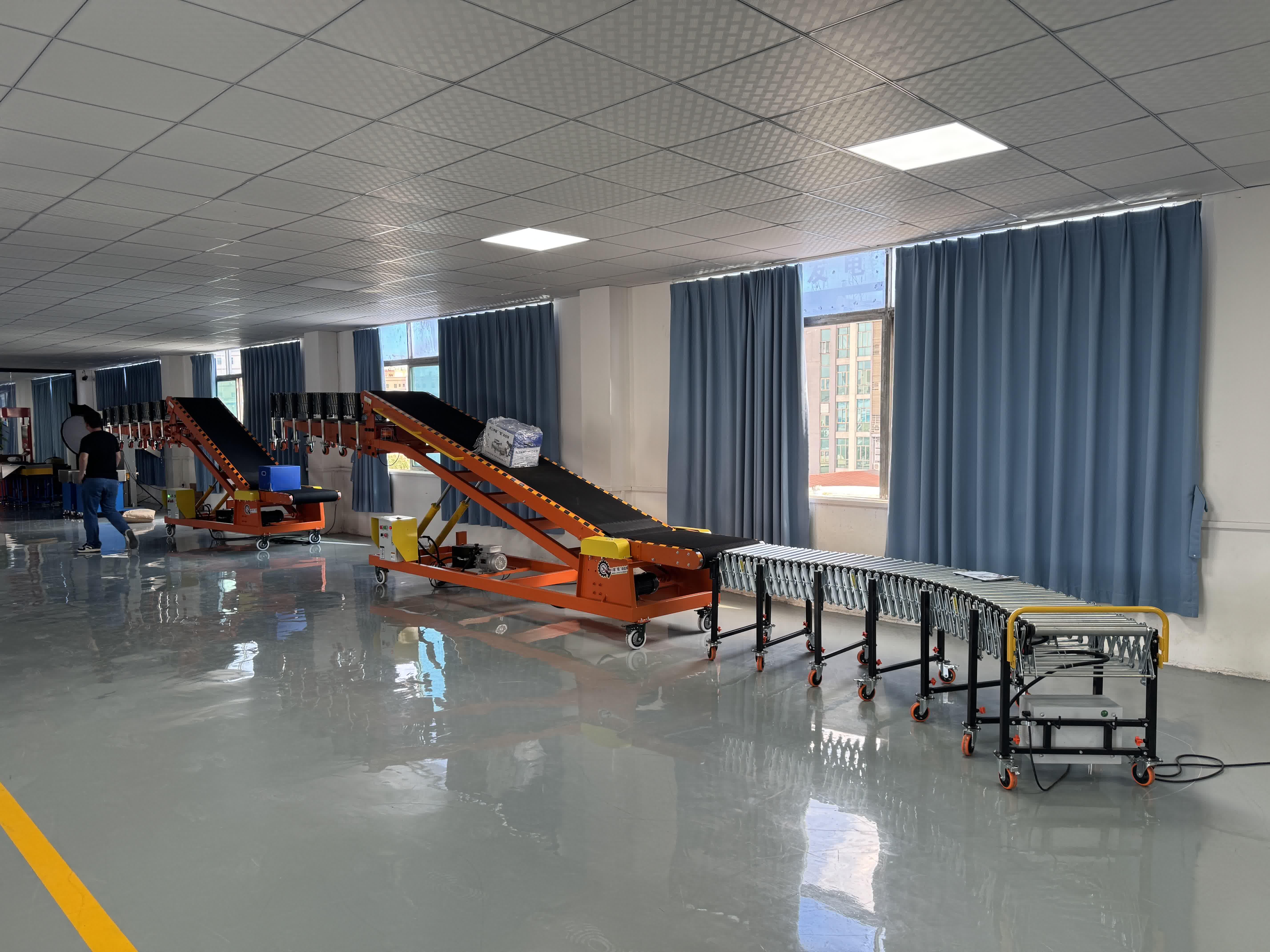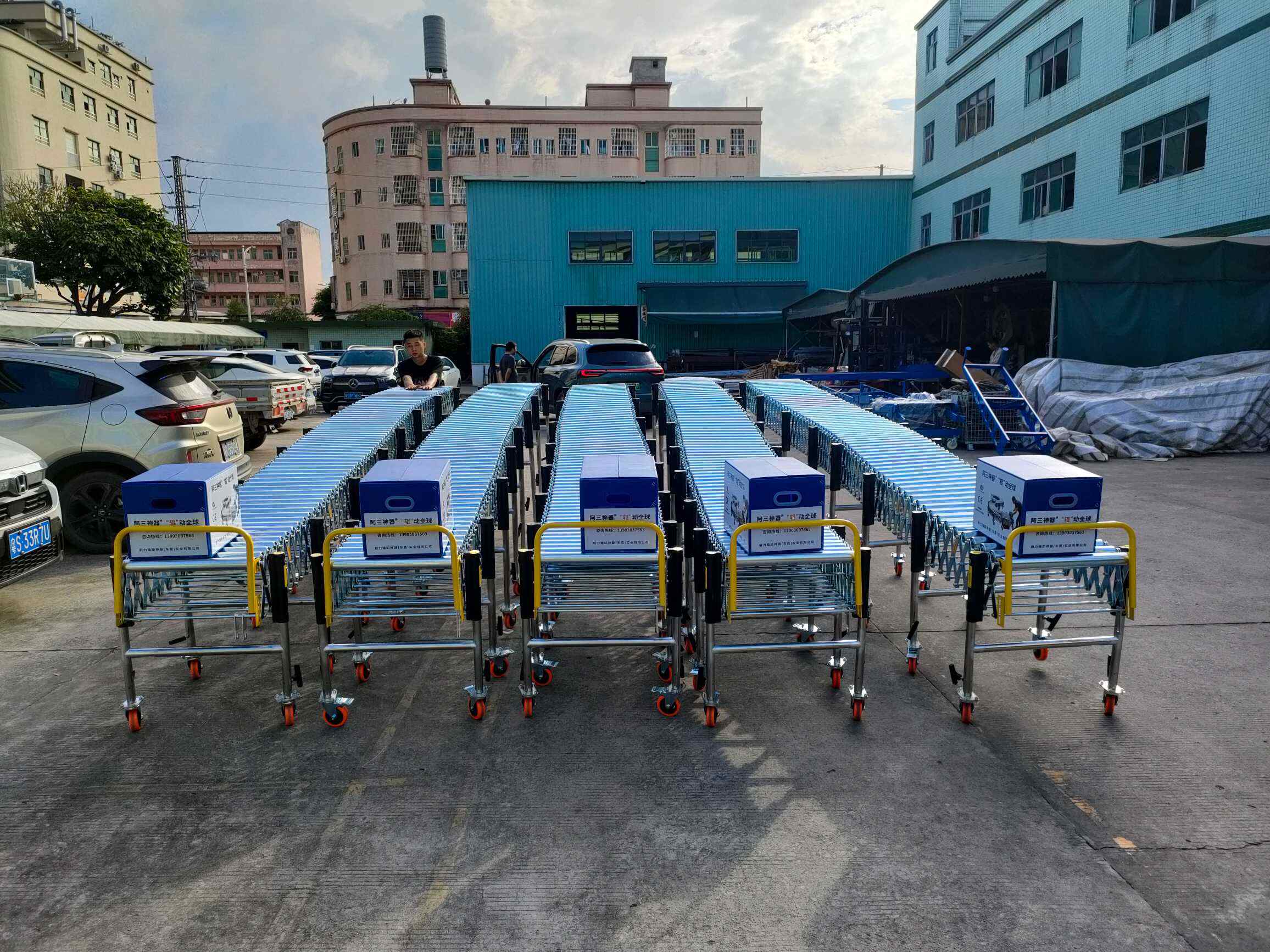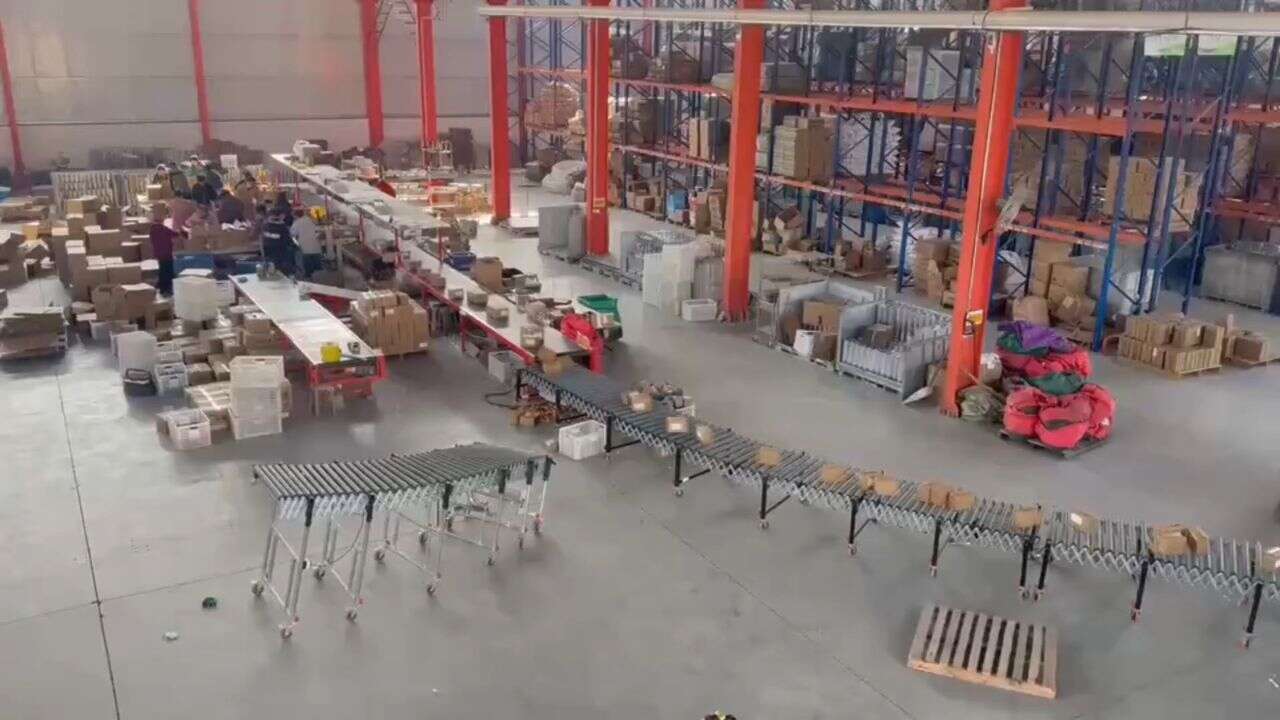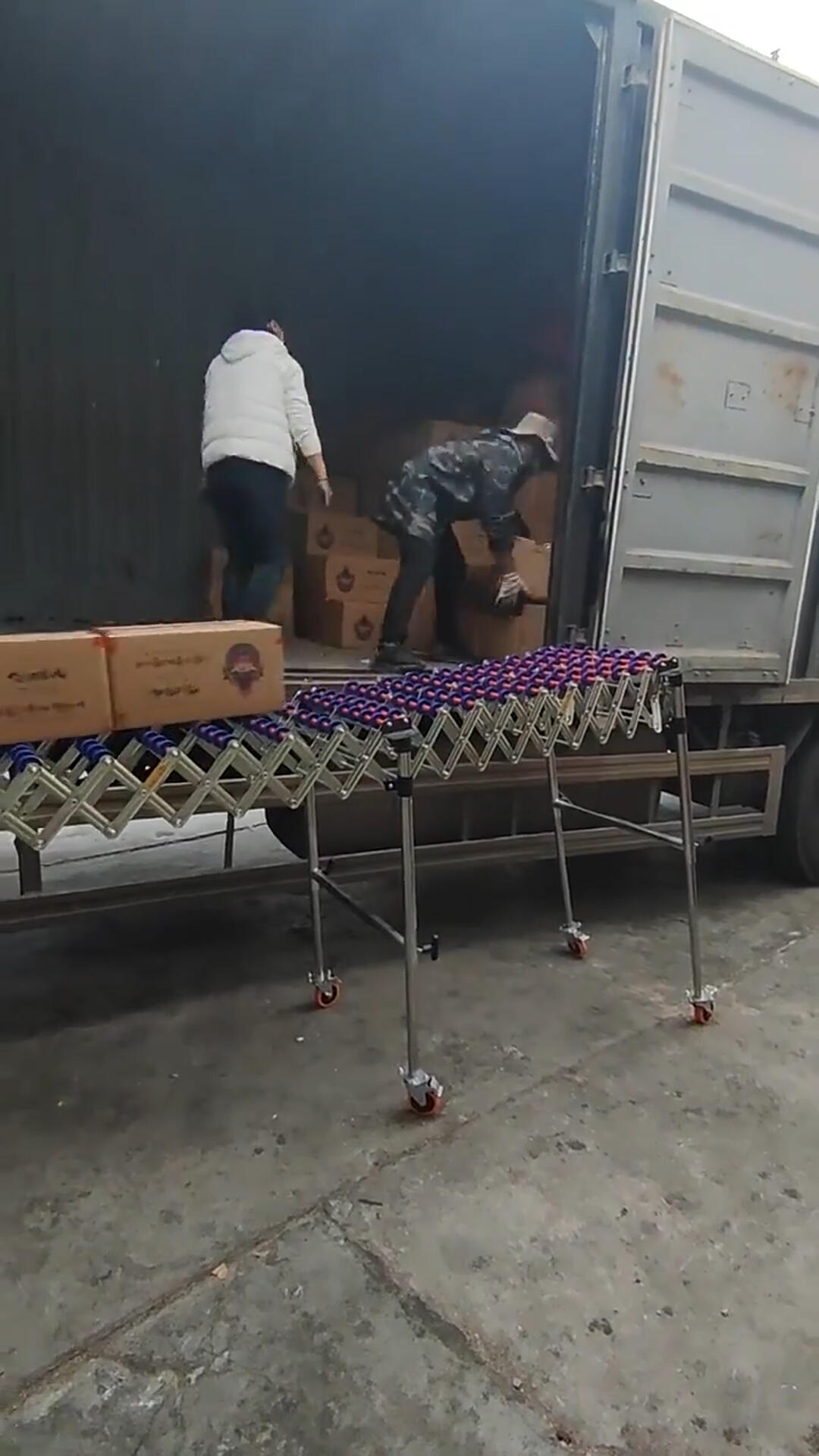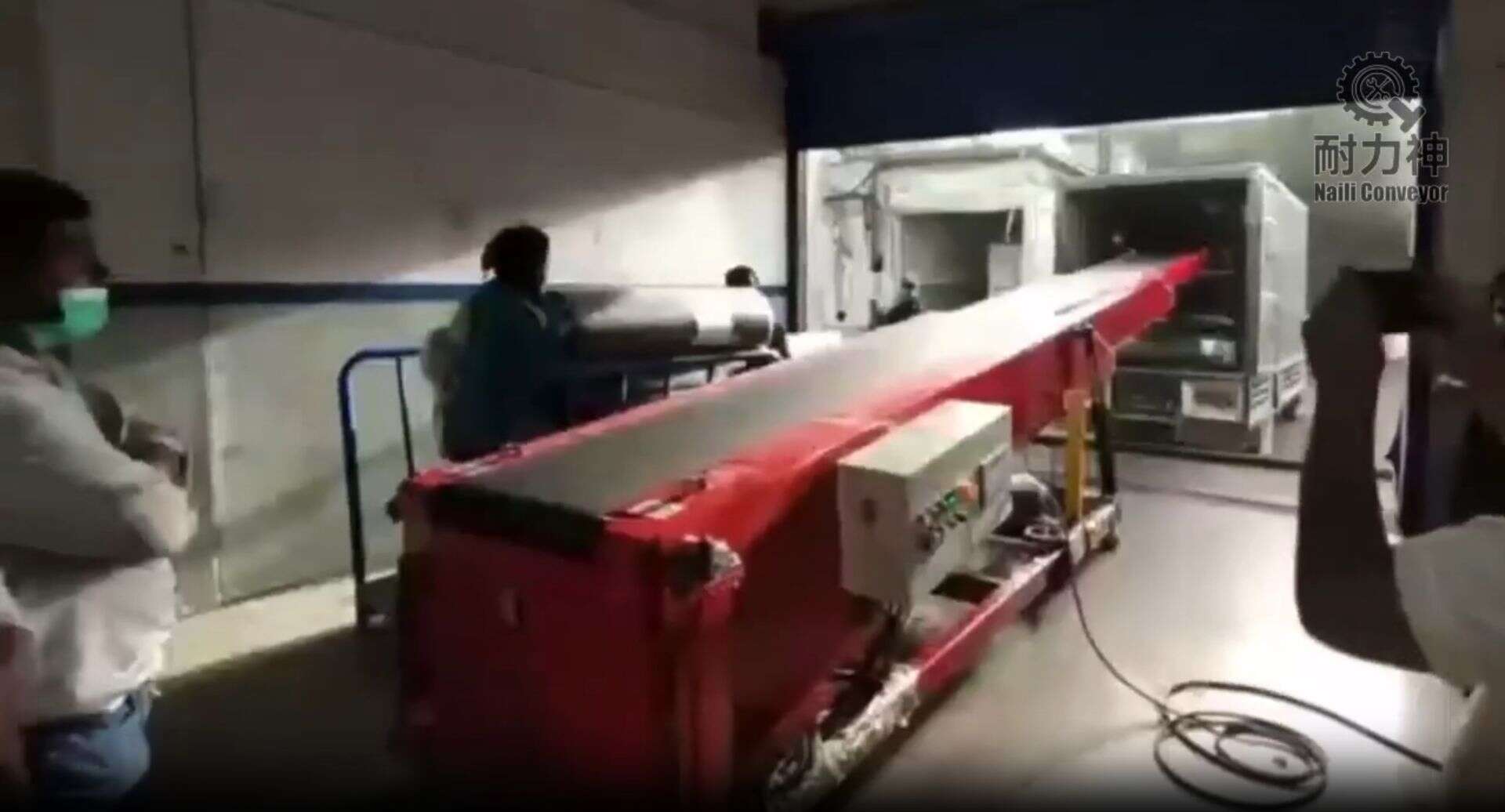
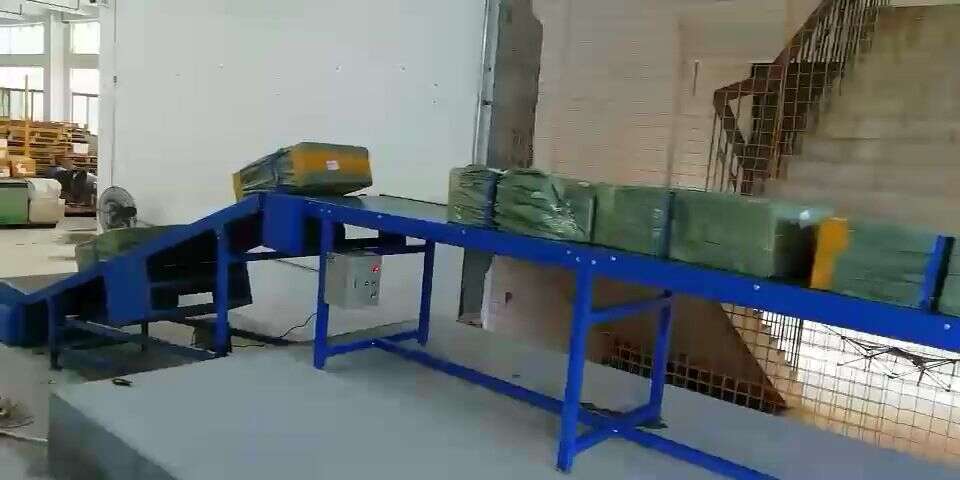
Telescopic conveyor loading and unloading has become a core part of fast-paced heavy-duty logistics distribution, ensuring rapid connection to warehousing or sorting areas in locations with frequent truck traffic and tight space. For selection tips, see Telescopic Conveyor Truck Loading and Unloading Selection Guide.
Current Pressure and Key Requirements in Telescopic Conveyor Loading and Unloading Scenarios
As warehousing and distribution centers deal with full-truckload and less-than-truckload trucks on both lines, unloading frequency and cargo volume keep rising. A telescopic conveyor fixed at the unloading area can extend and retract according to the truck body, freeing floor space when retracted and covering multiple vehicle lengths when extended. It also supports a load capacity of up to 80 kg/m², reducing manual transfer. The system smoothly moves goods into the warehouse or toward the sorting area, and, together with stepless speed control of 10-40 m/min and impact-resistant belts, meets the high-throughput pace of large and loose cargo.
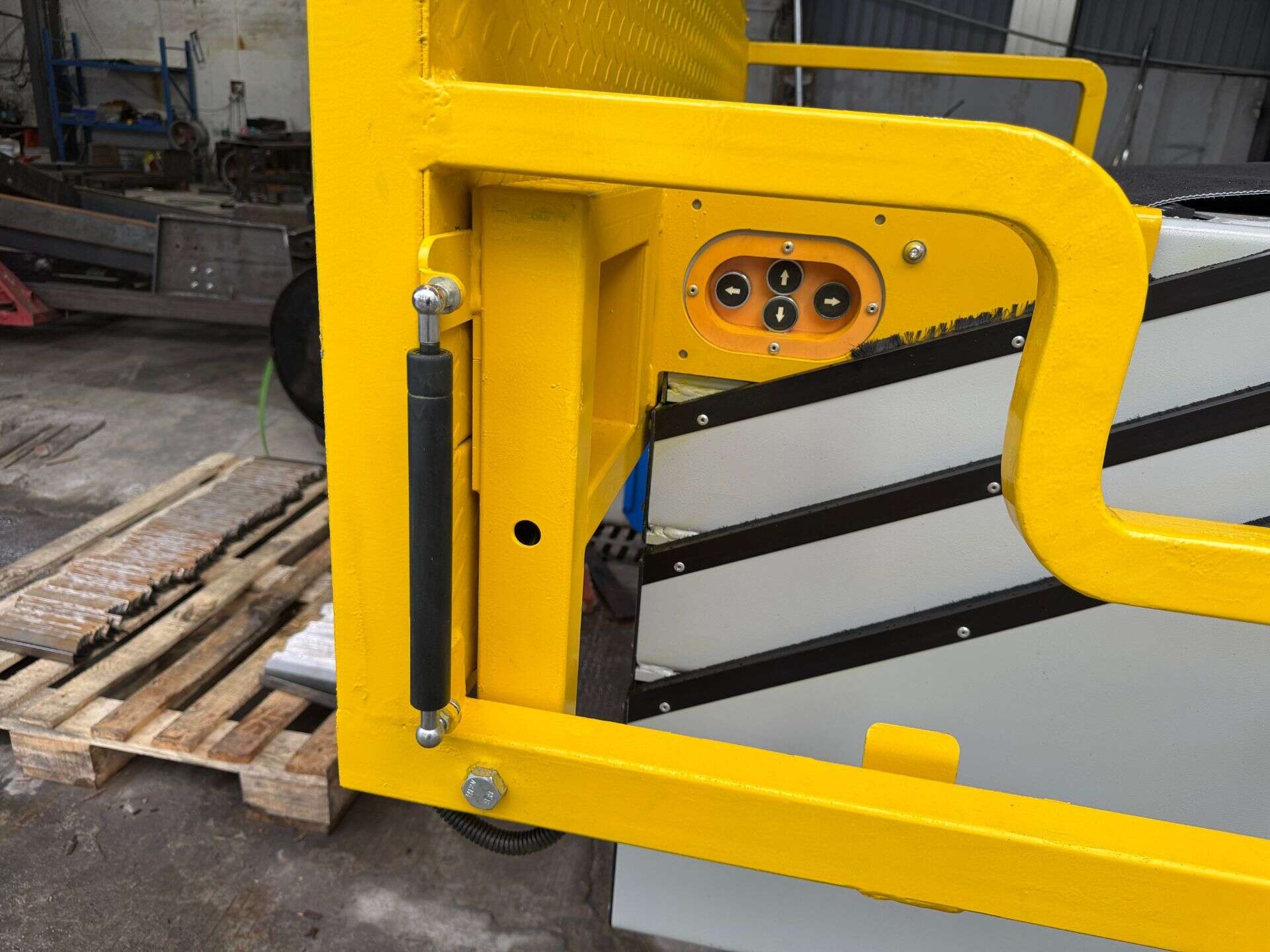
Taking the 4-Section Telescopic Conveyor as an example, the extended length can cover 9.6 m to 14 m trucks; the 5-section structure can extend up to 16-17 m to handle longer containers or trailers. Multiple telescopic sections are driven by electric push rods or chains, and a touch-stop sensor is installed at the front end to ensure safe operation. Users can choose the number of sections based on common vehicle types to avoid moving the equipment frequently.
Telescopic Conveyor Loading and Unloading Capacity and Operating Methods
Telescopic conveyor loading and unloading consists of multiple telescopic sections and can automatically extend or retract according to the length of the truck compartment, connecting smoothly with the warehouse, sorting area, or main conveying line through buffer sections and docking platforms. The 5-Section Telescopic Conveyor structure means it can extend up to 16-17 m, with front touch-stop and stepless speed control of 24-36 m/min. Combined with 600/800 mm width and a 3 mm PVK impact-resistant belt, it maintains continuous and gentle cargo movement. The electrical system works with variable-frequency drive and lighting, allowing quick integration into existing layouts and reducing truck waiting time at the unloading position.
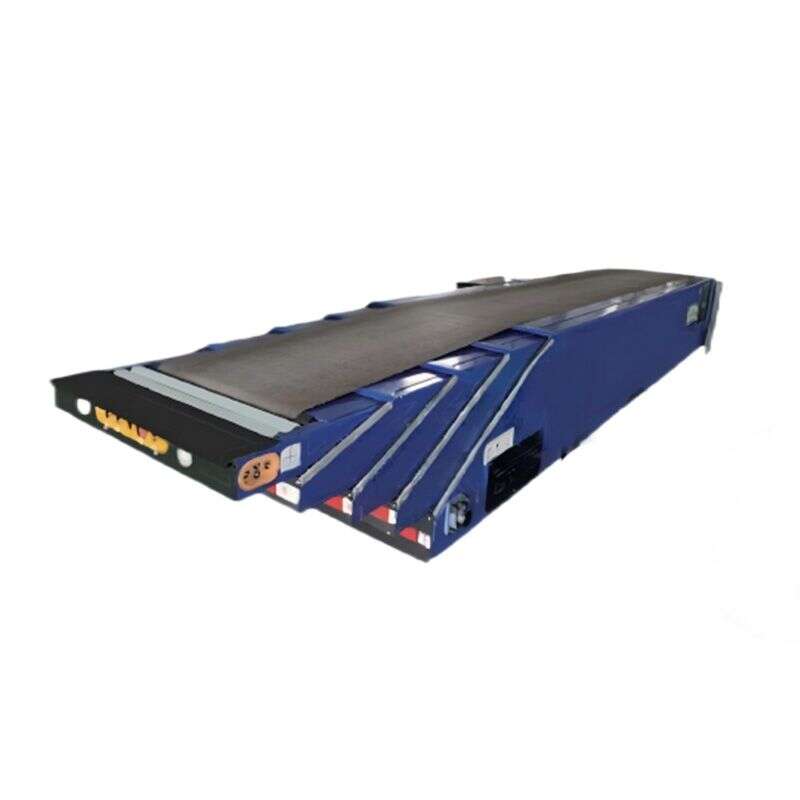
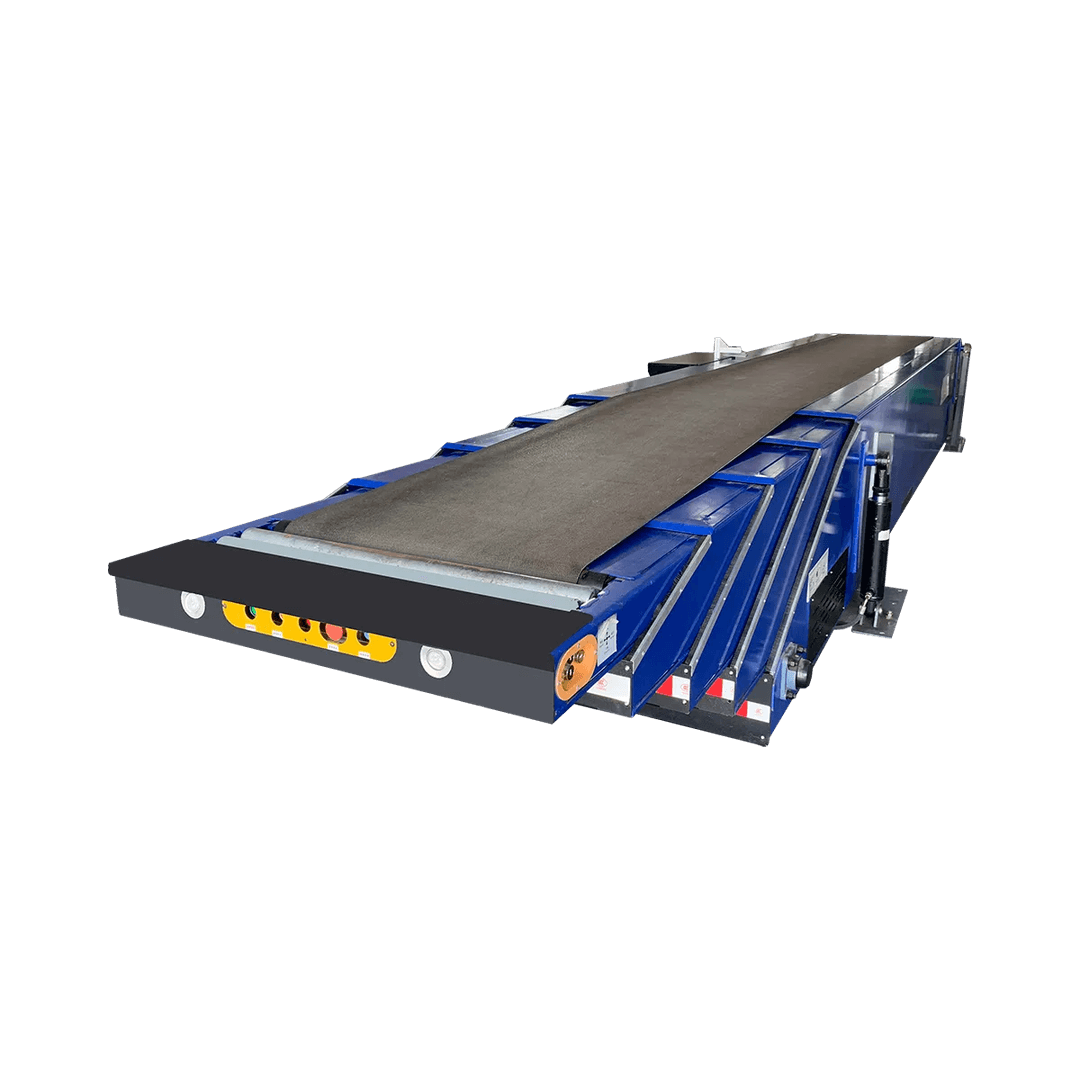
5-Section Telescopic Conveyor
Our five-section telescopic conveyor can extend up to 16–17 meters, reaching deep into trucks and containers to enable fast and efficient loading and …

Metal Drum

Plastic Drum

Roll

Carton

Bagged
- Adjustable length: the telescopic sections can align with different truck lengths, avoiding frequent equipment moves.
- Heavy-load adaptation: load capacity can reach 80 kg/m², ensuring stability for metal drums, plastic drums, cartons, and other bulky items during loading and unloading.
- Smooth connection: the interface with warehousing or sorting systems can be connected with zero gap, eliminating manual transfer steps.
In actual operation, variable-frequency speed control can be used to match the stacking rhythm inside the truck compartment. Use low speed (10 m/min) when fully loaded to reduce impact, and increase to 40 m/min when unloaded to improve efficiency. Inspect belt tension and surface wear regularly, and lubricate the drive motor on schedule to ensure stable long-term operation.
Typical Loading and Unloading Process and Target Cargo
From the rear of the truck to the warehouse or sorting area, the telescopic conveyor can extend throughout the entire compartment, continuously pushing goods to complete the loading and unloading connection. It is especially suitable for loose cargo, roll goods, or extra-long bulky items. It can be linked at the unloading opening with sorting lines, buffer sections, or stacking areas, so goods no longer need to be frequently transferred manually, improving unloading continuity. According to on-site measurements, using a telescopic conveyor can shorten unloading time by about 30%-50% and reduce the risk of accidental injury to handlers.
Alternatives and Selection Considerations Without a Platform
If the site lacks a fixed unloading platform, priority can be given to a hydraulic conveyor and roller conveyor combination. Hydraulic lifting compensates for different truck-bed heights, while the roller section provides smooth turning at the entrance, maintaining a flexible telescopic conveying layout. For a detailed setup plan, see Hydraulic Conveyor Builds a Temporary Loading and Unloading Port.
Selection considerations include load capacity, maximum extension length, belt material, speed range, and site footprint limits, ensuring the equipment can match the cargo type while also retracting within limited space. Want to learn more about the difference between telescopic conveyors and Hydraulic Conveyor? See Telescopic Conveyor Truck Loading vs Hydraulic Conveyor: Selection Comparison and Combination Boundaries. The practical application case of this equipment in an express distribution center can be found in Express Distribution Center Telescopic Conveyor Unloading.
For more practical implementations, see Express Center 3-Section Telescopic Conveyor Unloading Process.