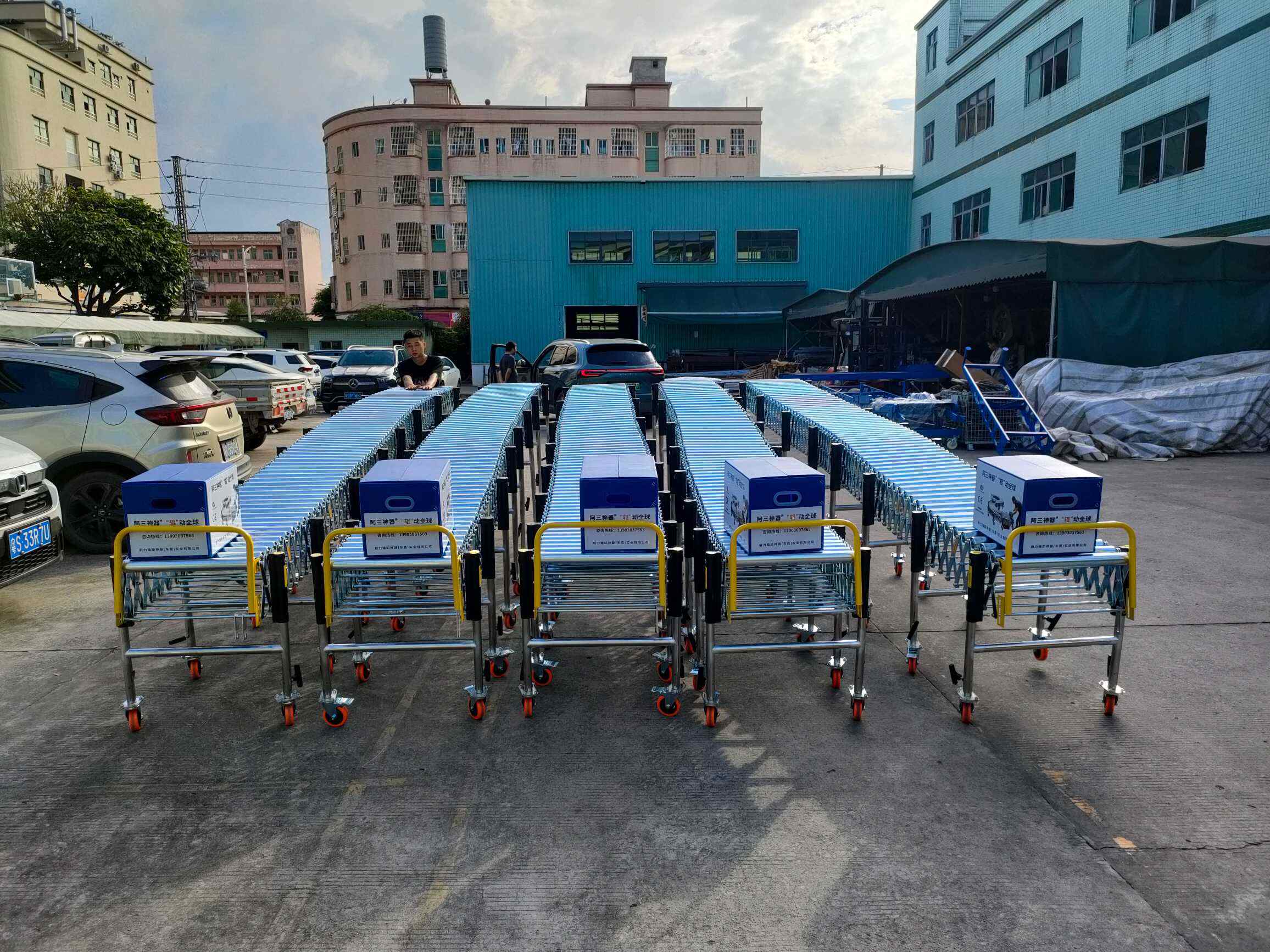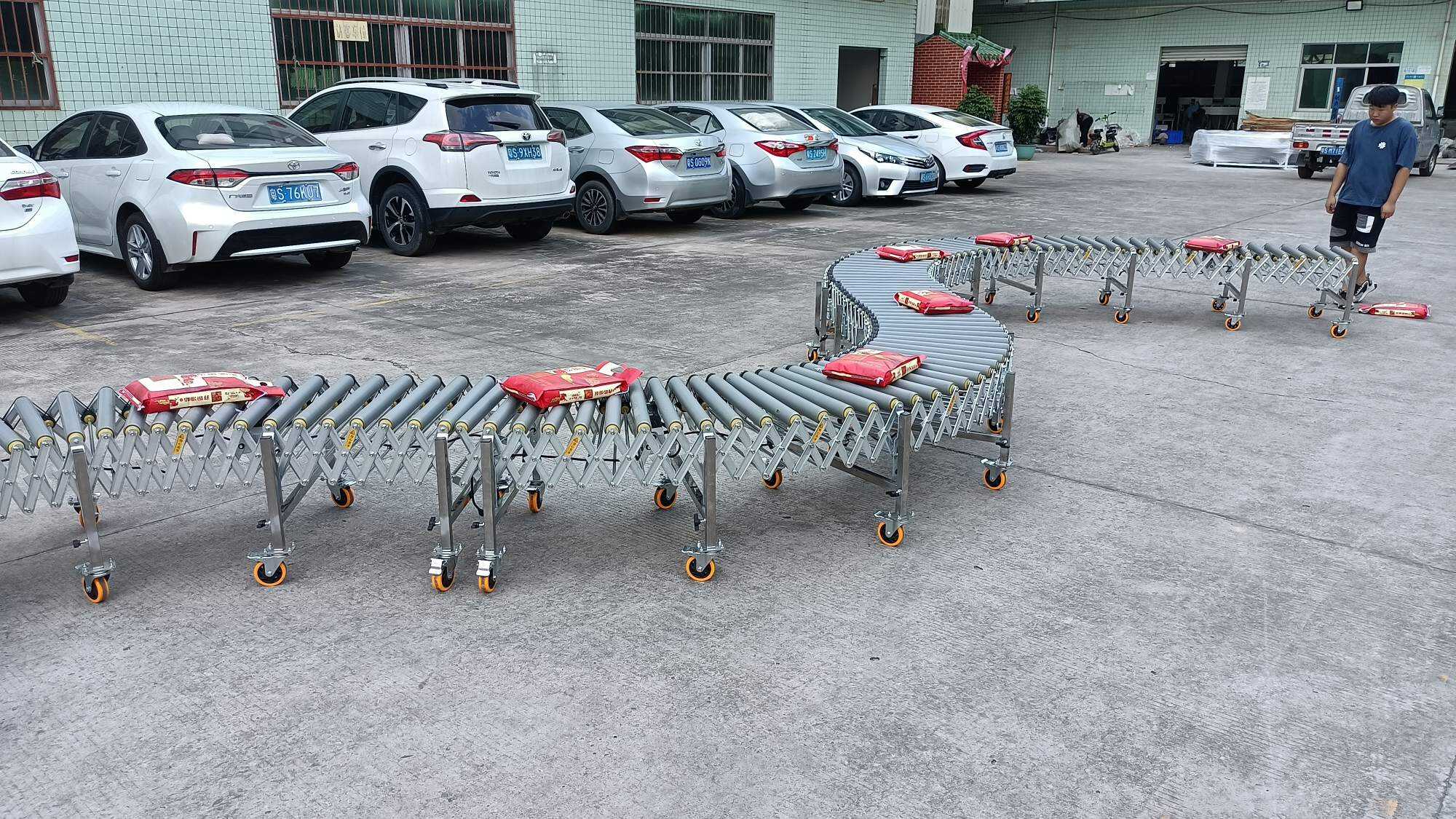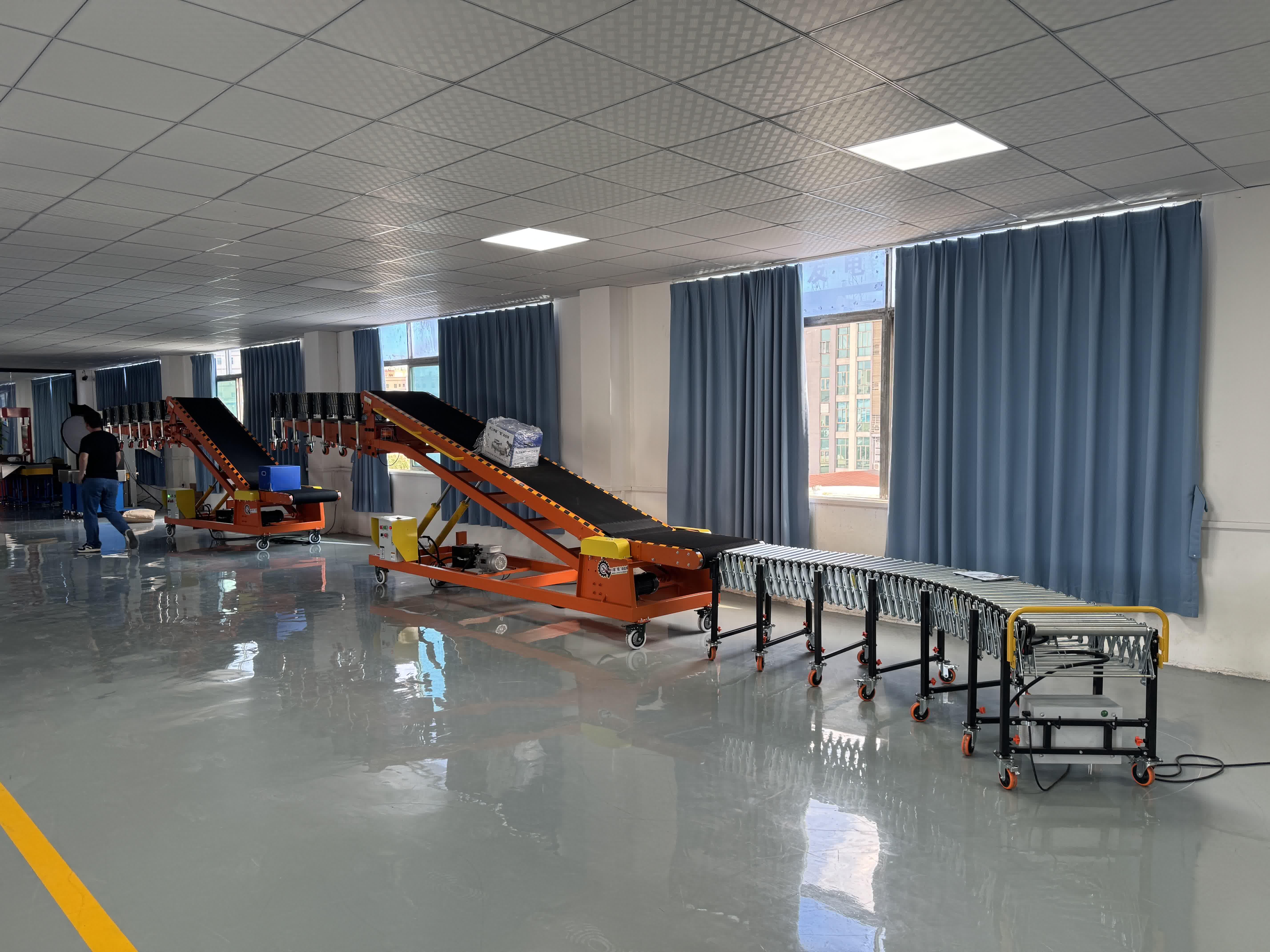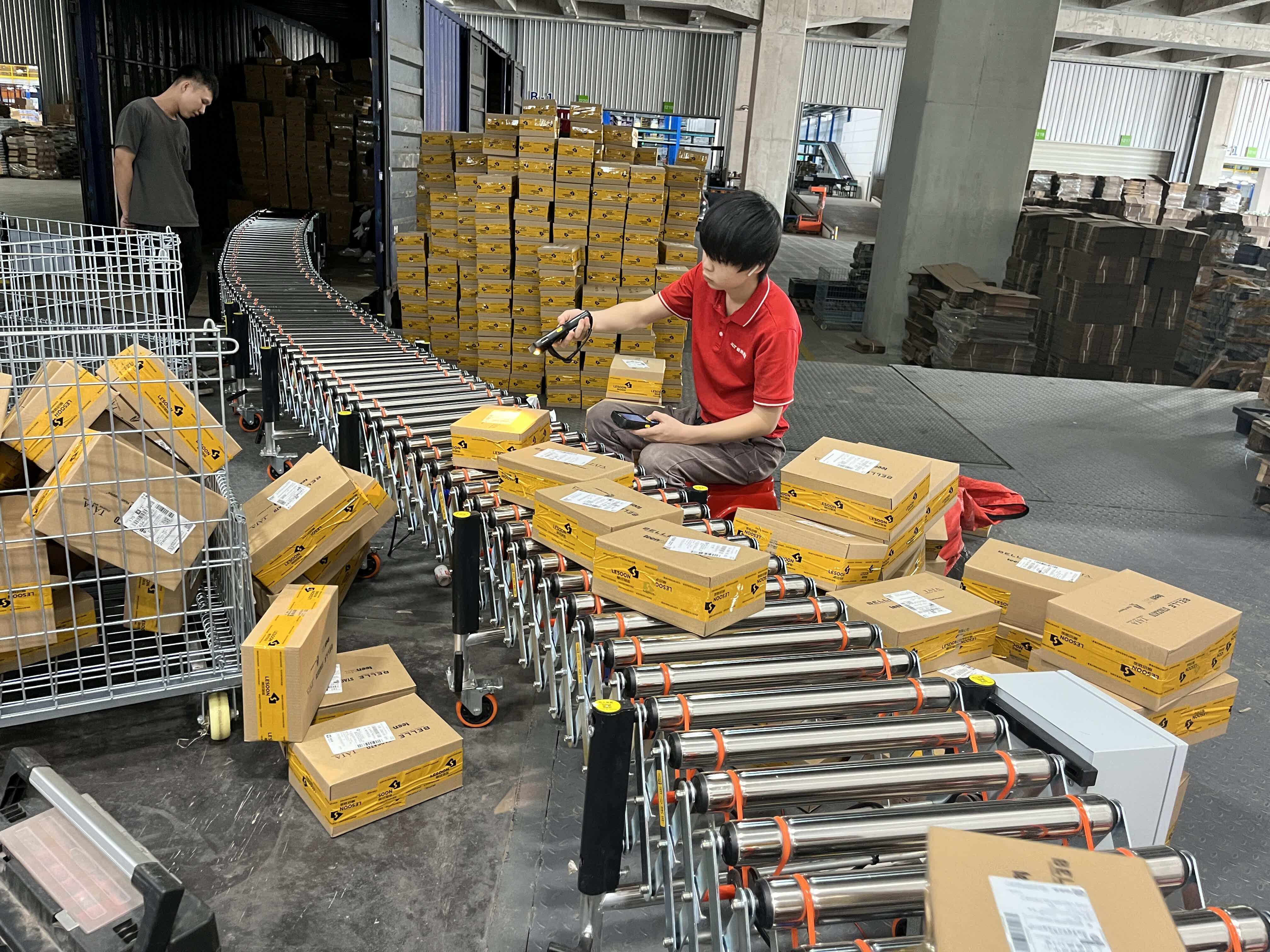
In the daily operation of a factory warehouse, one common loading and unloading challenge is how to efficiently and effortlessly transport large bagged goods from inside the warehouse deep into the truck bed. This case demonstrates a complete solution that combines ground-level horizontal conveying, large-angle lifting, and in-truck extension conveying. The solution uses a rubber-covered roller conveyor laid on the floor to transport goods from the warehouse to the loading dock, then a Medium Hydraulic Conveyor to lift the goods to a height level with the truck bed, and finally a rubber-covered roller conveyor inside the truck to smoothly convey the goods to the designated position inside the cargo box. The entire process is seamlessly connected, significantly reducing the distance and intensity of manual handling.
Core Equipment Configuration of the Solution
The core of this loading and unloading solution lies in the seamless integration and coordinated operation of three types of conveying equipment.
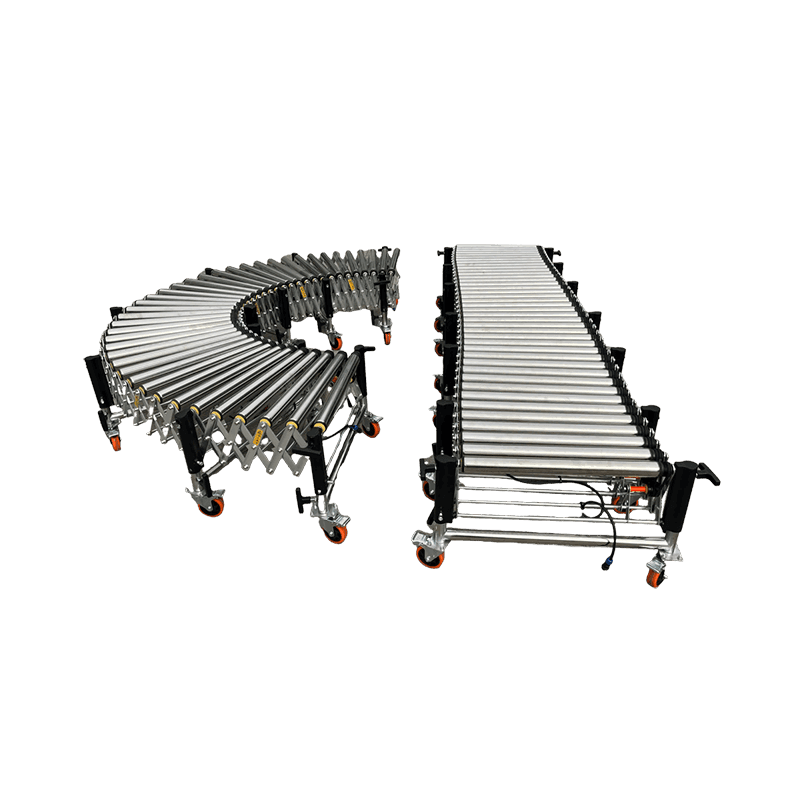
Ground section: rubber-covered Multi-Wedge Belt Powered Roller Conveyor
On the warehouse floor to the loading dock area, we deployed a rubber-covered Multi-Wedge Belt Powered Roller Conveyor. The roller surface of this conveyor is coated with a rubber layer, providing enough friction to smoothly convey bagged goods while avoiding scratches on the surface of the packaging bags. The Multi-Wedge Belt drive runs smoothly with low noise, making it ideal for long-term continuous operation in indoor warehouse environments. Its speed can be adjusted between 0.3 and 40 meters/minute to suit different production rhythms.
Lifting section: Medium Hydraulic Conveyor
The key piece of equipment connecting the ground and the truck bed is the Medium Hydraulic Conveyor. Its total length reaches 7 meters, allowing it to adapt to the loading and unloading height of most standard trucks. Driven by a hydraulic system, the conveyor's inclination angle can be smoothly and steplessly adjusted to ensure that the conveying surface always aligns precisely with truck bed floors at different heights. Its belt is made of anti-slip, wear-resistant material, effectively preventing goods from sliding down even when conveying bagged cargo.
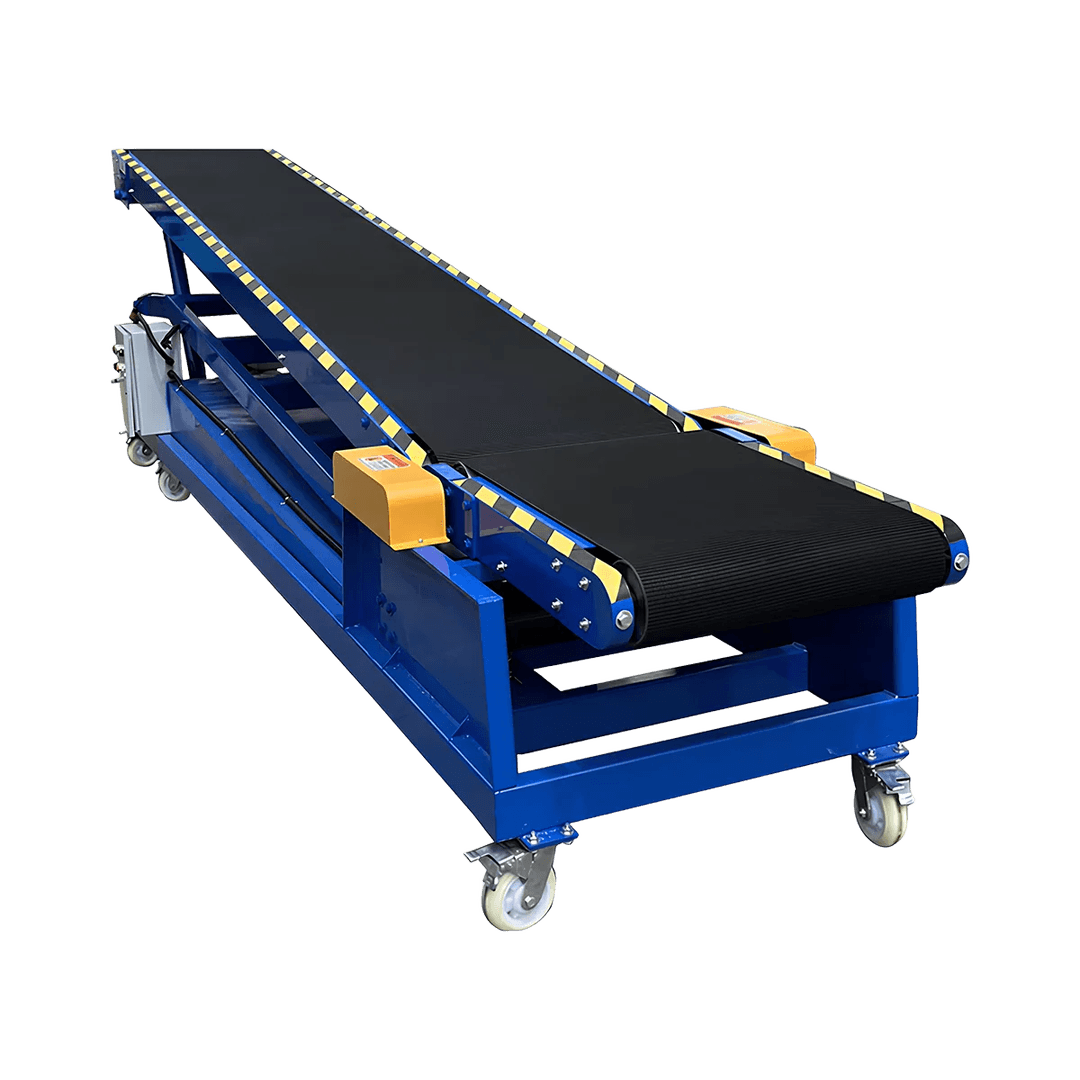
Medium Hydraulic Conveyor
Medium Hydraulic Conveyor is specially designed for sites without loading and unloading platforms and is suitable for trucks under 40 ft. The hydrauli...
 Metal Drum
 Plastic Drum
 Roll
Roll
 Carton
 Bagged
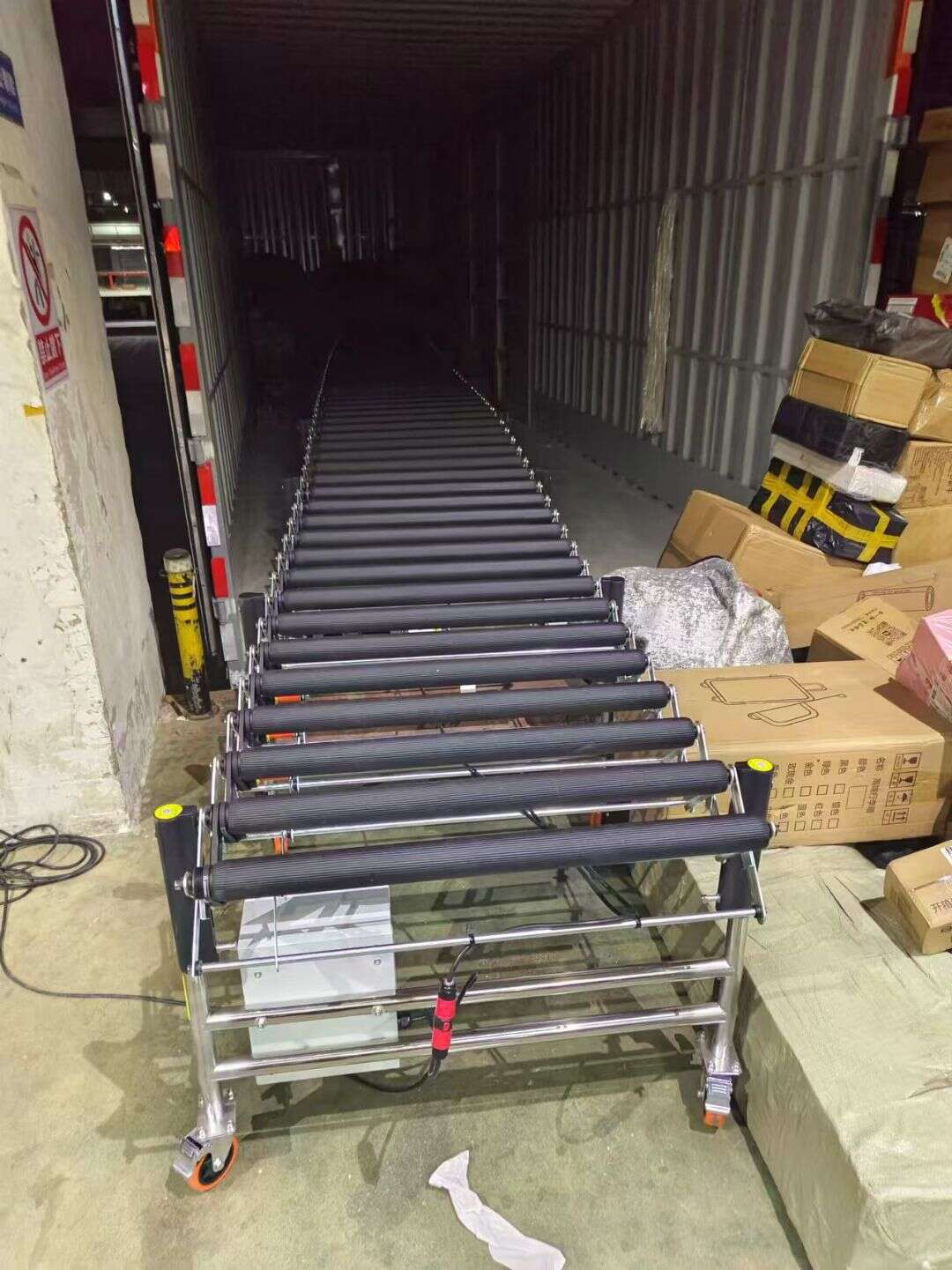
In-truck section: extension line of the rubber-covered roller conveyor
To deliver goods to the deepest part of the truck bed and avoid buildup in the middle of the compartment that would require a second manual transfer, we placed a movable rubber-covered roller conveyor inside the truck. This conveyor connects directly to the outlet of the hydraulic conveyor, receives goods conveyed from the conveyor, and uses its own power to continue moving the goods toward the front of the truck until they reach the designated stacking position.
Detailed Explanation of the Loading and Unloading Process
Stage 1: Warehouse outbound and horizontal conveying
After bagged goods leave the warehouse, they are placed on the starting end of the floor-mounted rubber-covered roller conveyor. Once the conveyor starts, the goods are smoothly and continuously conveyed to the loading and unloading area by the rotation of the rollers. This section of conveying replaces short-distance transfer by manual pallet jack or forklift, enabling the initial gathering of goods.
Stage 2: Large-angle lifting to truck-bed height
After the goods reach the inlet of the hydraulic conveyor, they enter the lifting stage. The operator adjusts the inclination angle of the conveyor according to the height of the current truck bed floor. Supported by the anti-slip belt, the goods are conveyed upward at a steady speed until they reach the outlet level with the truck bed floor. This entire process is completed by the equipment, with human operators only needing to monitor nearby, greatly reducing the labor required to lift heavy items to a higher position.
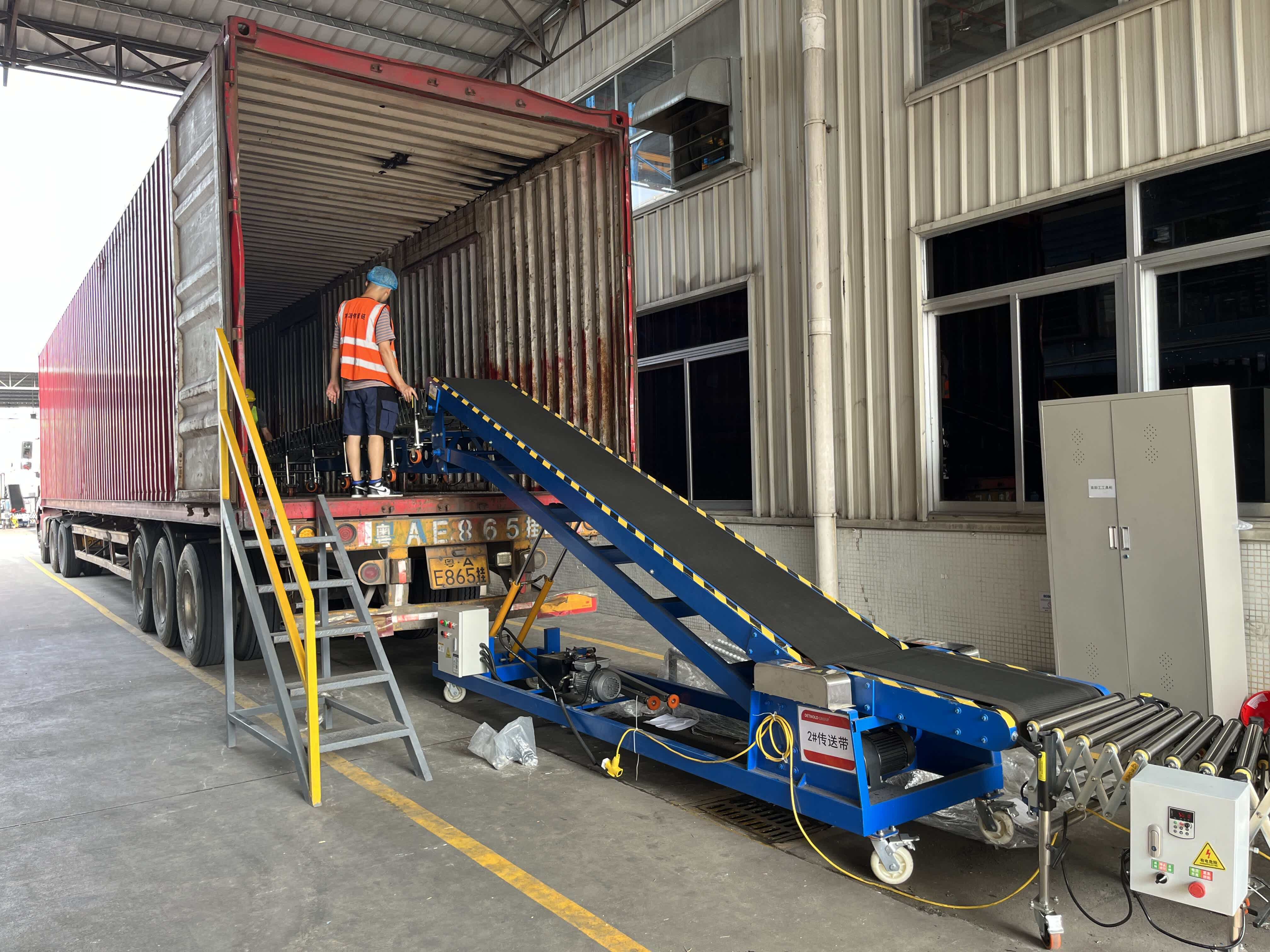
Stage 3: Deep conveying inside the truck bed
The goods transition smoothly from the outlet of the hydraulic conveyor onto the rubber-covered roller conveyor inside the truck. This conveyor continues working, moving the goods toward the front of the truck. Workers can stop the conveyor at any time according to the stacking situation and neatly stack the goods. In this way, the space inside the truck can be fully utilized, and goods can be neatly stacked from the rear to the front of the compartment, greatly improving loading and unloading efficiency.
Advantages and Applicable Scenarios
This solution is especially suitable for loading and unloading bagged feed, fertilizer, grain, textiles, and other cargo that has a certain weight and requires packaging protection. Its advantages are as follows:
- Smooth workflow: It forms a continuous conveying line from the warehouse to the inside of the truck, reducing interruptions in operation.
- Labor-saving and efficient: Mechanical conveying replaces most manual handling and lifting, shortening each loading and unloading cycle and significantly reducing workers' labor intensity.
- Highly adaptable: The incline angle of the ramp machine is adjustable, allowing it to match the loading and unloading heights of different vehicle types; the in-truck conveying section can be arranged flexibly to suit different vehicle compartment lengths.
- Protects the cargo: The rubber-coated roller surface is soft, effectively preventing wear on the surface of bagged goods.
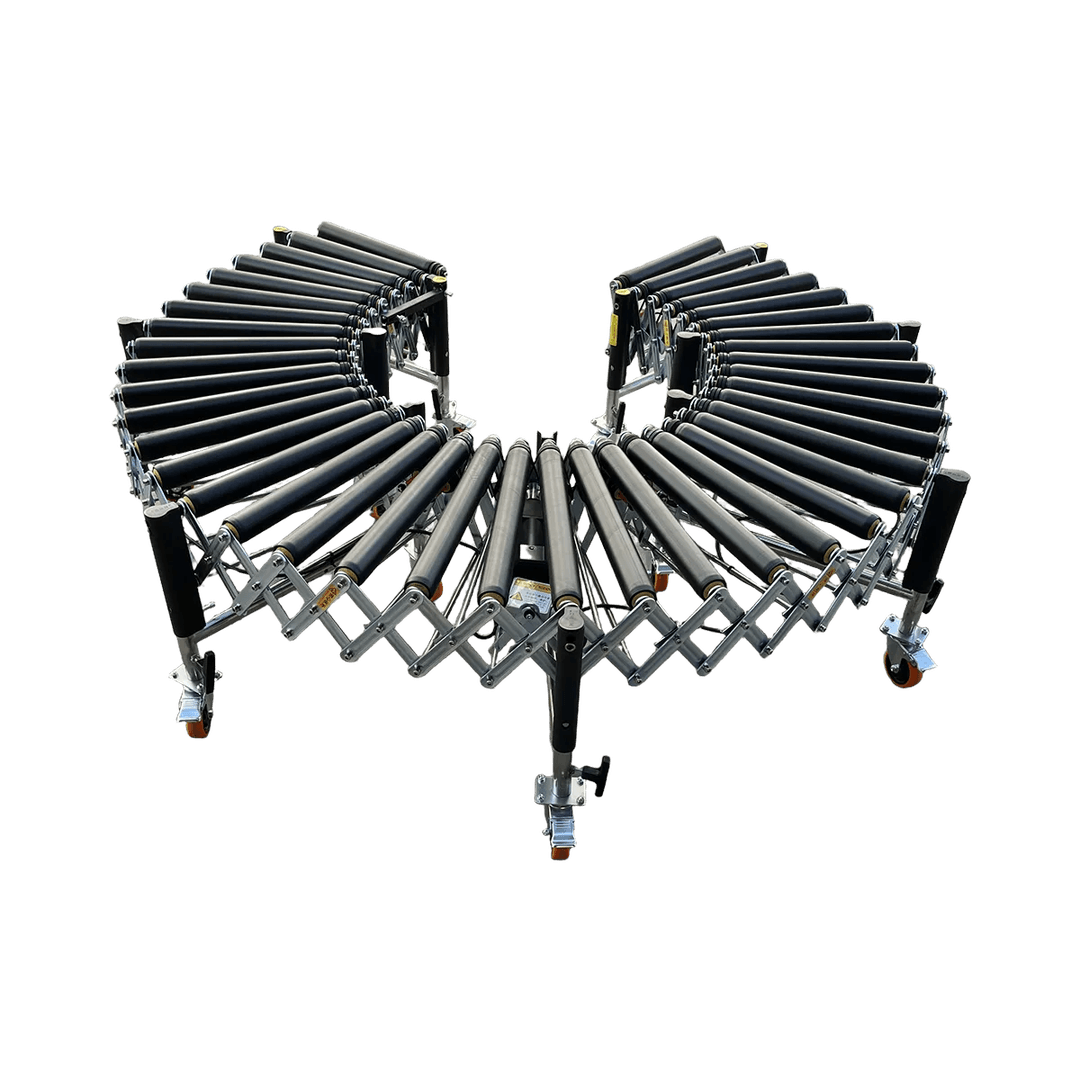
Powered Rubber-Covered Roller Conveyor Series
The Powered Rubber-Covered Roller Conveyor is designed specifically for short-distance conveying of bagged goods, enabling smooth and controlled cargo...
Metal Drum
Plastic Drum
Roll
Carton
Bagged
This solution is a medium ramp machine + roller line unloading case in a typical loading application, demonstrating the flexibility of combining modular conveying equipment to solve complex loading and unloading needs. For scenarios with similar continuous conveying requirements from warehouse to truck, such as bagged textile loading solution, this configuration offers very high reference value.