In the daily operations of a logistics warehouse, how to efficiently and effortlessly load goods from the warehouse platform into a truck compartment is a key factor affecting overall efficiency. The traditional forklift handling method is not only inefficient and dependent on skilled operators, but also carries certain safety risks. This case demonstrates a solution for efficient loading through a combination of conveyor equipment.
Solution Configuration and Equipment Selection
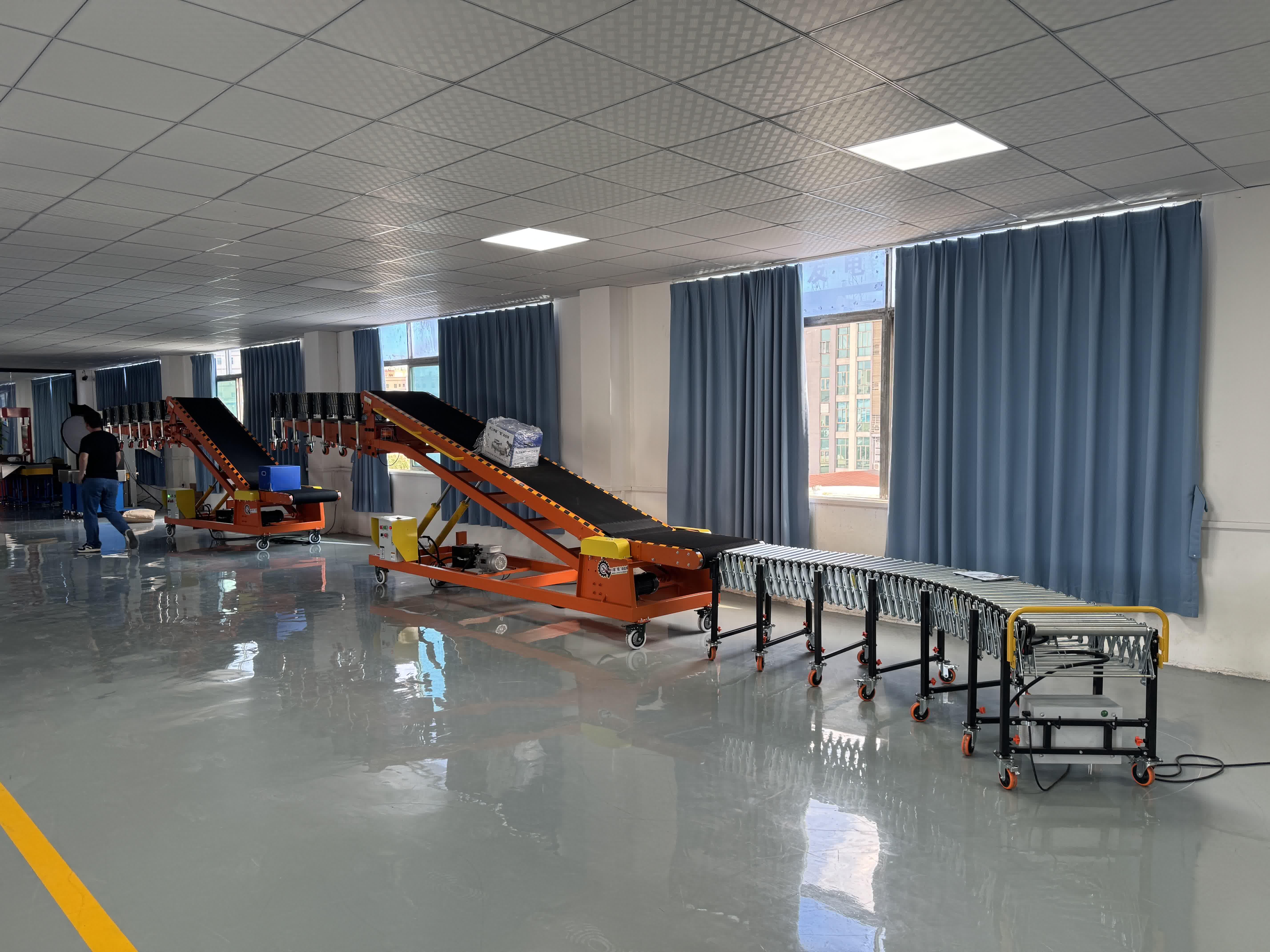
The logistics warehouse mainly handles standard cartons and regular packaged goods. To meet the continuous conveying requirements from the warehouse floor to truck compartments at different heights, the solution adopted Medium Incline Machine and Rubber-Covered Multi-Wedge Belt Powered Roller Conveyor as a combination.

Core Equipment 1: Medium Incline Machine
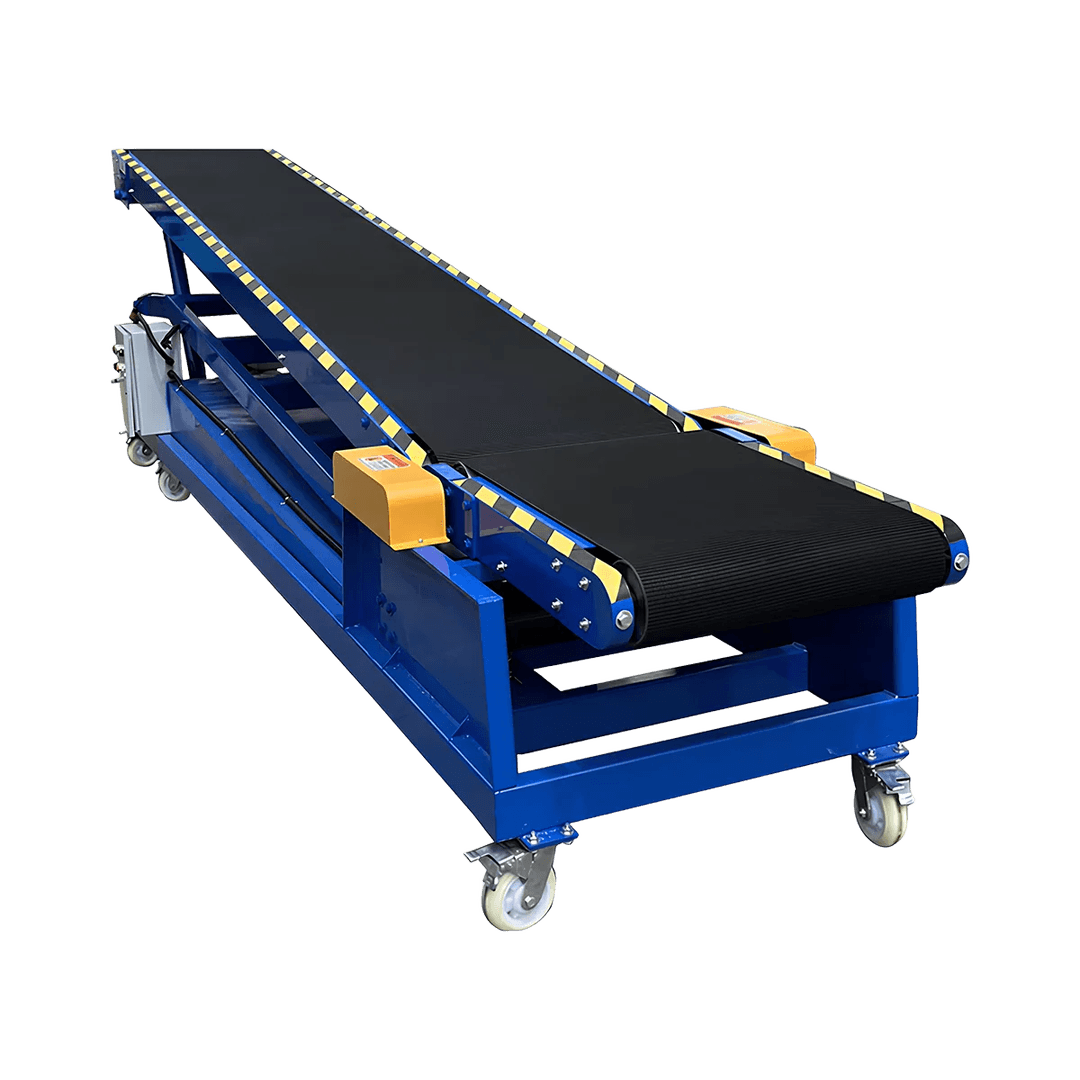
Medium Hydraulic Conveyor
Medium Hydraulic Conveyor is specially designed for sites without loading and unloading platforms and is suitable for trucks under 40 ft. The hydrauli...
 Metal Drum
 Plastic Drum
 Roll
Roll
 Carton
 Bagged
This equipment is responsible for bridging the slope from the warehouse platform to the truck compartment floor. Its hydraulic lifting system can flexibly adjust the conveying height to suit loading and unloading platforms for different vehicle models. With a total length of 7000 mm and an adjustable speed of 0.3 to 30 m/min, it ensures smooth and controllable movement of goods during the incline process.
Core Equipment 2: Rubber-Covered Multi-Wedge Belt Powered Roller Conveyor
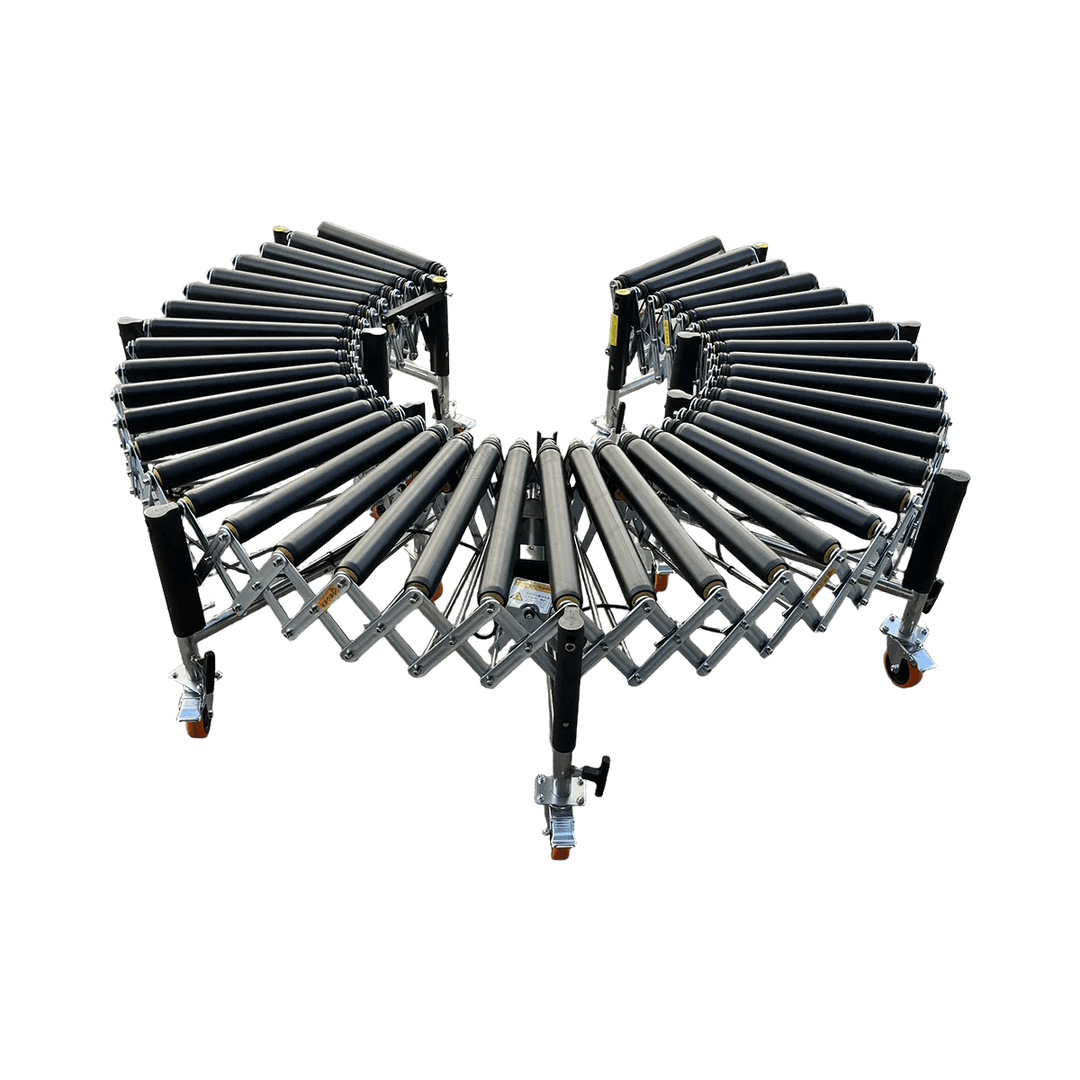
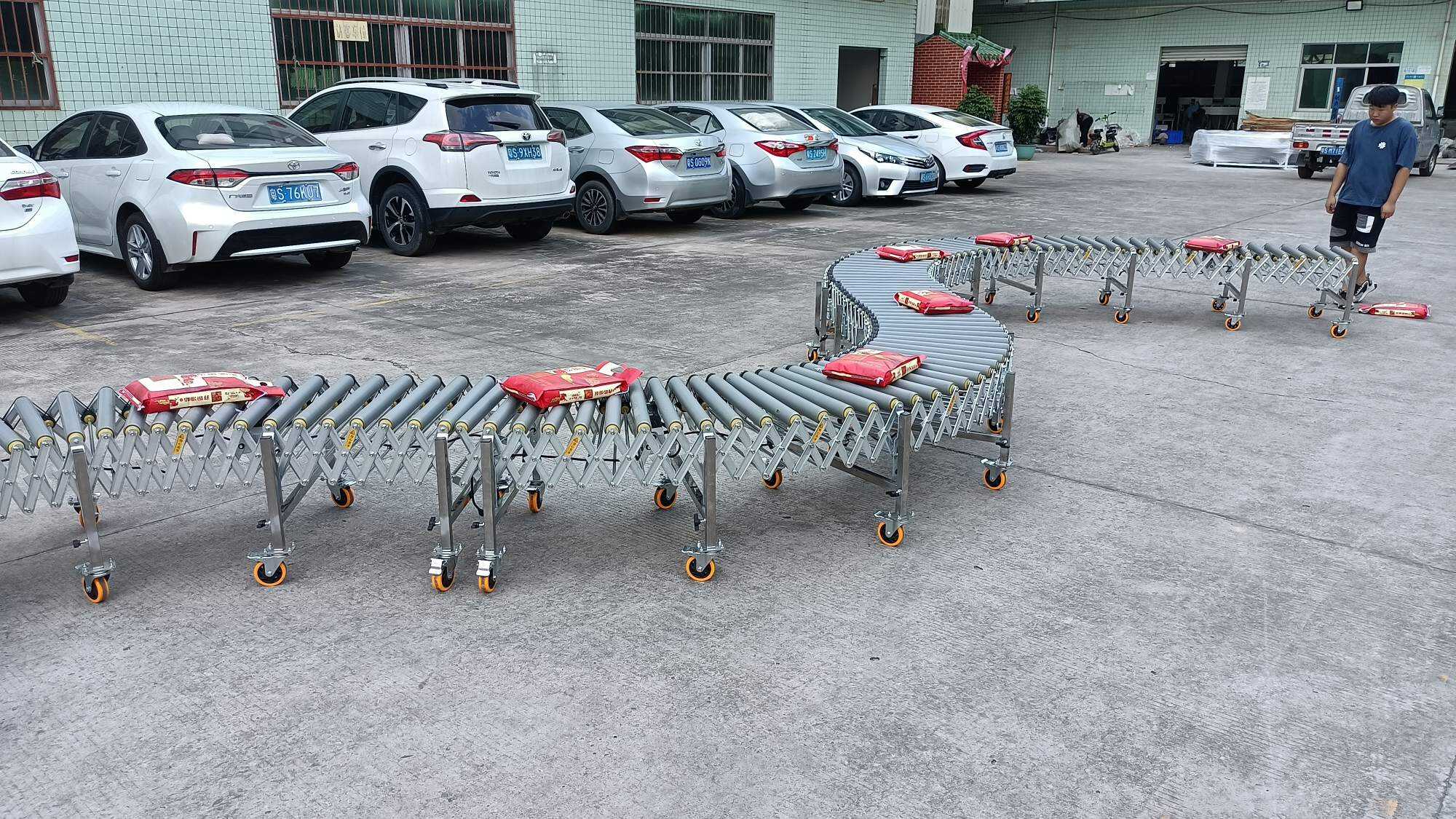
Multi-Wedge Belt Powered Rubber-Covered Roller Conveyor
The multi-wedge-belt Powered Rubber-Covered Roller Conveyor is specifically designed for the smooth conveying of bagged goods. It uses multi-wedge-bel...
Metal Drum
Plastic Drum
Roll
Carton
Bagged
As the horizontal conveying section, this equipment extends from inside the warehouse to the inlet of the incline machine. The rubber-covered rollers provide excellent friction and cushioning, effectively protecting carton packaging. The multi-wedge belt drive runs smoothly, with low noise, and the speed can be adjusted from 0.3 to 40 m/min, perfectly matching the speed of the incline machine.
Workflow and Efficiency Comparison
Traditional Forklift Operation Process
- The forklift driver picks up the goods inside the warehouse.
- Drive the forklift to the truck by the platform.
- Raise the forks and move the goods into the truck compartment.
- Reverse back to the warehouse and repeat the cycle.
This process relies on the driver to travel back and forth, and its efficiency is greatly affected by aisle width and the operator’s skill level. It also poses safety risks due to the mixing of people and vehicles.
Conveyor Combined Operation Process
- Warehouse staff place the goods on the roller conveyor at the starting point.
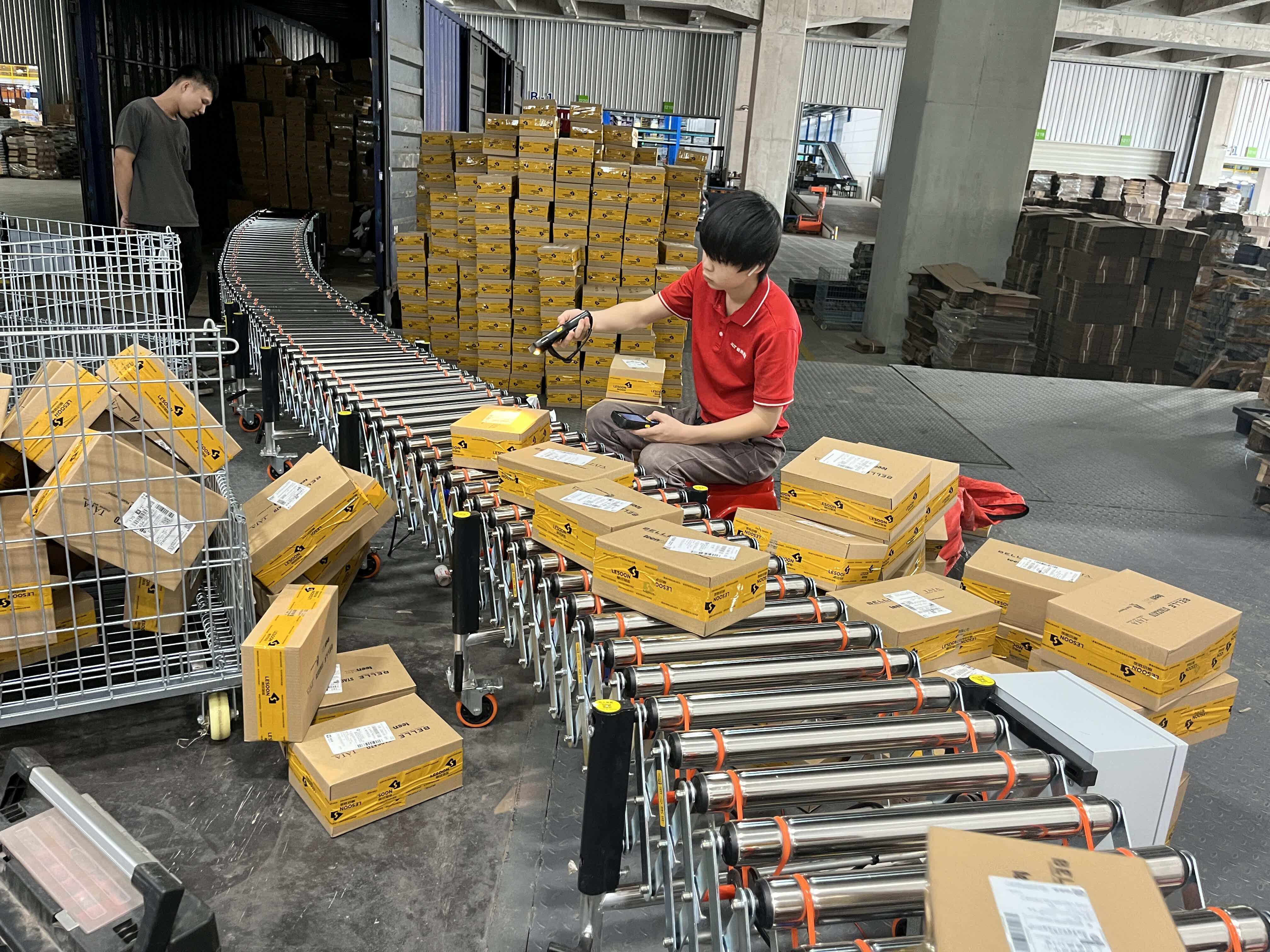
- The goods are automatically conveyed through the powered roller line to the inlet of the incline machine.
- The incline machine lifts the goods and conveys them into the truck compartment.
- Personnel inside the compartment only need to perform simple stacking and sorting.
The entire process forms a continuous conveying line, transforming the porter’s walking and heavy lifting into automatic equipment operation, greatly improving loading efficiency and saving labor costs.
Solution Advantages and Application Scenarios
Key Advantages
- Significantly Improved Efficiency: Enabled near-continuous loading operations, eliminated the empty travel time of the forklift shuttling back and forth, and significantly increased loading speed.
- Lower Labor Costs: Reduced the need for forklift drivers and handlers, allowing ordinary employees to complete loading operations.
- High Operational Safety: Avoided the risks of forklift work at the edge of the dock and reduced the likelihood of cargo falling and personnel collisions.
- Reduced Labor Intensity: Workers no longer need to repeatedly lift heavy items; they mainly place and stack goods, making the work easier.
- Good Flexibility: The conveyor height is adjustable and can adapt to a variety of vehicle types; the roller conveyor can be flexibly arranged according to the warehouse layout.
Applicable Goods and Scenarios
This solution is especially suitable for loading and unloadingstandard cartons, bagged goods, and regular turnover boxesand other goods with flat bottoms. It is widely used in e-commerce logistics warehouses, express sorting centers, finished-goods warehouses in manufacturing, and other places that require frequent truck loading and unloading. For customers seeking higher loading and unloading efficiency and looking to reduce labor dependence and operating costs, this is a proven and effective solution.
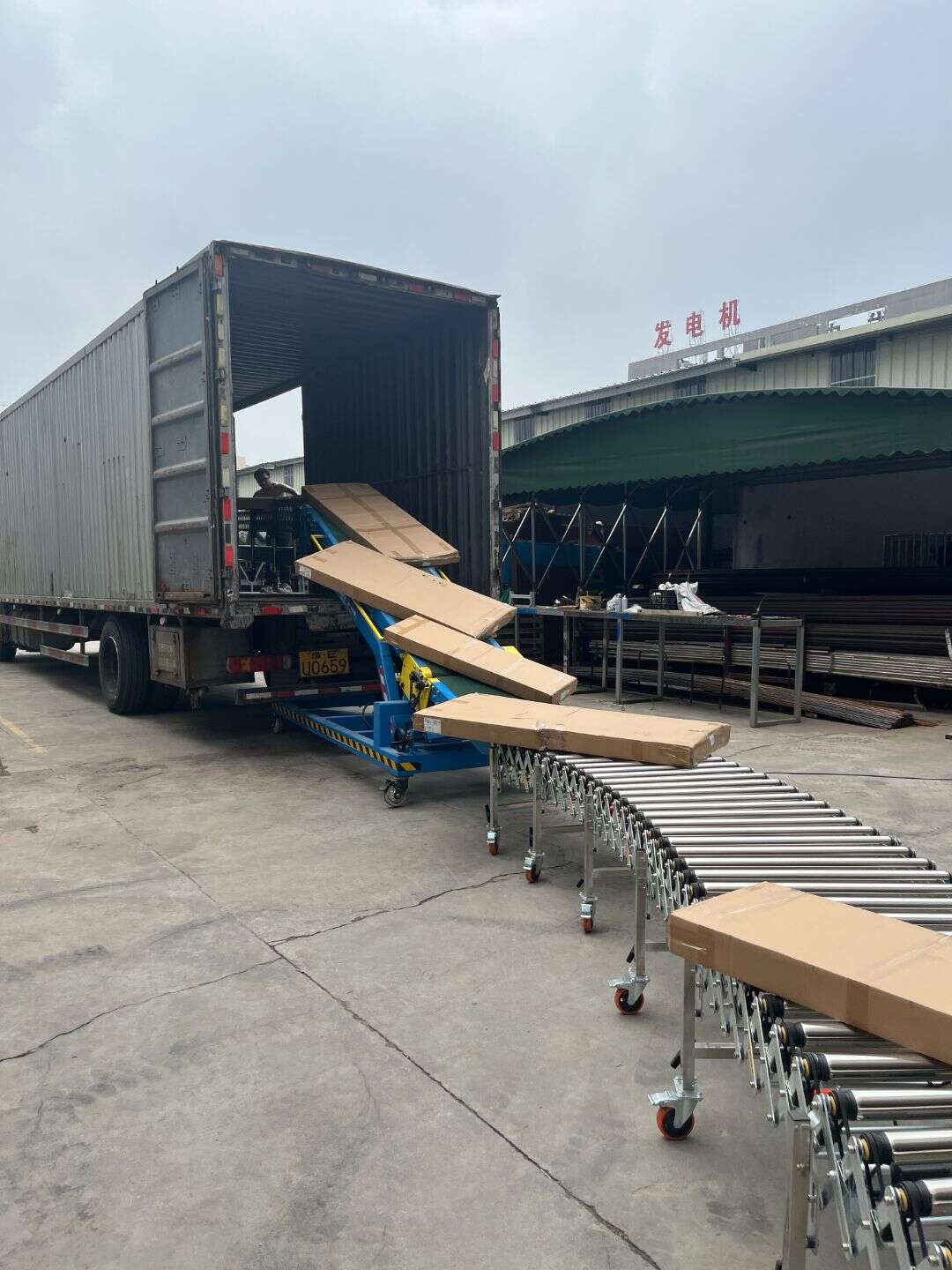
through the coordinated operation of the rubber-covered roller conveyor and the Medium Hydraulic Conveyor, this logistics warehouse successfully shifted the loading process from labor-intensive to equipment-assisted, consolidating its efficiency advantage in the highly competitive logistics industry.