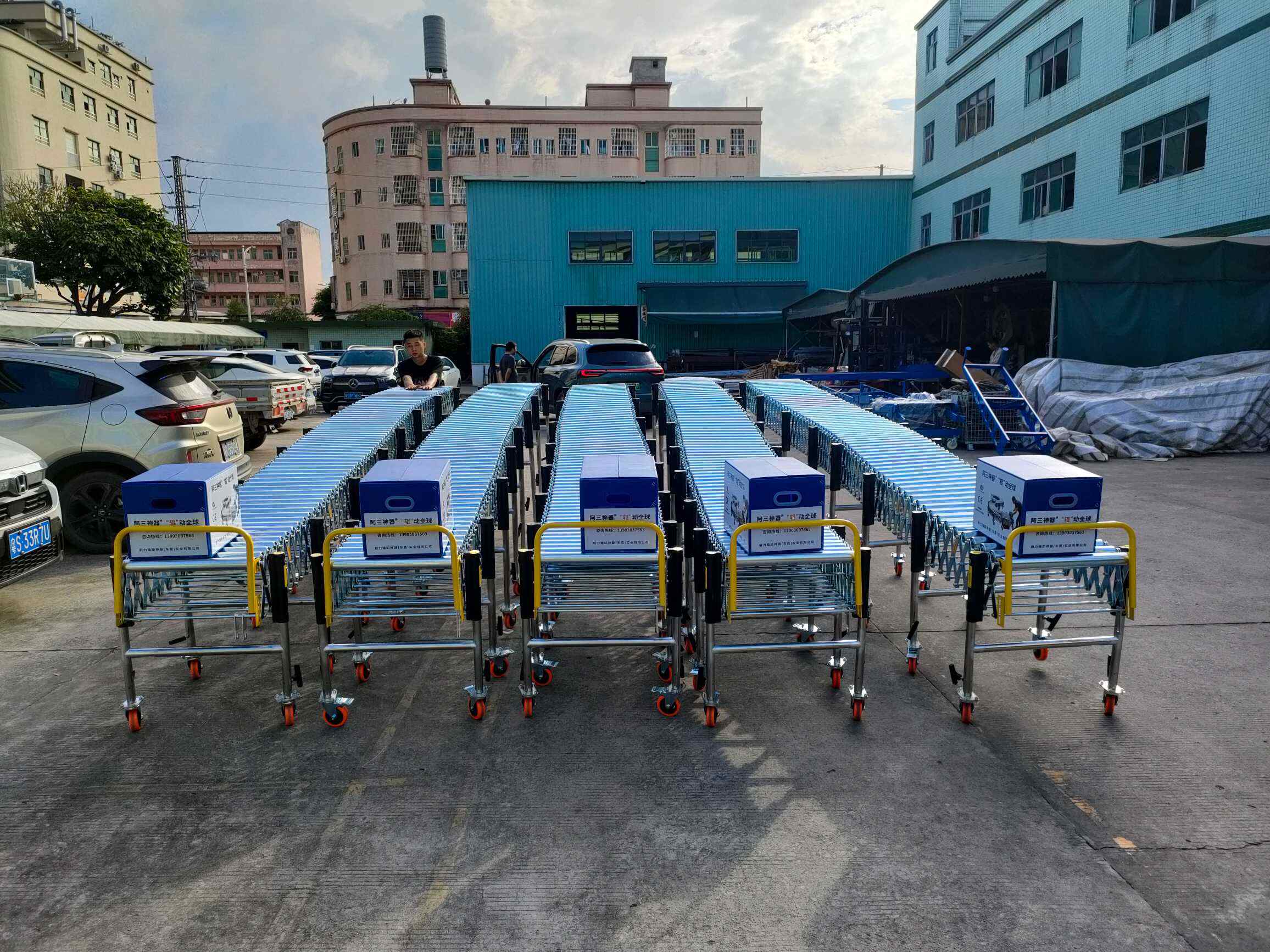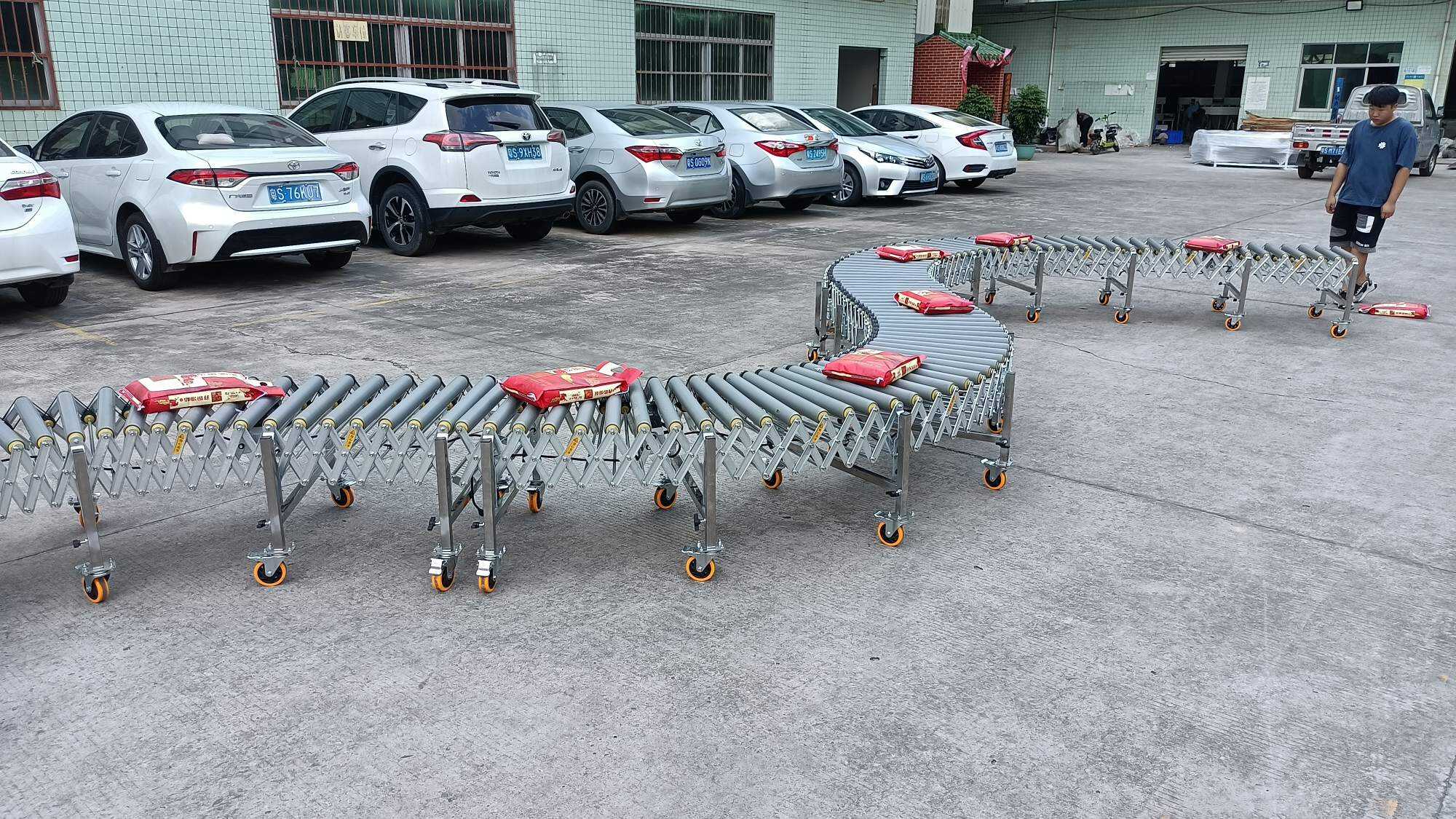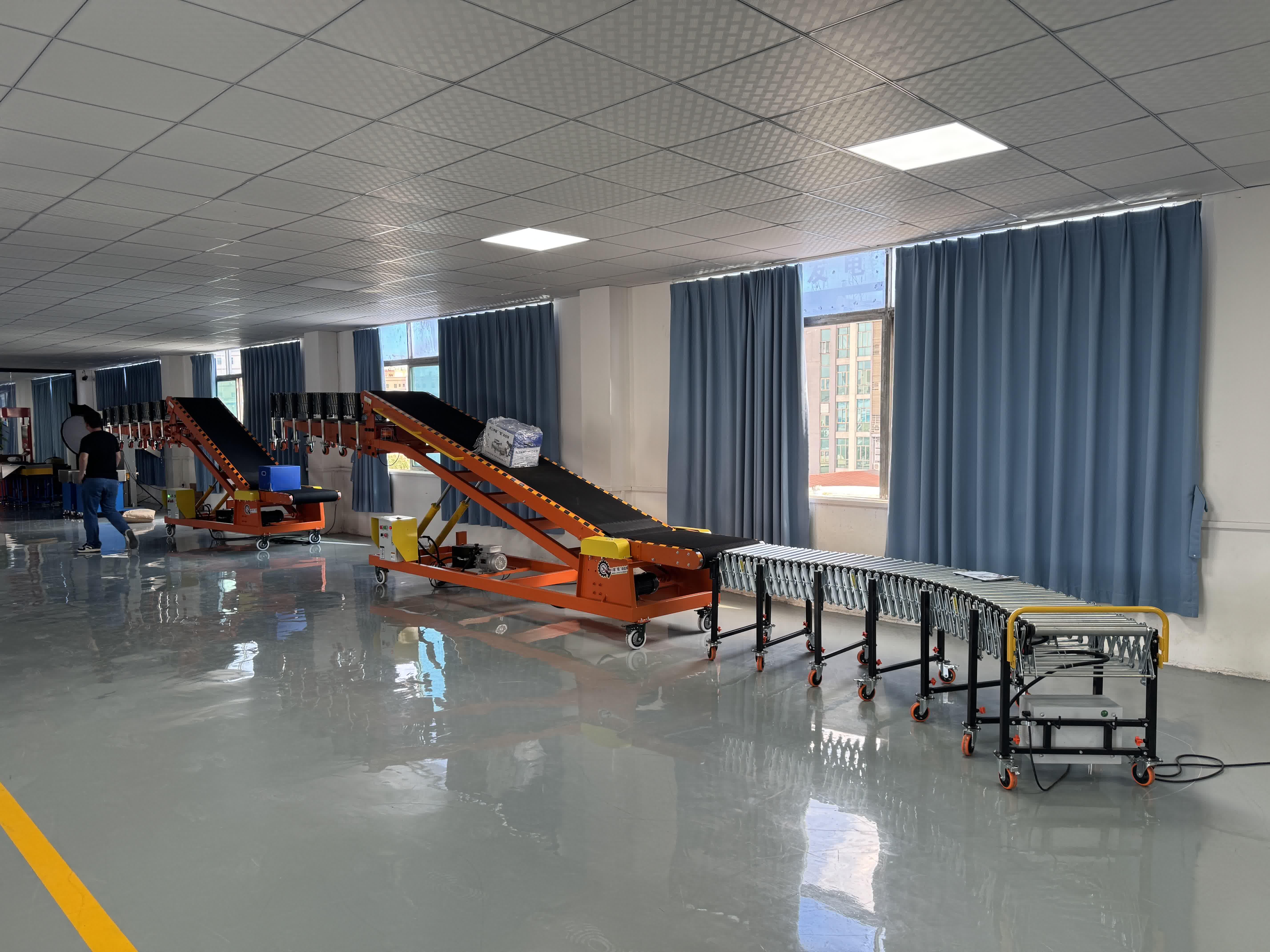
For large home appliance manufacturers, loading operations in the finished-goods warehouse are often a major challenge in logistics. Boxed home appliances with large size and heavy weight are not only inefficient to move by pure manual labor, but also place a high physical burden on workers and present considerable safety risks. This case demonstrates an efficient and practical solution: by combining a ground Multi-Wedge Belt Powered Roller Conveyor, a Medium Hydraulic Conveyor, and a roller conveyor inside the truck bed, a continuous conveying channel is built from inside the warehouse directly to the truck bed, easily solving the loading difficulty of large home appliances.
Customer Scenario and Core Challenges
The customer is a relatively large home appliance manufacturer, and its finished-goods warehouse stores a large quantity of boxed refrigerators, washing machines, air conditioners, and other home appliance products. Traditional loading methods require multiple workers to carry goods from the warehouse floor to the truck bed, a process that is time-consuming and labor-intensive and can easily cause goods to be bumped or damaged. The customer’s core requirements are: while ensuring cargo safety, greatly improve loading efficiency and reduce workers’ physical effort and labor costs.
Detailed Solution Configuration
Based on the customer’s warehouse layout and loading needs, we designed a three-stage linked conveying solution.
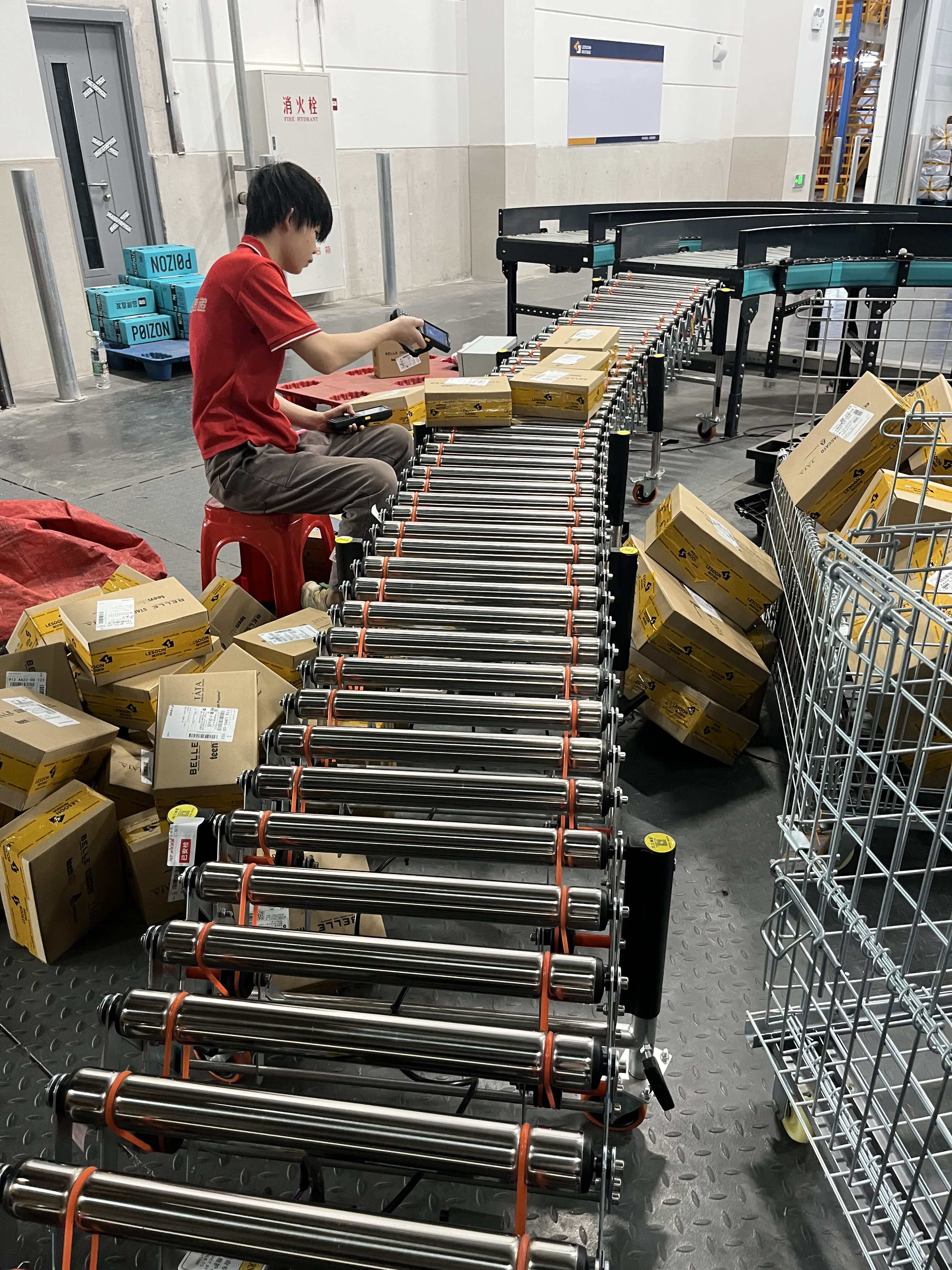
First stage: Ground Multi-Wedge Belt Powered Roller Conveyor
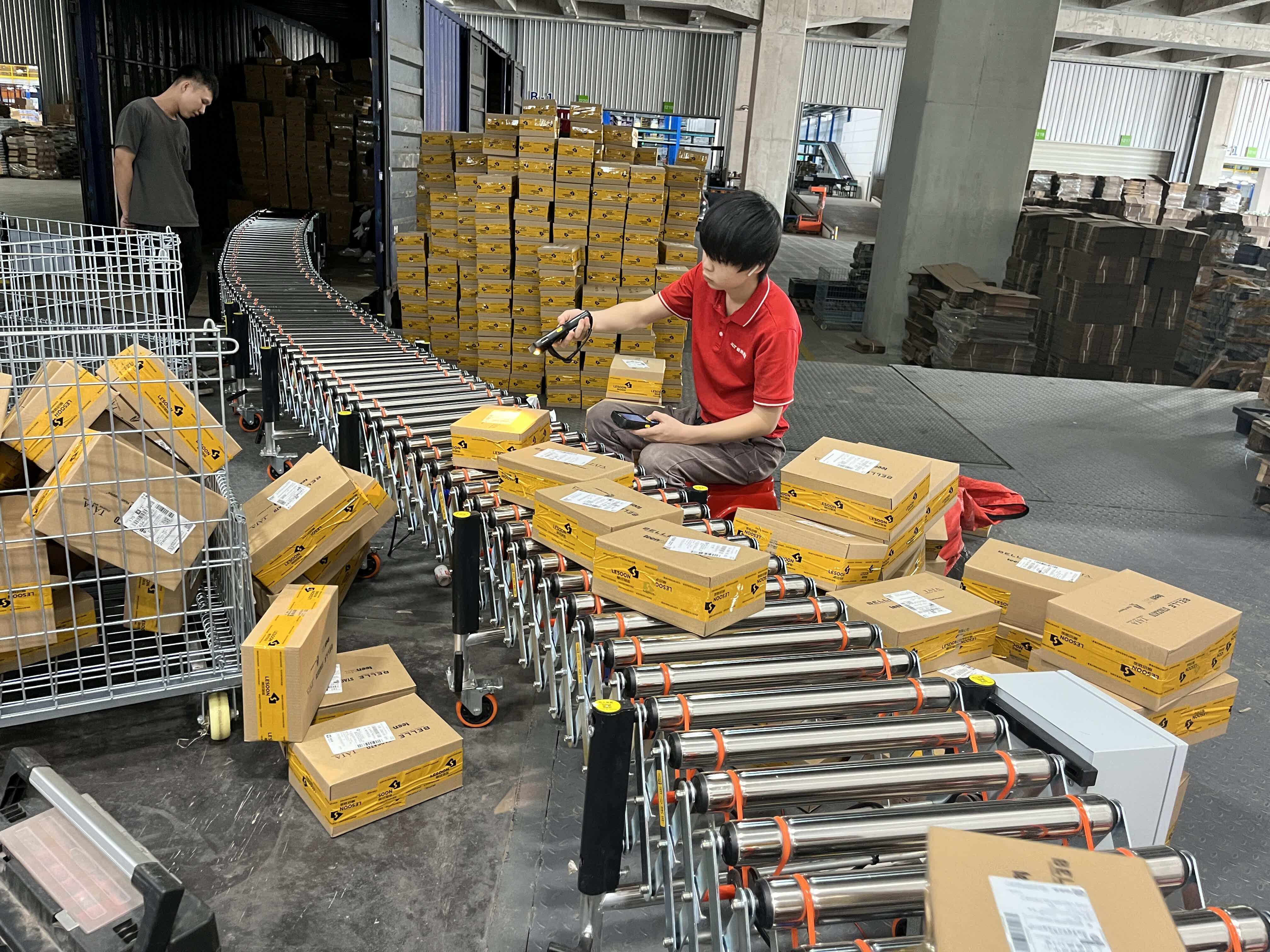
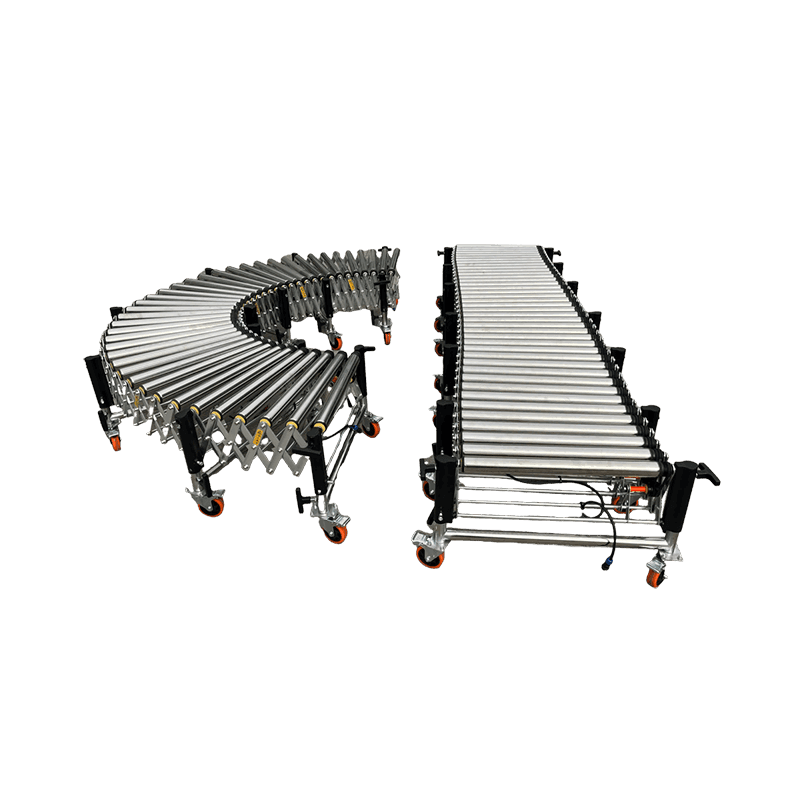
At the warehouse shipping exit on the ground, we installed a section of Multi-Wedge Belt Powered Roller Conveyor with a total length of about 6 meters. This conveyor is responsible for receiving boxed home appliances flowing out from inside the warehouse and smoothly conveying them to the inlet end of the conveyor ramp. The multi-wedge belt drive runs smoothly, with low noise, making it very suitable for transporting well-packaged home appliance cartons.
Second stage: Medium Hydraulic Conveyor
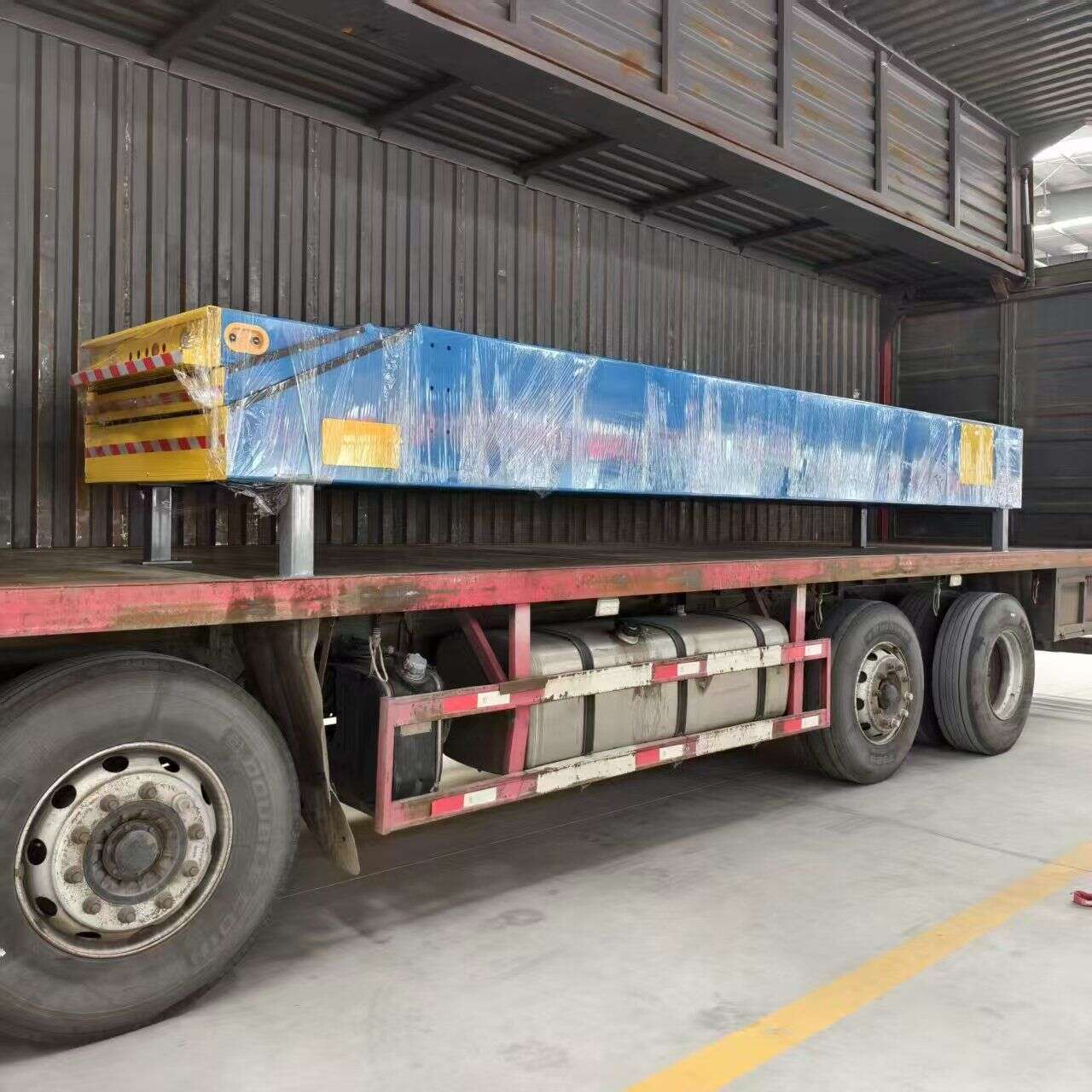
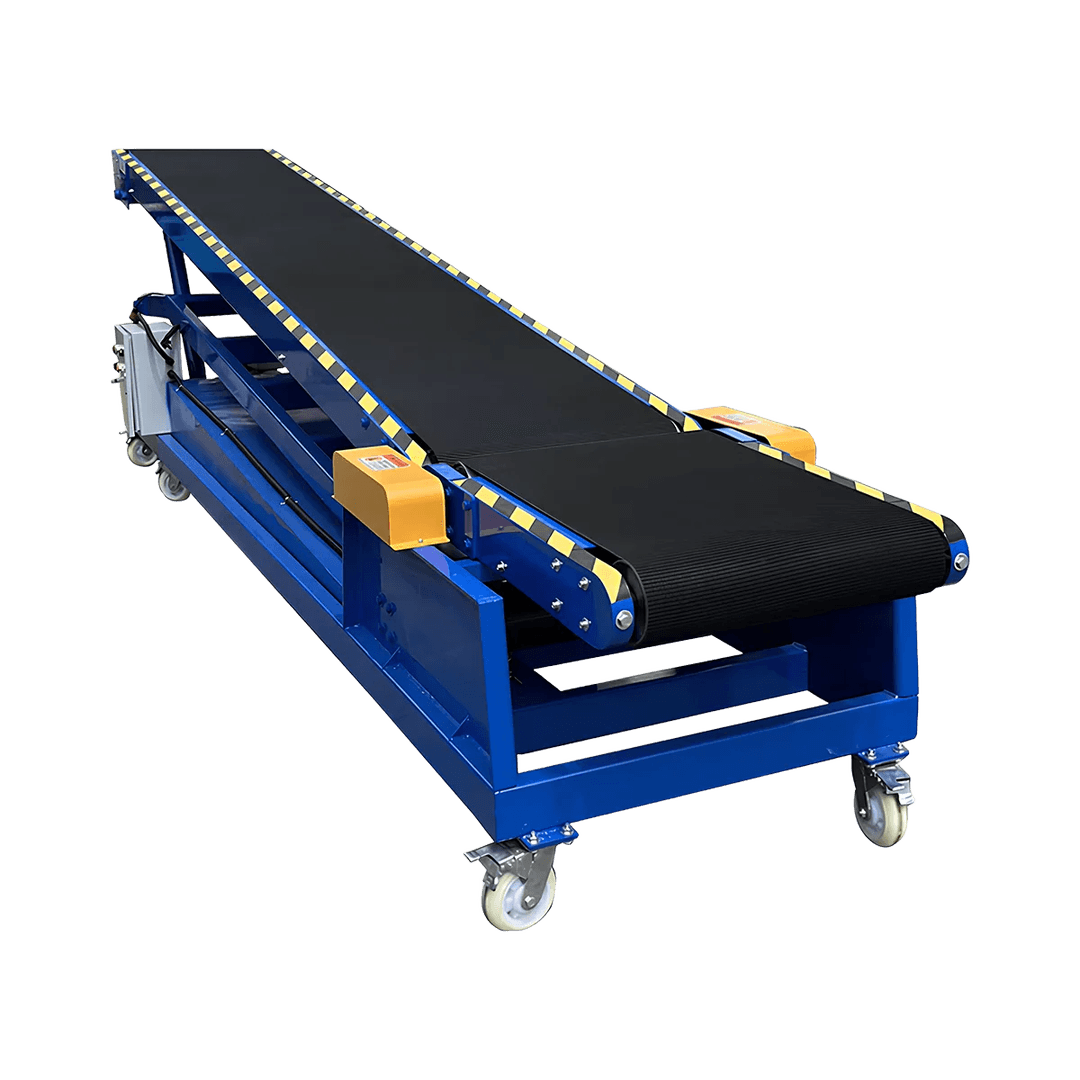
The key equipment connecting the ground conveyor and the truck bed is a Medium Hydraulic Conveyor. Its function is to raise goods from ground level to a position flush with the floor of the truck bed. This conveyor ramp uses a hydraulic lifting system and can flexibly adjust the incline angle according to the cargo bed height of different vehicle types, achieving a smooth transition. Its sturdy structure and reliable drive system ensure stability for heavy home appliances during the ramp-up process.
Medium Hydraulic Conveyor
Medium Hydraulic Conveyor is specially designed for sites without loading and unloading platforms and is suitable for trucks under 40 ft. The hydrauli...
 Metal Drum
 Plastic Drum
 Roll
Roll
 Carton
 Bagged
Third stage: Roller conveyor inside the truck bed
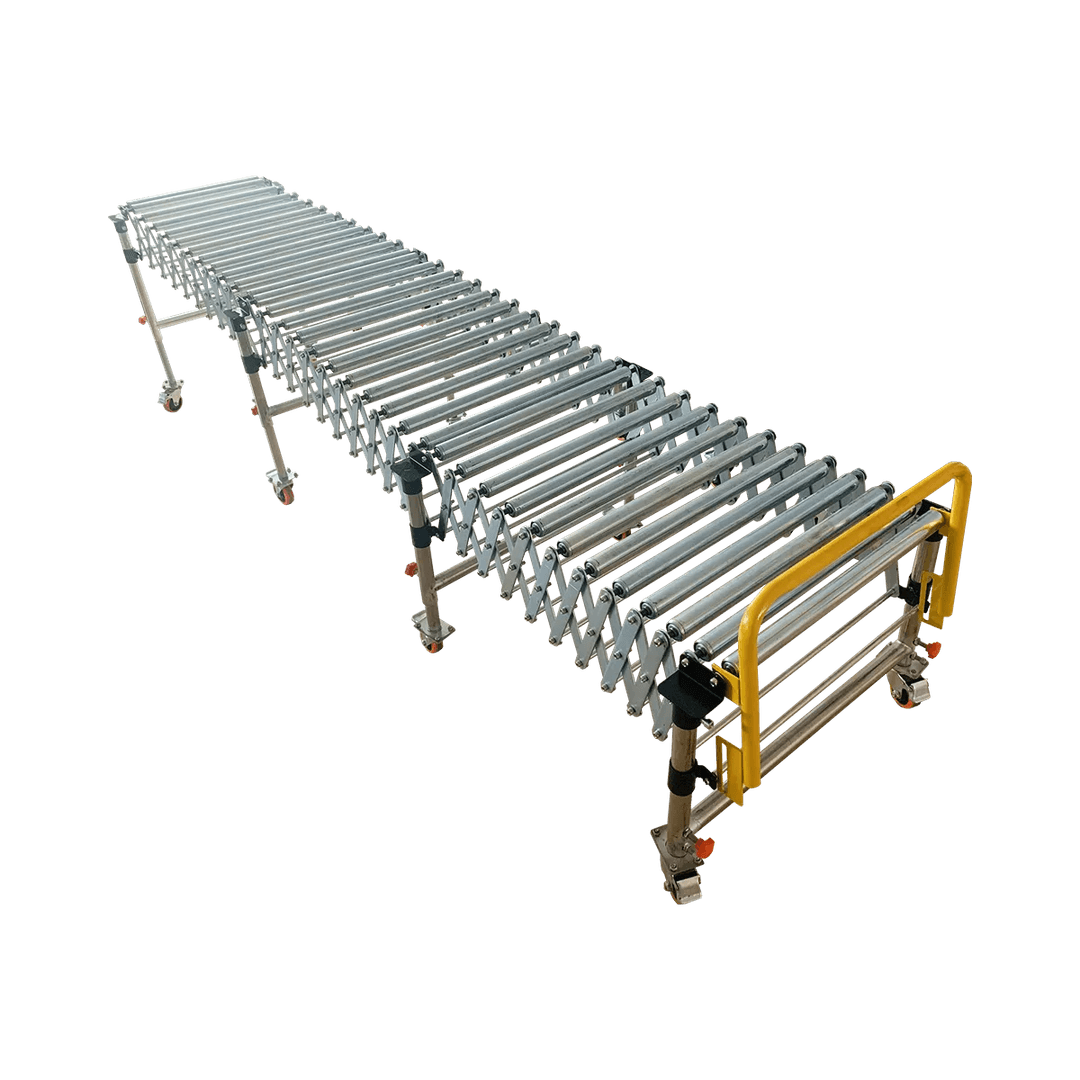
To deliver goods directly to the deepest part of the truck bed and avoid secondary handling inside the truck, we laid a roller conveyor about 10 meters long inside the truck bed (usually a non-powered or light-duty powered roller section). After the conveyor ramp delivers the goods to the truck opening, the worker only needs to give a gentle push, and the goods can easily slide into the designated position in the truck bed with the help of this conveyor, greatly saving handling distance and physical effort inside the truck.
Gravity Roller Conveyor Series
Gravity Roller Conveyor is specifically designed to withstand impact and is an ideal choice for the front end of loading and unloading systems. Compar...
Carton
Implementation Results and Advantages
After this combined solution was implemented, it brought the customer immediate and tangible improvements in efficiency.
Significantly Reduced Labor Intensity
Loading operations have shifted from heavy pure manual labor to auxiliary work centered on equipment operation. Workers are mainly responsible for guiding and placing goods at both ends, without having to perform high-intensity lifting or long-distance carrying, and the working environment has been fundamentally improved.
Greatly Improved Loading Efficiency
The conveyor line enables continuous operation, with goods moving almost without interruption from the warehouse to the truck bed. Compared with traditional manual handling, loading speed has increased by more than 100%, shortening vehicle waiting time in the factory area and accelerating logistics turnover.
Effectively Reduced Overall Costs
Although there is an initial equipment investment, in the long run the saved labor costs, improved loading efficiency, and reduced risk of cargo damage have significantly lowered overall operating costs. The equipment solution also offers good flexibility and can adapt to trucks of different sizes.
Reference for Similar Scenarios
This model of "ground-level conveying + ramp transition + in-truck extension" is not only suitable for the home appliance industry, but also highly valuable as a reference for other industries that handle heavy boxed or bagged goods, such as food, daily chemicals, and building materials. For example, in Logistics Warehouse Loading Conveying Solution and Bagged Goods Ramp Loading Solution, a similar combined approach was also used to address different cargo characteristics.
Conclusion
By properly configuring a Multi-Wedge Belt Powered Roller Conveyor and a medium-sized ramp conveyor, the home appliance manufacturer successfully integrated automated and semi-automated concepts into the final stage of finished-goods outbound delivery. This solution proves that, for specific loading and unloading scenarios, using modular, combined conveying equipment is an effective way to reduce costs, improve efficiency, and improve workers' operating conditions.