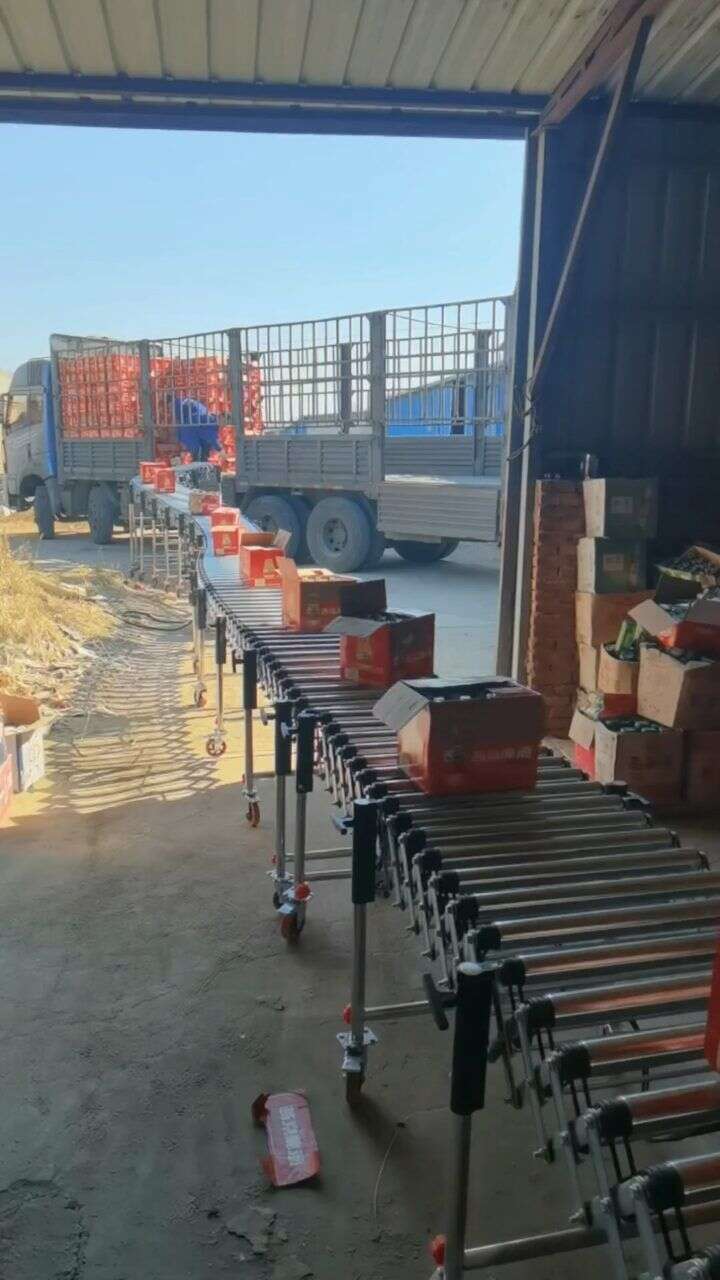
What warehouse problems can an incorrect width selection cause?
In warehouse conveyor loading, unloading, and sorting scenarios, width may seem like a minor parameter, but choosing the wrong one often magnifies into on-site problems: package jamming, product damage caused by scraping, reduced space utilization due to equipment taking up the aisle, and even paying for unused "width capacity" and floor space cost.
Loading and unloading efficiency is directly related to width:
- Too narrow: even a slight package shift makes it more likely to hit the side, get stuck, or fall at turns and transition sections.
- Too wide: occupies more warehouse area without adding effective operating value, and equipment plus supporting costs also rise accordingly.
Below, we use the standard warehouse widths 500/600/800mm as the main line to provide a practical selection method that can be implemented directly.
Core rule for selecting warehouse conveyor width: 50–100 mm wider than the largest package
When choosing the width of a warehouse conveyor, start with one general rule to quickly determine the right class:The effective width of the conveyor should be 50–100 mm wider than the widest regular package.
This 50–100 mm margin is mainly used for:
- Allowing space for slight package shifting during conveying
- Reducing risks such as jamming and scraping against side rails
- Make goods flow more smoothly at transitions between sections, turns, or changes in elevation
Ready-to-use examples:
- Widest standard package 450mm: Choose 500mm or 600mm
- Widest standard package 550mm: Choose 600mm
- Widest standard package 700mm: Choose 800mm
This clearance rule applies to different types of conveyor equipment (such as gravity roller conveyors, gravity skate wheel conveyors, powered roller conveyors, etc.) and can serve as a unified starting point for selection.
How to match goods and scenarios with the 500/600/800 mm three width options
Once the "maximum standard package width" is determined, you can quickly match it against the three standard widths. In general, it is recommended to consider at the same time whether the goods are stable in size, whether they are mixed, whether there are curved sections, and whether the site is space-constrained.
500 mm: Better suited for small items and compact layouts
Better suited for the following situations:
- Small parcels, document boxes, etc. (Package width ≤ 450 mm)
- Goods are relatively consistent in size with little deviation
- The site is compact, and you want a tighter layout and a more forgiving turning radius
600 mm: The most versatile balanced choice
Better suited for the following situations:
- Mainly standard logistics cartons (Package width ≤ 550 mm)
- Handling small and medium items at the same time, with many categories but not yet "large-item oriented"
- Need to balance footprint and adaptability
800 mm: For large items and higher stability requirements
Better suited for the following situations:
- Large items / oversized boxes (Package width ≤ 700 mm)
- Significant fluctuations in package size, high mix-and-match ratio
- Greater emphasis on stability in turns, transitions, and high-speed conditions
Quick reference table by package width
| Package width (maximum standard) | Recommended effective conveyor width | Notes |
|---|---|---|
| ≤400mm | 500mm | Better suited for small packages with more consistent dimensions |
| 401–500mm | 600mm | A common choice that balances adaptability and space |
| 501–700mm | 800mm | Better suited for large items or greater size variation |
| Mixed loading | 600mm or 800mm | Based on the "widest standard component" and then judge based on stability |
The comparison above assumes a relatively regular default packaging form; if the shape is irregular, the widest point of the cargo should be used as the basis for judgment.
If you need to refer to the application of a Powered Roller Conveyor solution in warehouse loading/unloading and turning, you can review the following equipment pages to understand its structure and scope of adaptation:
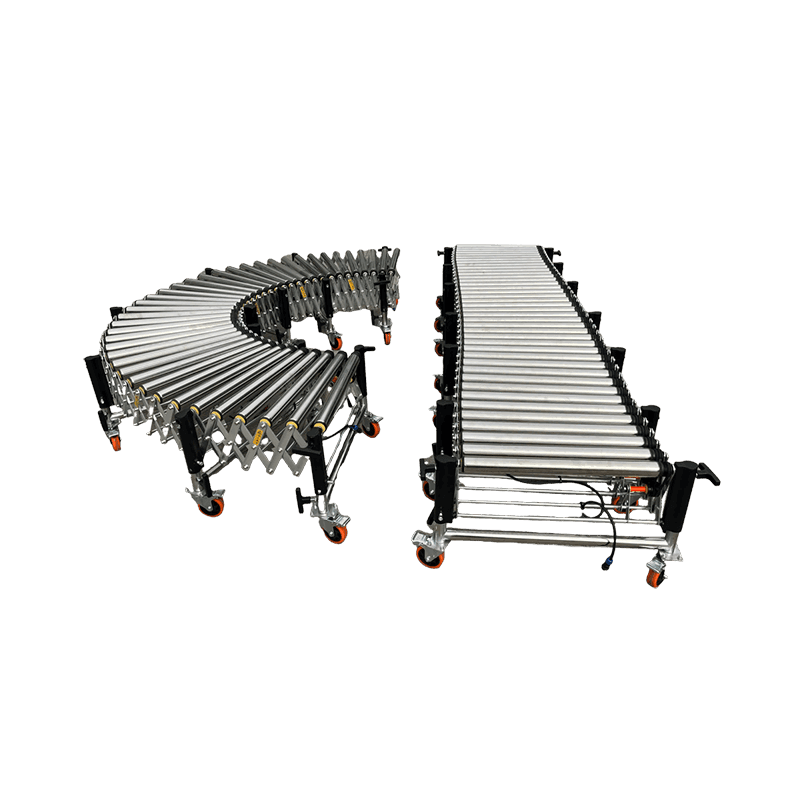
Multi-Wedge Belt Powered Roller Conveyor
The multi-wedge belt Powered Roller Conveyor uses a multi-wedge belt drive design to achieve smooth and efficient cargo conveying. Motor spacing range…

Plastic Drum

Metal Drum

Carton

Roll
Practical reminders beyond width: stability, cost, and system integration
Choosing a width is not just about whether it will fit; you also need to consider system stability, cost-effectiveness, and how it connects with other sections.
Stability: often overlooked, but most likely to determine whether it runs smoothly
A wider support surface usually means better stability. Under the following operating conditions, it is recommended to prioritize a more conservative width while still meeting the size requirements:
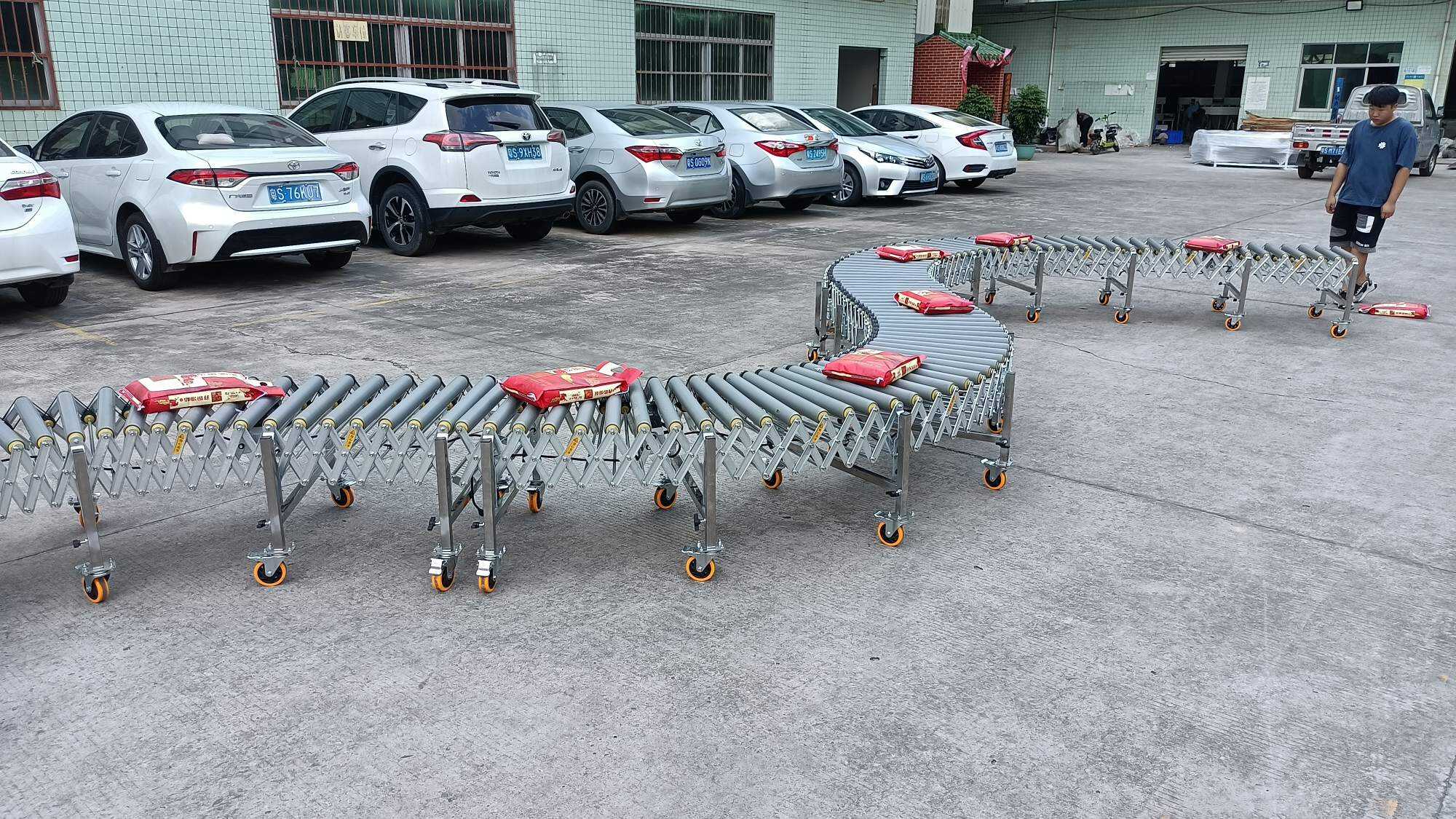
- Turning section: Lateral sway is more obvious when turning, so a more stable support is needed
- Cargo with a high center of gravity or off-center load: A wider width helps reduce the risk of tipping
- High-speed operation: The faster the speed, the more likely small deviations are to be amplified
- Irregular shape: More clearance and support are needed
- Mixed-load operation: Changes in size increase sorting and operating uncertainty
Cost and versatility: wider is more expensive, but may save effort
Generally speaking, the wider the conveyor, the higher the initial cost and floor space required. However, if insufficient width causes frequent jams, line stoppages, or cargo damage, the hidden cost may be even greater. In actual decision-making, it is recommended to take the possibility of future packaging size changes into account: if the business is growing and the SKUs are changing, a certain amount of width redundancy is usually a safer choice.
Key width-selection considerations for different conveyor types
- Gravity Skate Wheel Conveyor: Skate wheels use point contact, so stability is more sensitive; if the box bottom is uneven or the shape is irregular, a wider option is usually recommended.
- Powered Roller Conveyor: Power output is more continuous and can adapt better to narrower widths; however, future size changes and the zoning and transitions that may be required in sorting scenarios should still be considered.
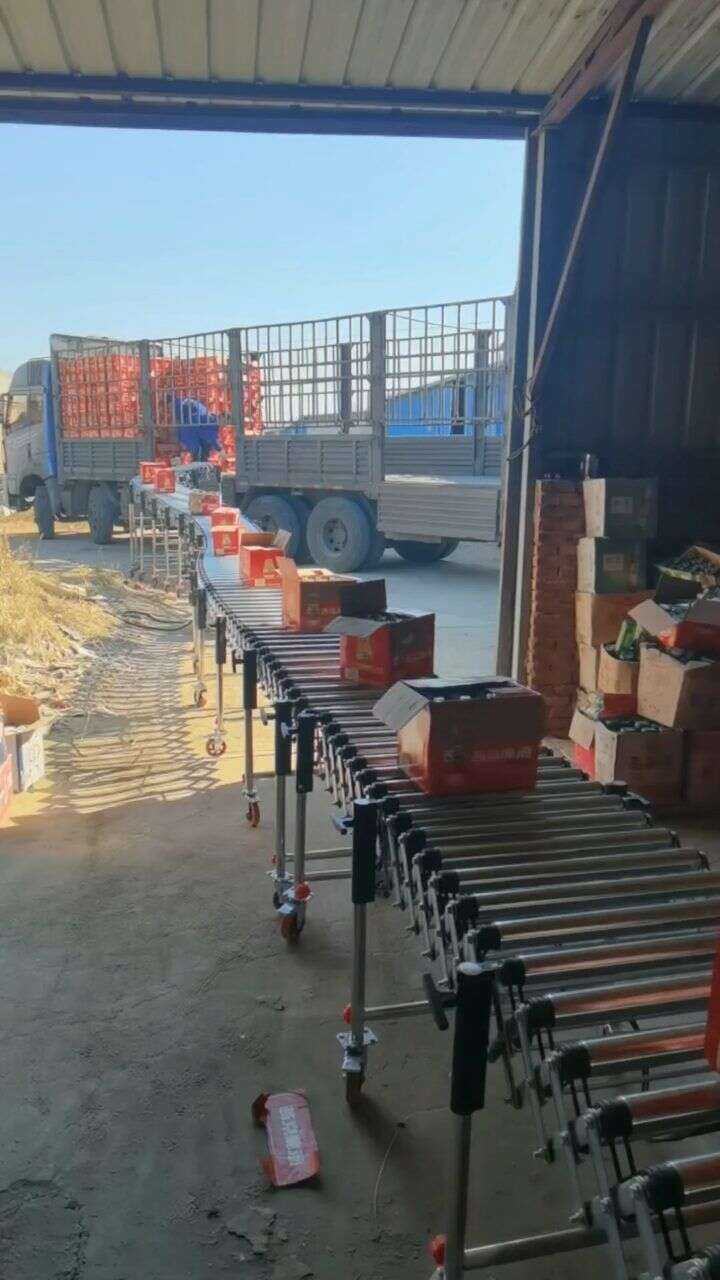
- Telescopic Conveyor: Width affects the footprint and passability after extension/retraction; selection should be based on a comprehensive assessment of trailer/container dimensions and on-site aisle conditions.
In addition, the overall layout of the conveyor line should also take width and length matching into account; refer to Planning warehouse line length with modular conveyors.
FAQ: Common questions about system integration and maintenance
- Can different widths be mixed on the same line? Yes, switching can be achieved through gradual transition sections; however, the more transition points there are, the more attention must be paid to controlling potential jamming points.
- What should I do if I occasionally encounter extra-wide items? Manual handling can be used; if extra-wide items become the norm, it is more suitable to set up a separate wider conveyor section rather than widening the entire line.
- Does width directly determine throughput? Width itself does not directly determine the number of items per hour, but the right width can reduce jamming and slow movement, thereby improving "effective capacity".
- Does width have a big impact on energy consumption? A wider width may bring a slight increase in energy consumption, but the effect is usually limited; rather than saving on this difference, it is better to first avoid the losses caused by being too narrow and causing jams.
- Would it be better to use the same width for the entire line? A uniform width is easier to manage and maintain; however, it can also be configured differently by function, for example using a wider width for curved sections or mixed-loading sections.
If you want to further reduce the risk of packages falling or shifting in curved sections, see: