Why warehouse operations need temporary loading and unloading with Gravity Skate Wheel Conveyor
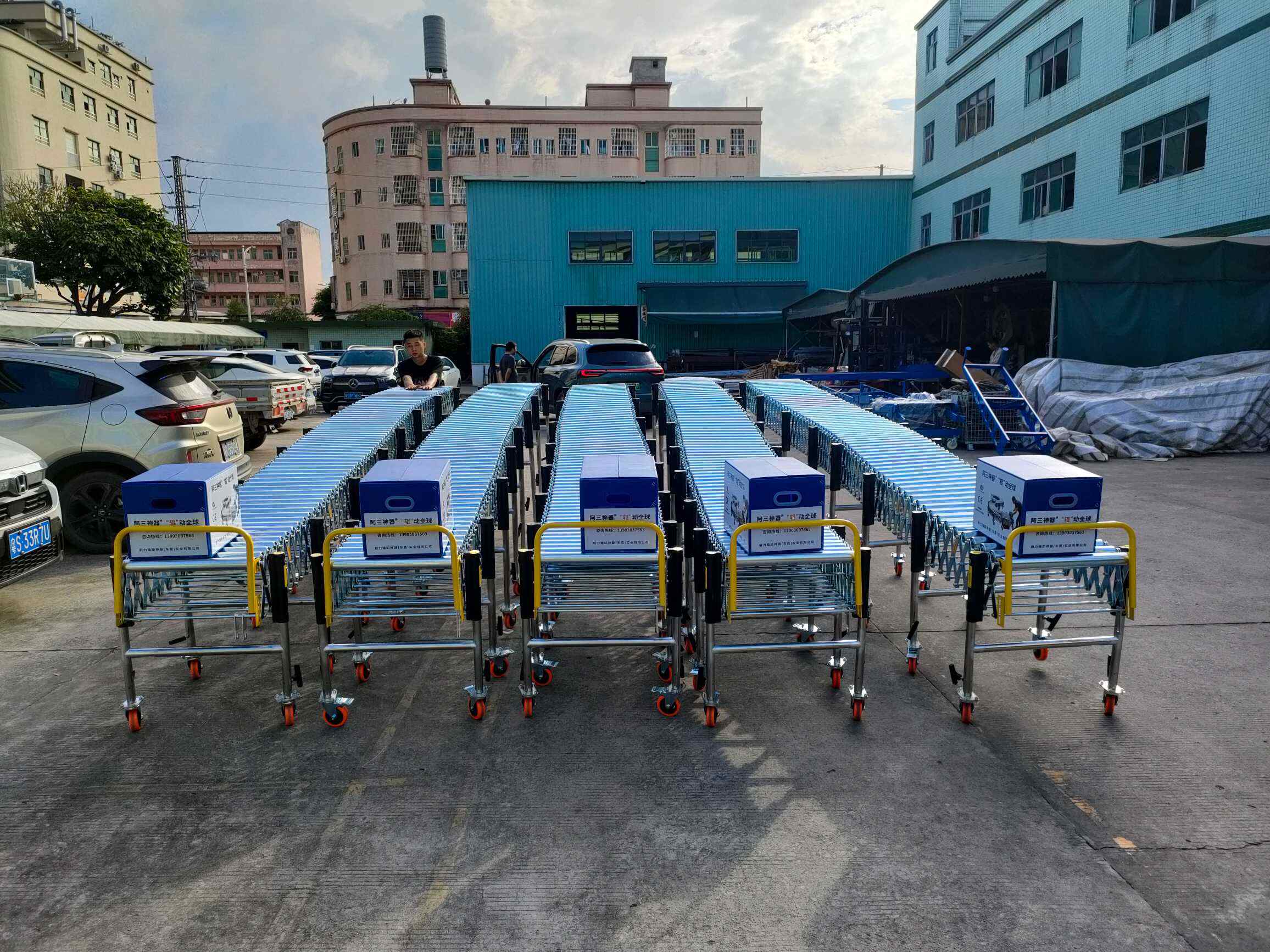
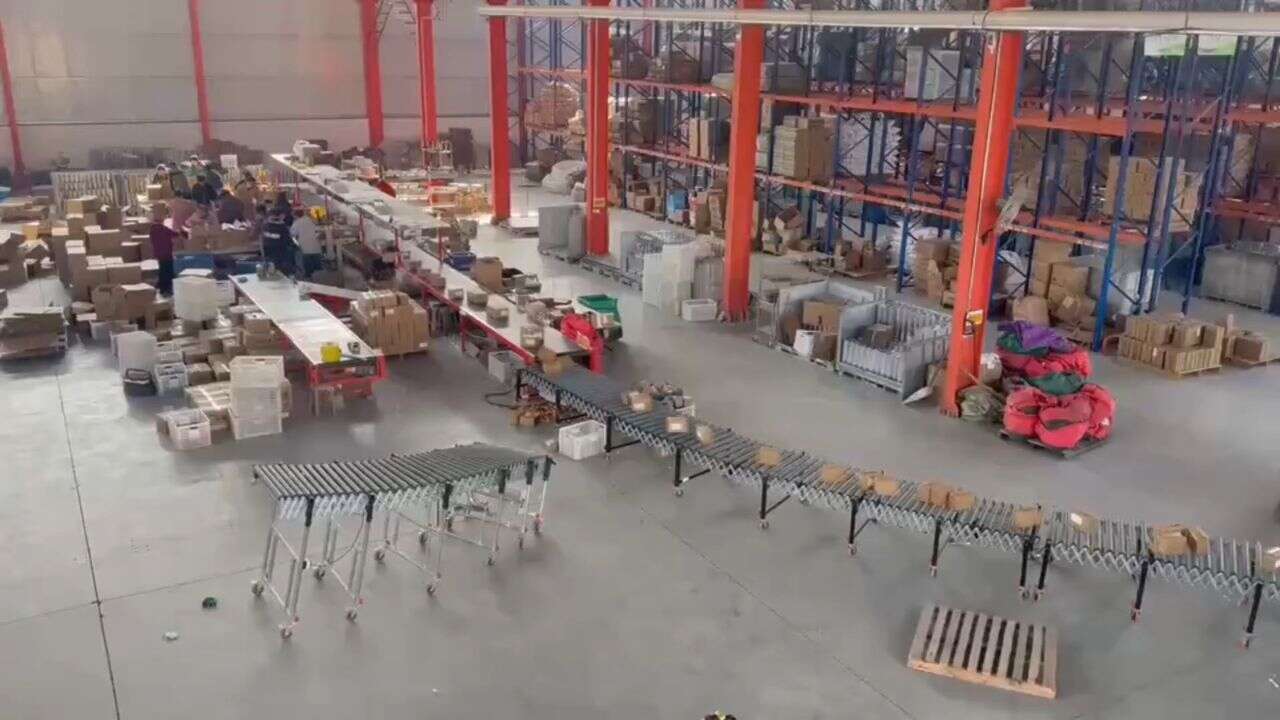
Gravity Skate Wheel Conveyor temporary loading and unloading is commonly used in warehouse operations that require "temporary setup, line changes at any time, and rapid deployment": loading and unloading positions are not fixed, aisles are narrow, and temporary packing/sorting stations are adjusted repeatedly. In this case, rather than building a fixed conveyor line, a more practical approach is to use a non-powered, movable, expandable gravity Gravity Skate Wheel Conveyor: transfer can be completed by gravity sliding or manual pushing, ready to use and easy to move, and when idle it can be retracted for storage to occupy less space.
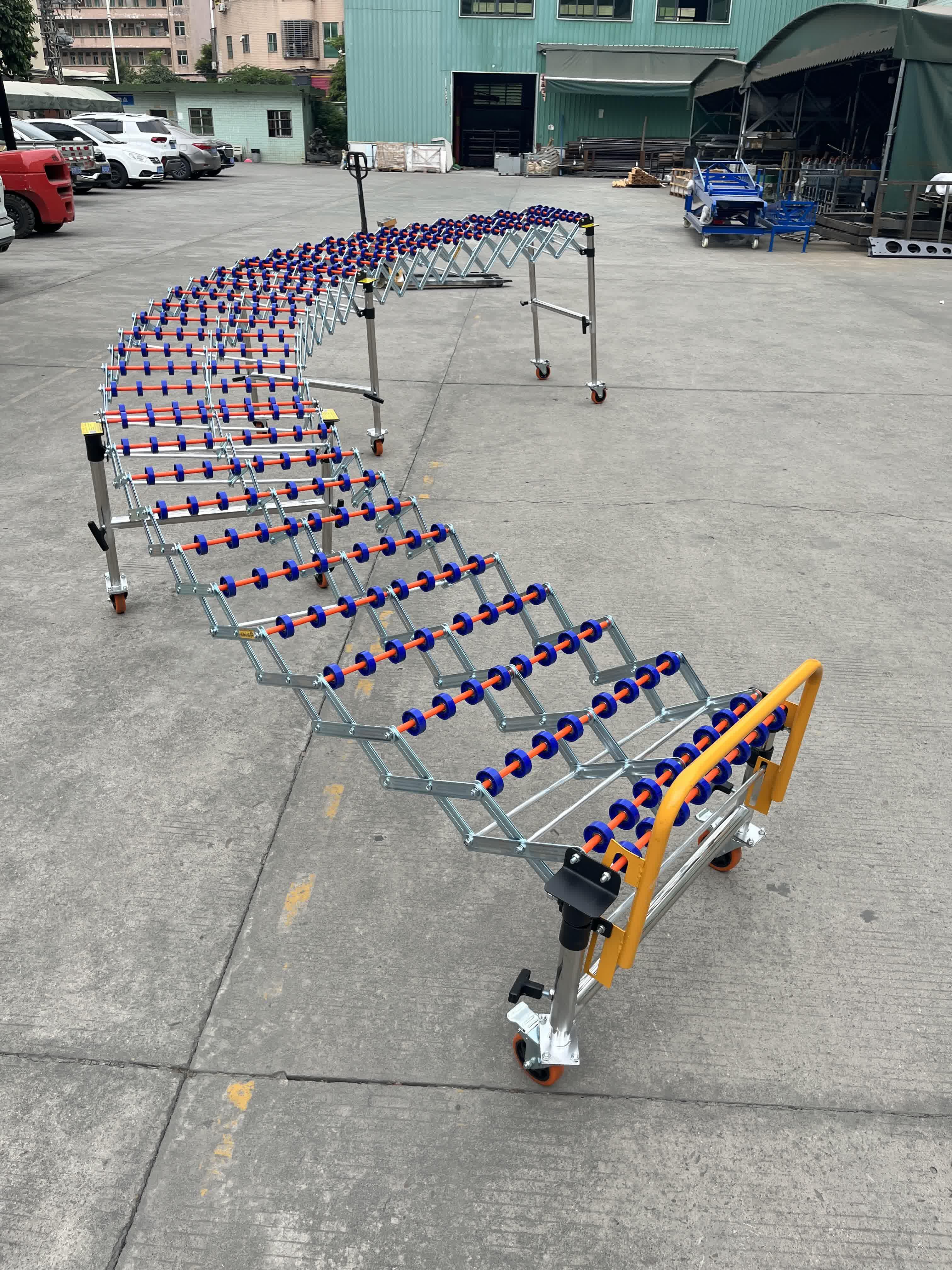
How Gravity Skate Wheel Conveyor temporary loading and unloading enables rapid deployment through "extension + relocation"
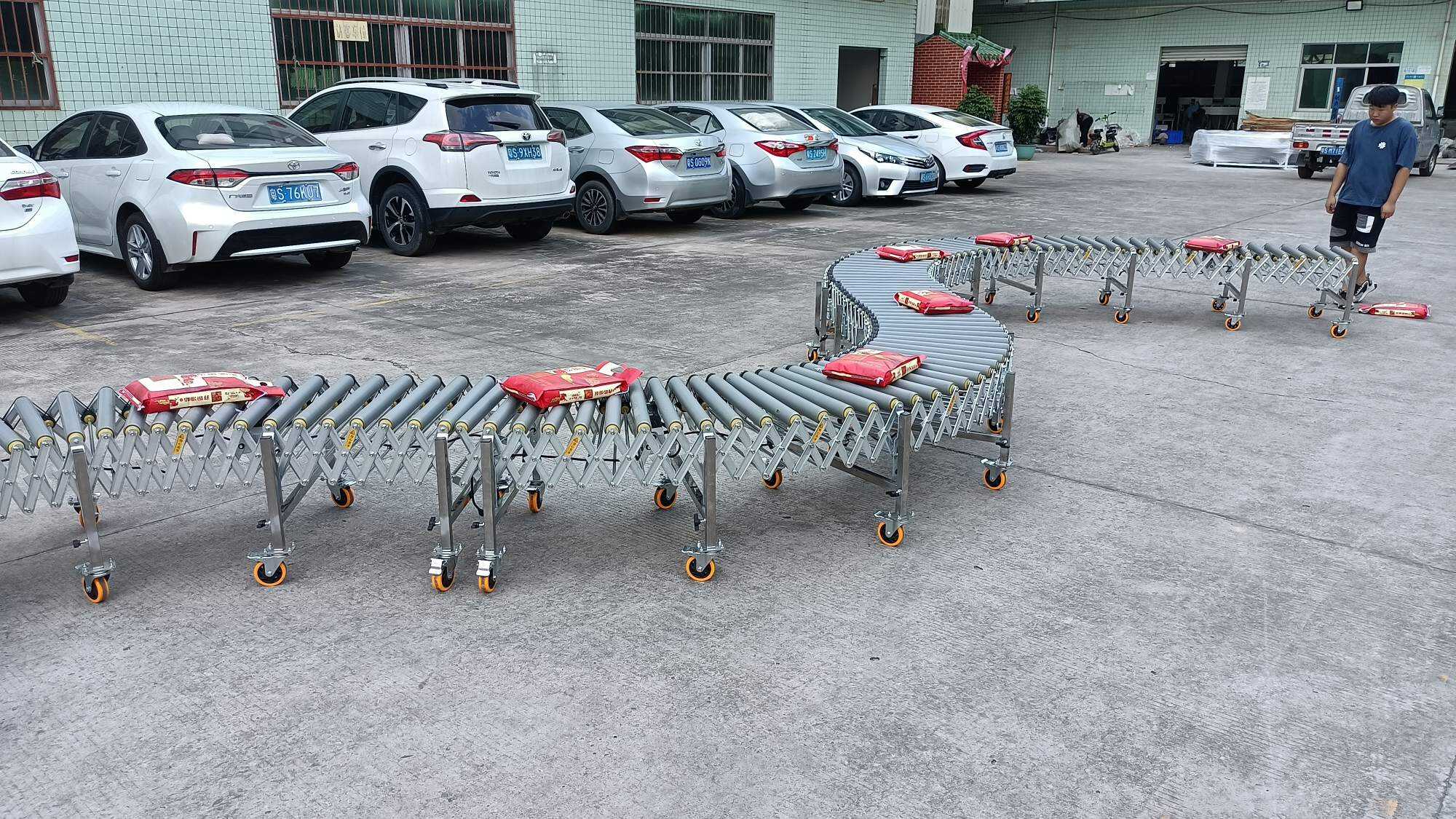
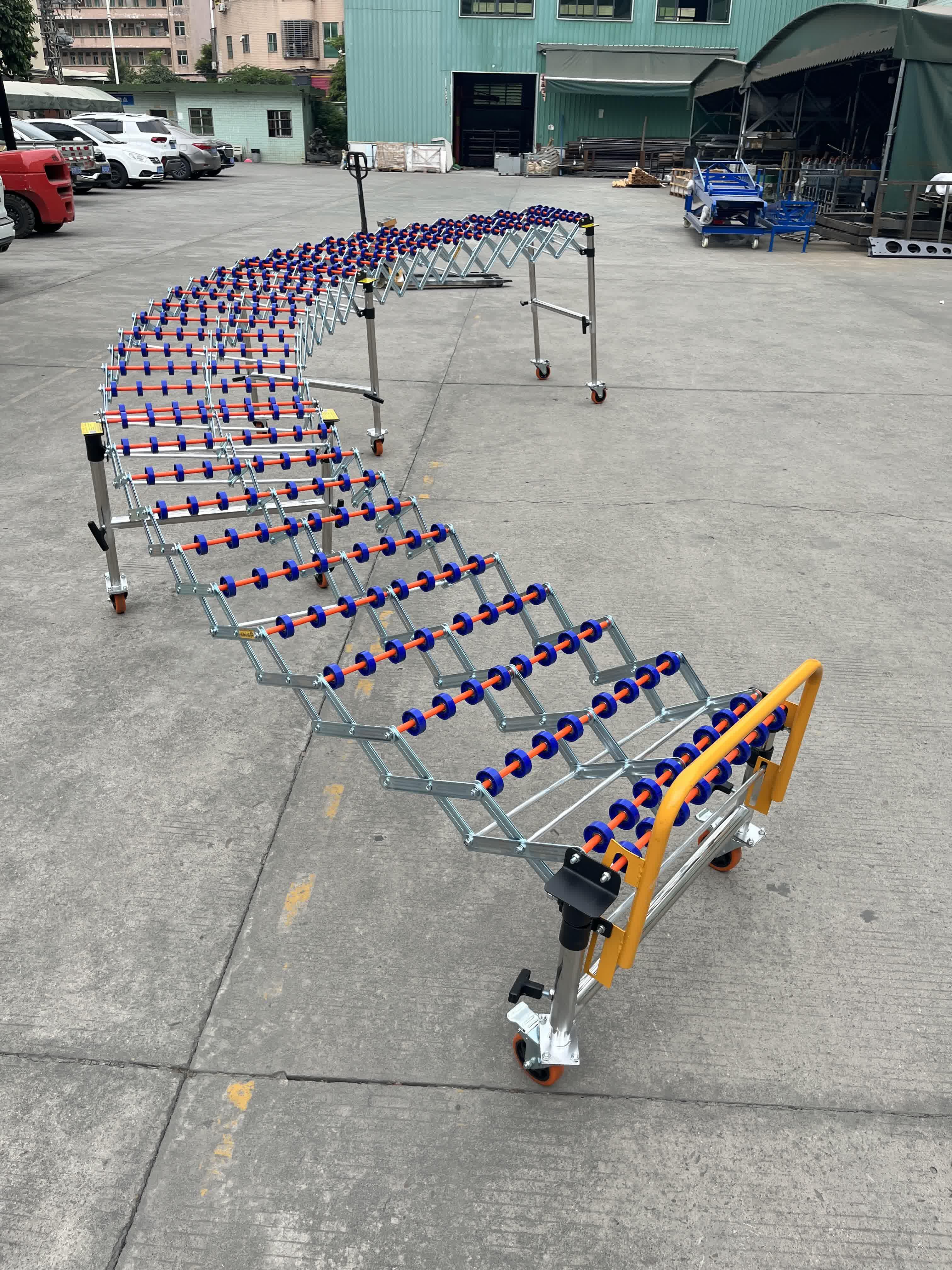
The core advantage of Gravity Skate Wheel Conveyor for temporary loading and unloading lies in the combination of "adjustable length + easy on-site relocation, " making it easy to quickly set up a temporary passage and then move it at any time as work points change.
- A 1: 5 telescopic ratio balances working coverage and storage footprint.: When retracted, a single section is about 420 mm; when extended, it reaches about 2100 mm. Extend it when extra length is needed, and retract it quickly when not in use, making it better suited to temporary warehouse conditions where it needs to be long when in use and short when not.
- Lightweight and portable, improving on-site dispatch efficiency: Compared with similar roller conveyors, the skate-wheel structure is overall lighter (the article cites about 30% less weight), making it easier for staff to lift, move, and reposition.
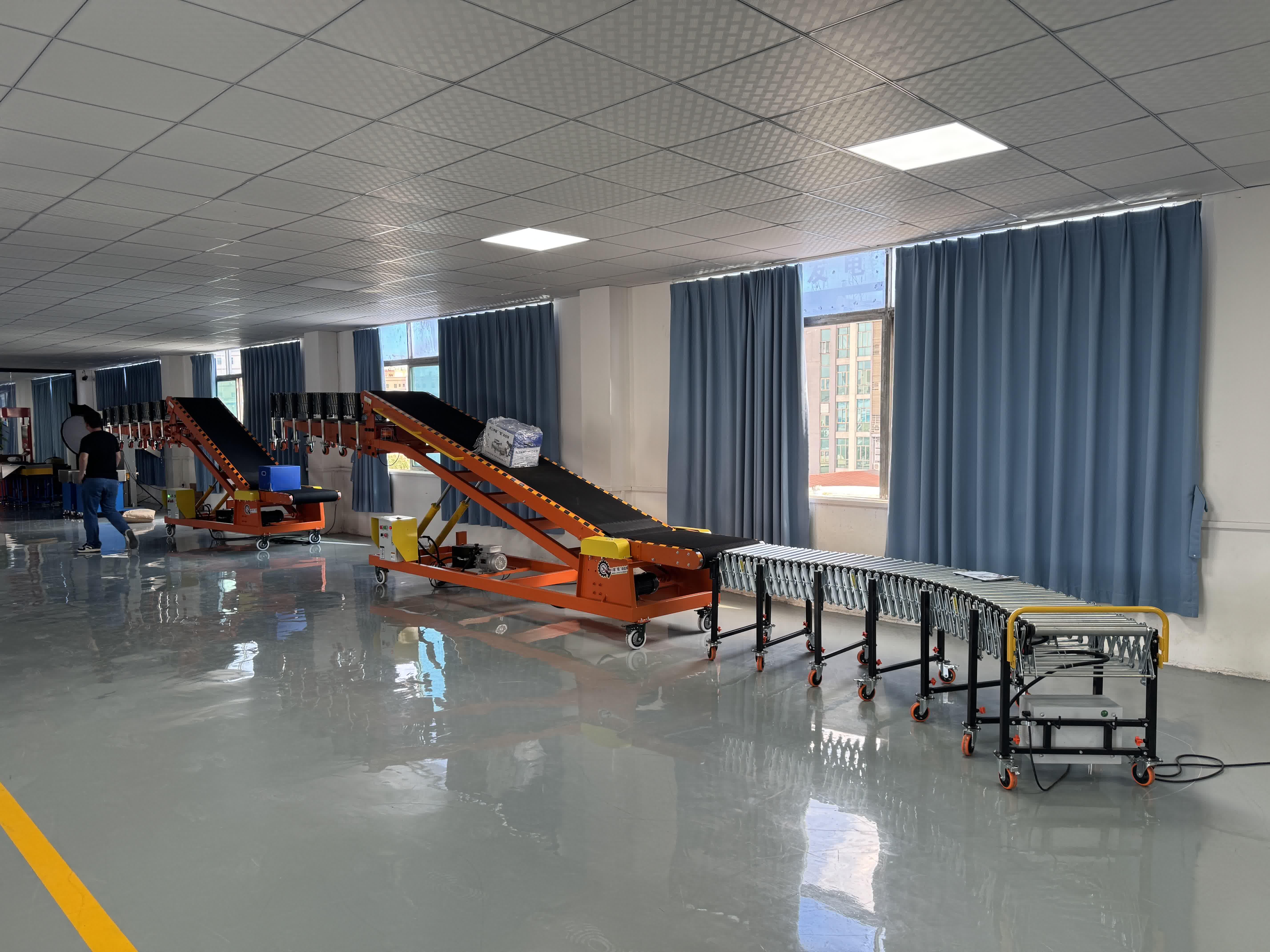
- Modular connections that can be joined together: Multiple sections can be linked with connectors to form a longer straight run; it can also be arranged into curved paths according to the on-site passage and connected with existing conveyor lines, reducing handling interruptions during temporary loading and unloading.
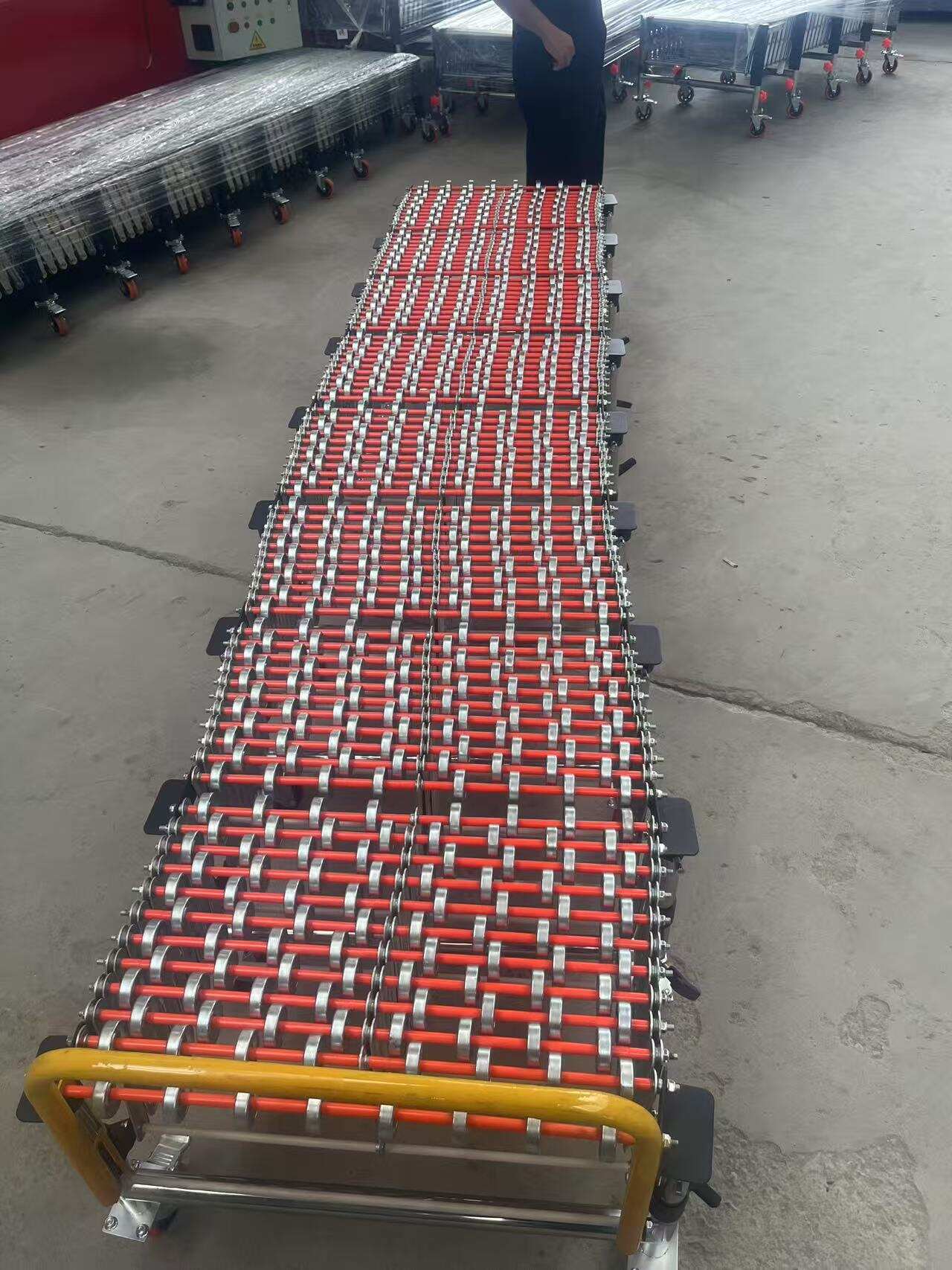
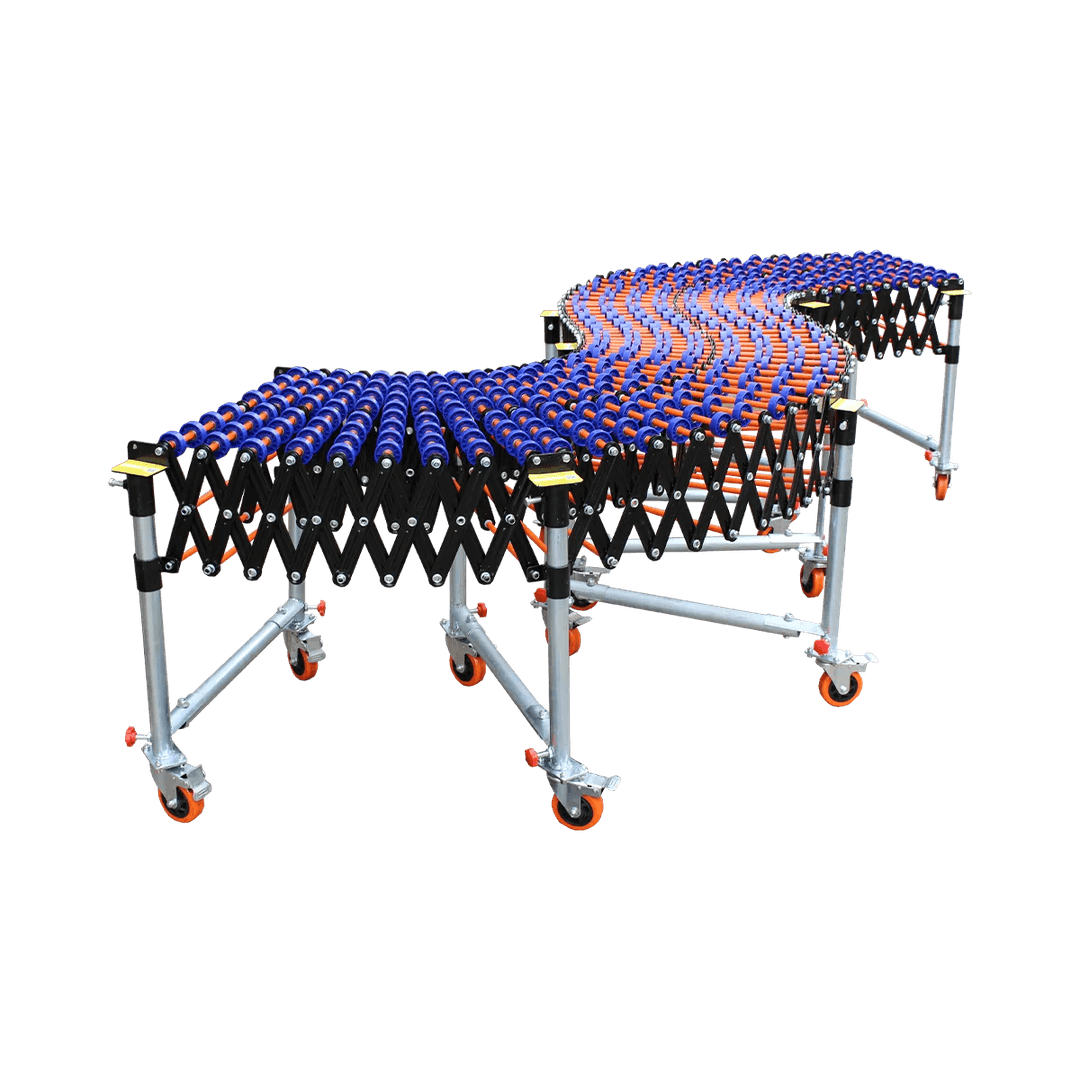
Gravity Skate Wheel Conveyor
Gravity Skate Wheel Conveyor is designed specifically for bottom-flat goods such as cartons, enabling fast and efficient unloading operations. The con…

Carton
Key differences from roller conveyors: contact method, suitable goods, and slope
Both Gravity Skate Wheel Conveyor and roller conveyors can handle carton transfer, but structural differences define their application boundaries. For temporary loading and unloading selection, it is recommended to quickly judge from three points: contact method, cargo bottom surface, and operating slope.
Contact method: point contact vs. line contact
- Gravity Skate Wheel Conveyor (point contact): The cargo forms point contact with multiple independent skate wheels, resulting in less friction, easier operation for light loads, and better suitability for gravity conveying scenarios that pursue "low resistance.".
- Roller conveyor (line contact): The bottom surface of the cargo forms more continuous support with the rollers, which usually provides better stability for heavier goods or goods with softer bottoms.
Suitable cargo: first check whether the bottom is flat and rigid
Gravity Skate Wheel Conveyor is more suitable for:
- Flat-bottomed, rigid cartons/turnover boxes/hard parcels
- Standard parcels
- Goods within an approximate load rating of 50 kg/m
Not recommended for:
- Soft packages, bagged goods, or irregularly shaped goods that are prone to sagging
The reason is that soft-bottom goods may sag between the skate wheels, causing jams, deviation, or poor conveying performance.
Gravity conditions: slope is the key factor in whether operation is smooth
Gravity skate-wheel conveying usually requires a certain slope to drive the goods forward. The article gives an experience range ofabout 3–6°: If the slope is too small, the goods may not move; if it is too steep, the speed may become too high and increase the risk of collisions.
Common applications and usage tips: from seasonal temporary lines to truck loading and unloading
The value of Gravity Skate Wheel Conveyor in temporary loading and unloading mainly lies in "quickly setting up a usable passage for a short period of time" and quickly retracting it after the job is finished.
Peak season / promotion period: temporary capacity expansion and rapid removal
When order fluctuations are obvious or the facility layout needs to be adjusted temporarily, it can be quickly set up for:
- Infeed and outfeed passages for temporary packing stations
- Temporary sorting lines or additional diversion channels
- Temporary extension sections of existing conveyor lines
After the peak period, the equipment can be retracted and stored, reducing long-term floor space occupation.
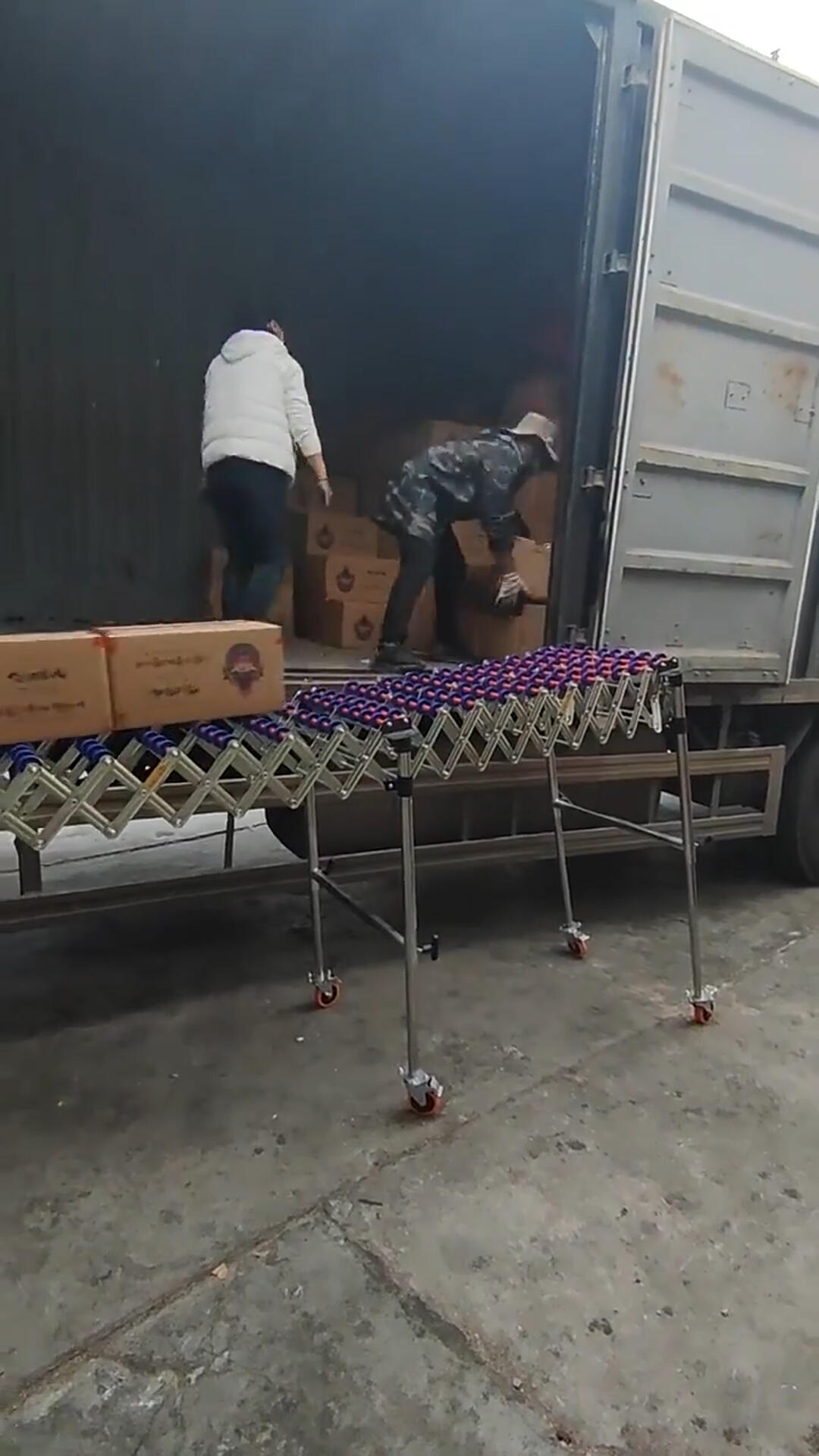
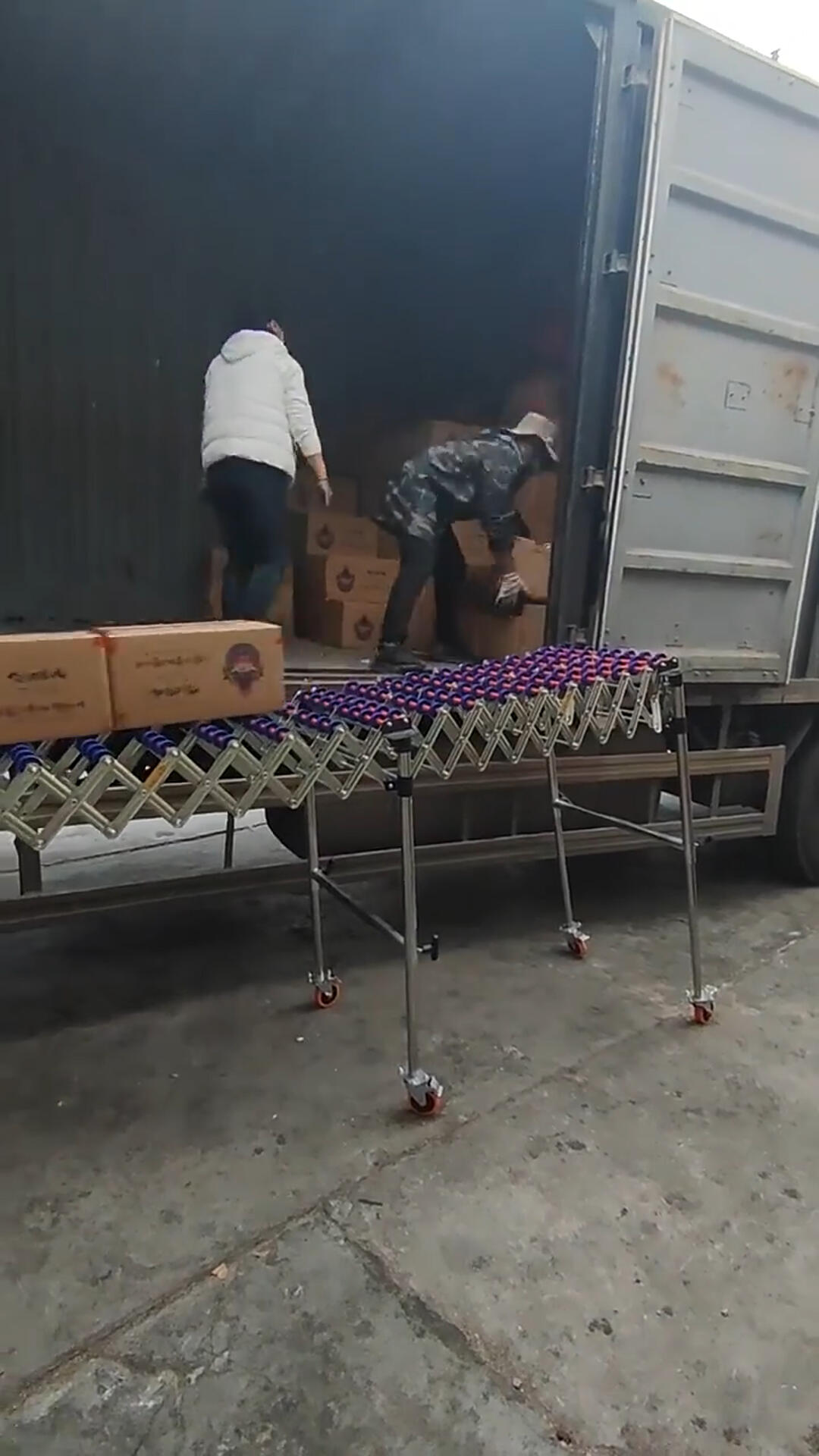
Truck / container loading and unloading: "Just extend it in and it’s ready to use" in tight spaces
Gravity Skate Wheel Conveyor can be extended into a truck compartment or container to create a temporary loading and unloading passage; meanwhile, the leg height is adjustable, making it easy to match different docking heights and reduce the lifting and carrying distance.
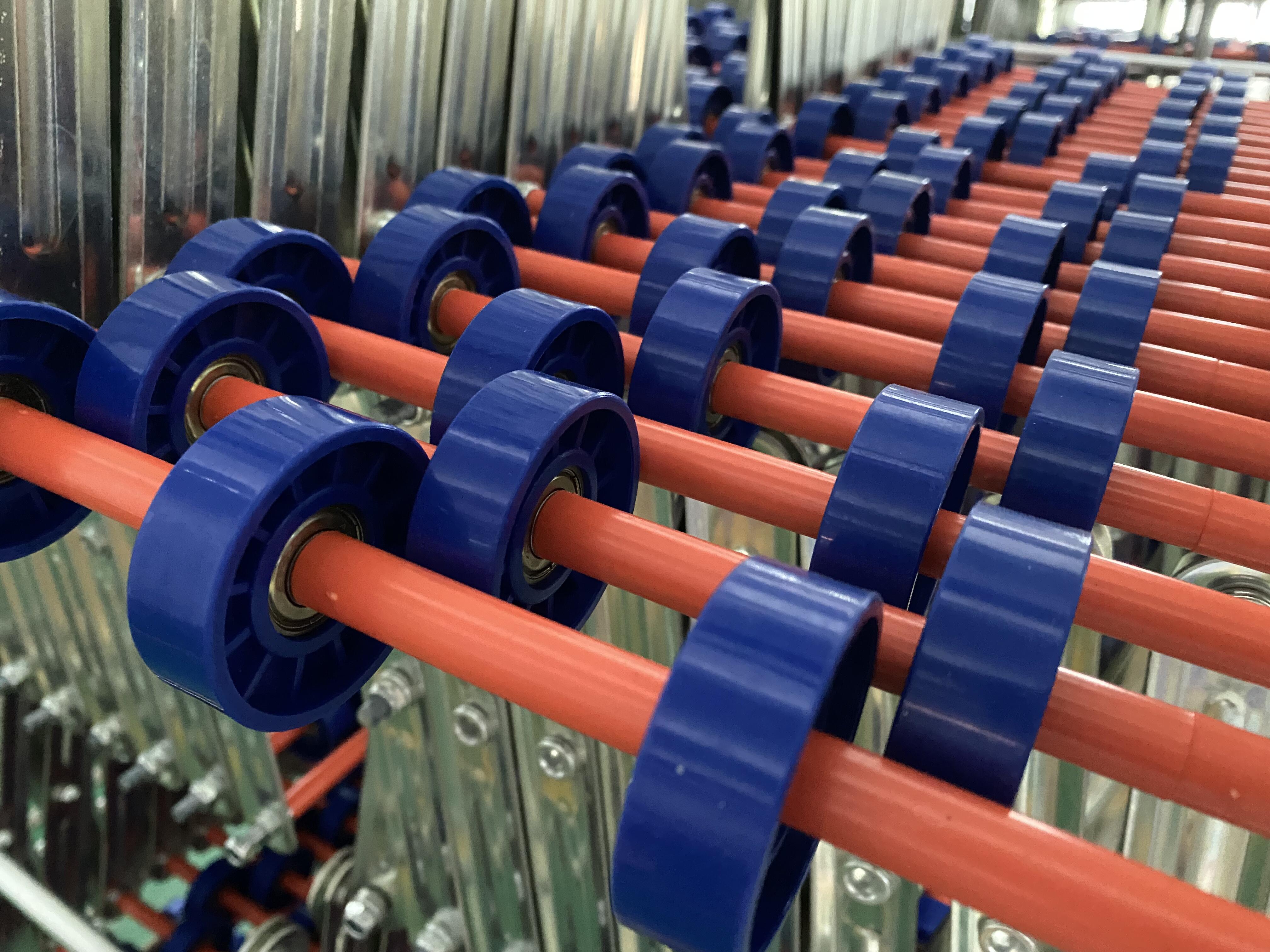
Wheel Material Selection: Based on Noise, Durability, and Daily Throughput
The article mentions two wheel materials:
- ABS plastic wheels: quieter, suitable for routine operations, recommended forless than 5, 000 pieces/dayof throughput.
- Galvanized iron wheels: more durable, suitable for high-frequency, near-continuous use, recommended for5, 000 pieces/day or moreof throughput.

Reconfirming the operating boundary: avoiding "sagging jamming"
Whether used for a temporary warehouse line or cargo unloading from a truck bed, the prerequisite for a Gravity Skate Wheel Conveyor is that the bottom surface of the cargo has sufficient rigidity and regularity. For soft packages, bagged items, or easily deformable goods, assess carefully to avoid sagging between the wheels and affecting conveying.
If you want to learn how a Gravity Skate Wheel Conveyor is used at unloading sites, see: