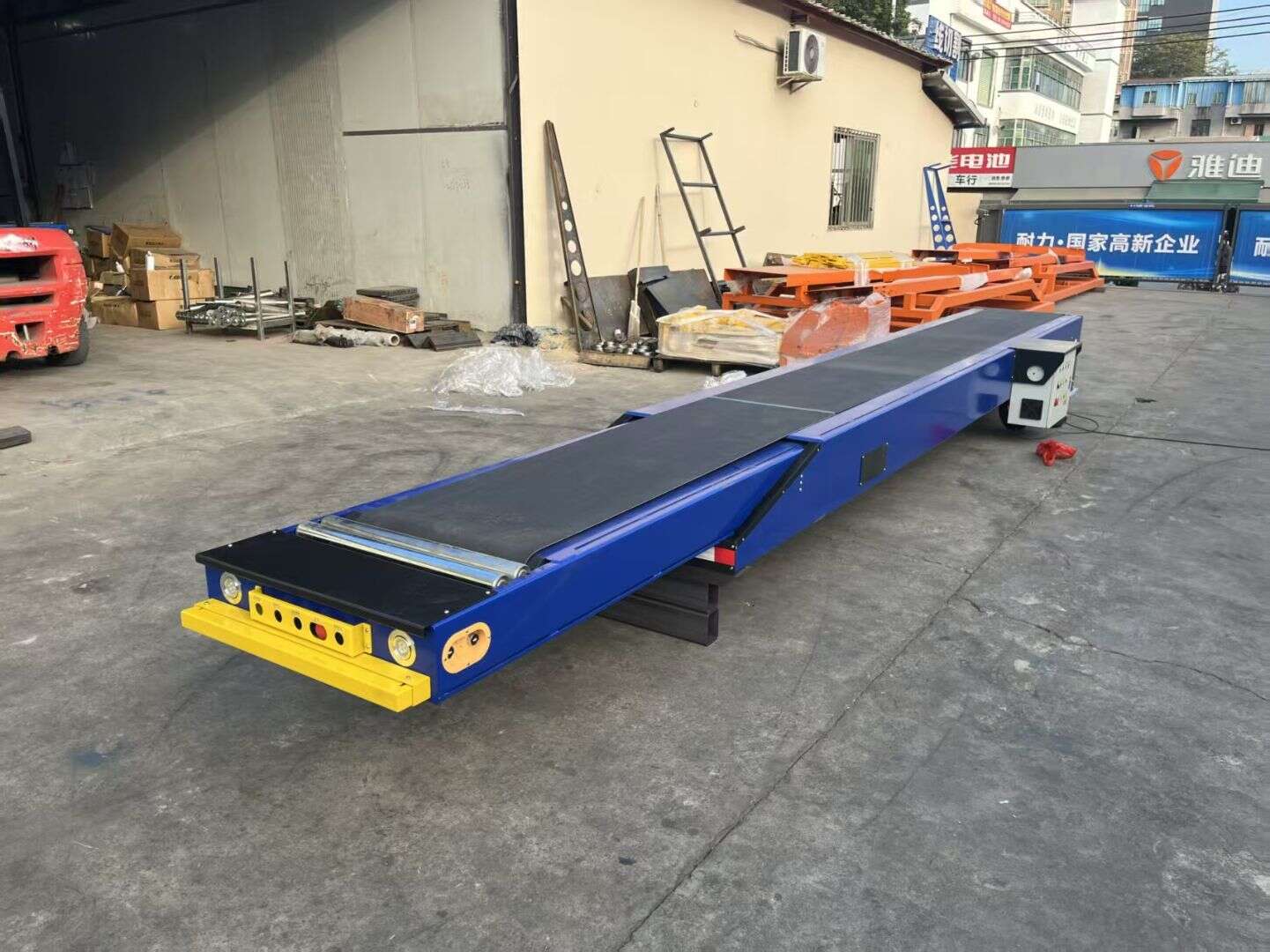
Pain Points and Goals of Beverage Box Unloading
Beverage distributors and distribution warehouses face the same high-frequency task every day: moving cartons of beverages from delivery trucks into the warehouse, and then transferring them to storage locations or pallet stacks. Because beverage cartons are usually heavy, this repetitive handling often means:
- Time-consuming: Manual carrying or cart shuttling back and forth, with the pace heavily affected by labor availability
- High labor intensity: Prolonged lifting and carrying easily leads to fatigue
- Increased risk: This includes workplace injury risks such as sprains and slips, as well as packaging damage and cargo loss caused by collisions
To improve this stage, the key goal is not to "move faster, " but to transform the unloading process intocontinuous flow: from the truck bed to the warehouse end, forming a smooth passage so that boxes can move forward steadily with less effort.
How Gravity Roller Conveyor Improves Beverage Box Unloading Efficiency
The core idea of unloading beverage boxes with a Gravity Roller Conveyor is to usethe downward sliding tendency created by gravity, combined with roller rotation, so that beverage boxes continuously roll forward on the roller surface, reducing repeated manual lifting and back-and-forth walking.
Compared with powered conveying, the Gravity Roller Conveyor solution is simpler in structure:
- No electricity required, no motor required, easier to deploy
- Movement is achieved through slope, making on-site adjustments easier and faster
- Fewer maintenance points, suitable for high-frequency loading and unloading scenarios
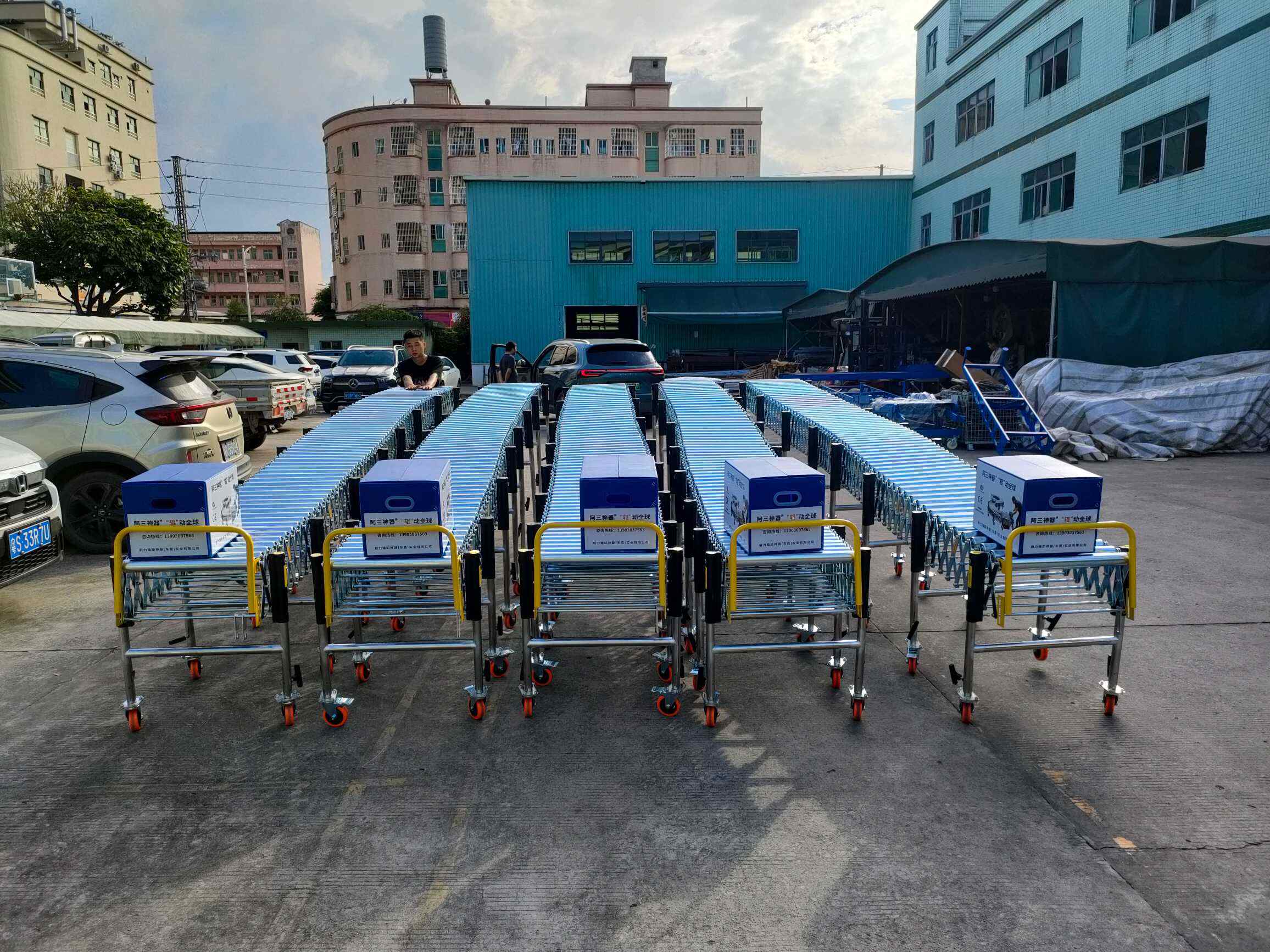
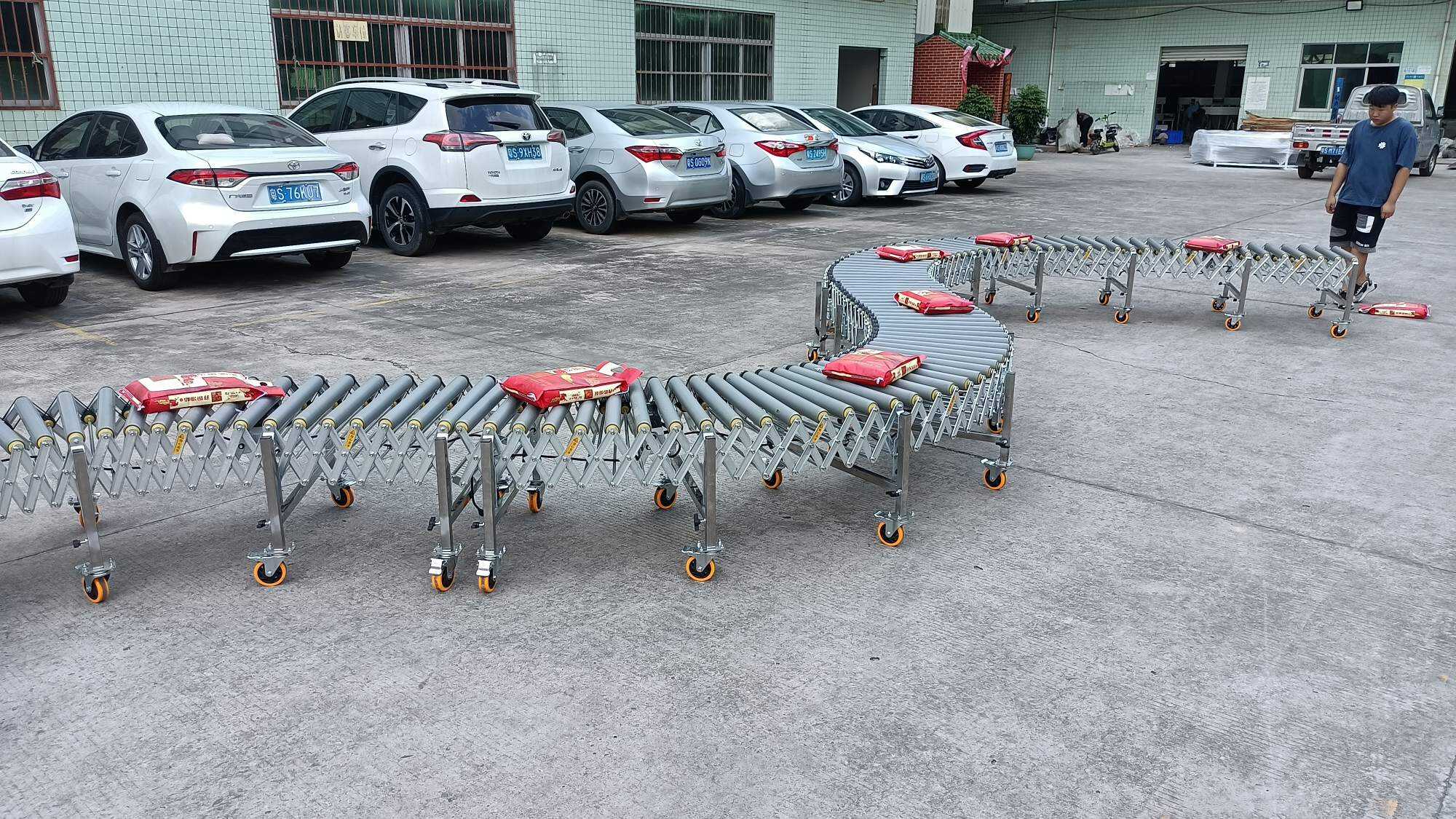
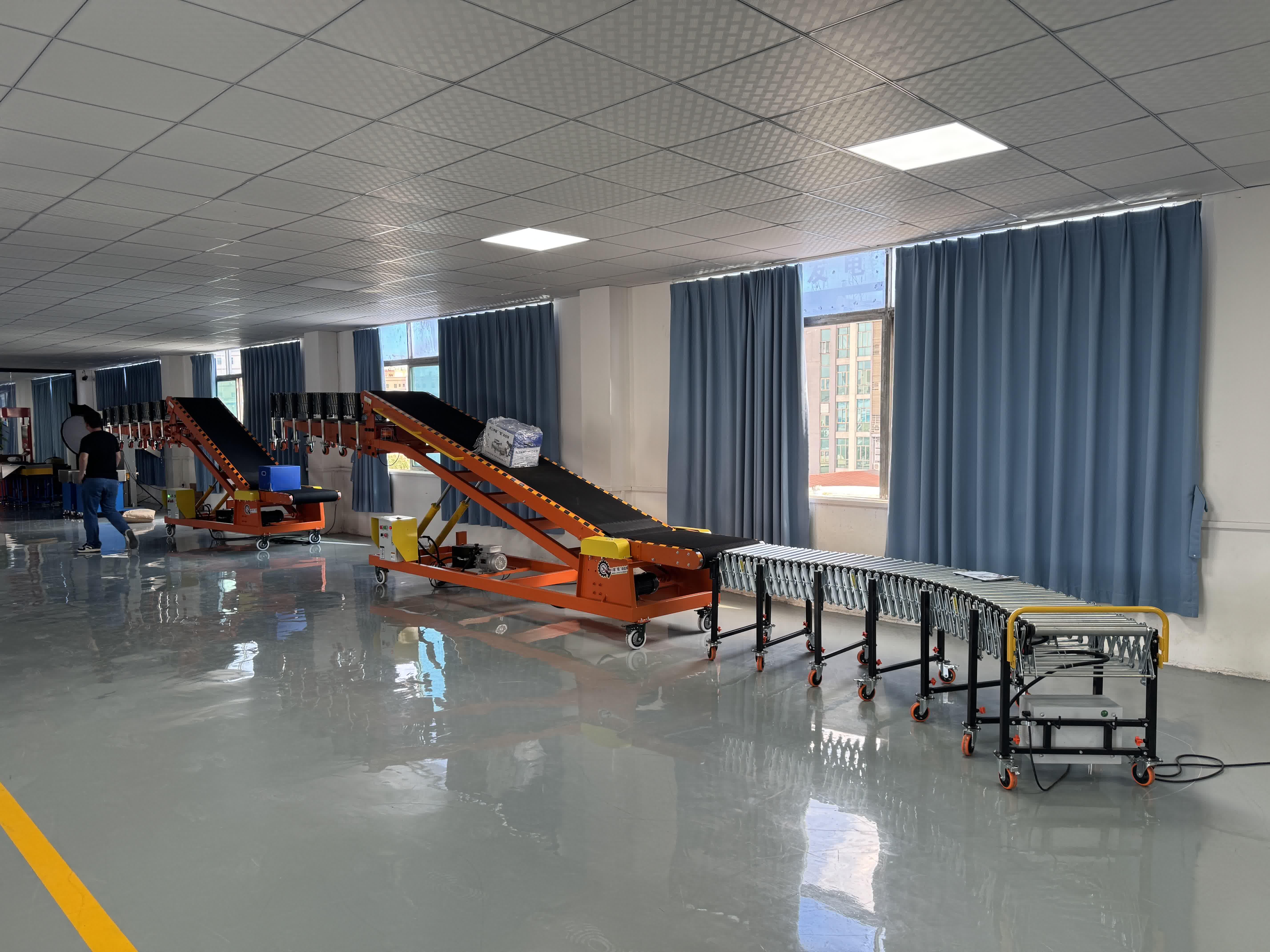
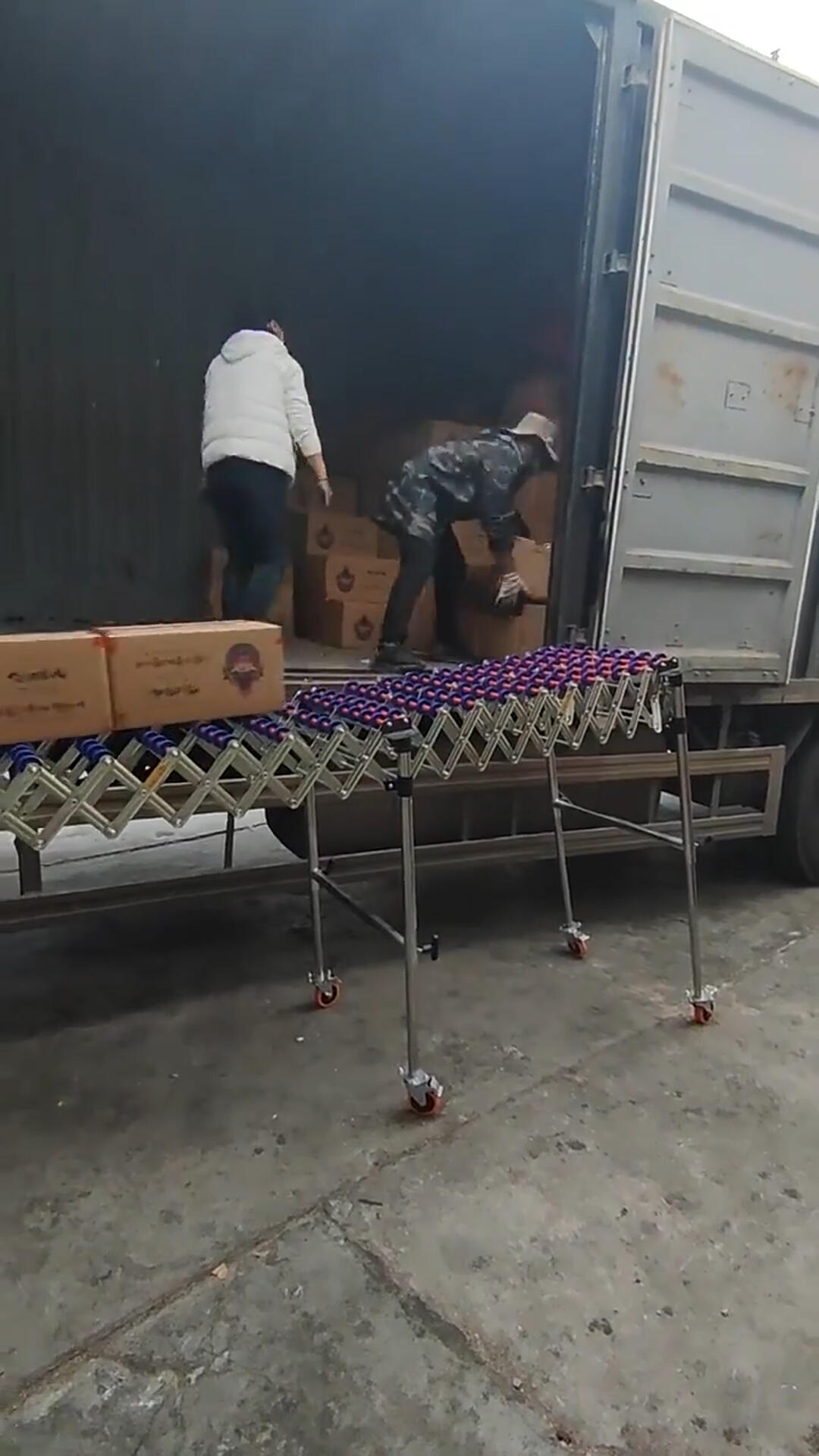
The application requirements are also very clear: the bottom of the cargo packaging should be relatively flat and able to maintain stable rolling on the rollers, such as common beverage boxes, cartons, shrink-wrapped multipacks, and more. See the actual case for reference: Side-truck unloading with Gravity Roller Conveyor into the warehouse.

Gravity Roller Conveyor
The 50 mm Gravity Roller Conveyor is designed for stable and reliable cargo conveying. The roller width is 50 mm, the conveying load is 50 kg per mete…

Carton
Key configuration points: model, width, slope, and module connection
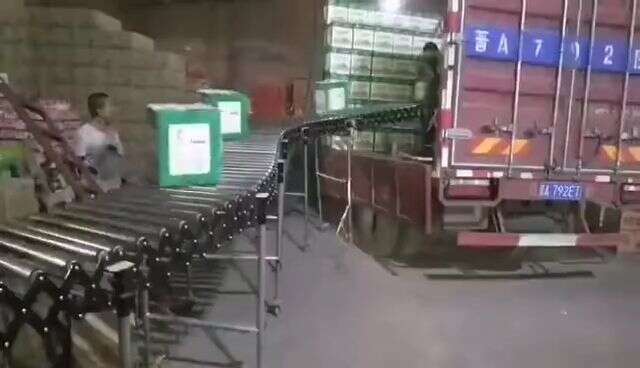
To make the Gravity Roller Conveyor truly "unload faster and more steadily, " it is recommended to focus on the following key points during configuration.
1) Prioritize roller specifications better suited for heavy boxes
Beverage boxes are a high-frequency, relatively heavy handling item. The article recommends prioritizing50mm roller model, for the following reasons:
- The structure is better suited to withstand the continuous impact of heavy boxes
- The roller spacing is denser (about 110mm, compared with 150mm), which is more conducive to smooth passage of different package sizes and reduces the likelihood of "sinking" and "jamming"
2) Width selection: balance stability and floor space
Common effective widths include 500/600/800mm. For most beverage box sizes,600mmusually achieves a better balance between stability and passage-space usage.
3) Modular splicing: measure the distance first, then determine the number of sections
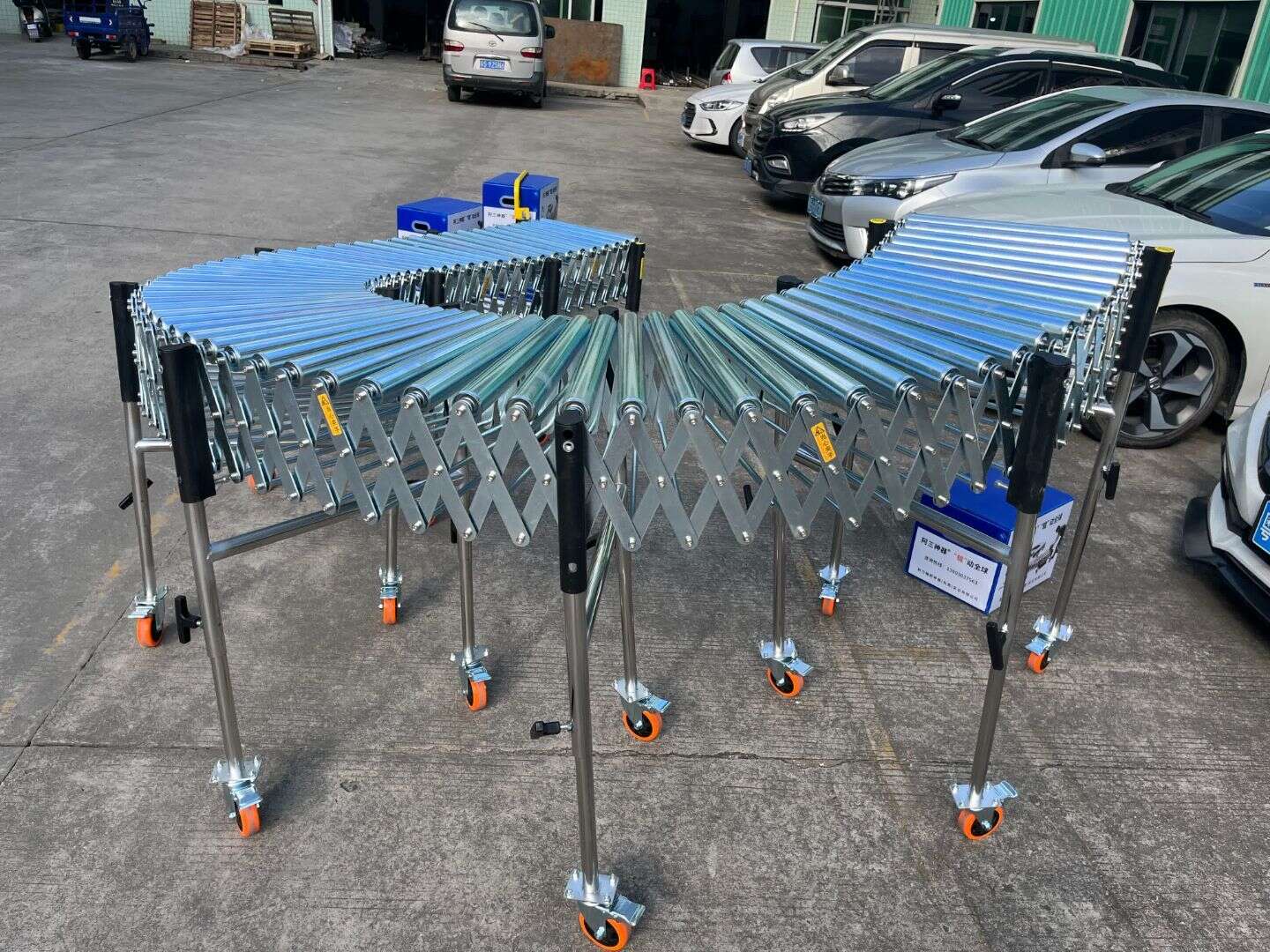
Gravity Roller Conveyor is usually connected by multiple modules, making it convenient for temporary setup or seasonal adjustments to the workflow. Based on the information in the article:
- The extension range of a single 50mm roller section is approximately 525–1500mm
- Calculate the number of sections required based on the distance from the "truck unloading point" to the "warehouse destination"
- Example provided in the text: If approximately 12m linear distance is required, it may need 8 sectionsjoined when fully extended (used to illustrate the calculation logic)
When connecting, it is recommended to use connecting brackets/connectors to ensure a smooth transition between sections and to secure the connection points reliably, preventing separation during operation.
4) Slope is key: Let it "move on its own" in a gentle, controllable manner
The smoothness of unloading beverage boxes using a gravity roller conveyor is highly dependent on the slope setting. The recommended slope for beverage boxes provided in the text is 2–5°, and the conversion range is provided:
- Converted to a height drop of approximately per 1 meter of conveyor length, 3.5–8.7 cm
The slope can be fine-tuned based on the product weight: heavier boxes can usually move smoothly on gentler slopes; lighter boxes may require a slightly steeper slope to avoid stalling, but it should still be based on the premise of "controllable and no collisions".
5) Additional details for beverage handling conditions
Considering common warehouse environments, the text also suggests:
- For wet or liquid-prone areas, consider a stainless steel roller solution
- Side railings can be added at curves or positions where items are prone to drifting
- It is recommended to set up stoppers/stopping structures at the end to prevent boxes from rolling off
Operation Workflow and Practical Tips: Two-person continuous flow and safety maintenance
Collaborate as two people to achieve a "continuous flow"
Gravity roller conveyors are better suited for a "two-person continuous flow" organization:
- Personnel A (Inside the truck / Loading position): Take boxes from stacks or piles, continuously place them at the entrance of the roller line, control the loading pace, and avoid batch piling.
- Personnel B (Inside the warehouse / Receiving stacking position): Receive boxes at the end and stack/store them, while communicating the pace with the upstream personnel through verbal prompts or gestures.
To reduce jamming and squeezing, maintain a reasonable distance between boxes on-site and schedule short breaks during long unloading periods to avoid fatigue-induced movement errors. Refer to more cases: Gravity Roller Unloading Line Case.
Achievable unloading pace (referencing the original range)
With reasonable pace organization and proper slope settings, the text provides the typical performance range for this two-person system:
- Throughput can reach 2, 000–2, 500 boxes/hour
- Compared to purely manual methods, unloading speed can be increased by approximately 40–50%
- while significantly reducing the physical burden on workers
On-site Space and Safety Key Points
- Reserve receiving areas at both ends to avoid accumulation at the entrance and congestion at the exit
- Reserve aisles for personnel to walk, reducing crossings with rolling goods
- Set up stoppers at the end and add railings where necessary to reduce the risk of rolling off
Maintenance Suggestions (Original Frequency)
Gravity roller conveyors require low maintenance, but it is recommended to establish a fixed inspection rhythm to ensure long-term stability:
- Weekly: Visual inspection of rollers and frames
- Monthly: Check connection points and connecting brackets/connectors
- Quarterly: roller bearing lubrication
- Replace damaged rollers promptly to avoid cascading failures
Further reading:
Choosing 38 vs. 50 for gravity roller unloading
For more information, please see other related cases: Fruit truck gravity roller conveyor connection.