Why Unloading a 40-Foot Container Becomes a Time Bottleneck
The reason a telescopic conveyor can significantly improve the efficiency of unloading 40-foot containers is best understood by looking at where the "time black hole" in traditional manual unloading lies: after a 40ft container arrives at the port or warehouse, the common method is for workers to enter the container to pick goods, then carry them to the container door or the dock for handover. This process often takes 2–3 hours and requires 4–5 workers to perform high-intensity continuous labor.
The core reasons for the bottleneck mainly come from four aspects:
- Long-Distance Round-Trip Carrying: The internal length of a 40ft container is about 12.19 m. The farther the unloading point is toward the back, the longer the in-and-out distance for workers becomes; one round trip to retrieve cargo from the rear of the container can be nearly 24 m. As the cargo volume increases, time is repeatedly consumed by walking and carrying.
- Fatigue and Risk Add Up: Repeated bending, lifting, and turning, combined with the cramped space and large temperature fluctuations inside the container, quickly drain workers’ physical energy. Efficiency drops as fatigue increases, and the risk of injury rises accordingly.
- The process is naturally "single-line": Inside the box, usually only 1–2 people can work at the same time, and goods must be passed or carried out one item at a time; the farther in you go, the slower the pace becomes, and each item often goes through multiple touchpoints before reaching its destination.
- Limited visibility and unstable coordination: Poor lighting inside the box and poor communication between inside and outside increase the time needed to find and place goods, causing the pace to fluctuate and requiring constant ad hoc adjustments to the unloading strategy.
Unloading a 40ft container with a telescopic conveyor: turning "manual carrying" into "continuous conveying"
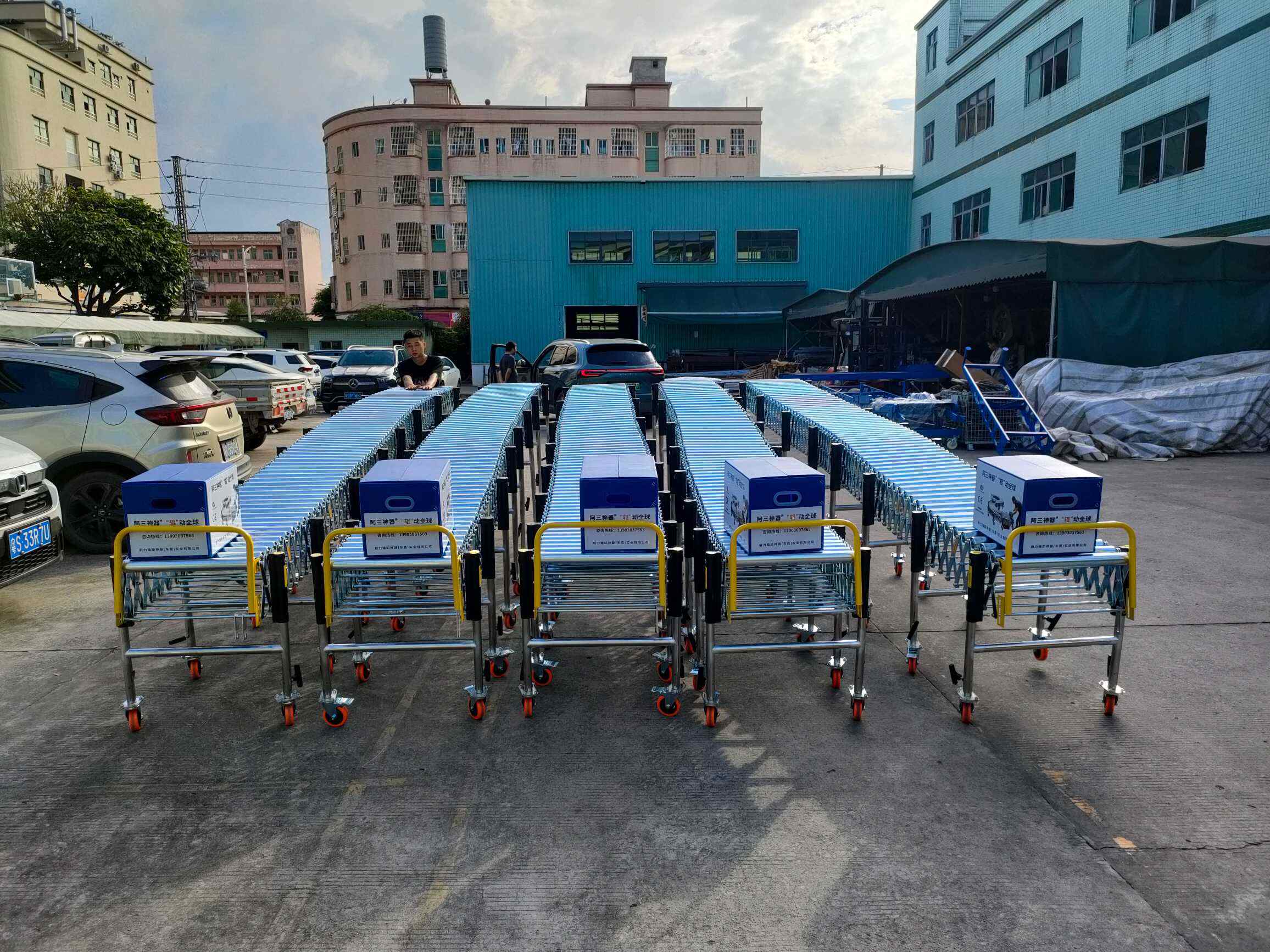
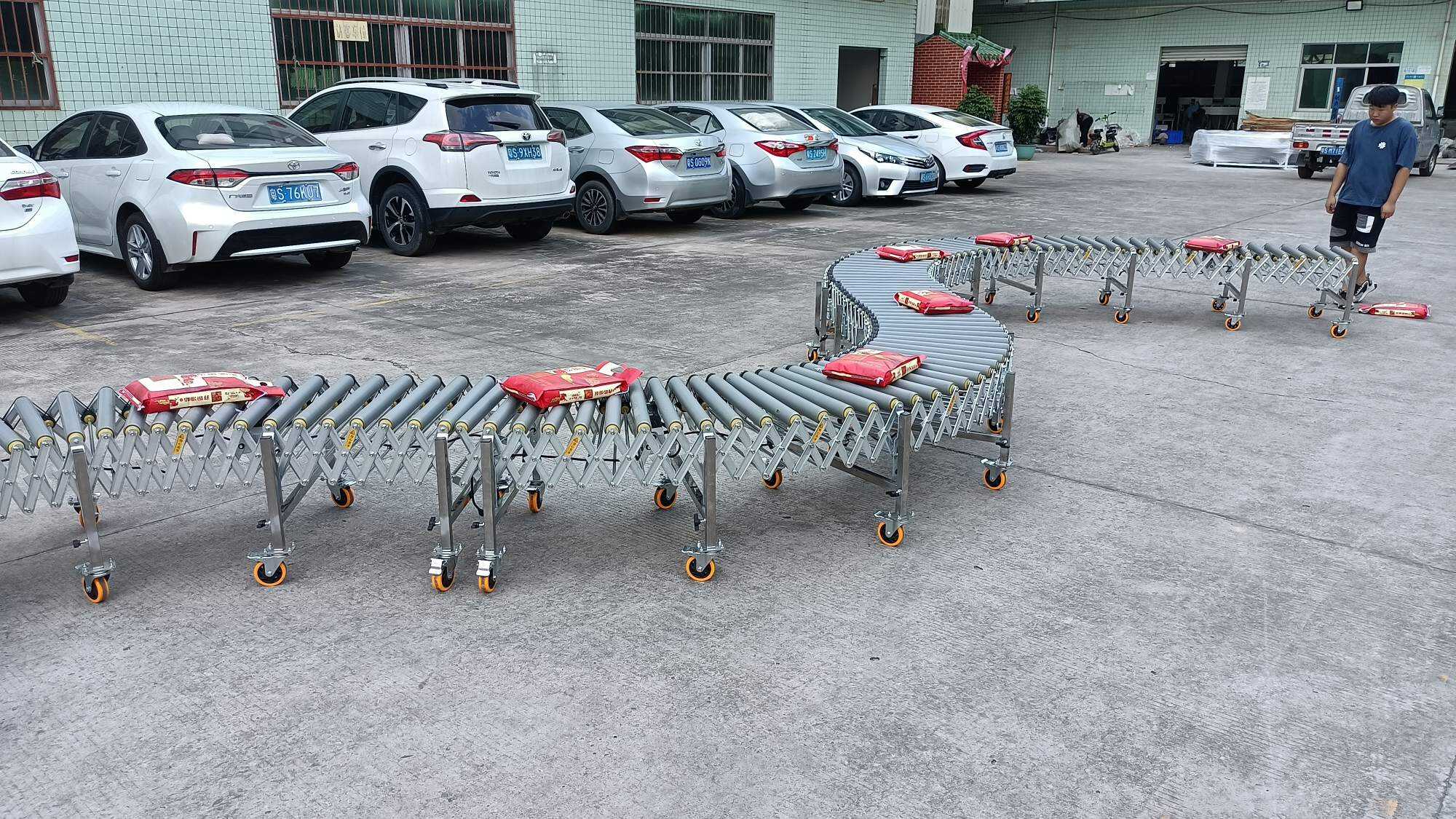
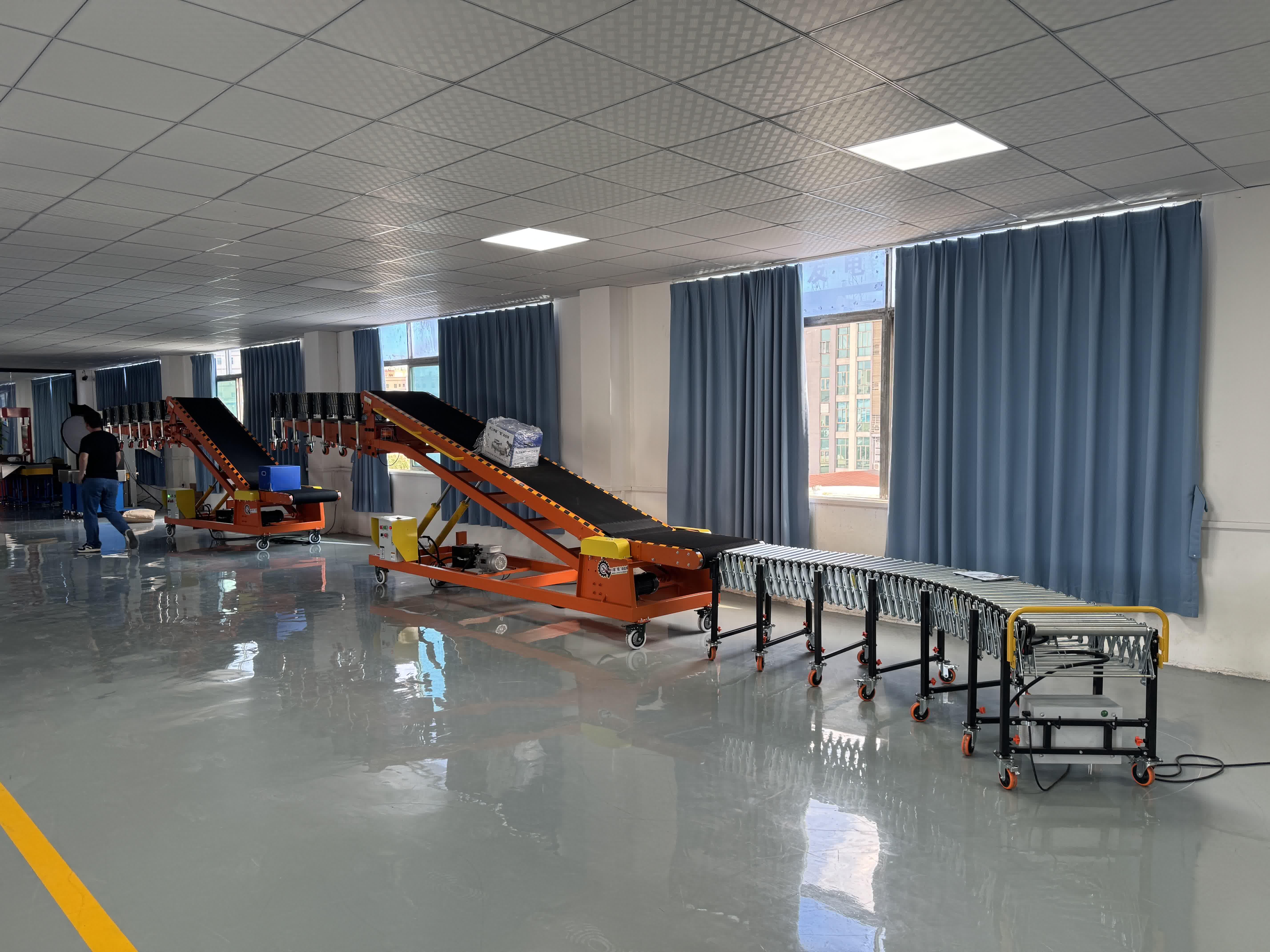
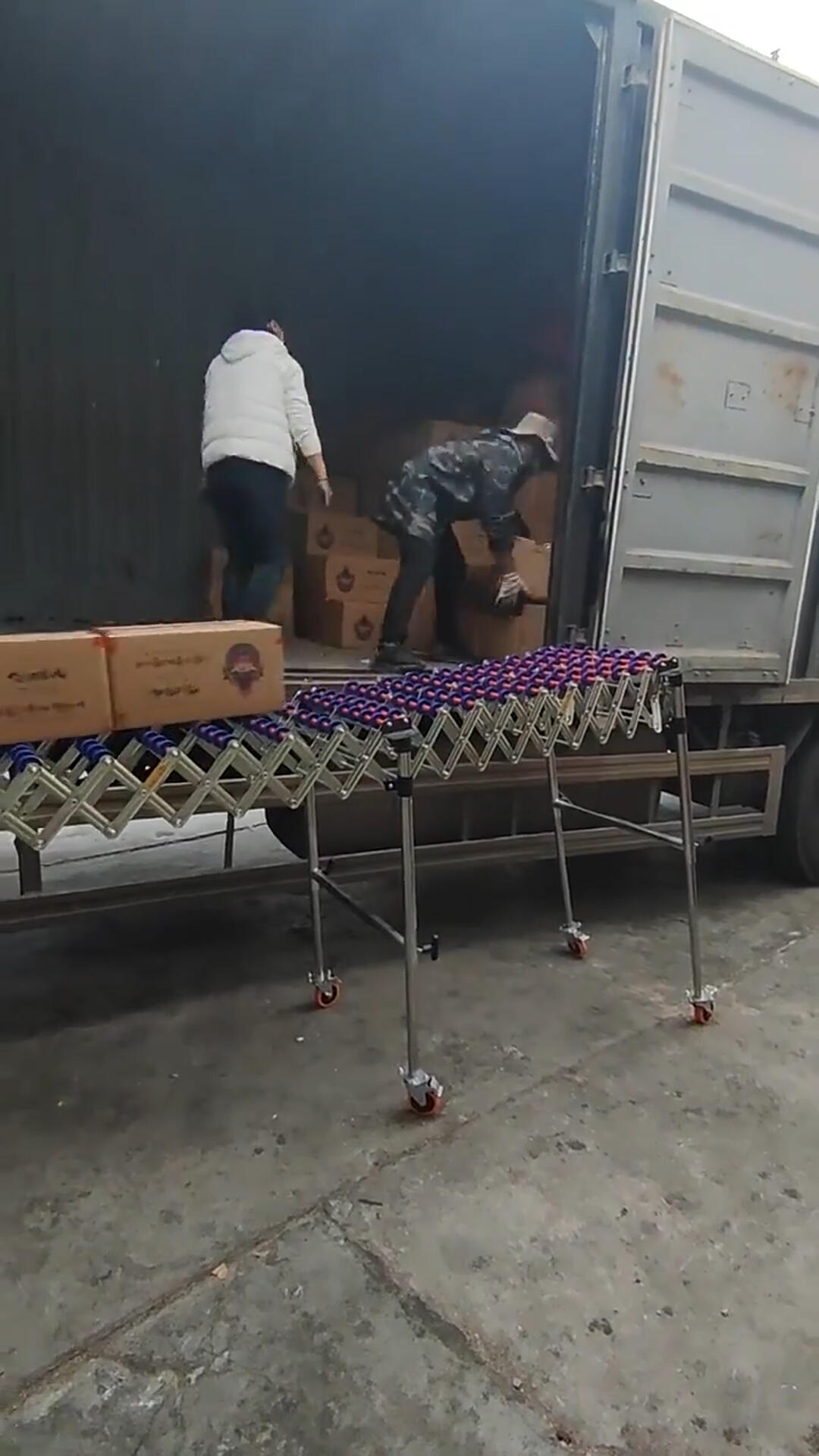
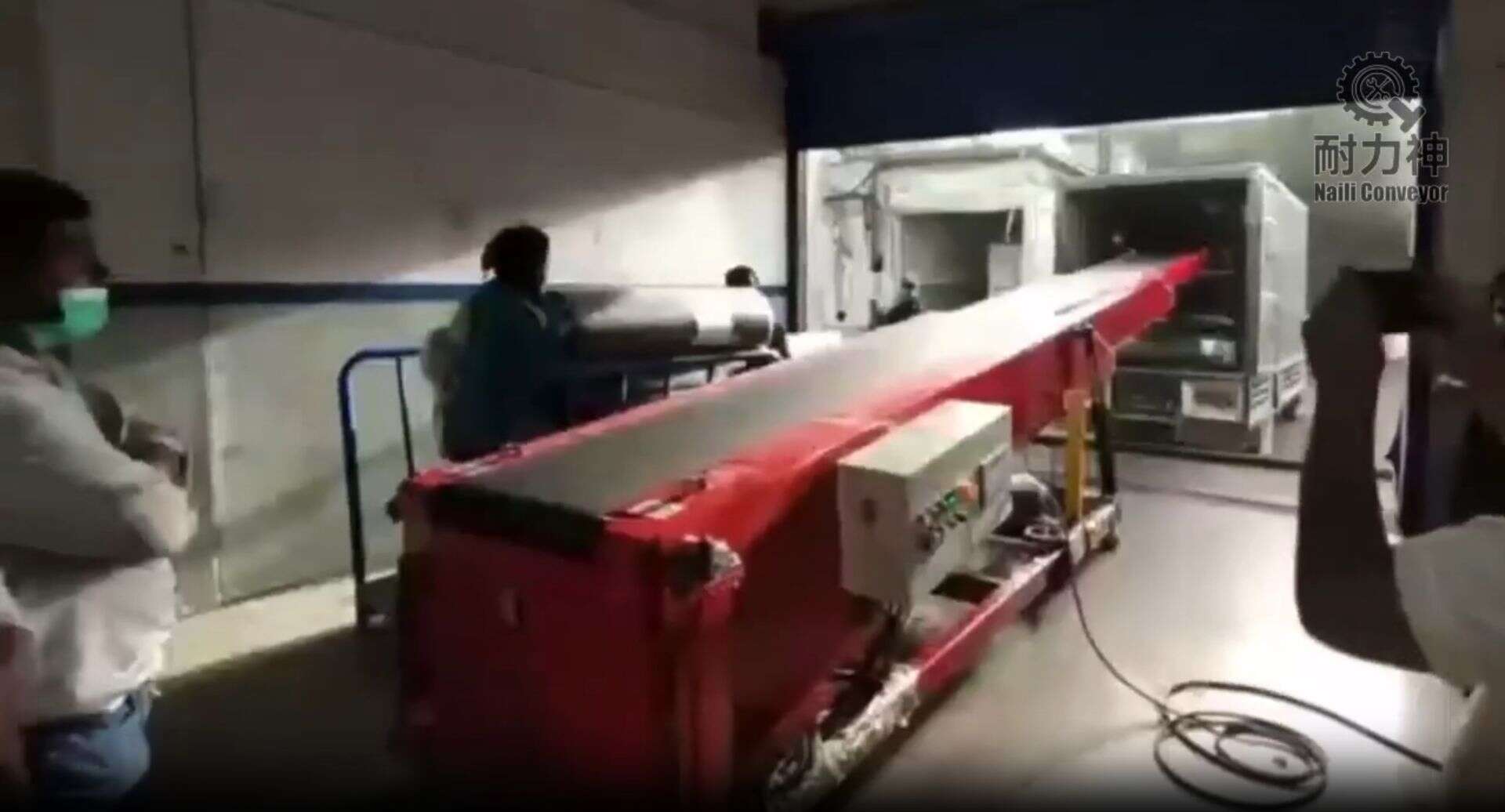
To cut unloading time from the "hour level" down to the "minute level, " the key is to free people from long-distance carrying and let the goods move continuously along a stable path. The method for unloading a 40ft container with a telescopic conveyor is to extend the retractable conveyor belt directly into the container, where workers inside place the goods directly onto the running belt, and the goods are automatically conveyed from inside the container to the fixed end at the platform/warehouse, reducing back-and-forth walking and repeated handling.
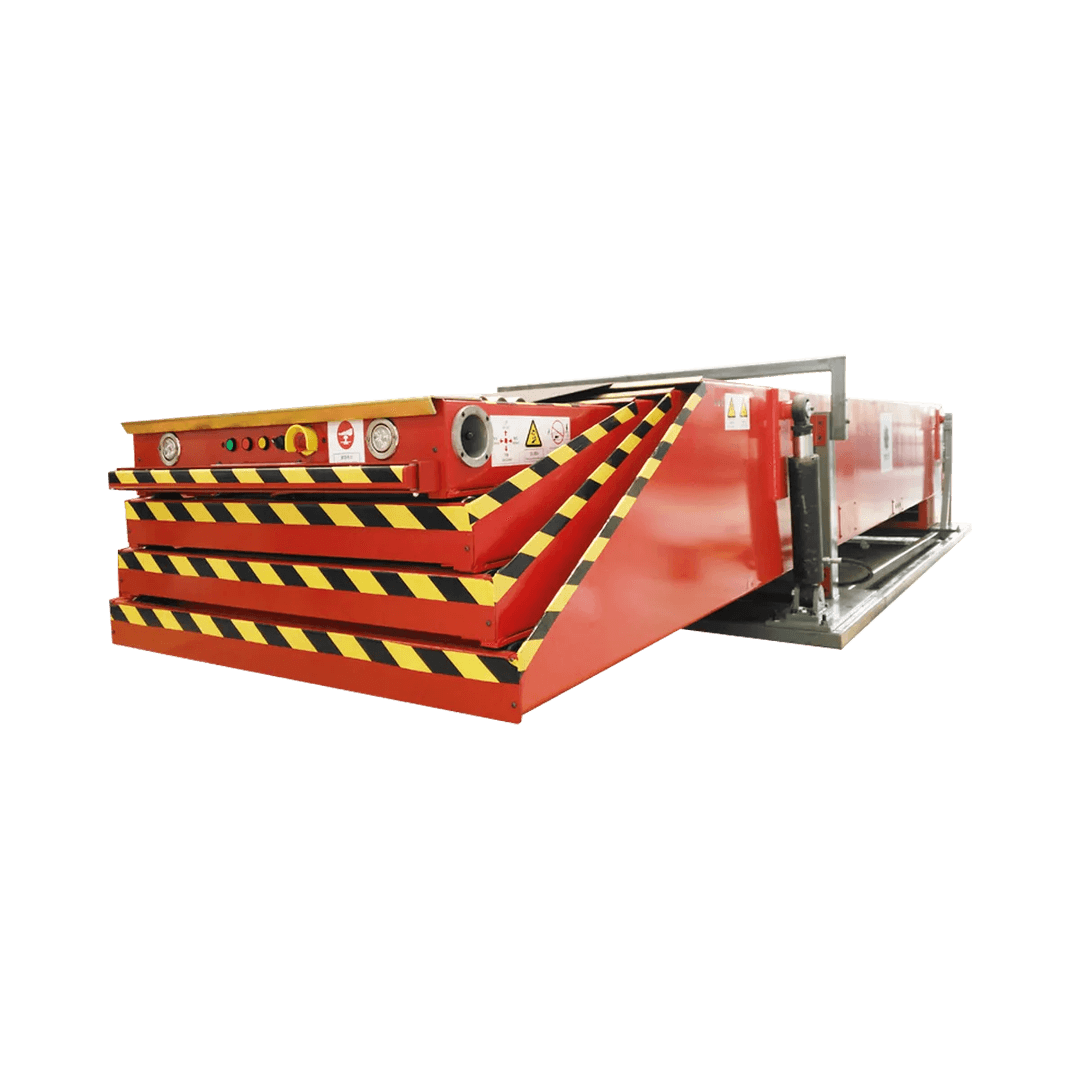
4-Section Telescopic Conveyor
Our four-section telescopic conveyor can extend up to 12–17 meters, reaching deep into trucks and containers to enable efficient and smooth loading an…

Metal Drum

Plastic Drum

Roll

Carton

Bagged
In the solution discussed in this article, the equipment used is4-section telescopic conveyor:
- Covering the depth of a 40ft container: The equipment can extend into the container, with the goal of reaching the 12.19m depth of a 40ft container, thereby minimizing manual back-and-forth carrying from the container end to the door.
- Adjustable speed to match the human-machine cycle: Conveyor belt speed is 10–40 m/minand can be adjusted in real time according to cargo density and worker movement rhythm, maintaining continuous feeding and stable output.
- Lighting assistance: Comes with LED lighting, improving visibility inside the container and reducing the time lost searching for and placing goods.
The scope of application must also be defined clearly:
- More suitable forgoods with a flat bottom and stable placement on the belt, such as cartons, parcels, and standard boxes.
- Irregularly shaped, very small loose itemsand similar goods may require additional supporting methods.
- The equipment mentioned in the articlehas a rated load not exceeding 60 kg/m², and goods beyond this range are not the optimal operating condition for this method.
Key steps for unloading a 40ft container in 30 minutes (follow the steps)
Having a telescopic conveyor does not automatically mean you can stably reach 30 minutes. More importantly, the process must be "fixed" into a reusable operating cycle. The following steps can be used directly for on-site training and team implementation.
1) Positioning and preparation
- Clear the platform area to ensure the telescopic section has an unobstructed path into the container.
- Confirm that the platform height matches the container floor height (the typical range given in the article is 1.2–1.4m).
- Align the equipment with the center of the container door, and arrange receiving personnel and downstream transfer equipment at the fixed end.
- Make sure the control panel is accessible; if the equipment has casters, lock them after positioning.
2) Extend in sections according to unloading progress
- There is no need to fully extend it at the start: begin with the fixed section/short extension state and unload the goods near the door first.
- As the front area is cleared, extend further into the container section by section, so the "work point" advances with the cleared area.
- This "unload while extending" approach makes it easier to maintain a continuous cycle and reduces the coordination chaos caused by fully extending all at once.
3) Use variable speed to smooth out the cycle
- By using 10–40 m/min variable speed, the belt output can be matched to the workers’ loading movements.
- The goal is to avoid fluctuations such as "front-end buildup and back-end interruption" or "the back end not being able to keep up with receiving goods.".
4) Front-end control and standing platform (optional)
- Position the operator at the extension end and use the front-end controls for extension/speed fine-tuning.
- If a standing platform is added, it can improve visibility and access to upper-layer stacking, making it easier to retrieve upper-level goods and organize the unloading sequence.
- For safety, it is recommended that emergency stops be available at both ends at all times.
5) Wrap-up: clear while retracting
- After the cargo at the far end has been cleared, retract the telescopic sections one by one, keeping the belt end close to the work area at all times.
- Clear systematically in a back-to-front sequence, and use LED lighting for inspection to avoid omissions.
According to the process above, the typical result given in the article is: a 40ft container loaded with standard cartons can be unloaded by 2–3 peoplein 25–35 minuteswhereas traditional manual unloading usually takes 2–3 hoursand 4–5 peoplein labor.
Manual vs. Telescopic Conveyor Unloading a 40ft Container: Quantitative Comparison and Practical Tips
Time comparison (by cargo weight range)
| Unloading method | Small parcels (≤5kg) | Medium cartons (5–15kg) | Large cartons (15–30kg) | Heavy cargo (40–50kg) |
|---|---|---|---|---|
| Traditional manual | 120–180 minutes | 150–210 minutes | 180–240 minutes | 210–270 minutes |
| Telescopic conveyor | 25–35 minutes | 30–45 minutes | 40–50 minutes | 45–60 minutes |
Throughput capacity (the level cited in the article)
- Small parcels: 3, 500–5, 000 pcs/hour
- Medium cartons: 2, 500–3, 500 pcs/hour
- Large cartons: 2, 000–2, 500 pcs/hour
- Heavy bagged goods: 1, 500–2, 000 pcs/hour
Labor and workload changes
- Headcount: reduced from 4–5 people to 2–3 people (varies by cargo type and on-site organization).
- Walking distance: reduced from 5+ km per carton to less than 1 km.
- The number of lifts: reduced from 500+ times per person to less than 150 times.
Basic conditions and access requirements (from the FAQ)
To keep a telescopic conveyor unloading a 40-foot container running stably, the site needs to meet the following conditions:
- A suitable loading dock height (usually 1.2–1.4m), and enough space reserved for placing the fixed section of the equipment.
- Three-phase power (usually 380V).
- The equipment weight is 2.1–3.0 tonsrange, so the ground load-bearing capacity must match.
Operational notes: loading and unloading, training, and maintenance
- The equipment can run in both directions, so the same machine can be used to unload containers or load them (the process is reversed: fully extend first, then retract section by section as loading progresses).
- Training usually takes only 1–2 hours to get started, and most teams become proficient after operating 2–3 containers under supervision.
- The maintenance schedule can follow daily inspections, monthly servicing, and quarterly maintenance; the typical belt life mentioned in the article is 2–3 years (depending on usage intensity).
If you want to learn more about the system configuration and operating-condition adaptation of telescopic conveyors in container loading and unloading, see: