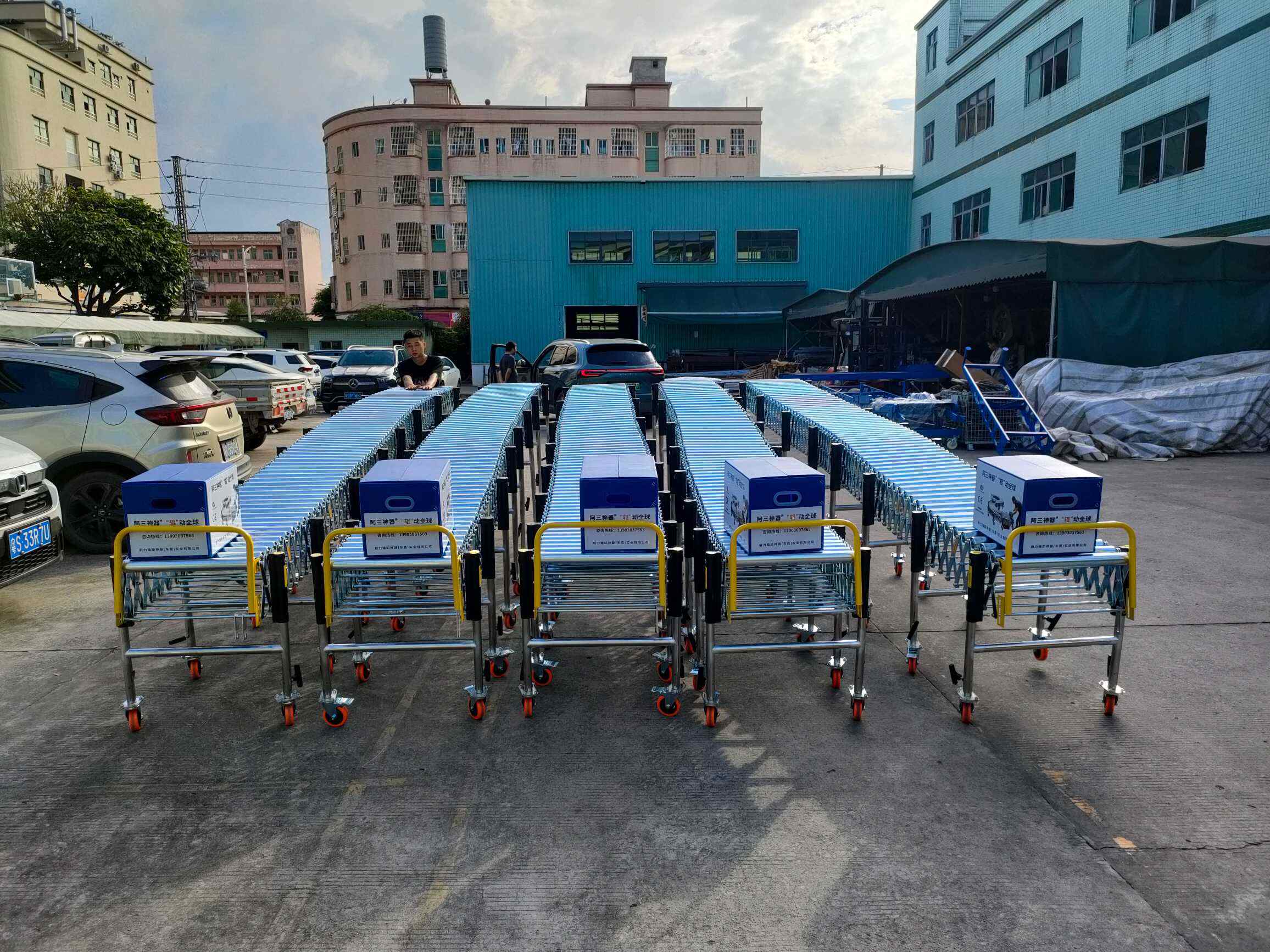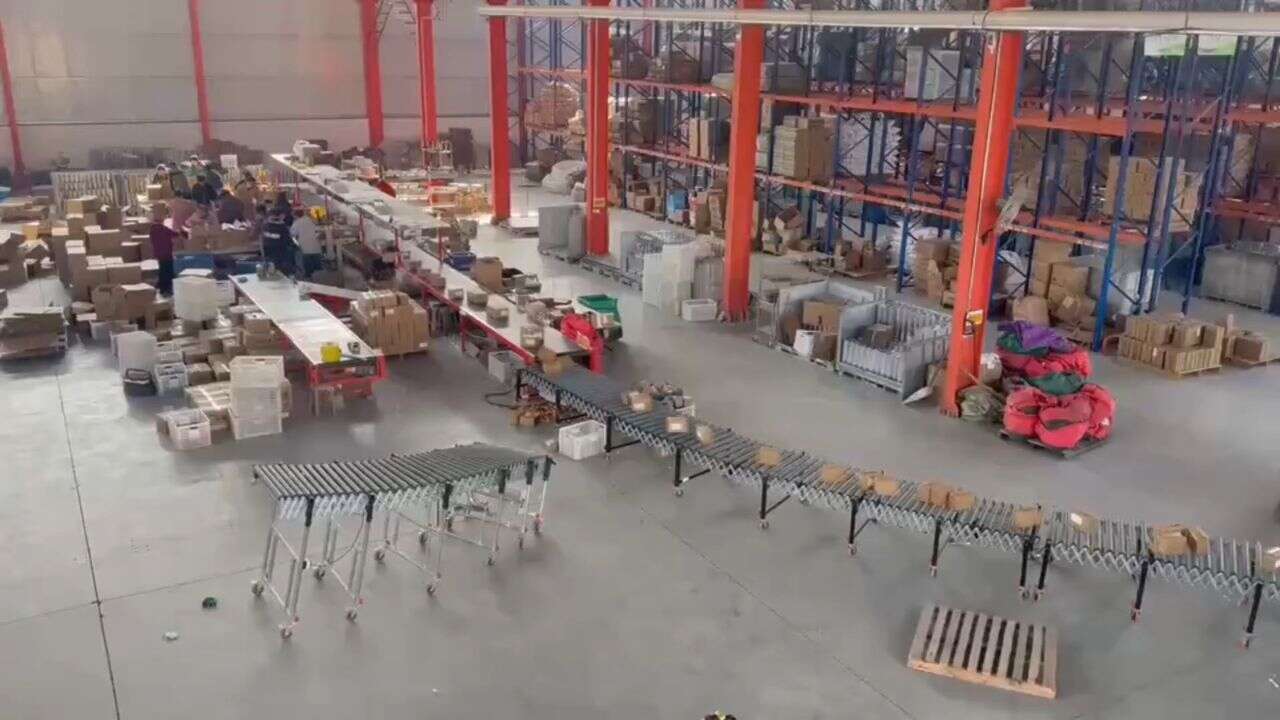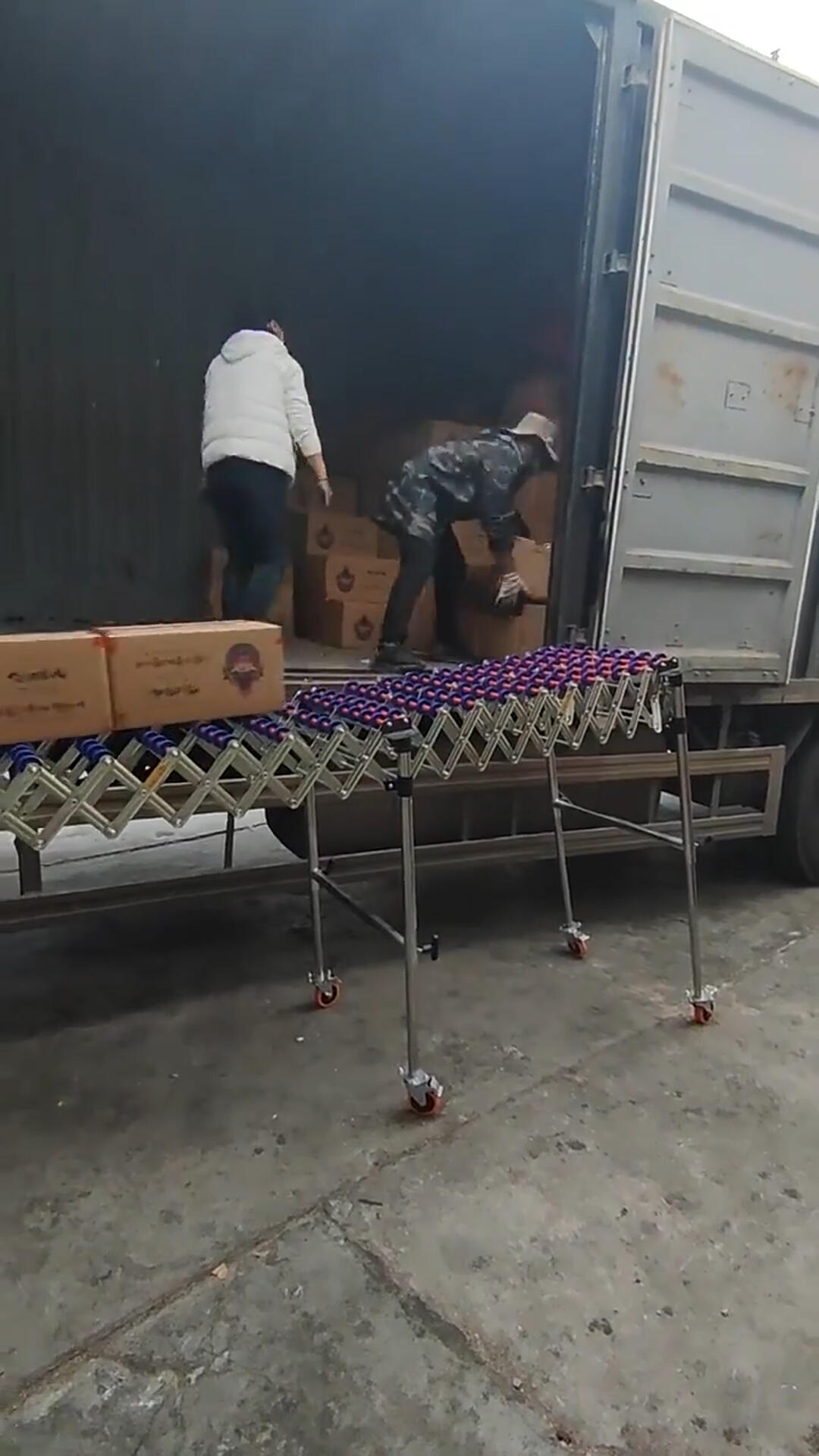
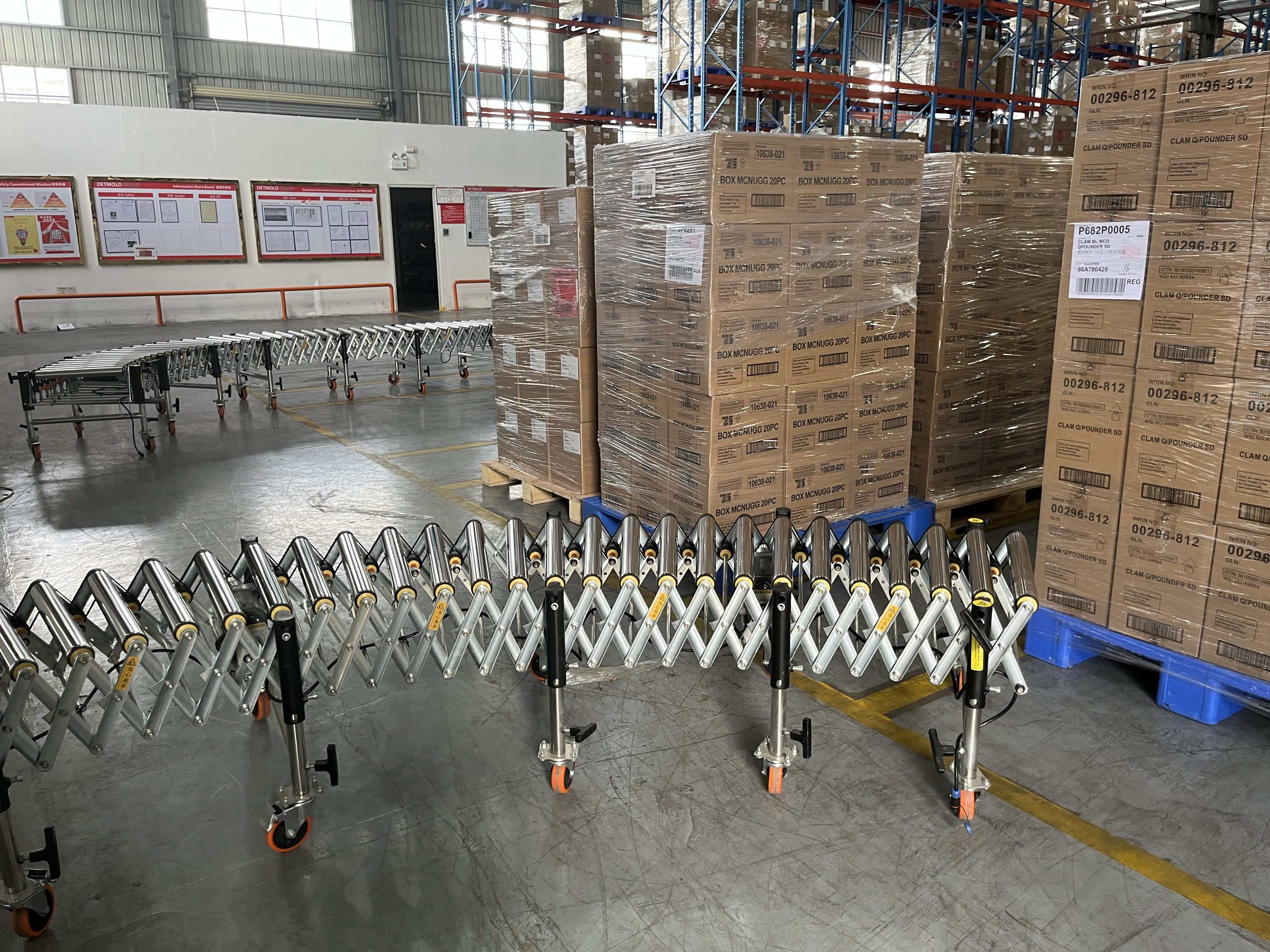
Warehouse conveyor scenarios: why you need to make a choice in roller conveyors
When planning material flow in a warehouse or distribution center, roller conveyor selection for warehouse use often directly affects operating efficiency and total cost. The two common options are powered roller conveyors and non-powered (gravity) roller conveyors. Both are used for transferring and connecting goods such as cartons and bags, but their different drive methods determine their suitability boundaries in terms of space conditions, pace control, investment, and maintenance.
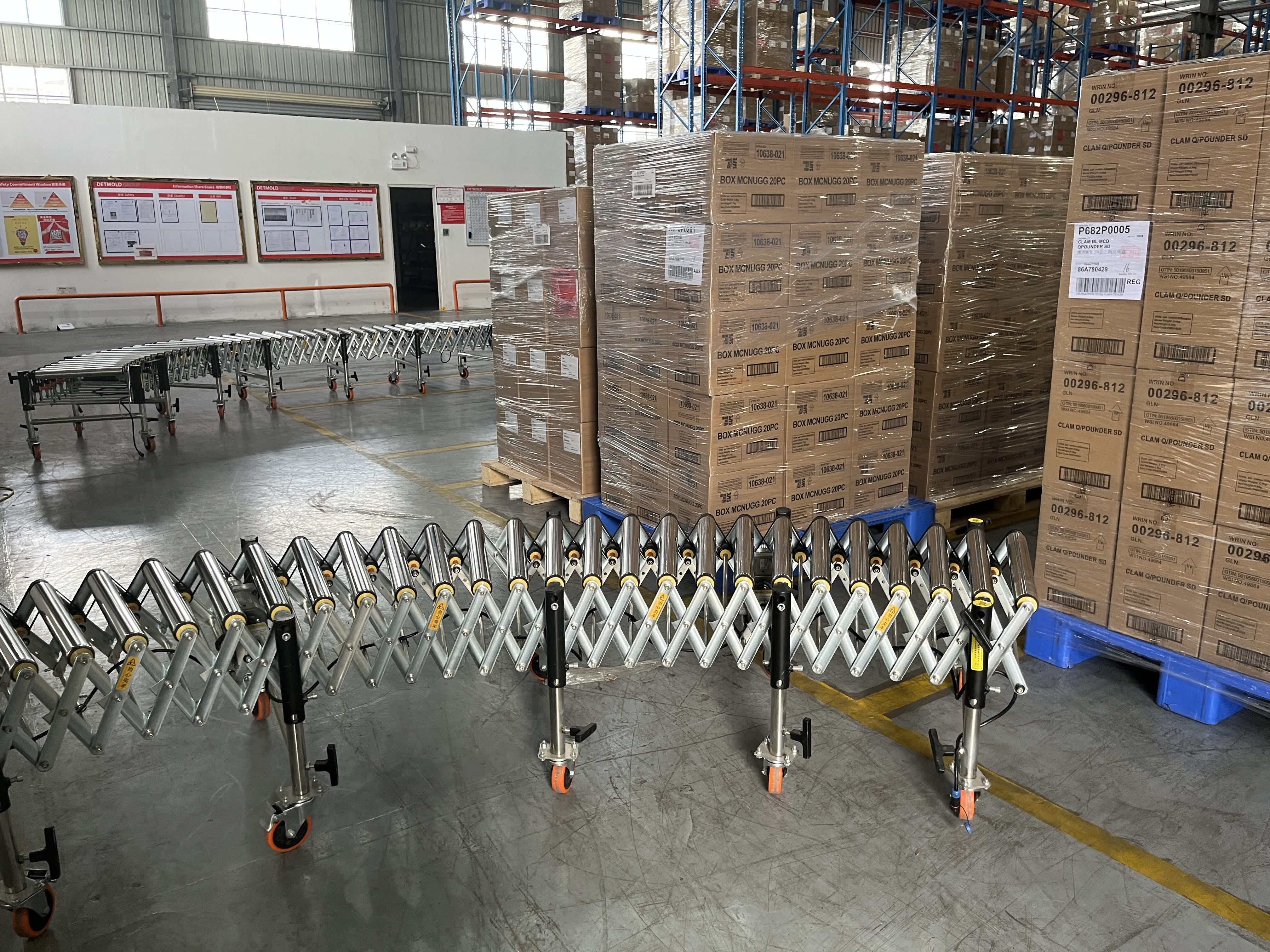
The comparison below focuses on three types of constraints: logistics requirements (distance, throughput, takt time), space limitations (whether slopes/elevation changes are feasible), and budget and maintenance (initial investment, energy consumption, and maintenance complexity).
Gravity roller conveyors: operating principles and application limits
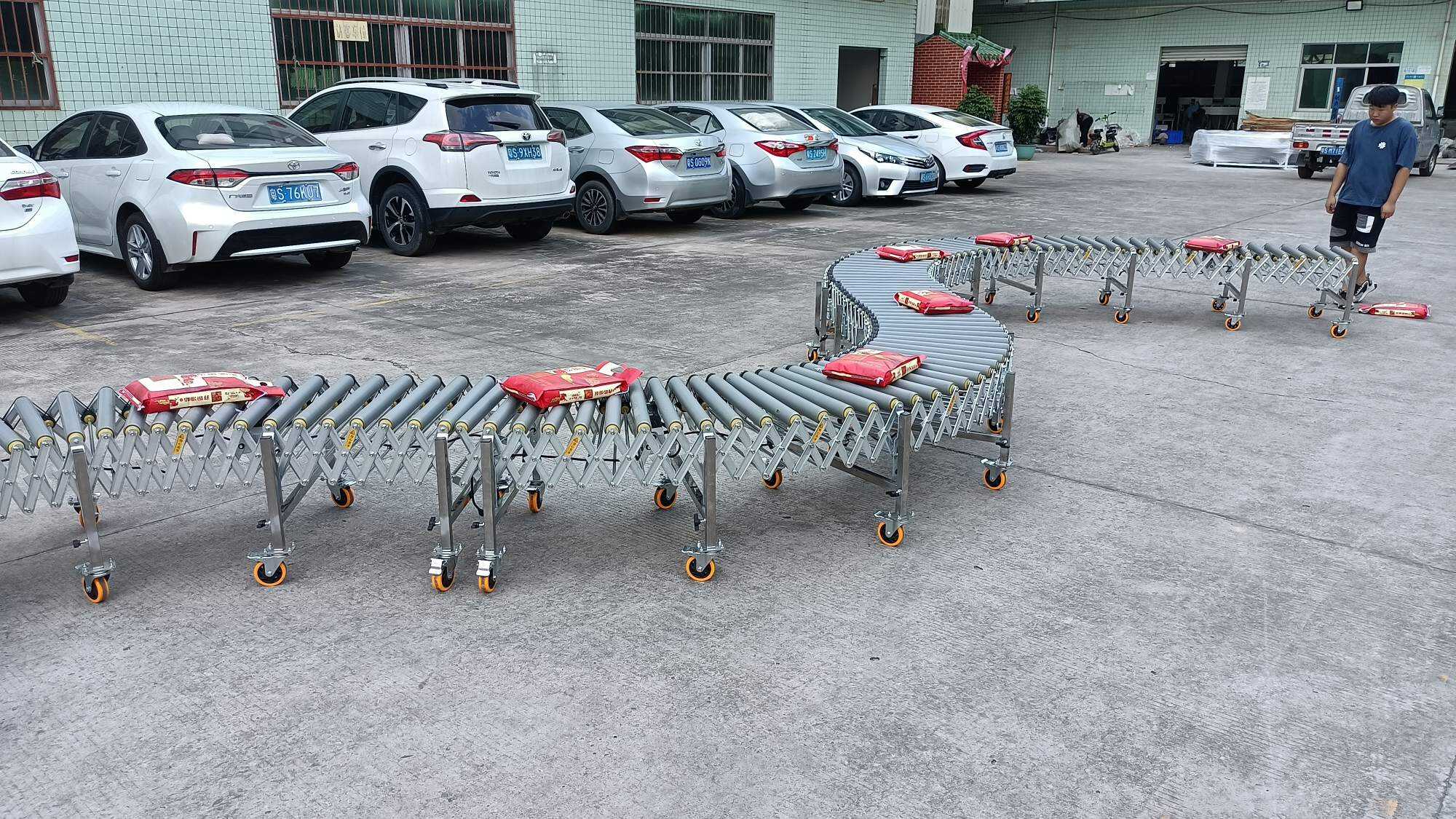
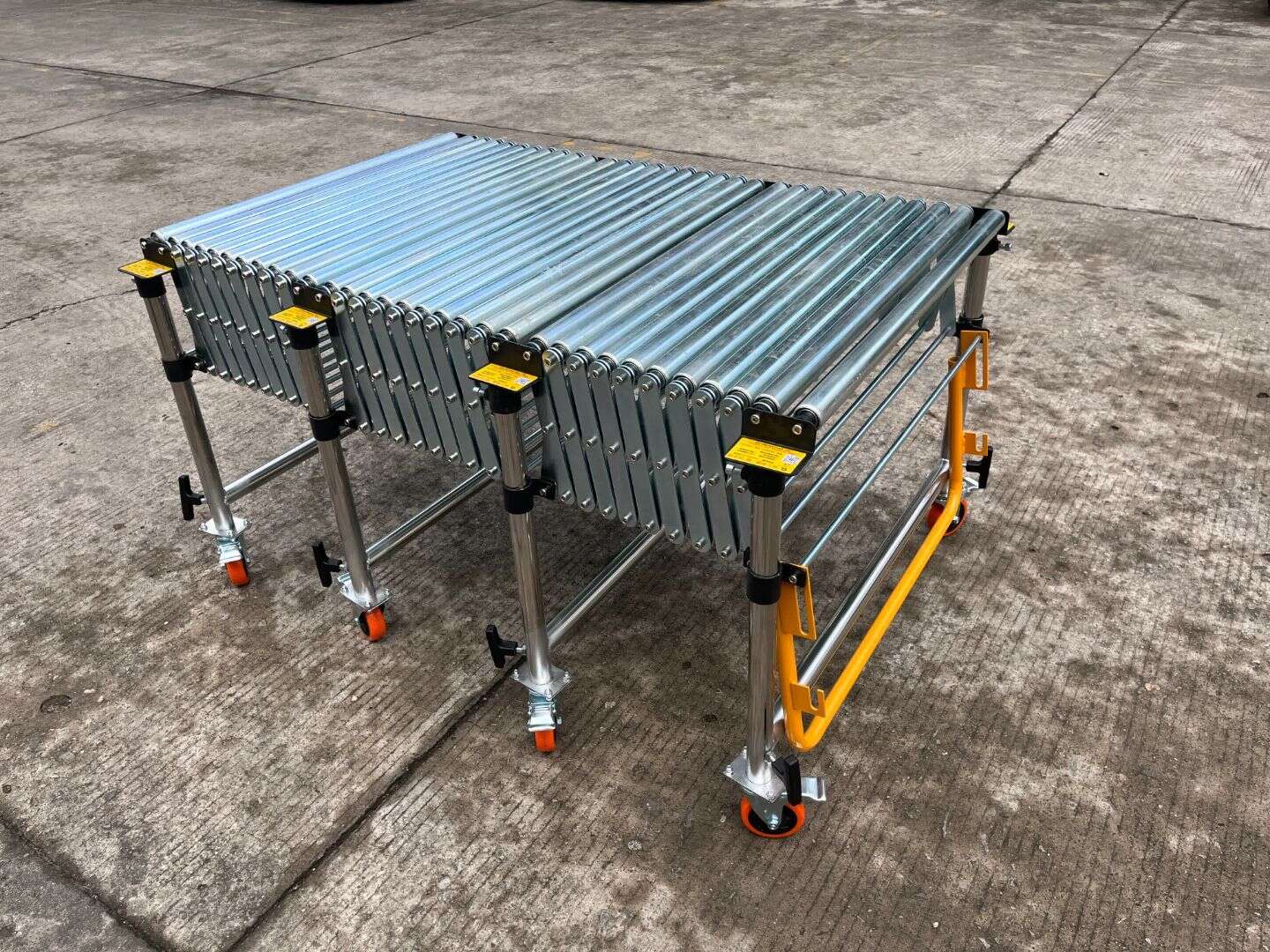
A gravity roller conveyor does not require a motor or electrical connection. Goods move forward on freely rotating rollers by gravity. For areas with a natural elevation difference (such as from the loading dock to the receiving area, or downhill connections between different workstations), it is a very direct way to transport materials.
How it works
It typically gains momentum by using a slight incline, with a common slope of about 2–5°. After goods are placed at the higher end, they move toward the lower end under their own weight, while the rollers rotate to reduce friction and maintain smoother flow. It should be noted that the proper slope is not a fixed value and should be adjusted according to the weight of the goods, the bottom surface material, and surface friction characteristics; lighter goods or goods with higher friction often require a steeper slope.
Advantages (more about "simple and reliable")
- No power supply needed: does not rely on electricity, has zero energy consumption, and offers more flexible placement
- Lower initial investment: more economical than powered solutions
- Low maintenance workload: simple structure with fewer moving parts
- Can still operate during power outages: unaffected by power loss
- Easy to expand/modify: convenient for later adjustments and temporary additions or removals
- Quieter operation: lower on-site noise
Limitations (more about "condition-dependent")
- Requires elevation difference: must rely on a slope, which limits installation locations and line routing
- Difficult to control speed: speed is affected by weight and friction, making flow consistency harder to ensure
- Not suitable for long-distance horizontal conveying: purely horizontal sections make continuous movement difficult
- May sometimes require manual assistance: when the slope is gentle or the goods are light, manual starting or extra pushing may be needed
Powered roller conveyors: drive and control capabilities
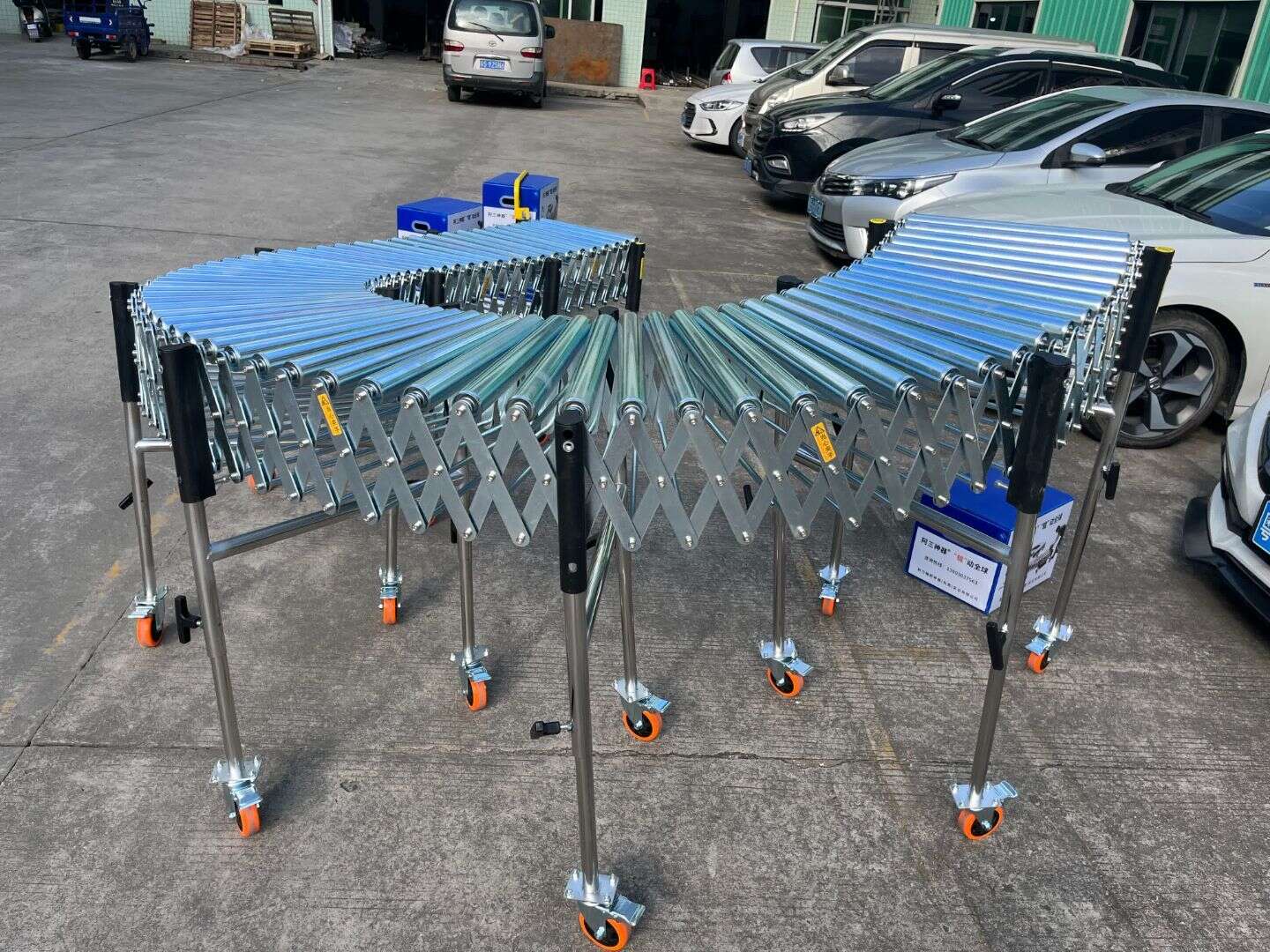
A powered roller conveyor uses a motor to drive the rollers, enabling continuous conveying on horizontal and even uphill paths, while also allowing speed control. For warehouse flow lines that require stable takt time, higher throughput, and linkage with automation systems, powered rollers are usually the more predictable choice.
Working principles and common drive types
In a powered roller conveyor, a motor and transmission system drive the rollers to rotate for controlled conveying. Common transmission methods include:
- O-ring belt drive: several O-ring belts connect adjacent rollers, with power transmitted from a central motor; the structure is relatively simple and cost-friendly
- Multi-rib belt drive: one multi-rib belt drives multiple rollers at the same time, providing higher torque and more stable transmission
Below is product information for the multi-rib belt powered roller conveyor (to help you understand the equipment configuration and solution setup):
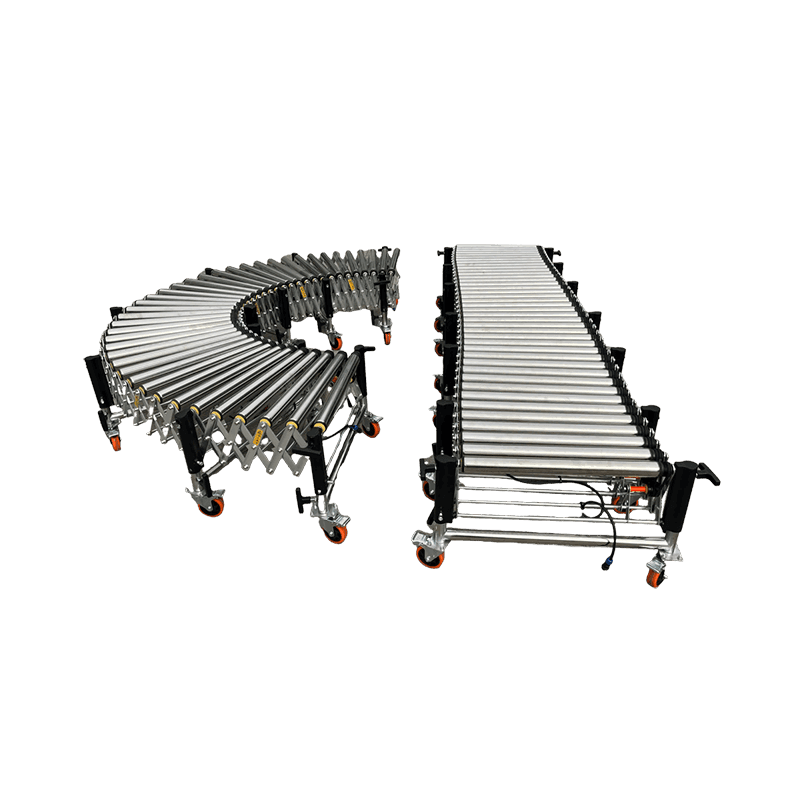
Multi-Wedge Belt Powered Roller Conveyor
The multi-wedge belt Powered Roller Conveyor uses a multi-wedge belt drive design to achieve smooth and efficient cargo conveying. Motor spacing range…

Plastic Drum

Metal Drum

Carton

Roll
Advantages (more about "control and high throughput")
- Controllable speed: speed can be adjusted through variable-frequency control and other methods; the article gives a speed range of 0–40 m/min (up to 40 m/min)
- Can convey horizontally/uphill: does not rely on slope, making floor-space layout easier
- Can run in both directions: forward and reverse conveying as needed
- Better speed consistency: within the load range, it is less affected by the weight of the goods
- Stronger throughput capacity: better suited for high-takt applications
- Easy to integrate with automation systems: convenient for forming a continuous operating line with other equipment
Trade-offs (more about "investment and maintenance")
- Higher initial cost: equipment and installation investment is usually higher than for gravity solutions
- Depends on electricity: requires a stable power supply
- More complex maintenance: routine inspection and servicing are required for motors, belts, and electrical components
- Noise must be considered: motor operation generates a certain level of working noise
- Higher maintenance support requirements: some fault handling may require more specialized personnel
Comparison and decision points: match by cost, control, and operating conditions
Placing the two types of roller conveyors in the same warehouse operating scenario for comparison usually leads to a conclusion more quickly.
1) Cost: initial investment vs. operating expenses
- Upfront investment: gravity systems are typically about 30–50% lower than comparable powered systems
- Operating energy consumption: gravity systems have zero energy consumption; powered systems require electricity, with a typical power range of 0.75–2.2 kW given in the article (per system)
- Maintenance costs: gravity systems mainly require cleaning and bearing inspection; powered systems also need regular maintenance of motors, drive belts, and electrical systems
2) Control and direction: whether takt control is needed
- Speed control: gravity systems are difficult to control precisely and are affected by the weight of the goods; powered systems can achieve 0–40 m/min speed adjustment through variable frequency control
- Direction control: gravity systems usually only allow one-way flow downhill; powered systems can run in both directions and reverse for return flow
- Consistency: gravity systems may speed up and slow down unpredictably; powered systems are more stable within the load range
3) Operating condition matching: make a quick judgment based on distance, space, and throughput
Situations better suited to a gravity roller conveyor:
- The conveying distance is short, and elevation differences on site can be utilized
- A temporary or movable layout is needed, or the line is frequently adjusted
- Low-speed operation, with little sensitivity to precise takt timing
- Power supply is unstable, or maximum energy savings are desired
- The budget is sensitive, and material flow is relatively simple
- Low to medium throughput: the reference value in the article is below 200 items/hour
Situations better suited to a powered roller conveyor:
- Long-distance horizontal conveying, or uphill conveying is required
- Stable, controllable takt timing and speed are required
- There is a large variation in cargo weight, and gravity lines are prone to speed fluctuations
- Integration with other automation systems is required
- Site constraints make it impossible to create a slope or elevation difference
- Two-way conveying or return flow is required
- High throughput: the reference value in the article is 200 items/hour and above
4) Hybrid solution: connect the two together
Many warehouses use a hybrid layout: gravity sections serve as buffers or transitions in areas with elevation differences, while powered sections are used where horizontal conveying, speed control, or critical takt points are needed. This helps control energy consumption while ensuring overall flow efficiency.
5) Usage reminders
- Gravity systems: the slope should be adjusted according to the weight of the goods and the friction of the bottom surface; avoid applying one fixed slope to all goods
- Powered systems: maintenance intervals for motors, belts, and electrical components should be planned in advance, and noise impact should be evaluated when necessary
In addition, for non-rigid items such as soft packs or bagged goods, the article mentions that a powered rubber roller conveyor with PVC-coated rollers can be considered to improve grip and conveying stability.
Frequently Asked Questions (FAQ)
Can gravity and powered roller conveyors be connected together?
Yes. Connecting the two into a hybrid system is very common and is used to strike a balance between energy savings and flow efficiency.
What slope is needed for gravity rollers to run smoothly?
Typically, 2–5° is common, but the exact angle depends on the weight and surface characteristics of the goods; lighter goods often require a steeper slope.
What maintenance is required for the two systems?
A gravity system mainly requires cleaning and bearing inspection; a powered system also requires motor maintenance, drive belt inspection, and electrical system inspection.
Which type is better for fragile items?
Powered roller conveyors usually offer better speed control, and the speed does not suddenly increase due to weight fluctuations, which helps reduce the risk of unexpected acceleration.
Can they be used outdoors?
Both can be used outdoors if the specification requirements are met. Outdoor applications require appropriate galvanized or stainless steel components, and the electrical parts of the powered system must be properly protected.