On-site question: Can a telescopic conveyor for unloading enable one person to unload an entire truck?
Against the backdrop of labor shortages and rising employment costs, the idea of "one person unloading a full truck" is highly appealing to many warehouse managers: one worker enters the trailer, picks up the goods, transports them to the warehouse, and completes the stacking without needing anyone else’s assistance throughout the process. It sounds like less labor input, simpler scheduling, and possibly even faster turnaround.
But in reality, the key question is this: when unloading with a telescopic conveyor, can the number of workers be reliably reduced to just one? To answer that, we first need to look at the common ways traditional manual unloading is organized—either 3–4 people passing goods relay-style, or one person repeatedly entering and exiting the truck to carry items out. These methods often lead to intense physical exertion, uncontrolled movements, rapid fatigue buildup, and a higher risk of safety incidents and work-related injuries.
Practical conclusion: two-person coordination is the better approach for unloading with a telescopic conveyor
The goal of completely "single-person unloading" is attractive, but when efficiency, safety, and ergonomics are weighed together, the more common and more recommended setup is "two people + a properly designed conveyor system." A conveyor can indeed significantly change the loading and unloading efficiency equation, but it is better understood as making two people more efficient and more sustainable, rather than compressing the team down to one person.
Two-person coordination usually offers greater advantages in safety and ergonomics:
- Reduced long-distance carrying: the conveyor handles horizontal transport from deep inside the trailer to the warehouse end, so workers no longer need to walk back and forth carrying boxes
- Reduced twisting and awkward postures: picking and placing are done beside the conveyor, making movements more controllable
- More stable working height: the conveyor height can be adjusted to an appropriate range, reducing frequent changes from ground level to higher positions
- More balanced workload: the two workers focus on different tasks, making fatigue less likely to accumulate
- Safer through mutual oversight: one person handles picking and placing inside the trailer, while the other monitors the discharge end and equipment operation, making abnormalities easier to detect
Compared with traditional manual unloading, the differences can be understood more intuitively through the following comparison:
| Dimension | Traditional manual unloading | Two-person coordinated unloading with a telescopic conveyor |
|---|---|---|
| Handling method | Repeated lifting and carrying by hand over long distances | Mainly "lift and place onto the conveyor, " reducing carrying distance |
| Working height | Large variation from the trailer floor to the stacking height | Maintain a relatively suitable working height by adjusting the conveyor |
| Motion control | Walking, turning, and lifting are mixed together, making the pace unstable | The movement sequence is shorter and more repeatable, resulting in a more stable pace |
| Standing position and floor conditions | Frequent entry and exit from the trailer, with greater impact from the trailer floor conditions | The two workers mostly operate in relatively fixed positions, making their stance more stable |
| Fatigue accumulation | Handling and walking are combined, so fatigue rises quickly | Division of labor is clearer, and fatigue growth is more controllable |
The direct value of these changes is that they make unloading more sustainable throughout the entire shift, instead of being fast at the beginning and then slowing down noticeably later.
Division of labor and workflow: let the telescopic conveyor handle horizontal transport
The core idea of two-person coordination is simple: assign the most physically demanding and time-consuming task of horizontal transport to the equipment, while people only handle the picking, placing, sorting, and organizing that must be done manually.
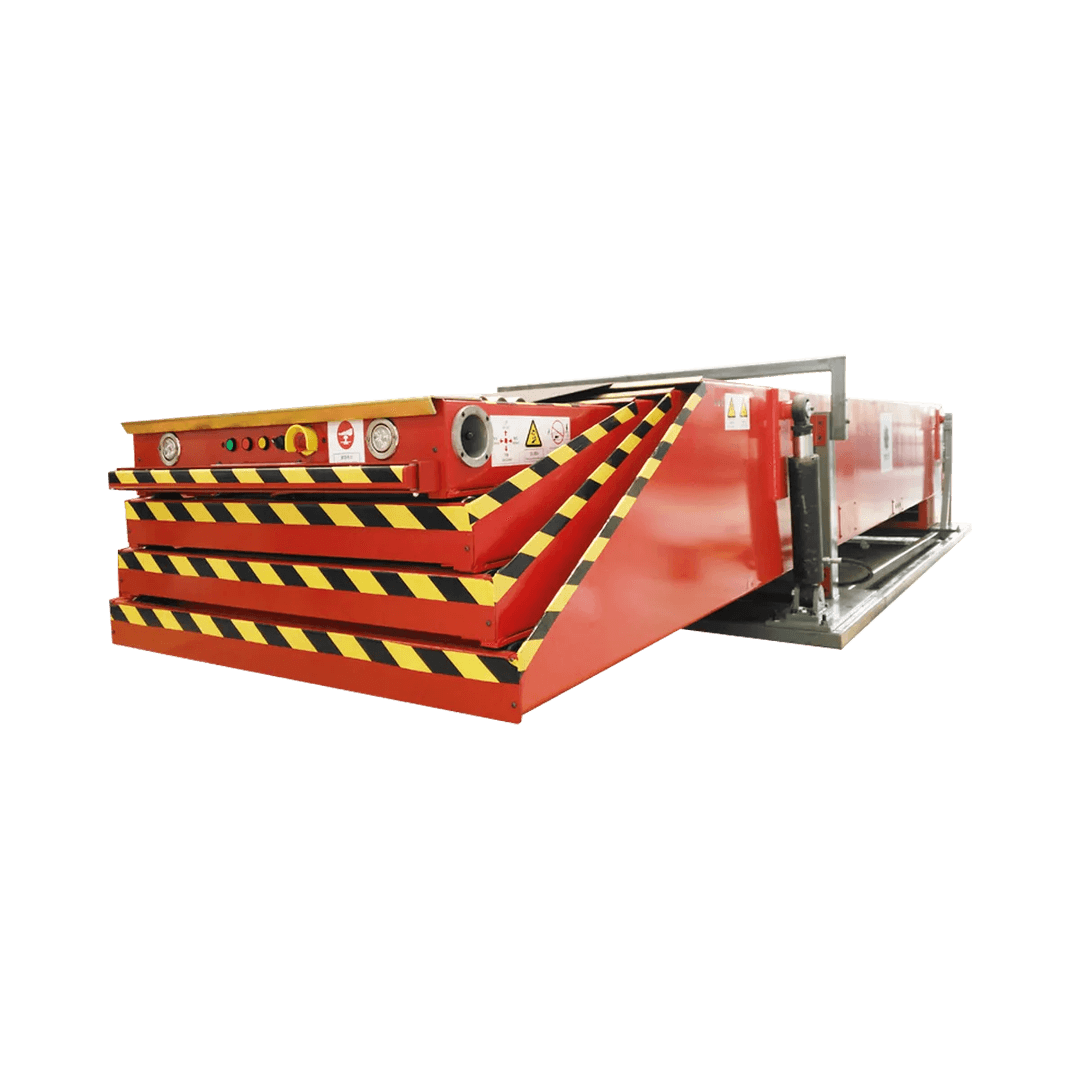
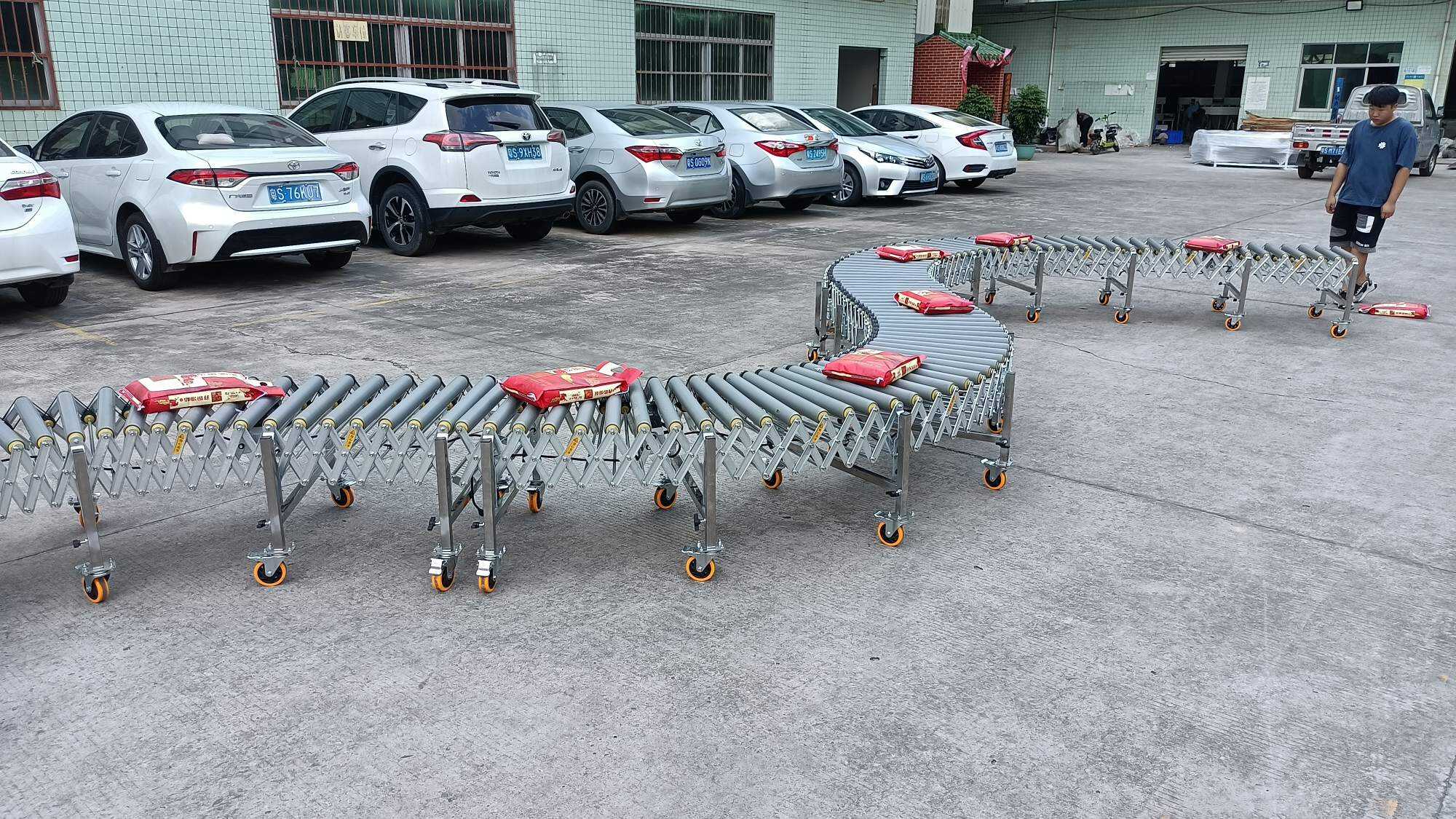
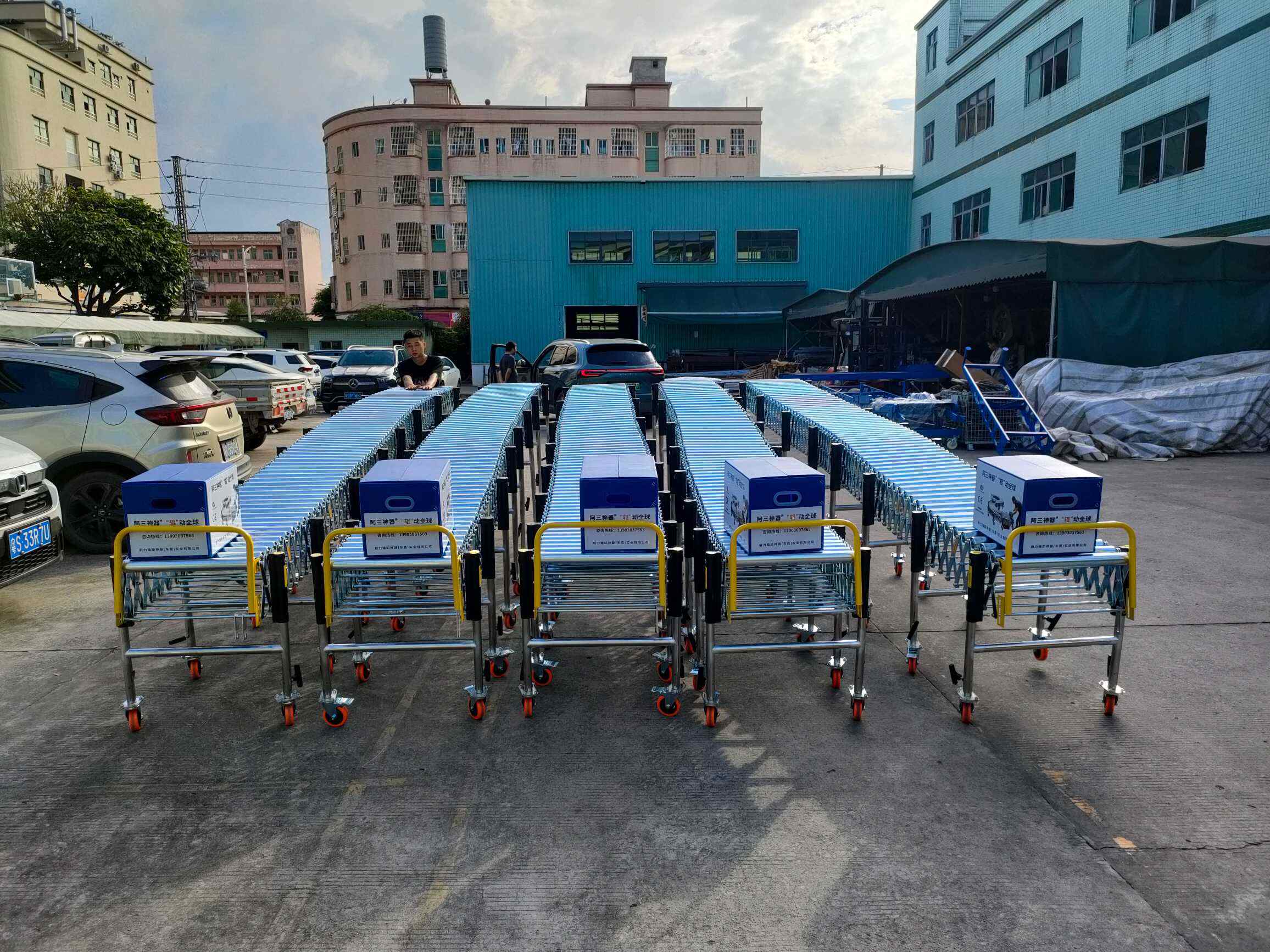
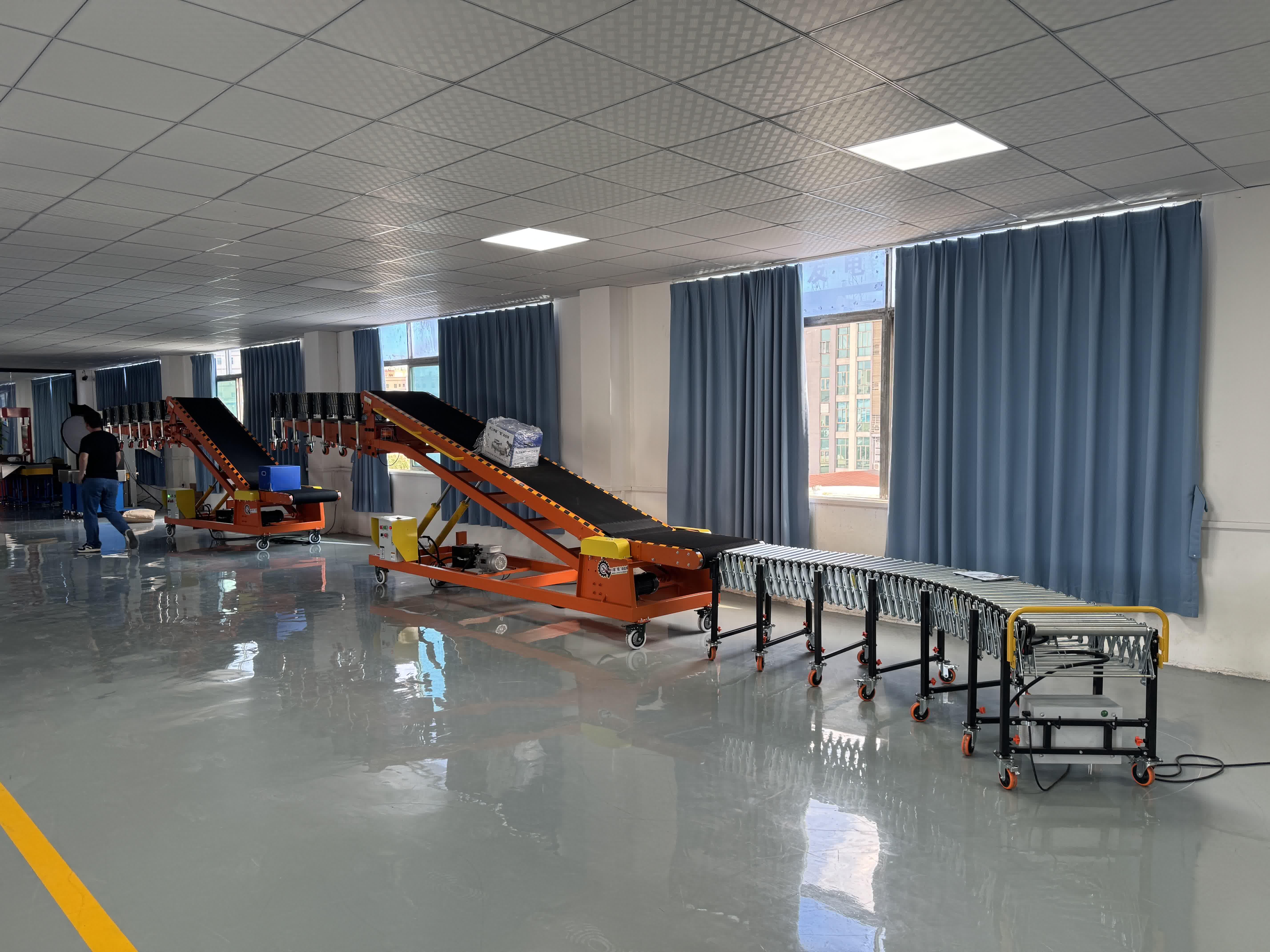
4-Section Telescopic Conveyor
Our four-section telescopic conveyor can extend up to 12–17 meters, reaching deep into trucks and containers to enable efficient and smooth loading an…

Metal Drum

Plastic Drum

Roll

Carton

Bagged
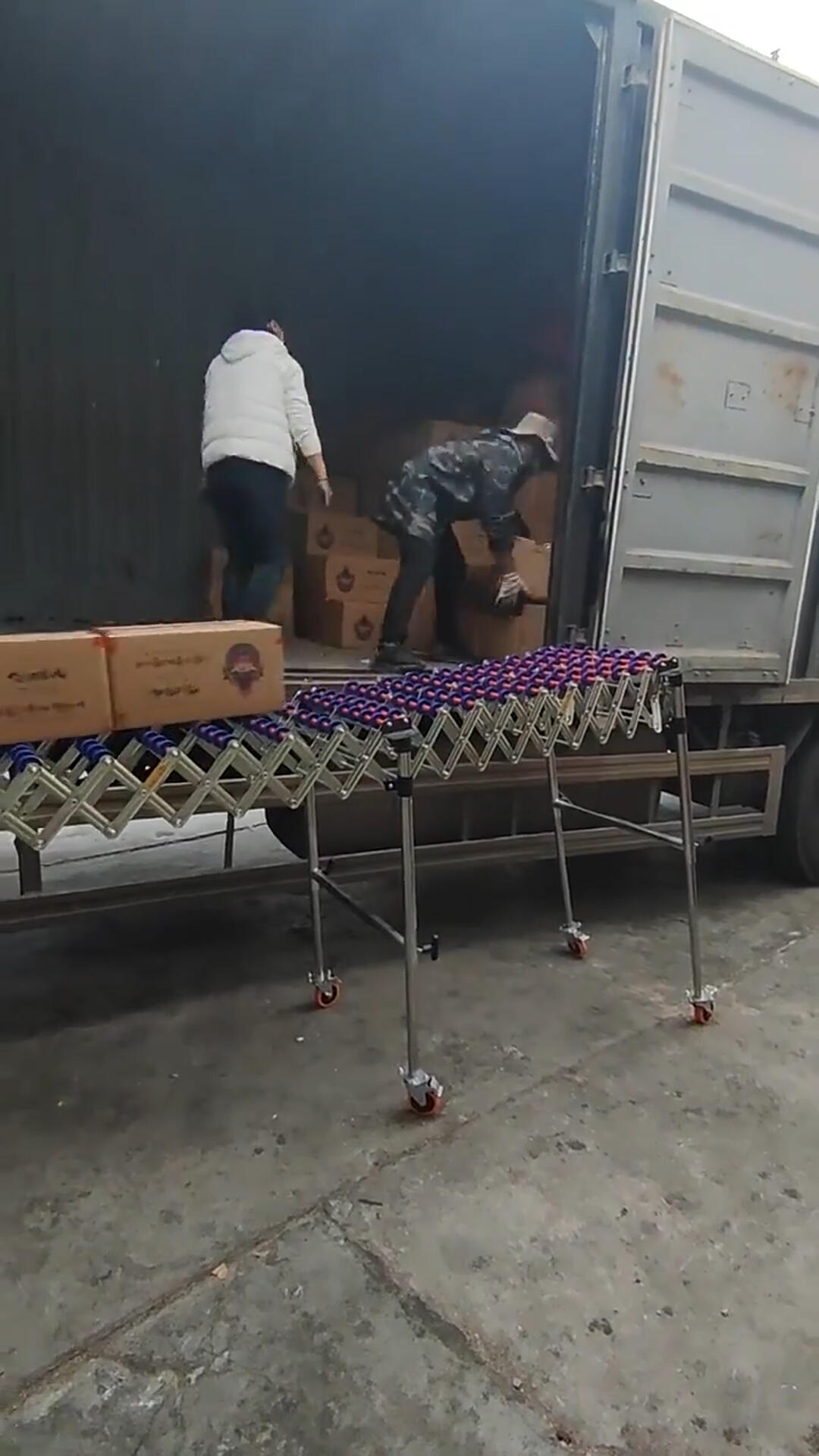
Role 1 (inside the trailer): pick items and place them on the conveyor
It is recommended that the worker inside the trailer keep the action sequence streamlined and repeatable:
- Pick items from the stacking position
- After turning or making a small movement, place the goods onto the telescopic conveyor
- Advance by area and in sequence to keep the picking path inside the trailer clear
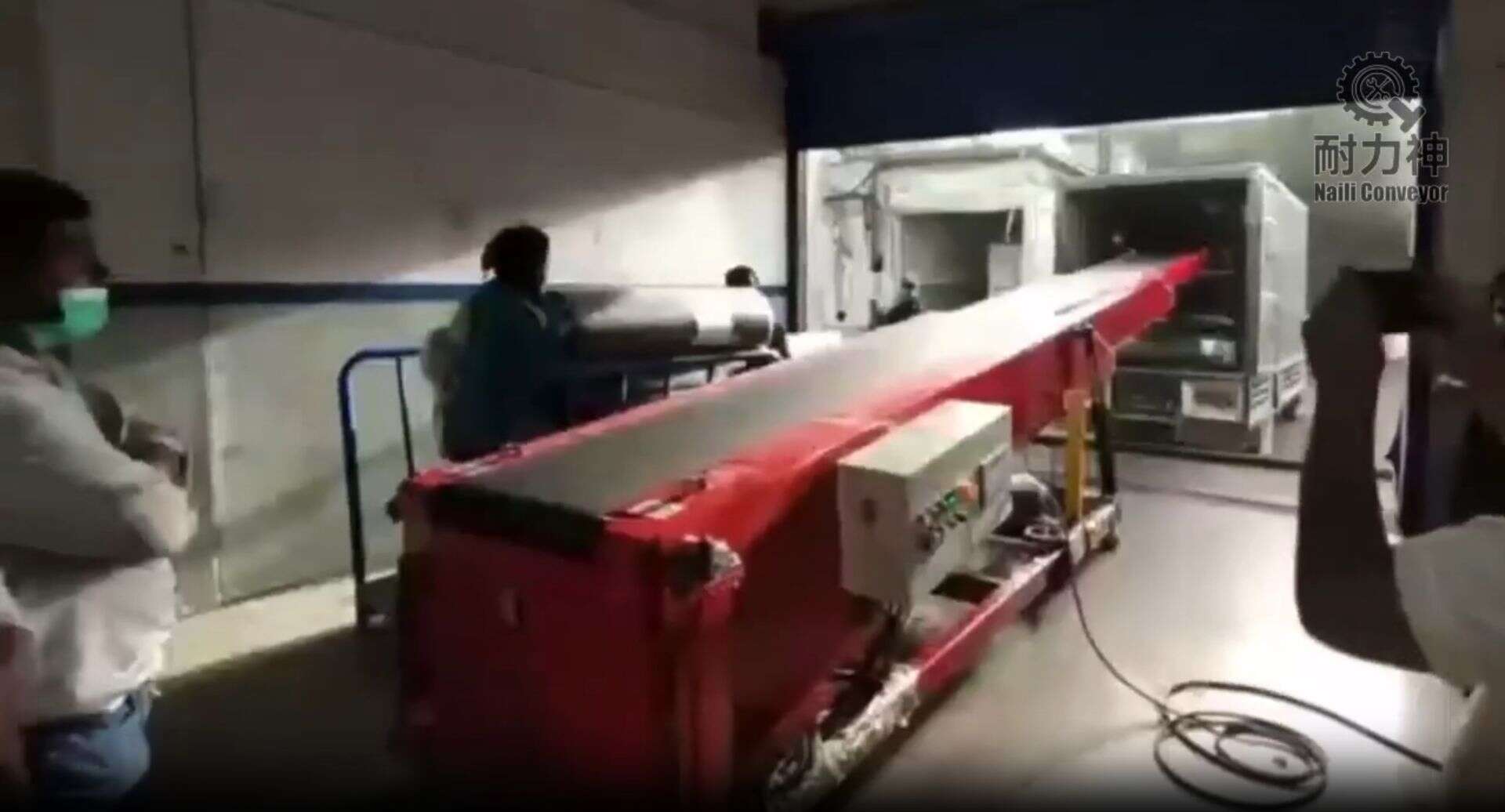
As unloading progresses, the telescopic sections gradually extend deeper into the trailer, allowing workers to place items from a relatively nearby position at all times and avoiding the need to carry goods all the way from the back of the trailer to the rear door.
Role 2 (warehouse side): receiving, sorting, and transfer
The worker on the warehouse side is mainly responsible for ensuring that goods smoothly enter the next process from the end of the conveyor:
- Receive goods discharged from the conveyor
- Sort them or divert them to designated areas
- Palletize them or transfer them to the next process/conveyor line
- If necessary, coordinate conveyor speed adjustments to ensure throughput matches handling capacity
This role also usually remains in a relatively fixed position, avoiding frequent trips in and out of the trailer, so physical effort is focused on receiving and organizing goods rather than walking and carrying.
The equipment’s key role in the workflow
In this workflow, the conveyor acts like a third team member, linking the path from the deepest part of the trailer to the warehouse floor into one continuous channel:
- The telescopic sections cover the depth of the trailer, reducing the inefficient final stretch where goods would otherwise have to be carried manually
- Height adjustable for easier alignment between the trailer floor and the warehouse-side docking height
- Continuous flow turns unloading from stop-and-go work into a more stable rhythm-based operation
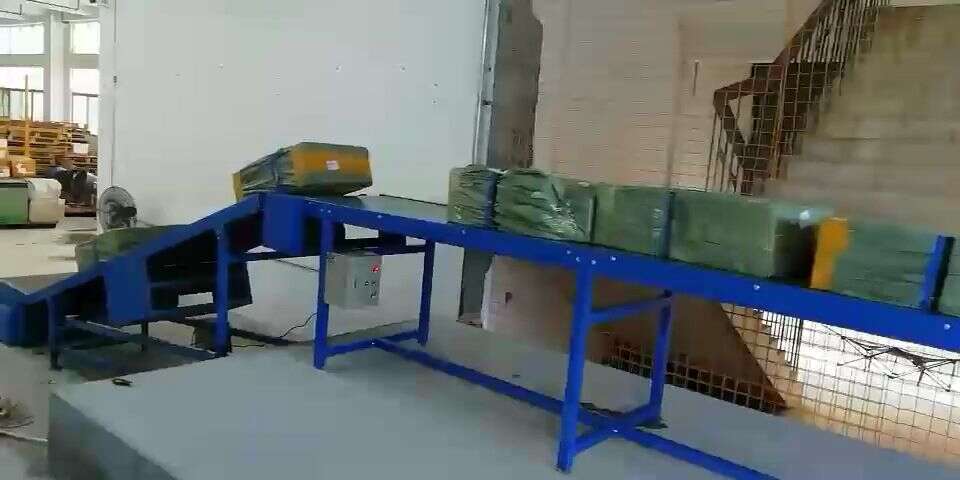
Efficiency and implementation reminder: staffing does not need to be pushed to the limit
With the same two-person setup, using a suitable conveyor system, unloading efficiency can usually reach about 2–3 times that of a fully manual method. For more details, see Improving loading and unloading efficiency with telescopic conveyors. The key is not working harder, but shifting time away from walking and carrying back to actually handling the goods.
Efficiency gains usually come from the combined effect of the following factors:
- Walking time is greatly reduced
- The conveyor creates a continuous operating rhythm, reducing pauses
- Lower fatigue and more stable output throughout the entire shift
- Clear division of labor between two people, with each focused on a single task
- Fewer touchpoints for goods from the trailer to the inbound storage stage, making the process smoother
It should be emphasized that in some scenarios, single-person operation may be technically possible, but it often significantly reduces efficiency and concentrates the risk on one person, who must both pick and place inside the trailer and receive and sort goods at the discharge end. A more practical goal is to use a telescopic conveyor to raise the efficiency of a two-person team while reducing the workload, turning unloading into a sustainable and repeatable standard process.