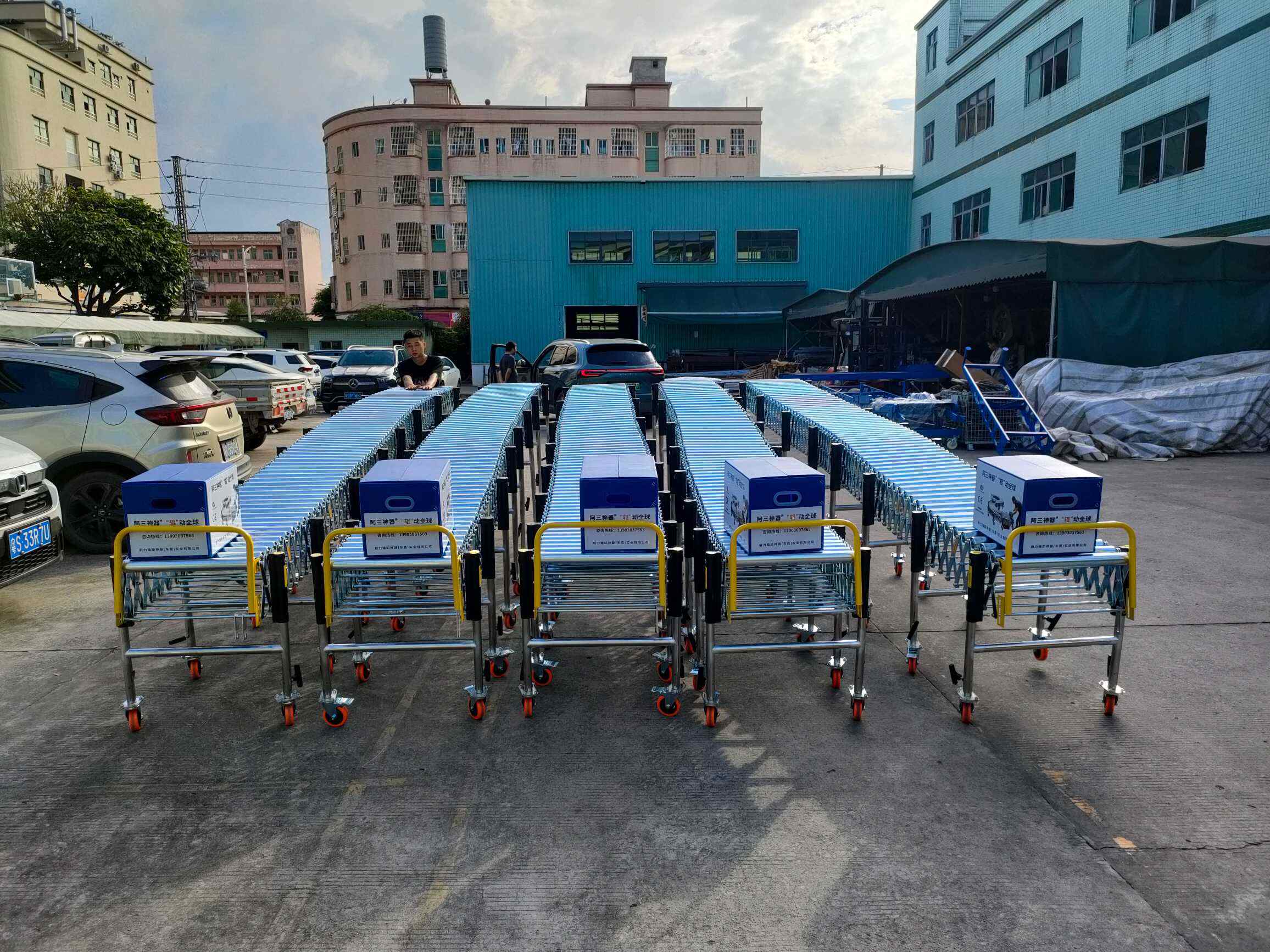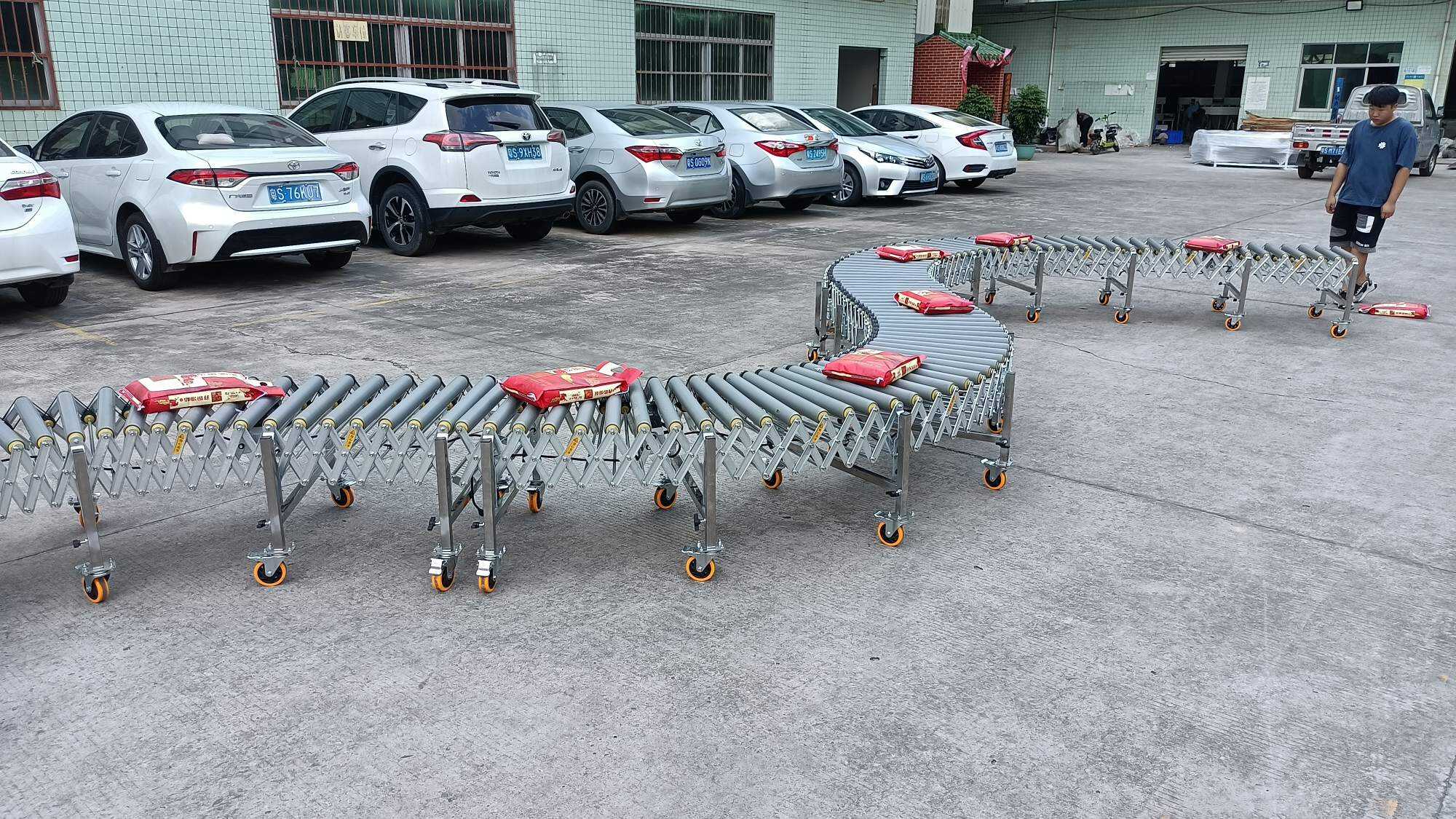
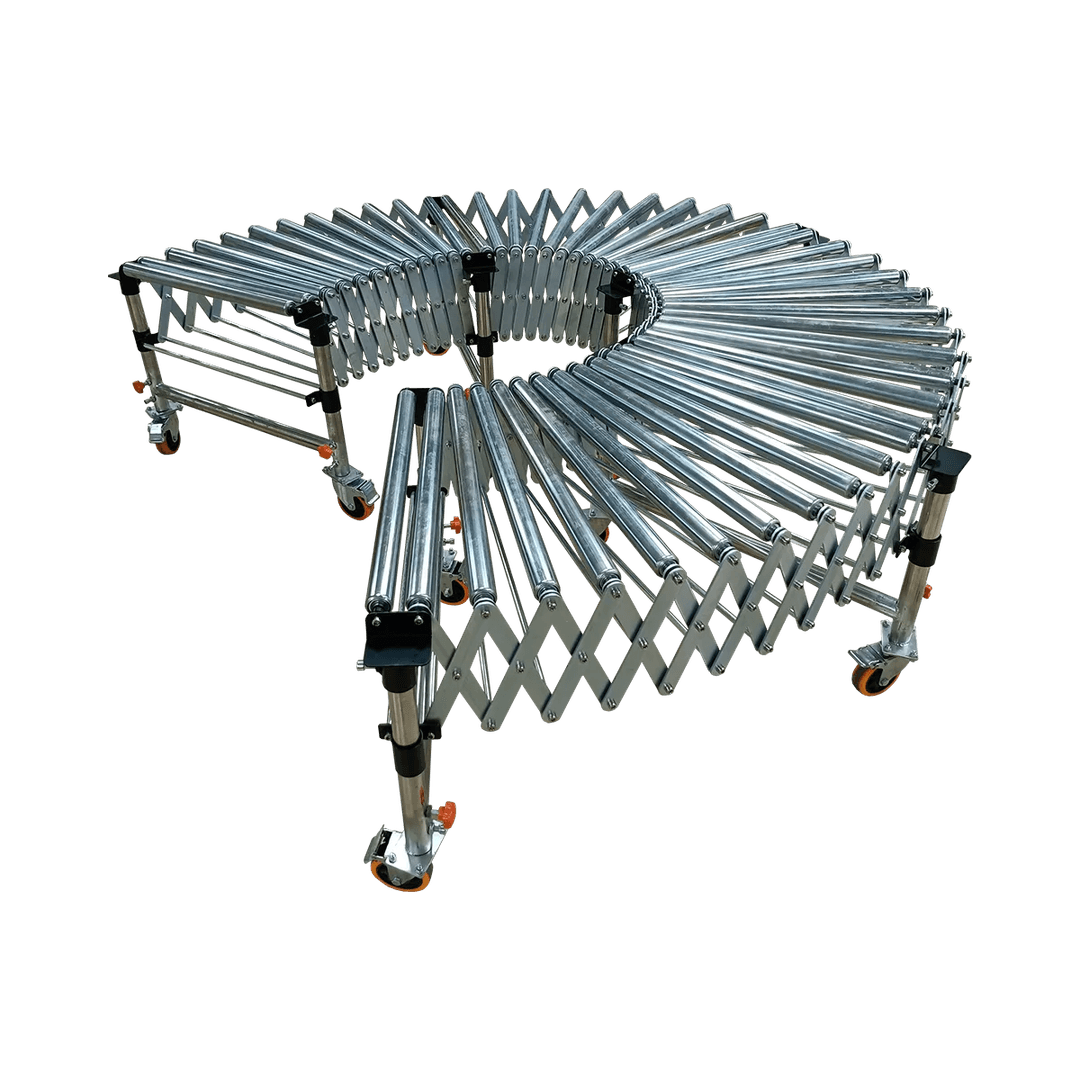

The positioning of Gravity Roller Conveyor: a buffering and impact-resistant section at the front end of loading and unloading
The most core value of Gravity Roller Conveyor is not that it "saves more power, " but that it "can take more punishment": when cargo at unloading ports, warehouse entry points, or places where manual throwing and placing is common inevitably creates drops and impacts, it acts more like a reliable load-bearing surface, first absorbing the impact and then handing the relatively stable flow of goods to the downstream equipment.
It is often placed at the front end of loading and unloading systems, taking on the role of a "buffer section": the front end uses gravity rollers to control uncertainty at the landing point as well as rebound and vibration of the goods. Whether it is followed by a skate wheel section or a powered section, it is easier to maintain continuous flow, on-site jamming and stoppages are often reduced, and the overall line stability becomes more predictable.
In a gravity solution, rollers and skate wheels are not substitutes for each other; they serve different functions. Skate wheels are more suited to light-load, circulation-oriented smooth rolling, but when there is obvious impact from falling material or uneven loading on site, using gravity rollers at the front end better matches the intuitive expectations of durability and reliability. The downstream section can then be flexibly combined into Gravity Skate Wheel Conveyor or other more suitable sections.
If you need cycle-time control, active propulsion, diversion, or long-distance main conveying, then you usually need to focus on Powered Roller Conveyor as this type of active conveying solution; when you care more about "impact resistance + simple structure + lower maintenance pressure" for the front end, gravity rollers are often a better fit.
How to choose between Gravity Skate Wheel Conveyor and Gravity Roller Conveyor: a comparison from impact resistance, durability, and front-end protection
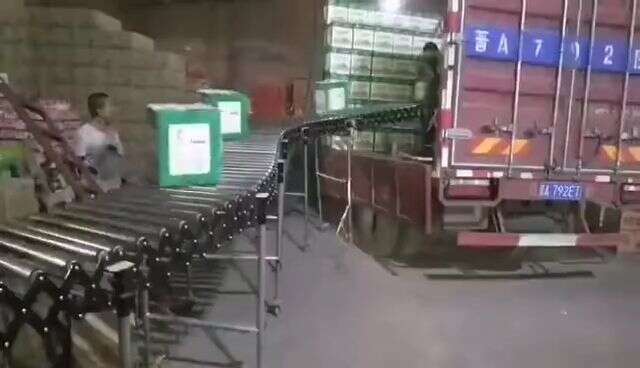
At many job sites, people hesitate between two types of non-powered conveying: should they use rollers or skate wheels? A direct and effective way to decide is to go back to the unloading action itself—does the cargo need to be placed down smoothly, or will it drop and hit the conveyor? When cargo may fall from a truck bed, a telescopic end, or manual tossing and create impact on landing, Gravity Roller Conveyor is more like a receiving surface that can take the load; skate wheel conveyor is better at letting cargo glide lightly, but it is more sensitive to impact and uneven loading.
Differences in durability also become more obvious in day-to-day use: the greater the impact and the rougher the manual handling, the more likely you are to see vibration, drifting, jamming, and faster wear. What the front-end section seeks is not "faster, " but "more stable, " so that cargo can pass smoothly even with uncertain landing points and unstable handling. That is also why Gravity Roller Conveyor is often placed at the inlet.
From a systems perspective, front-end protection is very practical: once the roller section absorbs the buffer impact, the downstream line is less likely to be disrupted, reducing interruptions and rehandling caused by changes in cargo position; especially when the back end needs to maintain continuous flow, stabilizing the inlet makes it easier for the downstream section to perform efficiently.
A more common combination approach is to use Gravity Roller Conveyor at the inlet/unloading opening to absorb impact, and then choose the middle and downstream sections as needed Gravity Skate Wheel Conveyor or a powered roller section, balancing cost and stability.
Narrow the scope by typical scenarios: side-truck unloading into the warehouse, end transfer, and storage workstation
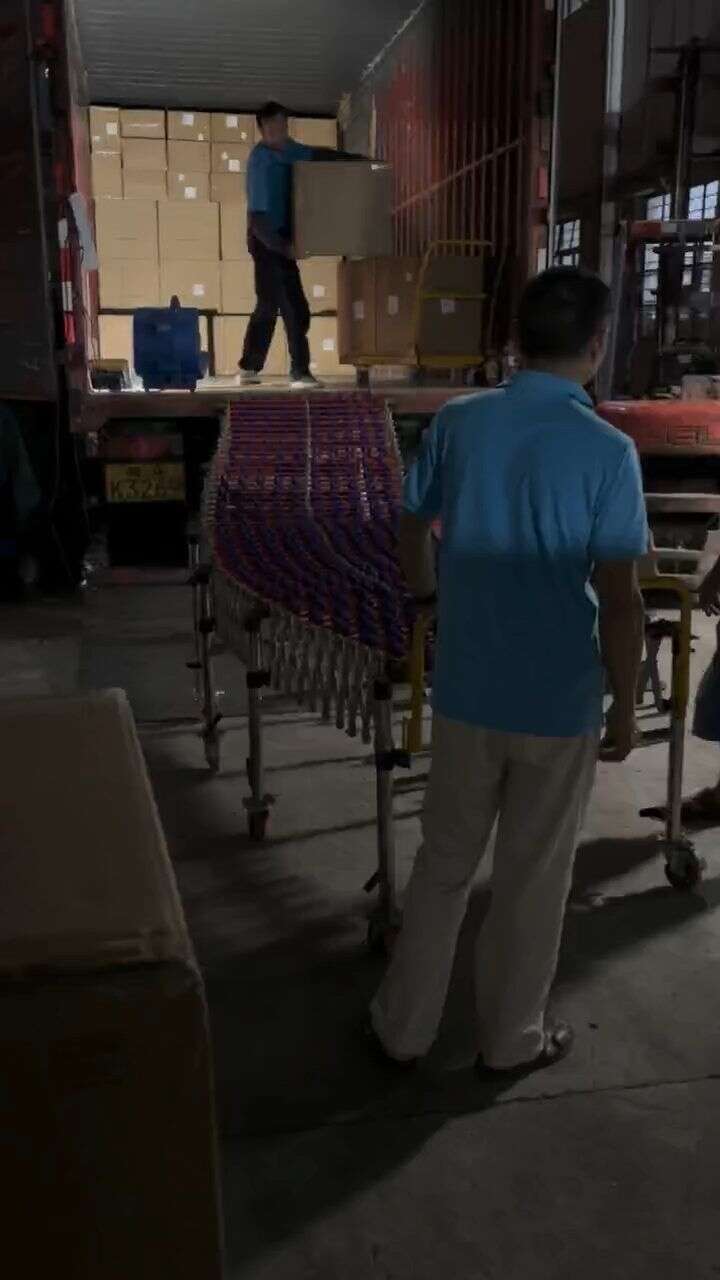
When unloading from the side of a truck into storage, the key contradiction is often not "conveying distance" but "unstable landing points." The side door position of the truck bed, parking deviation, and manual unloading motions all change the landing point and create impact. In this case, Gravity Roller Conveyor is better suited to be placed near the unloading opening to receive and guide the cargo first, allowing it to settle before entering the warehouse section. For a more intuitive comparison with similar working conditions, see this case: Side-truck unloading into the warehouse with Gravity Roller Conveyor.
In box buffering transfer and end-of-warehouse transfer, Gravity Roller Conveyor is more like a "receiving section/transition section": it is not responsible for pacing, but it can smoothly move cargo from a more unstable action zone into a relatively orderly conveying area, reducing interruptions caused by bounce, skew, and edge-corner collisions. For similar end-transition applications, see: Parcel platform roller conveyor end transfer.
For budget-sensitive storage workstations, the issue is often not a lack of drive power, but a lack of "durable and hassle-free front-end buffering." Rather than making every section powered, it is better to stabilize the most impact-prone and trouble-prone positions and leave the downstream sections to structures or control requirements that suit them better; in this way, overall usability is usually easier to maintain.
It is also necessary to clarify a common misuse: treating Gravity Roller Conveyor as the main conveyor for the entire line. In high-throughput or takt-managed scenarios, this can lead to congestion, accumulation, and loss of rhythm. At that point, you should consider earlier assigning the key sections to Powered Roller Conveyor to handle "active propulsion and pace, " while Gravity Roller Conveyor returns to the front-end buffering and receiving position.
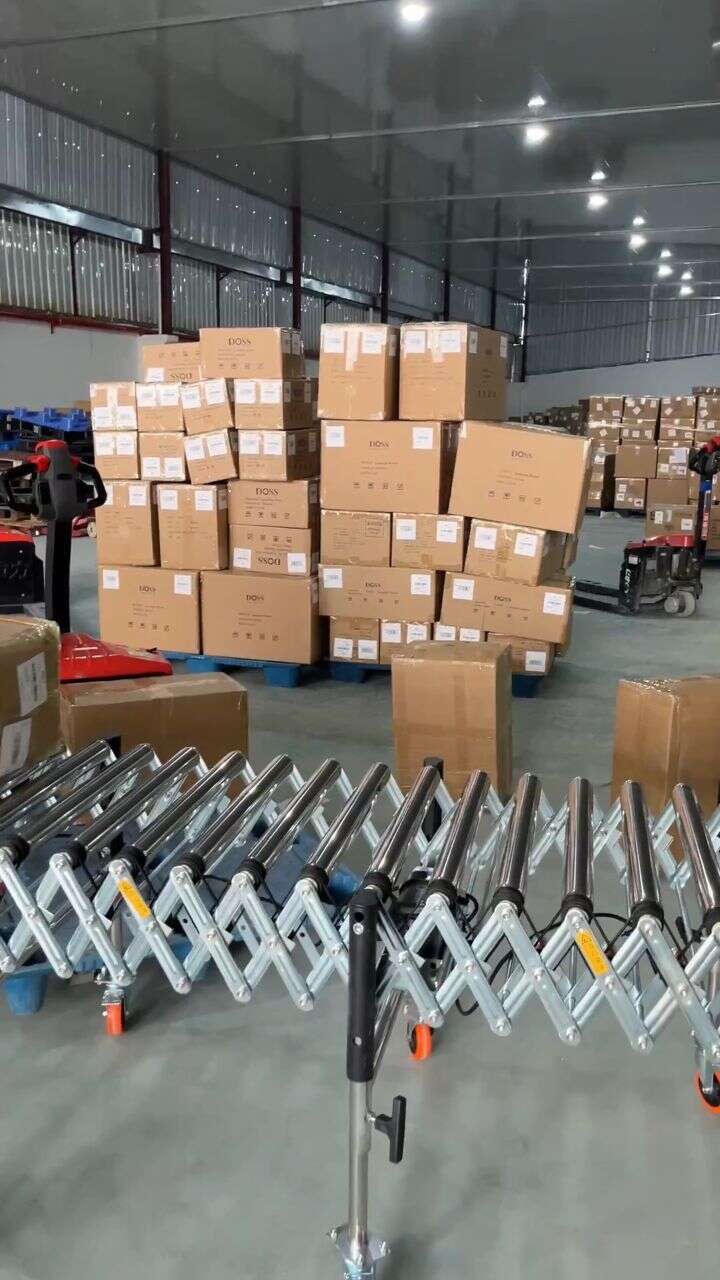
How to decide on the same type of model: key points for communicating between 38 mm and Gravity Roller Conveyor
When discussing differences in specifications such as 38 mm and 50 mm, the thing that is easiest to overlook on site but most worth clarifying first is whether the contact between the cargo bottom and the load-bearing surface is stable. The more irregular the bottom surface, and the more likely it is to tilt or create point loading, the more carefully you need to discuss the roller's receiving feel, structural stability, and impact-resistance expectations, rather than stopping at the verbal question of whether it can be used.
When communicating with the manufacturer, it is recommended to proceed with descriptive working-condition language: the bottom-contact state differs for cartons, totes, and bagged goods; whether there is manual tossing, drop height, diagonal landing, or uneven loading also directly changes the requirements for impact resistance and smooth guiding. You can also focus on the corresponding pages for the two models to understand their positioning and suitability:
Even for the same Gravity Roller Conveyor, whether it is "easy to use" often depends on how it is connected to the downstream section: if the downstream section needs to connect to a skate wheel section or a powered roller section, poor handling of height changes, guidance methods, and rhythm changes at the transition point will reduce the buffering effect and may even introduce new jamming points. Treating the connection as part of model selection is closer to real-world use than comparing a single section in isolation.
Finally, shifting the goal from "choosing a specific model" to "matching priorities" is more efficient: do you value front-end durability and buffering more, or do you value coordination with downstream throughput and control more? Different priorities lead manufacturers to make different trade-offs in structure and configuration, and the solution you get will be closer to the actual site.
How Gravity Roller Conveyor and other conveying equipment form an unloading chain
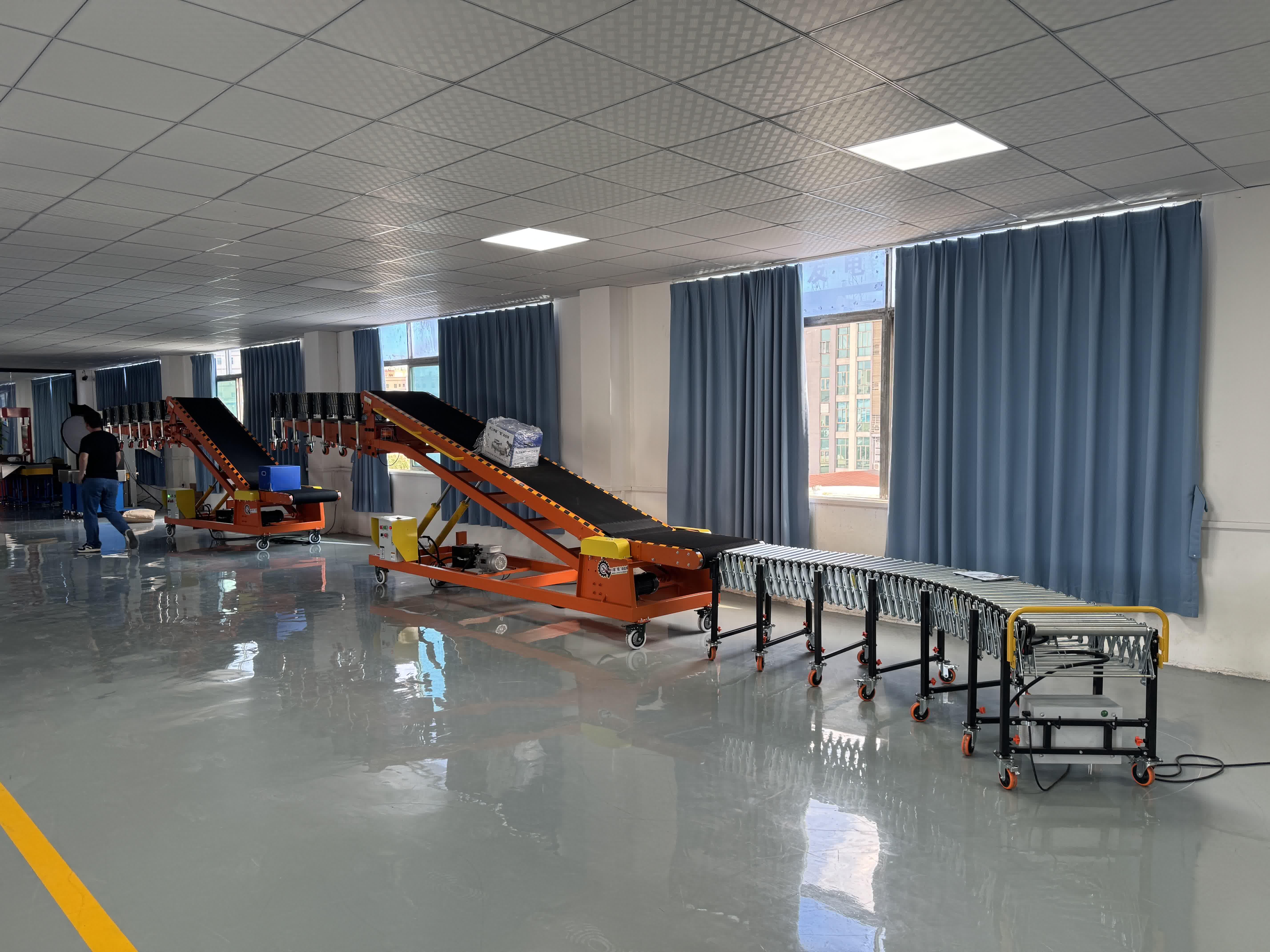
In an unloading chain, buying only one Gravity Roller Conveyor section is often not enough, because its role is "inlet buffering, " not "covering distance and pace." Together with Telescopic Conveyor a telescopic conveyor handles changes in truck-bed depth and distance, while Gravity Roller Conveyor is better used as the receiving and transition section near the unloading opening, stabilizing impact from landing and unstable guiding first before handing off to the telescopic section or the in-warehouse line.
With Climbing Conveyor the key logic is to keep impact out of the climbing section as much as possible: placing Gravity Roller Conveyor at the front end of the climbing conveyor as a buffer helps reduce the interference of impact on the throughfeed performance of the climbing section and makes the transition up and down smoother. For a reference unloading combination of "climbing conveyor + rollers, " see: Unloading solution with climbing conveyor and roller conveyor in a distribution center.
When combined with a powered roller conveyor, the roles should be even clearer: the powered section handles takt, diversion, and long-distance main conveying; the gravity roller section handles inlet buffering and receiving discharged goods, reducing impact and vibration from the inlet side on the powered line so the powered section can focus on "stable output".
When the line also includes more complex transfer equipment, such as Double Wing Conveyor or vertical conveyors, it is usually better to first use gravity rollers to absorb front-end uncertainty (impact, landing-point deviation, and fluctuations from manual operation) before the material enters the downstream equipment. This does not make the system more complex; it isolates the fluctuations at the front end so the back end can run stably over the long term.
What to look for when comparing manufacturers: durability limits, reliability, and maintenance communication
When comparing manufacturers, it is best to align on the "operating boundaries" before talking price: is the loading/unloading method pushing in place, tossing, or involving a significant drop? What are the cargo form and bottom-surface conditions? Is there off-center loading or short-term piling? These factors determine the priority for durability and the structural trade-offs. If the boundaries are unclear, even a fair price may still lead to repeated problems at the most impact-prone front end.
Reliability should be judged against the front-end operating conditions: the goal of the front section is not speed, but fewer interruptions and jams so goods can flow continuously and smoothly. Pay close attention to how the manufacturer explains the design’s logic for handling "impact and uncertain landing points"—being able to clearly explain the risk is often more valuable than simply saying it is "more durable.".
Maintenance communication should also be grounded in the reality of "high-frequency impact points": the inlet is more likely to have issues such as loosening, deformation, abnormal noise, and changes in rolling resistance. What matters more is whether the manufacturer can explain the daily maintenance focus and how to handle issues, as well as which parts in your operating conditions are high-risk areas that deserve more attention, rather than only giving template-style promises.
Finally, solution matching should consider coordination with the downstream line: whether the back end is a skate wheel section, a powered roller section, or other equipment, proper transition handling directly affects stability. Manufacturers that can clearly explain the chain of "inlet buffering—midline conveying—end transfer" are usually better able to turn the value of gravity rollers into a practical on-site experience.